SZH Blending with Glidants: Match the Premixing Route to the Host Powder
By QUANPIN
A double cone blender enquiry involving a flow aid should identify which powder the additive is intended to modify. A micronized drug and a coarser filler need not respond to the same glidant or addition route.
This guide examines host-specific glidant blending for pharmaceutical powders. It separates a flow improvement from lubrication, mixture composition and final tablet performance.
Flow Aids and Lubricants Have Different Objectives
A glidant is selected for a powder-flow objective. A lubricant addresses friction in a different processing context; the two functions should not be treated as equivalent.
A shared additive category does not establish an optimal grade or concentration for every host powder. The actual material response remains the development question.
Define the SZH Additive-Dispersion Duty
A double cone mixer redistributes a batch through tumbling. Confirm whether that motion provides the required additive dispersion with representative material.
Published surface-modification or high-energy mixing results do not establish an SZH capability. The supplied arrangement must remain explicit.
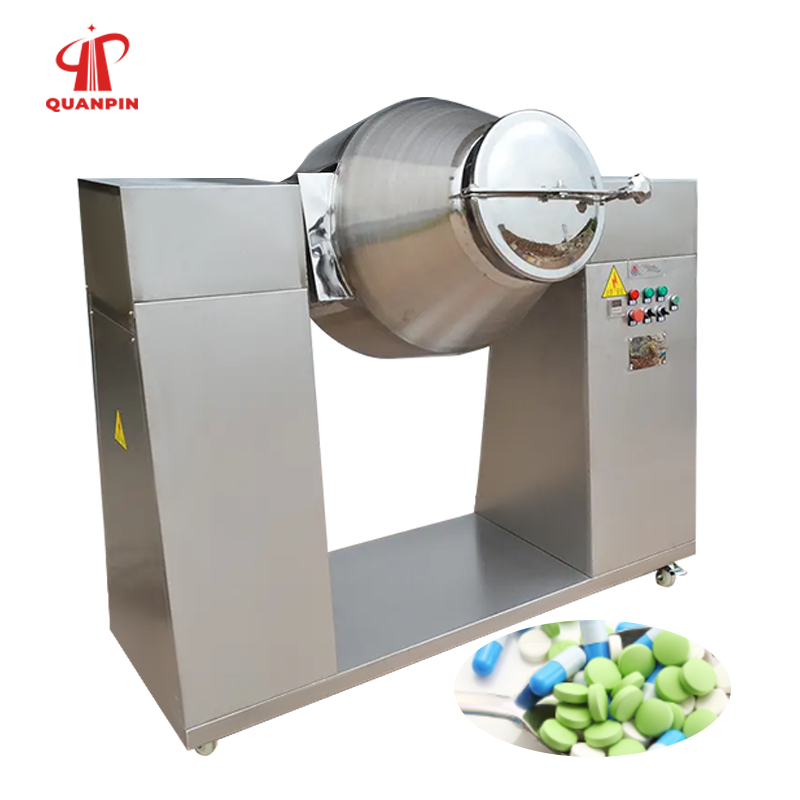
Five Definitions for a Glidant Comparison
Host identity
Identify the host powder and its particle characteristics before assigning a flow-aid requirement.
Glidant grade
Identify the additive type and grade rather than relying on the generic term silica.
Amount basis
State the additive amount on a defined basis. A percentage without its denominator is incomplete.
Addition route
Describe whether host fractions receive separate premixing or a single combined addition.
Flow measurement
Define the flow measurement and the receiving-operation question independently.
When Separate Host Premixing Is Worth Investigating
Separate premixing can be investigated when host materials have different flow limitations.
An original two-step glidant investigation treated drug and excipient fractions separately before combining them. Its tested formulation responded differently from a one-step procedure.
That experiment does not establish a universal sequence or concentration. It provides a reason to test the host-specific treatment rather than assuming one additive suits both fractions.
The benefit demonstrated belongs to the measured powder-flow response. It is not a general guarantee of tablet quality.
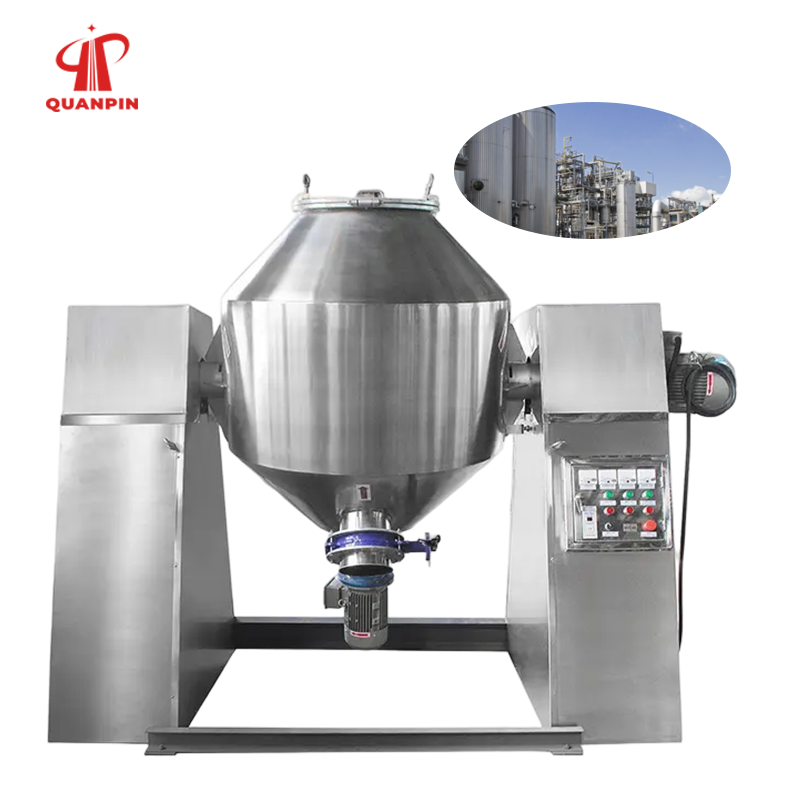
Six Stages Connecting Addition with Product Response
Before contact
Before additive contact, characterize the host material relevant to the flow problem.
During addition
During addition, retain the identity and amount of the glidant.
During premixing
During premixing, distinguish additive dispersion within one host fraction from the final blend.
During final blending
During combined blending, assess the actual composition rather than assuming that improved flow proves uniformity.
During transfer
During transfer, assess the flow requirement of the receiving arrangement.
During tableting
During tableting, examine final product attributes separately from the initial flow result.
Read Host-Specific Flow Evidence Carefully
Compare powder-specific responses
Flow improvement can depend strongly on the host morphology.
An original comparative glidant study examined several model powders, glidants and mixing conditions. The response depended on particle characteristics and did not support a universal strategy.
This supports a formulation-specific comparison. Its numerical findings cannot become an SZH additive recipe or mixing-time instruction.
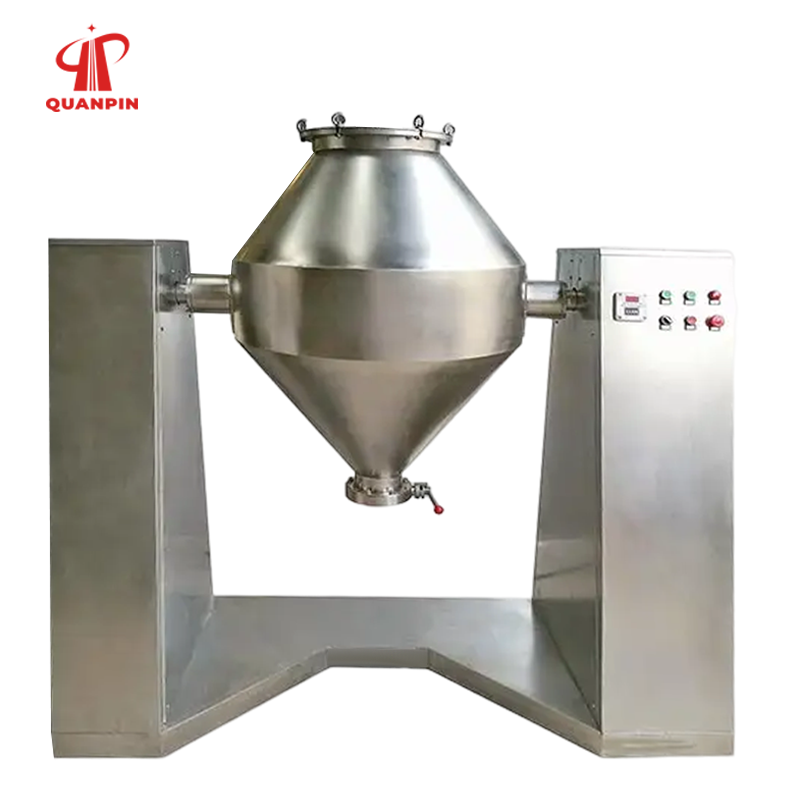
Assess the receiving geometry
A second question is whether the changed powder behaves appropriately in a particular discharge geometry.
An original lactose–cellulose excipient investigation combined flow measurements with shear and wall-friction assessments after colloidal-silica addition.
Its equipment-related calculations belong to that material and test basis. A reduced angle of repose alone cannot specify the outlet needed for another formulation.
Separate flow and compaction evidence
Changes affecting flow can also affect particle contacts relevant to compression.
An original ibuprofen glidant investigation examined surface-modified material and tablet tensile strength. The authors related the response to the properties of the added excipient and particle layer.
The preparation differs from ordinary tumbling. It does not establish that SZH blending creates the same surface structure or tablet outcome.
Evaluate Downstream Additive Effects Separately
A study of the full pressing sequence can distinguish additive effects beyond flow.
An original glidant-and-lubricant modeling investigation examined formulation and mixing variables across different compaction stages using experimental tablet data.
Its reduced-order models concern their tested materials and conditions. They are not transferable machine settings for a proposed mixer.
These studies identify several independent outcomes. Select the response that the actual development decision requires.
Define the Required Mixer Trial
A double cone powder mixer trial should define whether the question concerns additive dispersion, powder flow or downstream compaction.
The required evidence can include more than one response, but each needs its own measurement.
Investigate Different Responses
If flow improves without a change in composition uniformity, the observations address different attributes.
If one host responds while another does not, investigate their properties rather than increasing the additive indiscriminately.
If more glidant ceases to improve flow, retain that result. An additive response need not be monotonic.
If separate premixing performs differently, identify which host and additive combinations changed.
If tablet strength changes, investigate the compaction context instead of treating flow improvement as sufficient acceptance.
If two flow tests disagree, compare the deformation and consolidation conditions represented by each method.
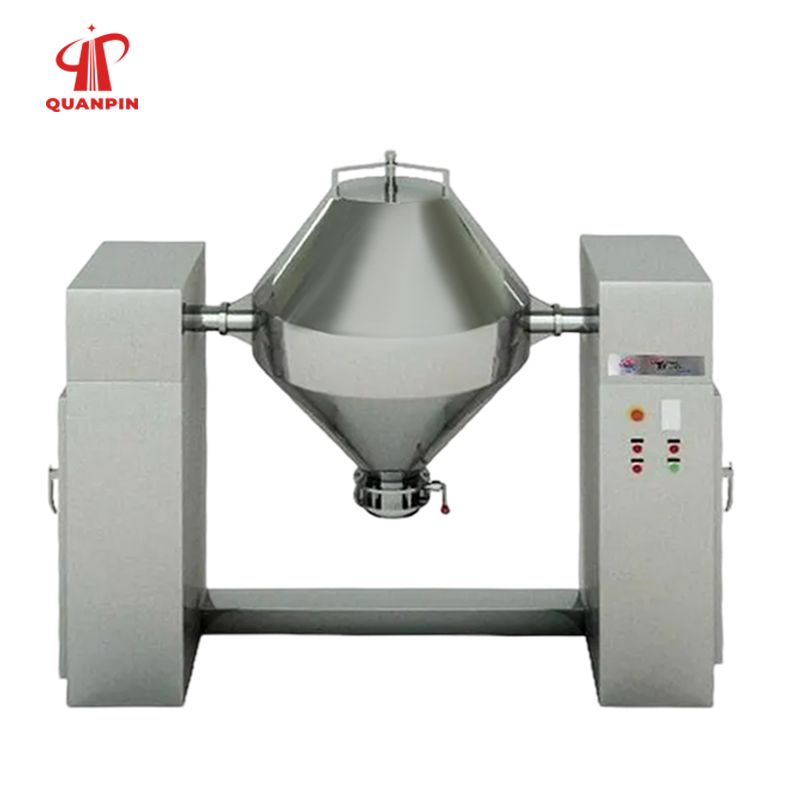
Prepare a Host-and-Glidant Enquiry
For a double cone tumble blender enquiry, identify the host fractions, glidant and intended addition route.
Agree which actual mixer trials and powder measurements will resolve the problem. Confirm any separate surface-treatment requirement.
Compare the Confirmed Scope
A double cone blender price comparison should retain the agreed material duty and trial scope.
The useful conclusion states which host response improved and which downstream questions remain untested.
Frequently Asked Questions
Does one glidant suit every host?
No. Different host powders can respond differently to the same glidant.
Does flow prove composition uniformity?
No. Powder flow and composition uniformity are different attributes.
Is two-step addition always better?
No. A benefit in one formulation does not establish a universal addition sequence.
Does more glidant always help?
No. The experimental response can level off or worsen outside a useful range.
Does tumbling reproduce surface treatment?
No. Specialized surface-treatment equipment and vessel tumbling impose different conditions.
What should the enquiry describe?
Identify the host, additive grade, amount, addition route and required flow or downstream measurement.
Discuss Your SZH Mixing Application
Discuss the material, processing objective and required trials with QUANPIN. Review the equipment information and the relevant industry applications, or send an enquiry through our contact page.
Email sales@qpdryer.com or stacie@qpdryer.com. Call +86 19850785582 or contact WhatsApp +86 15921493205 to discuss the proposed scope.
For process evaluation, consider the double-cone blender for gravity-driven blending in a rotating double cone. Confirm suitability with representative material, the required product properties and the proposed process conditions.