Ribbon Mixer for Seasoning Powders: Map Foreign-Material Controls around the Mixing Stage
By QUANPIN
A ribbon mixer proposal should show where foreign-material controls sit around the mixing operation. Blending compatible seasoning ingredients is a different function from detecting, removing or investigating an unwanted object.
Start the review with the actual ingredient route and identified hazards rather than assume that the mixer supplies every protective function in a food-powder line. Explore matching food applications.
Where Are the Foreign-Material Controls Located?
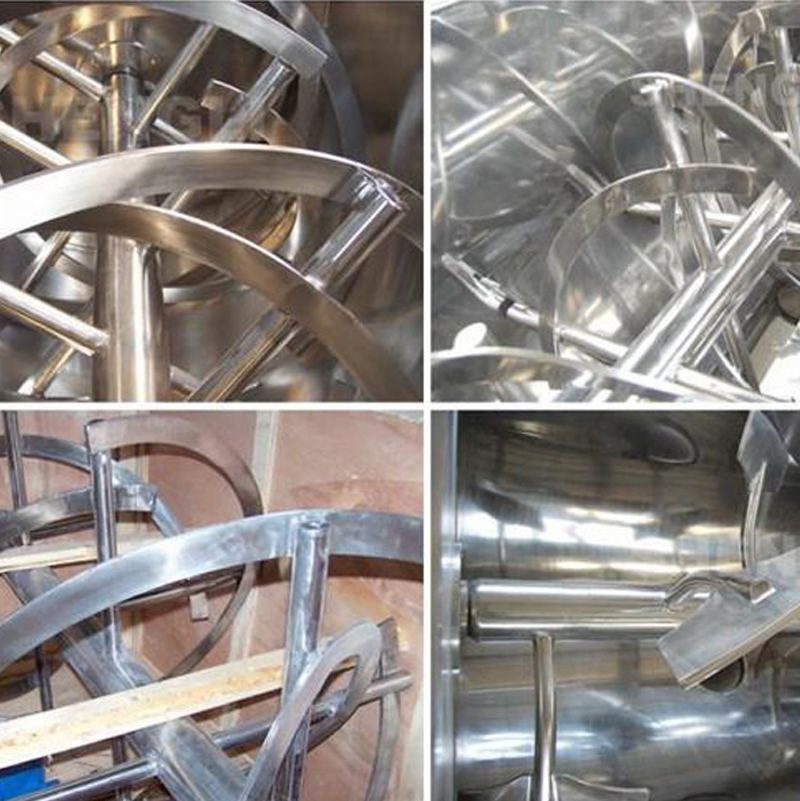
The WLDH ribbon blender circulates material through a trough using inner and outer helical ribbons.
That confirmed working principle does not establish an integrated sieve, magnet, metal detector or other unconfirmed inspection accessory.
Ribbon Mixing and Separate Protective Functions
A horizontal ribbon mixer enquiry should identify the physical controls proposed before charging and after discharge.
Keep the supply scope of each separate device understandable, including when the equipment or procedure is provided by the customer.
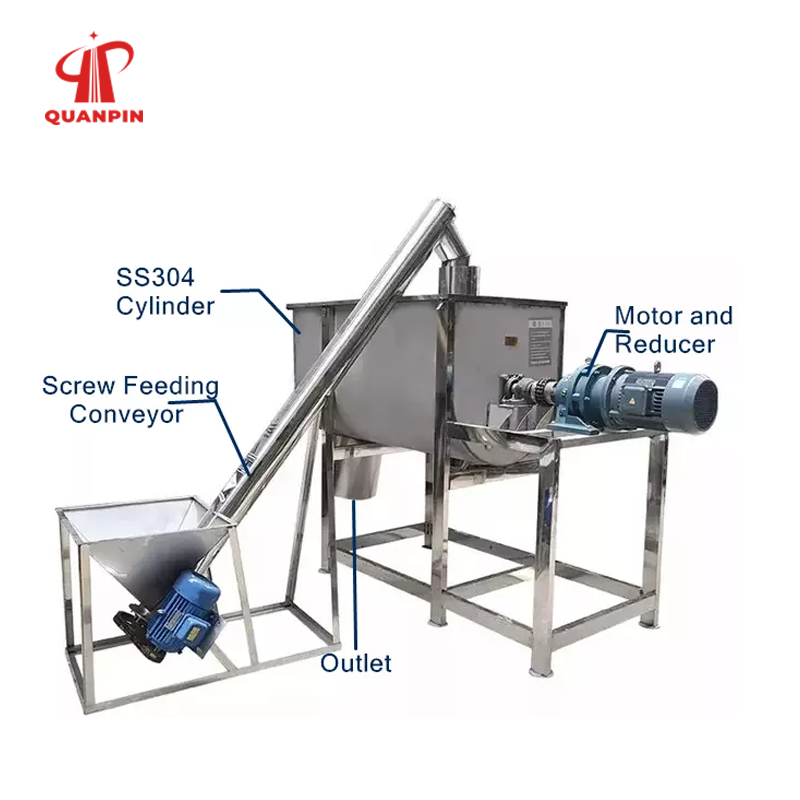
Five Steps to Map the Actual Food-Powder Route
Describe incoming ingredients
Describe the ingredients and actual incoming-material route.
Identify relevant concerns
Identify the relevant physical-contamination concerns.
Map proposed control boundaries
Map proposed checking, separation and receiving boundaries.
Assign responsibilities
Assign equipment and procedural responsibilities.
Review the actual findings
Review findings through the operation’s applicable food-safety arrangements.
Four Different Material and Control Activities
Ingredient inspection concerns the material received and its identified source.
A separation or detection activity concerns a particular device, material stream and stated function.
Mixing concerns the processing operation performed within the confirmed vessel.
A rejected-material decision concerns what happens to identified material after a finding and should not disappear from the process map.
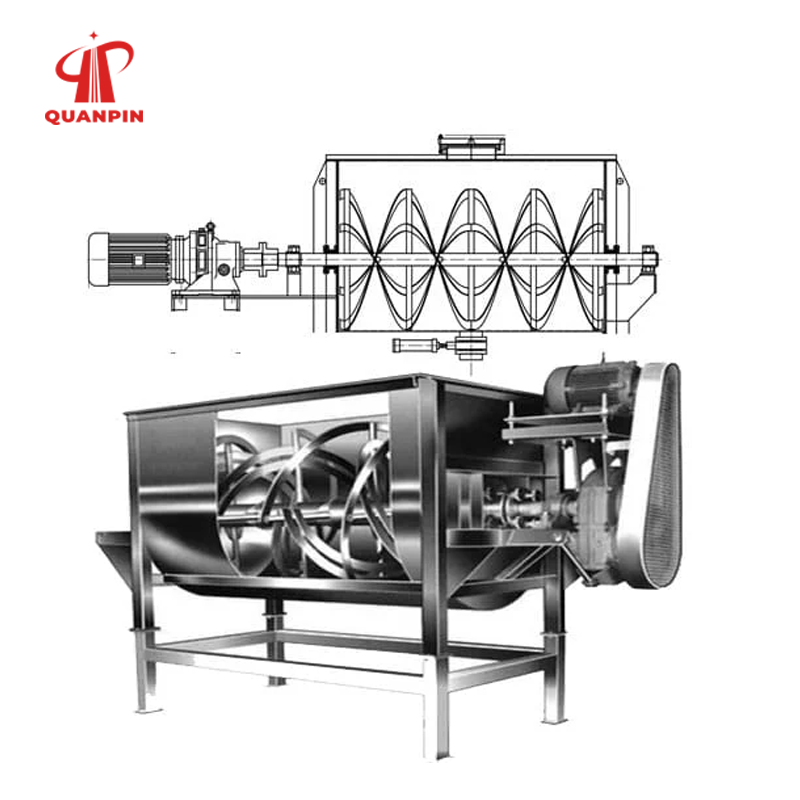
Mixer and Protective-Equipment Interfaces
Ingredient charging
The ingredient charging arrangement establishes the material-entry boundary.
Trough and ribbons
The trough and ribbons form part of the confirmed product-contact configuration.
Discharge connection
The discharge connection establishes the immediate material-exit point.
Separate protective devices
Separately proposed detection or separation equipment needs its own confirmed location and scope.
Collection and packing
External collection and packing introduce further contacts and handling responsibilities.
Inspection provisions
Inspection and maintenance provisions need review for the actual supplied assembly.
Interpreting the Actual Ingredient and Device Scope
Keep ingredient and device scope visible
A ribbon powder mixer food-safety discussion should preserve the actual ingredient forms and receiving conditions.
Different ingredients or supplied premixes may introduce different questions that a generic powder description does not resolve.
Do not present an accessory named on a proposal as an established detection result for every food matrix.
Separate contact suitability from object findings
If a separate control is proposed, request confirmation of its actual function and the product conditions it is intended to address.
An industrial ribbon blender does not by its model name establish a universal acceptable foreign-material limit.
Product-contact suitability also needs its own consideration; chemical transfer from a contact material is not the same as finding a detached physical object.
Preserve material disposition evidence
A detected object, a rejected portion and an investigation record should remain linked to their actual material boundary.
Food-defect action levels for specified circumstances should not be treated as general permission to introduce contamination.
The food operation should identify which preventive measures and evidence are appropriate for the real ingredients and process.
Food-Safety Evidence and Practical Limits
A mapped route can reveal a protective function assumed by one party but excluded from another party’s supply. The cited compliance policy concerns identified hard or sharp food hazards; it is not a universal acceptable-contamination specification for a seasoning recipe. See FDA compliance policy on hard or sharp foreign objects.
It can also distinguish an equipment-configuration question from the food operation’s material-disposition decision. Action levels for specified natural or unavoidable defects are not permission to introduce foreign material or a substitute for preventive controls. See FDA Food Defect Levels Handbook.
The map does not prove that any proposed control detects every object or makes the product safe. A foreign-material programme should identify relevant detection, removal and rejected-material responsibilities. See CFIA preventive-control programme approach.
The actual product, hazards, device configuration and relevant verification determine what the control can support.
Document Ingredients and Identified Physical Concerns
Record ingredient identity and the incoming-material route.
Describe the physical concerns identified for the actual process.
Control Records, Responsibilities and Safe Access
List proposed controls and their confirmed locations.
Assign supplier and customer responsibilities at the interfaces.
Preserve the observed finding and the affected-material identity.
Keep investigation and disposition decisions separate from unsupported equipment-performance assumptions.
Inspection, clearing or maintenance must follow the installation’s approved shutdown and safe-access procedures. Chemical transfer from a food-contact material is a different question from the presence of a detached physical object. See EFSA explanation of food-contact material migration.
Food-contact hygiene and sanitation remain relevant across every actual device and handling connection in the route.
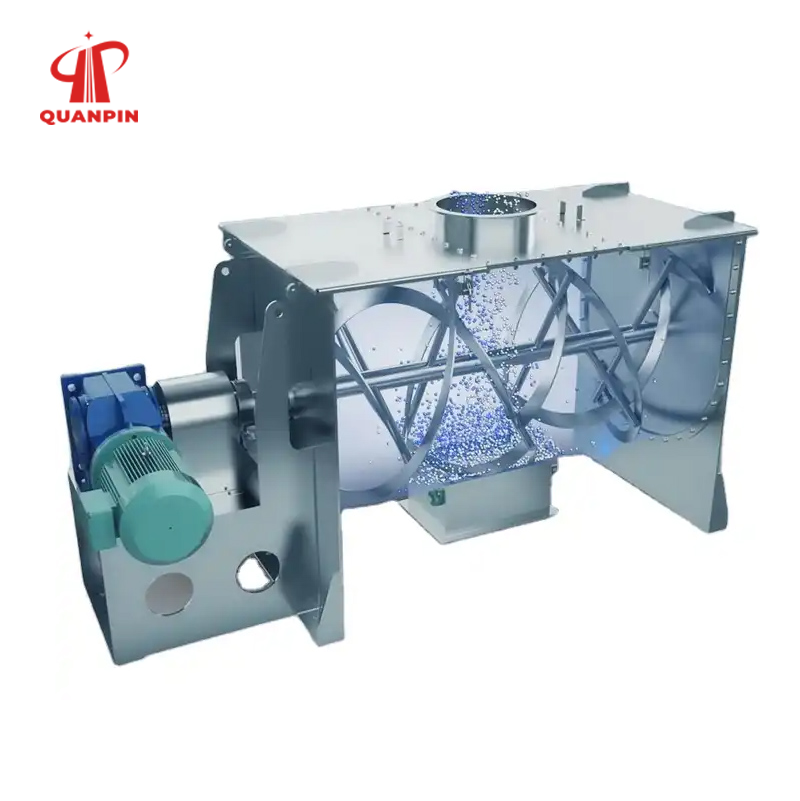
Provide QUANPIN with the Confirmed Line Interfaces
Send QUANPIN the mixing duty together with the proposed protective-equipment and receiving interfaces.
Ask for confirmation of included accessories without assuming that an illustrative line image defines the final supply scope. For food-powder operations within its scope, the guidance illustrates separate sieving, blending and subsequent foreign-material controls. See FSSAI food-supplement food-safety management guidance.
Retain the Mixing and Protective-Control Boundaries
The enquiry should distinguish the mixer’s confirmed mechanical function from controls requiring separate engineering and food-safety review.
Retain the agreed route and responsibilities alongside the actual equipment configuration and relevant product evidence.
Frequently Asked Questions
Does mixing include detection automatically?
A ribbon mixing function does not automatically include foreign-object detection.
What scope does a separate device need?
A separate device needs its own defined material stream and confirmed duty.
Are chemical transfer and physical objects the same?
Chemical transfer from a contact material differs from a detached physical-object finding.
Is an action level a general contamination allowance?
An applicable food-defect action level is not a universal contamination allowance.
Should rejected material remain identifiable?
Rejected material and its authorized disposition should remain identifiable.
What should the route enquiry map?
The enquiry should map ingredients, mixing, proposed controls, receiving boundaries and responsible parties.
Discuss Your Ribbon-Mixer Food-Powder Route with QUANPIN
Discuss the matching QUANPIN equipment with QUANPIN. Use the enquiry form or our contact page to describe the actual application.
Email sales@qpdryer.com or stacie@qpdryer.com. Call +86 19850785582, or contact us on WhatsApp: +86 15921493205.