Oscillating Granulator for Pharmaceuticals: Define the Feed-Preparation Boundary before Wet Sizing
By QUANPIN
An oscillating granulator wet-sizing trial begins with the prepared mass actually presented to the screen. Define that feed-preparation boundary before interpreting the size or appearance of the material leaving the machine.
The same formulation name does not establish that two prepared feeds have the same history or condition. Explore matching pharmaceutical applications.
What Prepared Material Reaches the Screen?
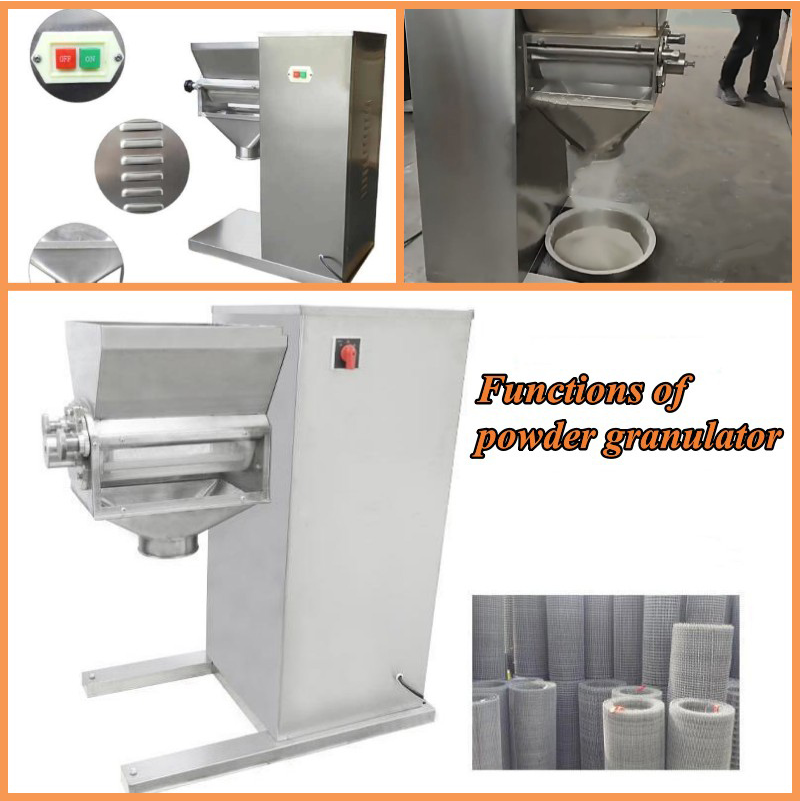
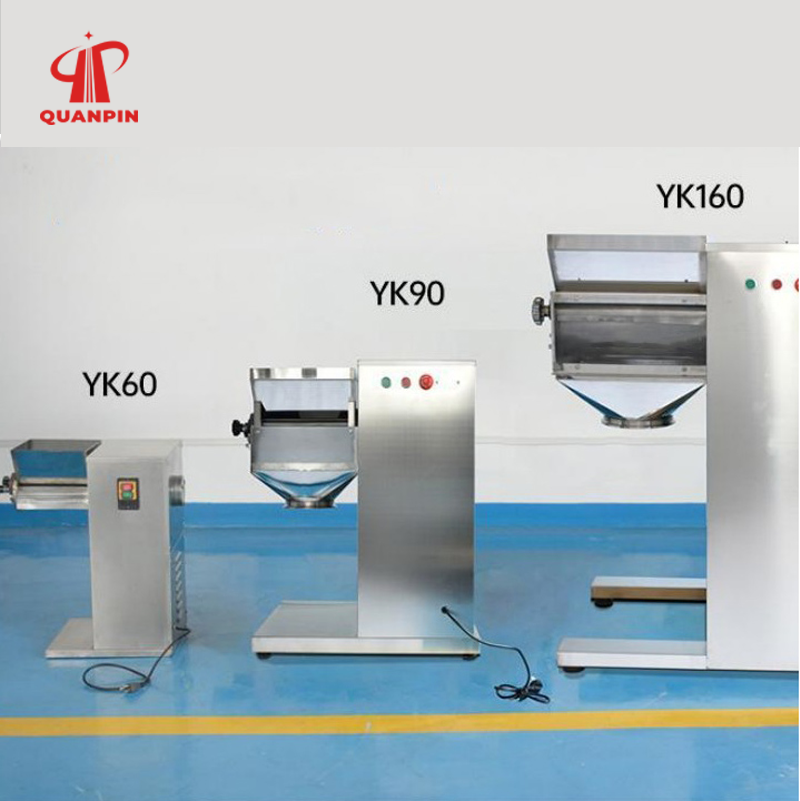
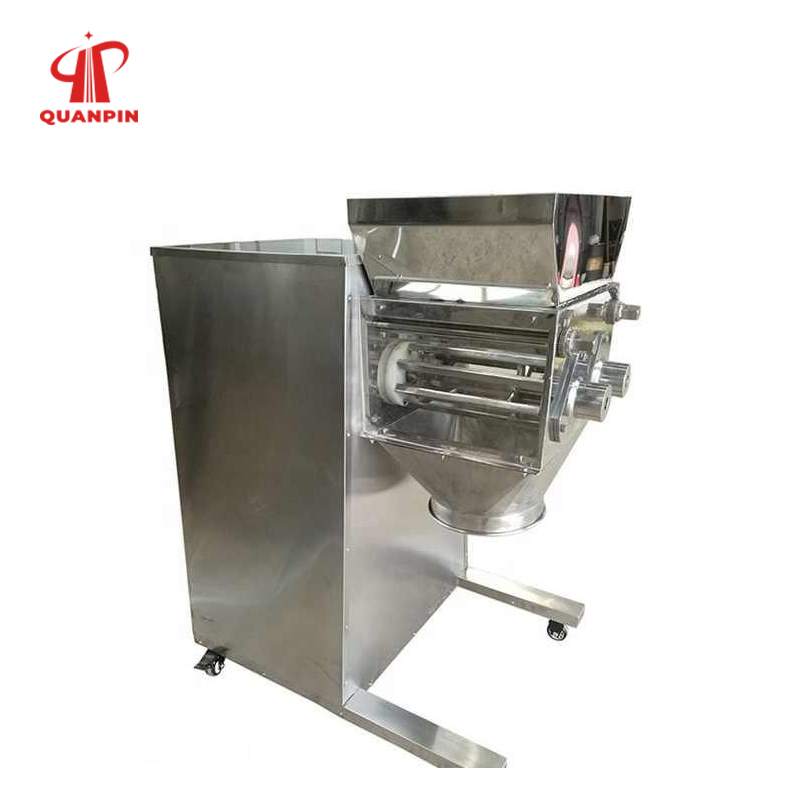
The YK oscillating granulator machine uses a reciprocating rotor to work compatible material against a screen.
Suitable wet masses form granules as they pass through the reviewed arrangement; the actual feed determines whether the proposed duty is suitable. Use product-specific development knowledge to justify the attributes being examined. See FDA ICH Q8 pharmaceutical development.
YK Wet-Sizing Principle and Upstream Scope
A swing granulator enquiry should describe the upstream preparation operations included in the study.
Do not assume that the YK supplies an unconfirmed mixing, binder-preparation or conditioning function.
Five Steps to Define the Feed Boundary
Define the formulation purpose
Identify the intended pharmaceutical formulation and sizing purpose.
Describe wet-mass preparation
Describe the operations that create the wet feed.
Identify the actual inlet condition
State the actual condition at the granulator inlet.
Confirm the working assembly
Confirm the working assembly and collection boundary.
Assess the next process
Assess the sized material and its intended next process.
Four Stages of the Feed Description
Powder and binder preparation describe the inputs to the upstream process.
Wet-mass formation describes the operation that creates the material intended for sizing.
Any holding or conditioning step adds a history that should remain identifiable.
The inlet description states what actually reached the YK rather than only what the preparation instruction intended.
Preparation and Wet-Sizing Interfaces
Upstream mixing
Upstream mixing equipment belongs to the supply scope only when expressly confirmed.
Transfer contacts
Transfer vessels or contacts define the route from preparation to sizing.
YK feed arrangement
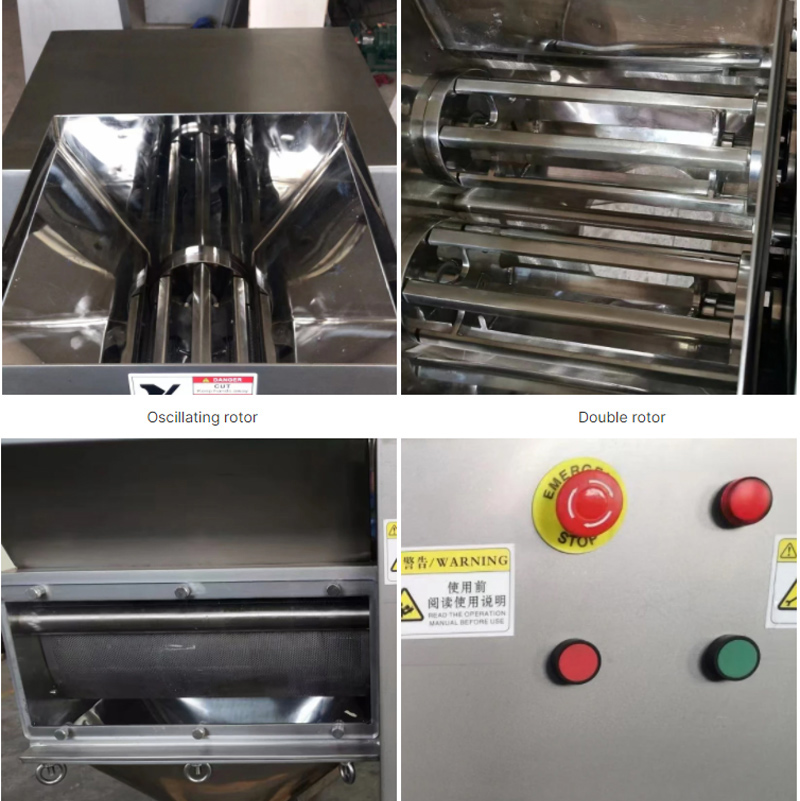
The YK feed arrangement presents the prepared material to the working assembly.
Reciprocating rotor
The reciprocating rotor provides the reviewed action against the screen.
Fitted screen
The fitted screen belongs to the actual configuration record.
Collection and onward transfer
Collection and downstream transfer establish where the sized material is observed or sampled.
Comparing the Actual Inlet Conditions
Preserve preparation history
A pharmaceutical granulator comparison should preserve both the preparation method and the actual feed history.
For wet granulation, explain whether a trial sample represents freshly prepared material or a separately held portion.
Do not silently treat different preparation or holding histories as an identical feed condition.
Identify measured feed properties
Describe relevant observed handling behavior without substituting an unsupported universal wet-mass consistency value.
Keep any measured properties attached to their actual method and collection point.
An inlet observation can help investigate a sizing difference without proving its cause on its own.
Track the material state after sizing
Compare the output using representative samples and an appropriate product method.
If later drying or another operation occurs before analysis, identify the resulting new material state.
The formulation-specific acceptance requirements should determine which preparation differences need further development review.
Pharmaceutical Granules and Later Testing
Defining the inlet boundary can prevent an upstream preparation change from being mistaken for an unchanged sizing trial.
It also clarifies where the granulator’s confirmed function begins within the proposed route. A development comparison should not be presented as complete validation of an untested production process. See FDA process validation guidance.
The boundary description does not establish a universal wet-feed specification or processing setting.
Actual material compatibility and product acceptance need representative formulation evidence.
Document Formulation Inputs and Wet-Mass Preparation
Identify the powder and binder references used upstream.
Describe how the wet mass was produced. Assess relevant quality risks using the actual material and process context. See FDA ICH Q9 quality risk management.
Feed Records, Configuration and Safe Handling
Record any holding, conditioning or transfer step actually performed.
State the feed condition and any measured properties with their methods.
Identify the rotor, screen and proposed collection arrangement.
Preserve the downstream route and the material state used for acceptance tests. Interpret measurements through process understanding rather than treating an isolated instrument reading as product acceptance. See FDA process analytical technology framework.
Preparation, transfer and wet-sizing activities must follow the relevant safe operating and material-control procedures.
Review cleaning and exposure across all actual product-contact stages rather than limiting the discussion to the screen.
Provide QUANPIN with the Wet-Feed Scope
Send QUANPIN the upstream preparation description and the actual material presented for sizing.
Ask for confirmation of the YK configuration and any separately proposed preparation or transfer equipment.
Retain the Preparation and Sizing Evidence
A useful enquiry should connect the sizing purpose to an identifiable inlet condition.
Retain the preparation record, configured assembly and observed output together for further review. Retain knowledge and manage adopted process changes through the pharmaceutical quality system. See FDA ICH Q10 pharmaceutical quality system.
Frequently Asked Questions
Does a formulation name describe the full feed?
A formulation name alone does not describe the actual prepared feed.
Is preparation automatically included?
Upstream mixing or binder preparation is not automatically included with the YK.
Should holding history be recorded?
A held sample and freshly prepared feed can have different histories that should remain visible.
Does an inlet observation prove causation?
An observed feed condition can support investigation without independently establishing the cause of a result.
Are wet and dried results the same boundary?
Results obtained after drying describe a different material state from the immediate wet-sizing output.
What should the wet-feed enquiry identify?
The enquiry should identify preparation, transfer, actual inlet condition and the intended subsequent operation.
Discuss Your Oscillating-Granulator Application with QUANPIN
Discuss the matching QUANPIN equipment with QUANPIN. Use the enquiry form or our contact page to describe the actual application.
Email sales@qpdryer.com or stacie@qpdryer.com. Call +86 19850785582, or contact us on WhatsApp: +86 15921493205.