Oscillating Granulator Development: Why Compression Energy Is Not Screen Throughput
By QUANPIN
Compression energy measures work applied during a defined deformation test. Screen throughput measures material passing a particular arrangement over time. An oscillating granulator investigation should not treat these quantities as interchangeable simply because both change with wet-mass condition.
This pharmaceutical granulator guide asks a narrow development question: which conclusions can a compaction test, mixer torque rheometer or extrusion experiment support about a proposed screen-passage measurement? Each instrument imposes its own motion, geometry and observation.
Distinguish Material Resistance from Passage Rate
A compaction measurement describes resistance during imposed loading. Its integrated force-displacement response can express work, whereas a passage rate requires collected mass and elapsed operating time. One cannot be converted into the other by changing the label on a graph.
The practical issue for a swing granulator is whether a laboratory descriptor predicts an independently measured response on the proposed equipment. That relationship must be demonstrated rather than assumed from a similarly named wet-granulation process.
Three Measurements with Different Meanings
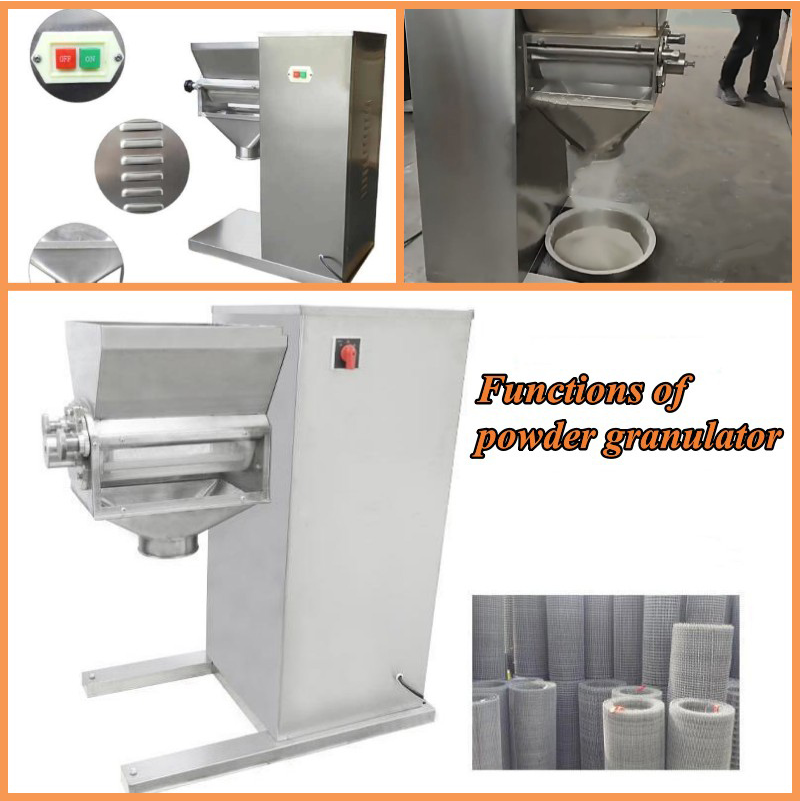
Identify the actual research and production apparatus separately. A compaction tester compresses a specimen, an extruder forces material through its own die, and a screened granulator applies a different deformation history.
State the specimen geometry and contact arrangement used in the mechanical test. A reported force belongs to that arrangement; changing the contacted area changes the interpretation of an unchanged numerical force.
Specify Five Measurement Definitions
Mechanical test geometry
Keep displacement or loading history with the result. An endpoint force cannot reconstruct the entire deformation response, particularly when two specimens resist differently during earlier loading.
Loading and deformation history
Describe torque as a response in the particular mixing arrangement. Include how the measurement is taken and interpreted instead of calling every available motor indication a rheological measurement.
Torque measurement basis
Define passage rate using an identified collected mass and elapsed interval. Specify whether interruptions are included. This is an equipment response, distinct from a compression-energy descriptor of a small specimen.
Screen passage rate
Keep specimen condition comparable across the instruments being compared. Differences introduced before measurement can otherwise be mistaken for disagreement between mechanical methods.
Specimen condition
Pressure transmission is another observable, distinct from the total work of compression. A wet mass can redistribute water while it deforms, so the observed mechanical response needs interpretation beyond a single consistency label.
Interpret Compaction and Water Distribution
An original water-dispersion and pressure-transmission experiment used compaction measurements alongside a separate extrusion process. It provides a way to investigate wet-mass mechanics, not a conversion from laboratory force to YK throughput.
Keep the tested water-dispersion mechanism tied to its preparation and loading conditions. A pressure-transmission result alone does not identify how much material an oscillating screen will collect during a working interval.
Interpret a mechanical descriptor by asking what physically produced it. Resistive deformation, rearrangement and liquid redistribution need not contribute in the same proportions in every formulation or apparatus.
Initial contact can influence the beginning of a compression response. Preserve the measurement definition rather than comparing curves whose starting conditions are unspecified.
Read the Compression Curve in Context
Initial specimen contact
Progressive deformation produces a curve rather than only a final number. Two preparations can have different curve shapes even when one selected point appears similar.
Progressive deformation
Pressure transmitted through the specimen and force applied at the loading surface answer different questions. Retain the measurement location when describing either result.
Pressure transmission
An energy calculation summarizes work over the defined deformation interval. Its meaning depends on the measurement method and reporting basis, which should accompany any comparison.
Energy calculation
Extrusion then applies a different passage geometry. Any relationship between compression results and extrusion response is an experimental relationship established for the tested combination.
Separate extrusion response
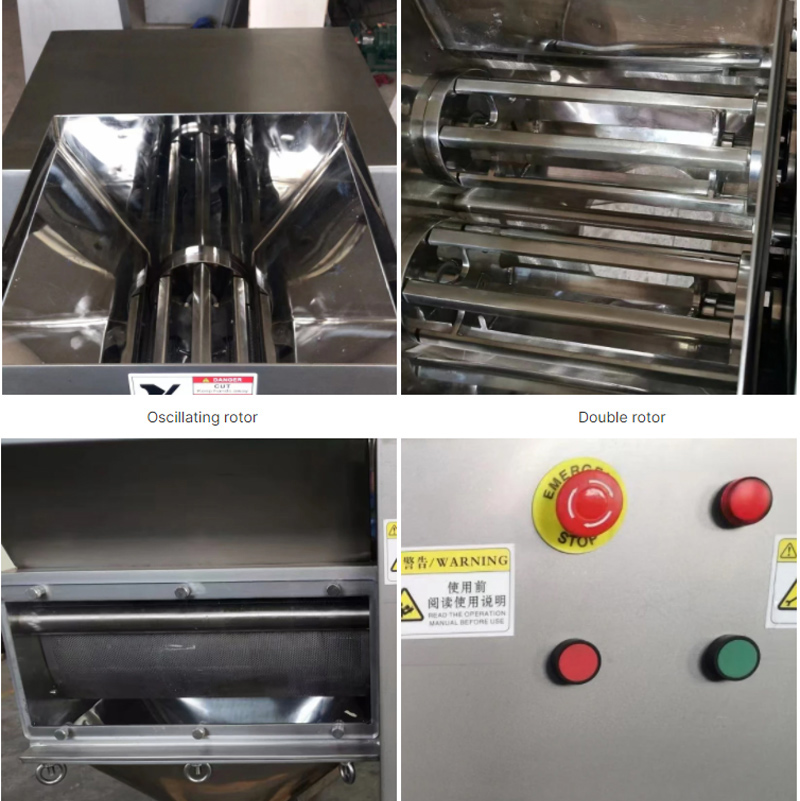
An actual screened output provides the independent response needed for the equipment question. Compression measurements may help explain that output, but cannot replace observing it.
Actual screened output
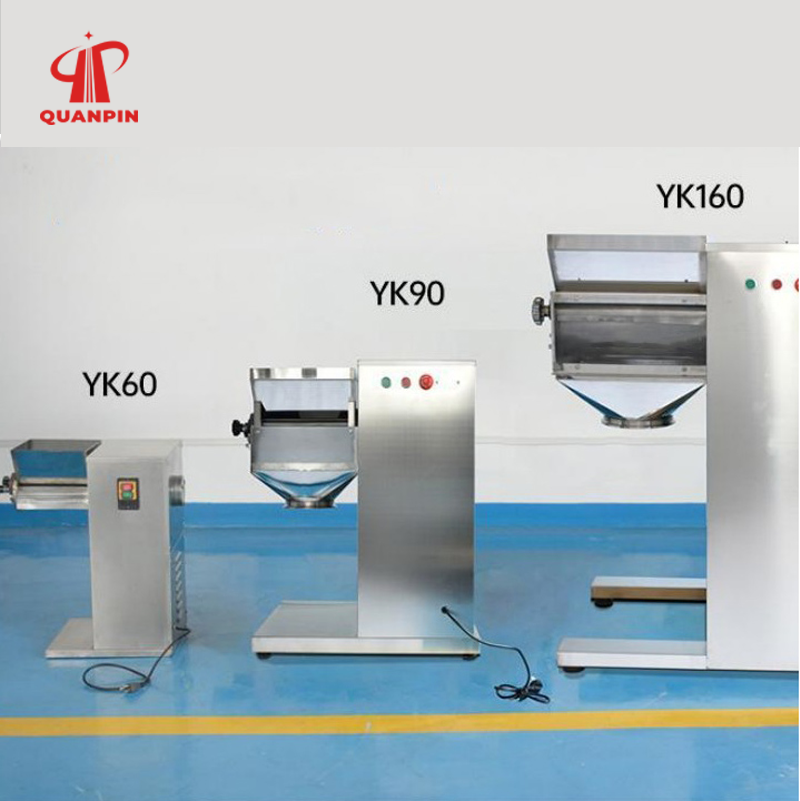
An oscillating granulator machine evaluation becomes more informative when the laboratory descriptor and the screen response remain separate columns in the analysis. An apparent correlation can then be tested rather than built into the definitions.
Compare Research Instruments without Equating Them
Compare like measurements
Compare repeated mechanical tests before treating a small change as material behaviour. Measurement scatter limits how confidently one can distinguish preparations using the proposed descriptor.
Plot the independently observed passage response against the chosen material descriptor only after confirming comparable specimen condition. A relationship may be useful locally without remaining valid outside the tested formulation range.
Wet-kneading research has examined liquid distribution and compression behaviour before a separate extrusion step. Such experiments connect a preparation mechanism to an instrument response without establishing equivalence between screened machines.
Identify correlation scope
The original kneading and dome-extrusion investigation related its material measurements to later pellet properties. Those properties and the study geometry define the scope of its demonstrated relationships.
A pellet-property correlation is not a screen-capacity equation. Preserve the measured dependent variable: a relationship involving later pellet characteristics cannot silently become a prediction of collected wet mass per unit time.
Compression tests can discriminate formulations under specified loading. Whether their ranking also predicts passage depends on the competing mechanisms active in the receiving apparatus.
Avoid a universal conversion
An original compression and extrusion comparison examined wet masses using different extrusion arrangements. Its apparatus comparison makes the limitation of a universal material-to-machine conversion particularly relevant.
If a descriptor performs differently across two research extruders, preserve that difference in the interpretation. Do not pool the responses into a single supposed granulator property.
For the proposed application, test the material descriptor against the actual response of interest. Record where a relationship fails as well as where it appears useful.
What an Extrusion Correlation Demonstrates
Compression energy is attractive because it summarizes a mechanical response. Its convenience does not establish that the same deformation mechanism controls every subsequent passage operation.
An original wet-powder compression-energy experiment compared lactose-based preparations and related the mechanical measure to extrusion energy and studied granule properties. These were experimentally assessed responses in that system.
The study supports investigating a relationship between distinct measurements. It does not supply a universal conversion coefficient, a YK operating limit or a guaranteed capacity for another pharmaceutical formulation.
Torque rheometry adds a different deformation mode. It can reveal aspects of a kneaded wet mass that are not captured by another available machine indication.
What Torque Rheometry Can Resolve
An original mixer-torque rheometry investigation distinguished kneading states that amperage did not distinguish in its high-shear experiments. The researchers also examined subsequent product measurements.
That comparison explains why instrument choice matters. Its later dissolution findings do not establish screen throughput, and high-shear mixer amperage should not be described as the same measurement as a separate torque rheometer.
Investigate Disagreement between Metrics
When compression energy changes but screened output does not, first examine whether the tested material property controls the actual passage mechanism. A real descriptor change need not force every downstream response to change.
When torque and compression rankings differ, preserve both results. They apply different deformations; disagreement may identify a limitation of a proposed common consistency index rather than an invalid instrument.
Design a wet granulation study with paired specimens and independently measured outcomes. Define which laboratory quantity is intended to explain which equipment response before selecting a statistical comparison.
Keep the comparison range explicit. A relationship within one formulation family and preparation range does not establish prediction for another liquid, filler or loading history.
Use an independent check where the study design allows it. Reproducing the same fitted observations is weaker evidence of prediction than testing a new preparation against a previously established relationship.
Distinguish explanatory investigation from a production decision. A useful experimental association still requires an appropriate assessment before it becomes a process-control or acceptance criterion.
Design a Paired Measurement Study
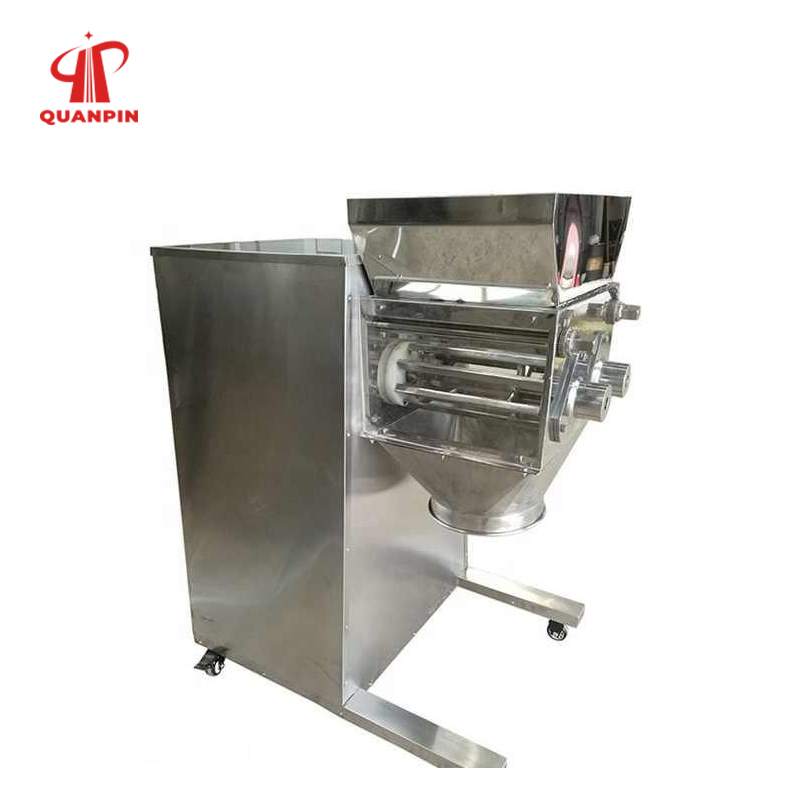
Ask QUANPIN which actual screen-passage observations can be collected for the proposed duty. State the material descriptor you intend to compare, without presenting published extrusion results as supplied-machine performance.
Agree who will perform the laboratory mechanical tests and who will measure screened output. Compare the linked results only after their methods, units and specimen identities are reconciled.
Turn Measurements into a Supplier Question
Discuss your measurement question with QUANPIN: identify the wet mass, the laboratory descriptor and the independent screen response you need to investigate. Confirm the actual equipment and available trial arrangements.
A useful conclusion states what the measurement predicts, what it does not predict and where the demonstrated relationship ends. That makes the research relevant without treating different instruments as interchangeable.
Frequently Asked Questions
Is compression energy throughput?
No. Compression energy describes work under a defined deformation. Throughput describes mass passage over time in the actual equipment; an experimentally demonstrated relationship is needed to connect them.
Does a higher torque mean faster passage?
Not necessarily. Mixer torque belongs to its own deformation and geometry. A higher reading does not independently establish either a greater or a smaller passage rate through another arrangement.
Can extrusion pressure specify YK performance?
No. An extrusion-pressure relationship applies to the studied die and operating arrangement. It cannot directly specify the capacity or operating limits of an oscillating granulator.
Why retain the full force curve?
The curve retains the sequence of mechanical response that a single final force or integrated value can conceal. Method and loading interval remain necessary for meaningful comparison.
Can later dissolution validate screen capacity?
No. Dissolution is a later product measurement. It may be relevant to pharmaceutical development, but it is a different dependent variable from screen-passage rate.
What would establish a useful correlation?
Paired material descriptors and independently measured passage responses, collected under a defined design, can establish a relationship within the tested range. Its prediction and applicability need separate assessment.
Discuss Measurement Requirements with QUANPIN
Discuss the confirmed YK Oscillating Granulator application with QUANPIN. Use the enquiry form or the contact page to describe your project.
Email sales@qpdryer.com or stacie@qpdryer.com. Call +86 19850785582, or contact us on WhatsApp: +86 15921493205.