Extrusion Granulator Trials: Connect Extrudate Geometry with Later Pellet-Surface Observations
By QUANPIN
A pharmaceutical extrusion trial may produce strands that undergo additional processing before their surface or shape is assessed. Identify the stage of each observation before connecting it to equipment geometry.
An Extrusion Granulator enquiry should describe the intended extrudate and its next handling step. A photograph of a final pellet cannot independently establish what happened at the extrusion outlet.
Identify Which Stage Produced the Observation
Extrudate diameter describes one dimension of an intermediate material. Final pellet size and shape describe material that may already have experienced breakage, rounding and drying.
Keep those observations attached to their actual specimens. Do not label a final-pellet measurement as an extrudate property simply because both specimens came from the same trial.
Distinguish Diameter, Shape and Surface Texture
Surface texture is another attribute with its own measurement method. A visually smooth particle and a measured surface-roughness result are different forms of evidence.
The proposed granulation equipment should be assessed against the actual process duty. Extrusion, spheronisation and drying are distinct operations even when a project connects them.
Record Five Comparison Inputs
Formulation identity
Record the formulation revision and ingredient condition. A different excipient grade can alter interpretation independently of an equipment change.
Wet-mass condition
Describe the wet mass presented to the extruder and its preparation history. Preserve relevant observations without inventing a universal moisture target.
Extrusion configuration
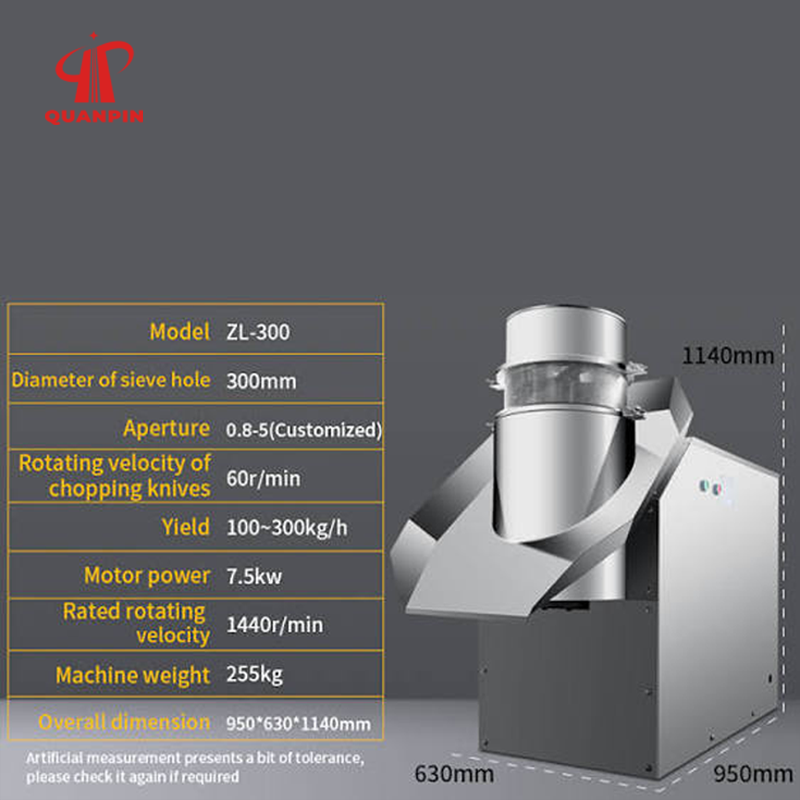
Identify the installed extrusion configuration. Ask QUANPIN to confirm which components and interfaces belong to the supplied arrangement.
Downstream arrangement
Record whether later spheronisation is part of the trial. Identify that equipment and its actual configuration separately from the extruder.
Evaluation method
Specify the method used to evaluate size, shape or texture. Retain the specimen identity and processing stage beside each result.
Read Starting-Material Research Carefully
Original research investigated how starting-material particle size affected the roughness of pellets produced by extrusion-spheronisation. It used optical interferometry and microscopy rather than assuming roughness from size alone. See research on starting materials and pellet surface roughness.
The study also described different behaviour among its investigated excipients. A common formulation label therefore cannot replace the actual ingredient-grade and processing information.
These observations concern a particular experimental system. They do not establish that a QUANPIN pharmaceutical granulator produces a specified surface roughness with every material.
A useful comparison retains both the starting material and the sequence of processing. Otherwise an apparent equipment effect may include an unrecorded formulation difference.
Follow Six Process Boundaries
Wet-mass preparation
At wet-mass preparation, retain the actual material identity and preparation record. The extrusion specimen should remain traceable to that input.
Extrusion
During extrusion, record the supplied configuration and the agreed observations. A nominal opening description does not establish all dimensions relevant to the actual process.
Extrudate collection
At collection, identify the extrudate specimen and its handling. Keep photographs or measurements linked to the collection event.
Transfer to the next stage
At transfer, document any waiting period or handling change relevant to the trial. The material entering the next operation may differ from a freshly collected specimen.
Spheronisation
During spheronisation, identify that operation as a separate stage. It should not be described as an automatic function of a JZL extrusion unit.
Final evaluation
At final evaluation, identify whether the specimen is wet, rounded or dried. Measurements taken at different stages should remain distinguishable.
Evaluate Geometry within the Actual Arrangement
Describe the actual geometry
Original research compared spheroniser plate protuberance sizes and shapes while retaining the same groove-line arrangement. It also compared extrudate sizes and assessed several resulting pellet attributes. See original research on plate features and pellet observations.
A spheroniser plate belongs to downstream equipment, not the extrusion die. Preserve that distinction when discussing a proposed change.
These experiments examined interacting material and downstream-equipment conditions. They do not establish one geometric feature as the sole cause of every final pellet attribute.
Preserve the formulation context
For a granulation and drying line enquiry, identify who supplies each operation. A connected process proposal still needs explicit interfaces and responsibilities.
Original experiments systematically compared extrudate and plate-protuberance dimensions using a defined cellulose-water paste. They assessed size, shape, mechanical and surface observations. See the authors’ research on extrudate and plate geometry.
Those experiments provide a framework for asking about interacting dimensions. They do not supply an optimised configuration for a different pharmaceutical formulation.
Keep equipment responsibilities clear
Do not attribute a difference solely to an opening diameter when other material or operating conditions also changed. Identify the actual comparison before drawing a mechanism-based conclusion.
A supplier proposal should state which features are confirmed and which need trials. Research apparatus dimensions are not substitute specifications for the proposed supply.
Retain unresolved questions in the project record. A clearly defined test can address them more effectively than an unsupported guarantee based on a familiar machine name.
Consider the Breakage Stage
An original Cambridge modelling study examined simultaneous size and shape evolution during the breakage stage of spheronisation. It analysed images of extrudate segments and related breakage and rounding within its studied system. See original research on extrudate breakage and rounding.
This illustrates why initial strand geometry and later particle observations are connected through a process. It does not establish that a final pellet retains a simple one-to-one relationship with the original strand.
Keep the limits of a model visible. Its material representation and validation conditions determine which questions its predictions can reasonably inform.
Do not treat model agreement as a certificate for QUANPIN equipment. Representative material evidence and configuration confirmation remain separate requirements.
Keep Surface Measurement Explicit
Original nicotinamide-pellet research evaluated extrusion and spheronisation factors in separate experimental designs, with roundness and roughness among the responses. See research separating extrusion and spheronisation process effects.
The study supports treating these stages and response measurements explicitly. Its formulation and fitted relationships should not be transferred as operating instructions for another product.
Investigate Differences before Assigning a Cause
When final surfaces differ, retain evidence from the intermediate stages where available. The investigation should distinguish a proposed explanation from an established cause.
Check whether starting material, handling, drying or measurement changed alongside geometry. Those differences can affect the interpretation of a simple comparison.
Use the agreed safe sampling arrangements for each stage. Do not open operating machinery or improvise a route to inspect extrudates.
The actual material hazards and cleaning requirements remain part of the equipment review. This educational comparison specifies no protective-system modifications.
Provide QUANPIN with the formulation family, intended wet granulation route, extrusion objective and any later rounding or drying stages. Describe what the trial must establish.
Ask for confirmation of the supplied configuration and the division of responsibilities. Identify who prepares specimens, measures attributes and reviews acceptance.
Prepare an Extrusion Trial Enquiry
Retain the specimen history, images and analytical reports together. A reviewer should be able to identify which process stage produced each observation.
State remaining uncertainties before selecting a configuration. An evidence-based proposal explains what is known without implying that geometry alone guarantees product quality.
Retain the Complete Evidence Chain
Discuss the intended extrusion duty through the verified product and contact links below. Explain which intermediate and final observations the project needs to establish.
A useful evaluation connects extrusion geometry with material history and downstream evidence. It preserves those links without reducing every product observation to a single equipment dimension.
Frequently Asked Questions
Does extrusion alone produce spherical pellets?
Not necessarily. Extrusion forms an intermediate extrudate; a separate operation may be required for the intended rounded product. Confirm the actual process scope.
Does a smooth photograph establish low roughness?
No. A photograph records appearance under its imaging conditions. Quantitative surface evaluation requires a suitable defined method and representative specimens.
Can die geometry determine every downstream result?
No. Formulation, material condition and later processing can also matter. The actual comparison must support any claimed cause.
Are size and roundness the same attribute?
No. Size and roundness are distinct attributes. An assessment should name the property and method rather than treating all particle descriptions as interchangeable.
Can a research formulation define operating settings?
No. Published settings and relationships apply to the investigated arrangement. Another formulation and equipment configuration require an appropriate applicability review.
What should an enquiry contain?
Provide the material identity, desired intermediate output, downstream stages and required tests. Include known restrictions and clearly assigned trial responsibilities.
Discuss Your Pharmaceutical Extrusion Duty
Discuss the QUANPIN JZL extrusion granulator with QUANPIN. Use our contact page or the enquiry form to explain the intended material-processing application.
Email sales@qpdryer.com or stacie@qpdryer.com. Call +86 19850785582, or contact us on WhatsApp: +86 15921493205.