Oil Spray Drying: Interpret Peroxide Value Alongside Secondary Oxidation Evidence
By QUANPIN
A spray-dried oil powder can have high encapsulation efficiency while still developing oxidation products.
For a centrifugal spray dryer, compare peroxide results with an appropriate secondary oxidation measurement. A single low reading cannot describe every stage of deterioration or establish a storage-life claim.
What Does Each Oxidation Measurement Establish?
Peroxide value describes primary oxidation products under a specified analytical method. It is a chemical result, distinct from how much oil the powder contains.
Secondary oxidation measurements investigate different products. Define the assay and sample basis rather than treating every oxidation index as interchangeable.
How Does LPG Drying Relate to Oil Encapsulation?
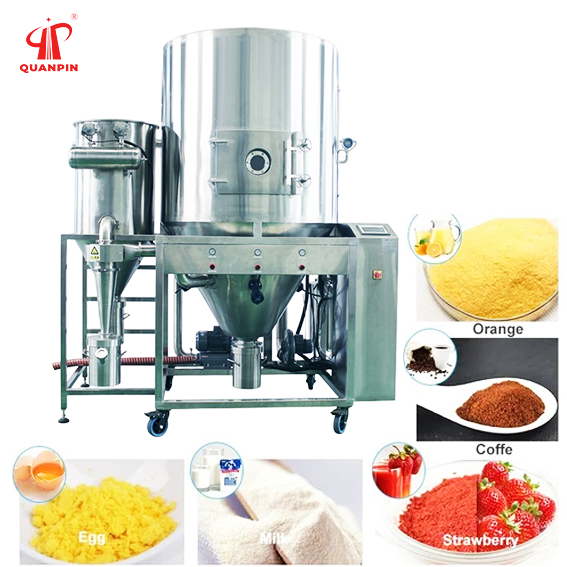
The LPG high speed centrifugal spray dryer converts suitable prepared emulsions into powder through atomization and water evaporation. Encapsulation depends on the actual feed and resulting particle structure.
A centrifugal spray dryer working principle does not predict an oil powder’s storage stability. Formulation, upstream preparation, collection and storage all belong in the investigation.
Which Five Inputs Make Results Comparable?
Initial oil
Identify the oil and its initial condition.
Wall formulation
Record wall materials and oil loading.
Feed preparation
Describe emulsification and holding.
Reporting basis
Define the analytical extraction and reporting units.
Matched specimens
Keep matched specimens from the same batch.
Why Follow More Than One Chemical Response?
A flaxseed oil experiment studied spray-dried flaxseed oil formulations containing oil cake extract, measuring peroxide value and TBARS during refrigerated storage.
The experiment also followed fatty acid changes. Its multiple measurements show why an antioxidant-containing formulation still requires more than one chemical observation.
The authors’ findings concern their extract, oil loading and storage conditions. They do not establish a universal antioxidant dose for other oil powders.
For a proposed formulation, define which comparison is being made before changing the dryer: initial oxidation, wall formulation, or the subsequent storage response.
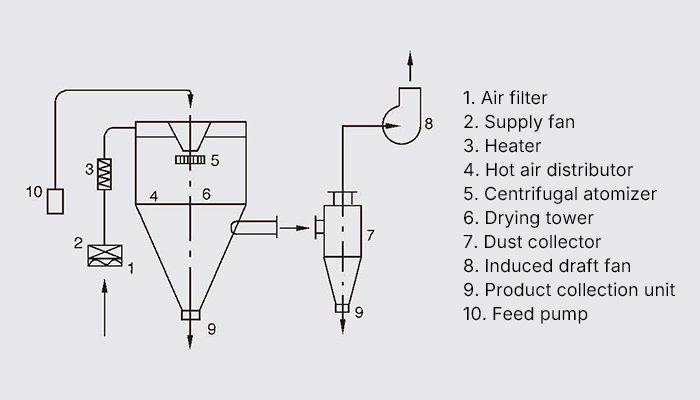
Which Six Stages Need Separate Records?
Starting material
Measure the starting oil alongside the finished powder. Without a baseline, processing and inherited deterioration are difficult to separate.
Emulsification
Keep a record of emulsion preparation.
Drying
Document the trial’s drying measurements and their locations. Do not substitute a single air temperature for the entire exposure history.
Collection
Separate fresh collected powder from deposits recovered later. Their residence and handling histories may differ substantially.
Packaging
Use comparable packaging and headspace conditions for storage comparisons.
Sampling intervals
Choose sampling intervals that answer the intended storage question.
How Do Efficiency and Oxidation Differ?
Retention is not stability
An original fish-oil study compared fish-oil encapsulation approaches and also tested capsule-fortified salad dressings. High encapsulation efficiency did not identify the least oxidized capsules across all approaches.
That study included spray drying and electrospraying assisted by pressurized gas. These are different processes; the comparison does not imply that LPG equipment provides electrospraying.
Its useful lesson is analytical: oil retention and oxidation resistance are separate responses. The intended food matrix can also need its own examination.
Operational assay definitions
Encapsulation efficiency describes a retained or protected fraction according to the extraction procedure used.
An extraction method may not isolate precisely the same oil population as another method.
A powder can retain oil efficiently while that oil changes chemically. Keep efficiency and oxidation results in separate acceptance fields.
Paired oxidation trends
Peroxide and secondary-product measurements belong to the same storage timeline. Interpret their trends together rather than selecting whichever value appears most favorable.
A change in a secondary marker requires the same attention to method suitability and interference as the primary assay.
If the two measurements diverge, report the disagreement. It can identify an incomplete analytical picture rather than a failed instrument or a successful product.
What Does a Wall-Material Comparison Show?
A wall-material experiment compared fish oils encapsulated by conventional spray drying with different wall materials. It measured encapsulation and peroxide development during refrigerated storage.
The reported protection differed with the formulation. This supports a material-specific wall comparison, not a guarantee that one wall ingredient always performs best.
For a centrifugal spray dryer design enquiry, provide the proposed emulsion and analytical targets. The equipment configuration follows that material assessment.
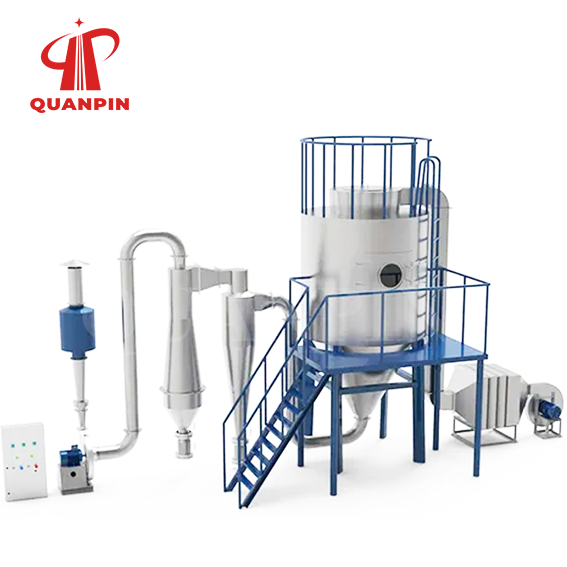
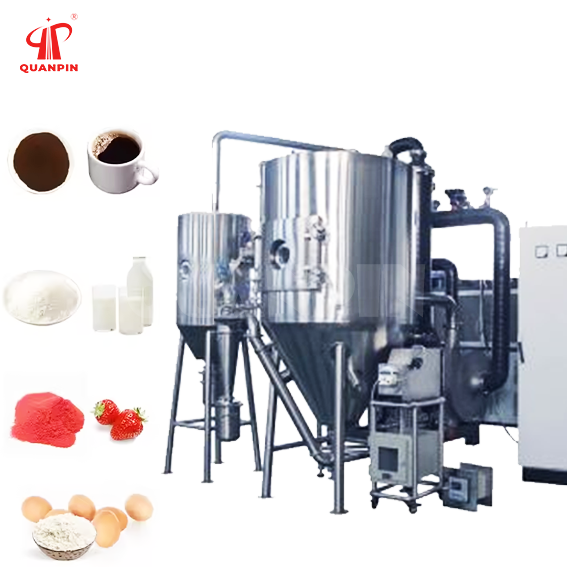
Retain representative samples for the laboratory plan. Equipment photographs illustrate the process reference; they do not document the cited experiments as QUANPIN trials.
How Should Combined Indices Be Reported?
A pomegranate seed oil study investigated pomegranate seed oil with different wall systems and drying conditions. It measured peroxide, p-anisidine and a combined Totox value during accelerated storage.
The combined index did not eliminate the need to know its component measurements. Its results remain specific to the oil, formulation, assay and storage protocol.
What Can a Complete Formulation Comparison Establish?
A two-formulation fish-oil experiment compared fish-oil powders prepared with skimmed milk and with a maltodextrin/protein-hydrolysate formulation.
Peroxide index, moisture, water activity and encapsulation were assessed. A favorable result in one response should be reported alongside the others.
The work supports comparing complete formulations. It does not establish a general shelf life or justify transferring a percentage improvement to another oil.
Avoid converting food ingredient experiments into health claims. This equipment discussion concerns powder processing and analytical evidence.
Define acceptance around the intended food use. Include agreed chemical measurements, handling requirements and storage conditions in the trial brief.
A laboratory storage test can support a defined comparison. It should not be presented as proof of commercial shelf life under unspecified packaging and distribution.
What Should the Equipment Enquiry Include?
When requesting a centrifugal spray dryer price, include feed composition, required output and the intended sampling plan. Comparable quotations need comparable duties.
Agree who performs the oil extraction and laboratory analyses. State sample quantity, preservation and transport requirements before the trial.
Which Records Support a Defensible Decision?
Keep batch and specimen identifiers linked to collection and storage records. Report analytical uncertainty and replicate results where available.
Separate published research from project observations. QUANPIN equipment selection requires representative material and agreed evidence, without invented trial outcomes.
Frequently Asked Questions
Does high efficiency prove stability?
No. Encapsulation efficiency and oxidation are different responses. Oil can remain within a powder while oxidation products develop during processing or storage.
Is low peroxide value sufficient?
No. A peroxide result should be interpreted with the initial oil condition, sampling time and suitable complementary measurements.
Are peroxide and TBARS interchangeable?
No. They measure different oxidation-related responses under different analytical procedures. Report each method and its limitations.
Does Totox replace its components?
No. A combined index depends on its component assays and calculation. Retain the separate results needed to interpret it.
Can a published wall recipe be copied?
No. The compared oils, walls and storage conditions matter. Use representative formulation trials before adopting a material recommendation.
Does one storage test prove shelf life?
No. The research helps define useful questions. A commercial acceptance decision requires specified packaging, storage, tests and project-specific evidence.
Discuss Your Oil Powder Drying Requirements
Discuss the material, processing objective and required trials with QUANPIN. Review the equipment information and the relevant industry applications, or send an enquiry through our contact page.
Email sales@qpdryer.com or stacie@qpdryer.com. Call +86 19850785582 or contact WhatsApp +86 15921493205 to discuss the proposed scope.
For process evaluation, consider the centrifugal spray dryer machine for centrifugal atomization of suitable liquid feeds. Confirm suitability with representative material, the required product properties and the proposed process conditions.