High-Speed Granulator/Crusher for Pharmaceutical Granules: Size Reduction and Size Classification
By QUANPIN
Size reduction changes the material; size classification separates it according to a defined criterion. A pharmaceutical granule-sizing enquiry should explain which task is required and how the result will be judged.
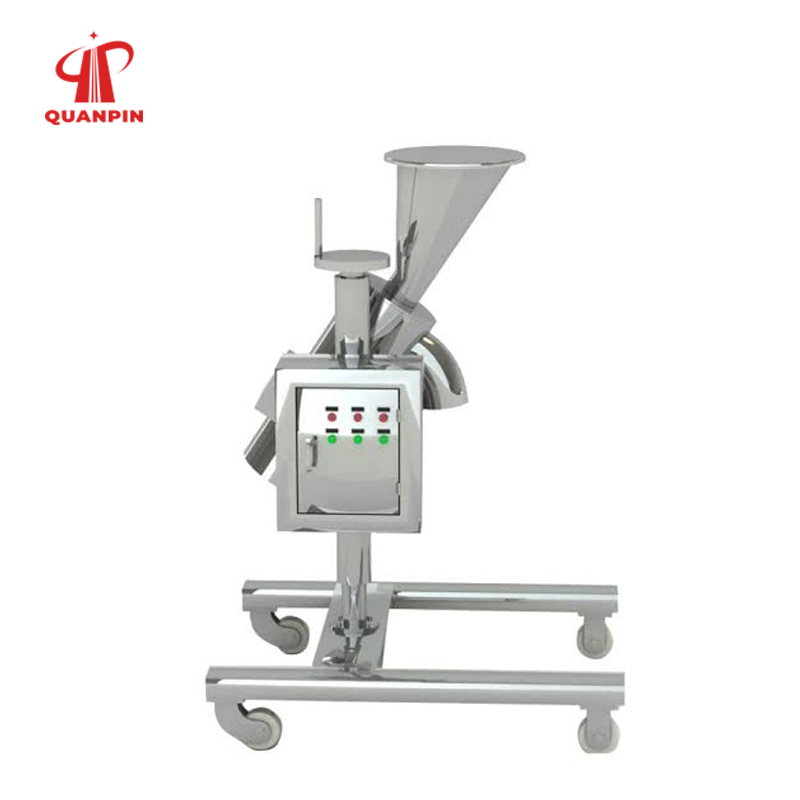
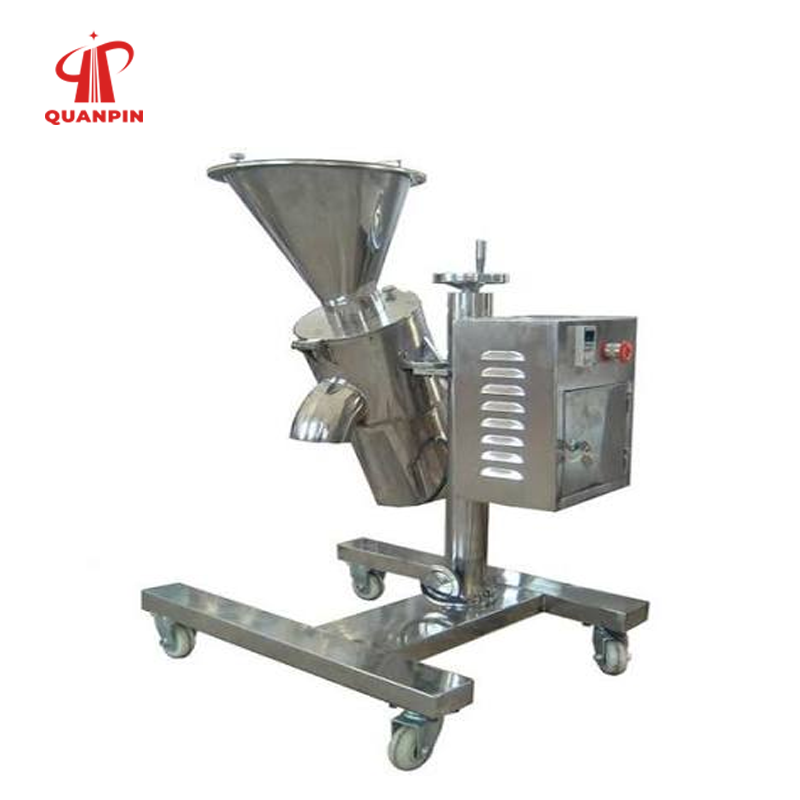
The QUANPIN KZL High-Speed Granulator/Crusher is reviewed for compatible granule-processing duties. Its equipment name does not turn every sizing result into a complete particle-distribution specification. See the corresponding pharmaceutical industry applications.
Which Task Changes Granules and Which Task Measures Them?
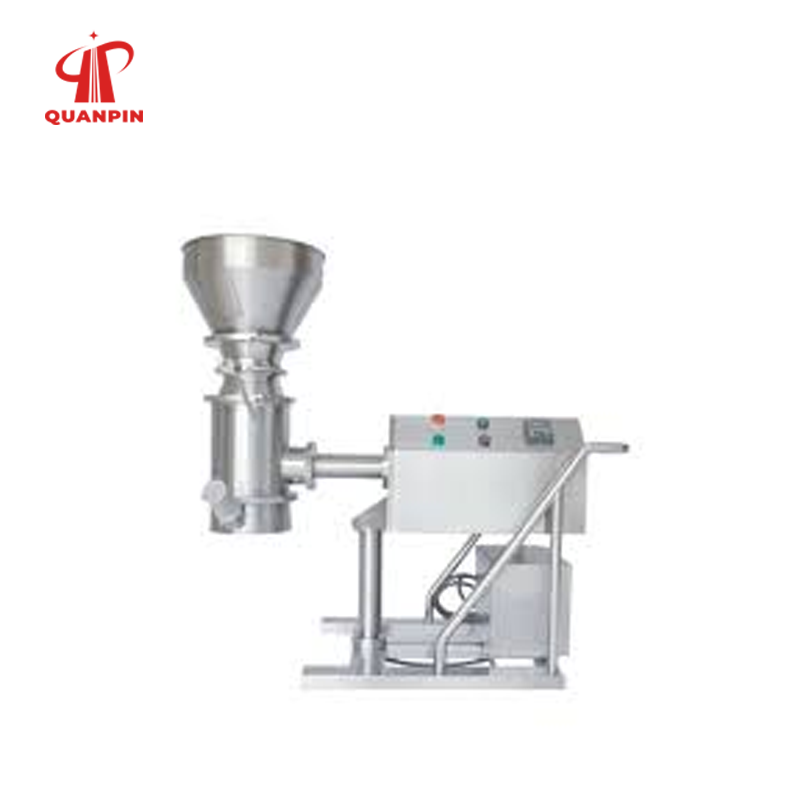
A working rotor and screen process compatible material through the sizing arrangement. The actual feed condition and fitted components determine the duty to be reviewed.
A high speed granulator may break down agglomerates while material passes through a screen. A separate analytical classification can still be needed to describe the delivered granules. Use product-specific development knowledge to justify the attributes being examined. See FDA ICH Q8 pharmaceutical development.
Equipment Principle and Material Requirements
Define whether the objective is breaking lumps, controlling oversize, preparing a downstream feed or another confirmed task.
Do not use a screen designation as a substitute for representative product measurements.
Five Steps for the Application Review
Describe the granule feed
Describe the incoming granules and intended next process.
Define the sizing task
Identify the mechanical sizing task.
Record fitted components
Document the proposed rotor and screen arrangement.
Sample collected material
Sample the output across the agreed collection boundary.
Measure the distribution
Measure the granules using the specified analytical method.
Four Process Boundaries to Define
The fitted screen is part of the machine configuration; a laboratory sieve is part of a test method.
The two may use related dimensions but answer different questions about processing and measurement.
Describe whether the reported distribution is based on mass fractions and how samples were prepared.
Keep unmeasured fractions visible rather than treating an opening size as proof that all granules meet a limit.
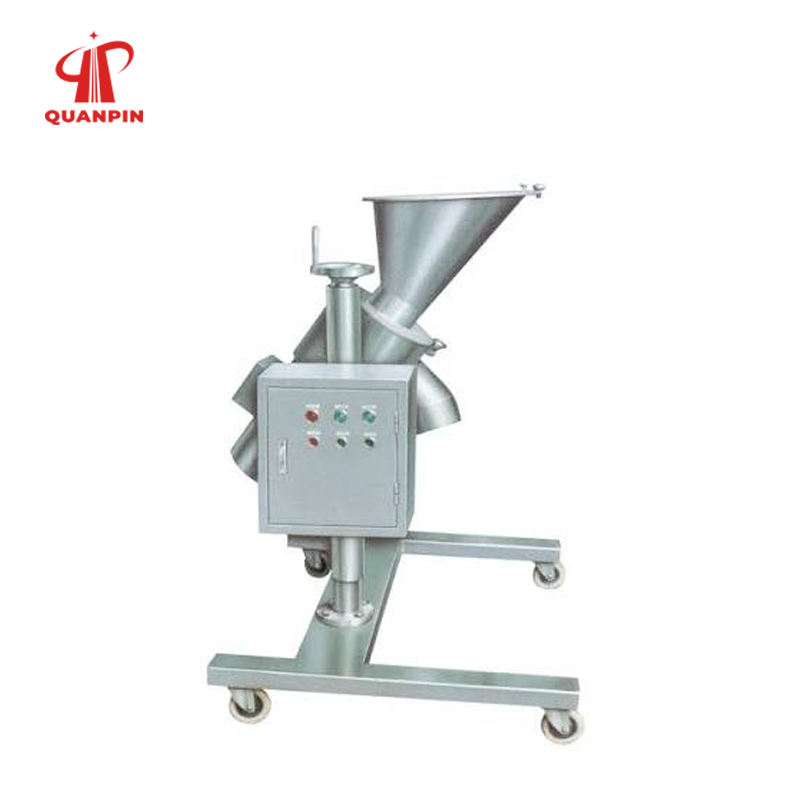
KZL High-Speed Granulator/Crusher Components and Interfaces
Feed presentation
Feed presentation affects how material reaches the working assembly and should be included in the trial record.
Working rotor
The rotor provides the mechanical action reviewed for the actual granules.
Processing screen
The screen establishes a processing interface whose condition and identity require control.
Product collection
Collection containers define where the processed material is sampled.
Analytical preparation
Analytical preparation determines the basis of the reported size result.
Onward transfer
The downstream transfer route establishes whether later handling belongs in the acceptance study.
Comparison Choices and Application Evidence
Define the Reference Basis
In pharmaceutical granulation equipment, sizing is one operation within a wider formulation route.
A pharmaceutical granulator should be assessed against the required feed and the intended subsequent process.
For a wet granulation route, define whether the sizing stage occurs before or after drying.
Keep the Comparison Interpretable
Do not assume that wet material and dried granules will respond to the same arrangement.
Compare the incoming and processed distributions using compatible methods.
Record fines as well as oversize when those fractions matter to the formulation.
Assess the Receiving Process
A high proportion passing a laboratory sieve does not describe every other granule property.
Preserve separate observations about flow, integrity or downstream performance.
The evidence should show what the sizing operation achieved without assigning it the functions of an entire manufacturing line.
Industry Application and Acceptance
Separating mechanical sizing from analytical classification makes the acceptance question clearer.
It also prevents a screen-selection discussion from becoming an unsupported product guarantee. A development comparison should not be presented as complete validation of an untested production process. See FDA process validation guidance.
The suitable arrangement depends on the actual formulation and compatible feed condition.
No universal granule specification follows from the KZL model family alone.
Benefits and Practical Limits
Inspect the working assembly only under approved shutdown and isolation procedures.
Review dust, cleaning and product-contact needs for the actual pharmaceutical material. Assess relevant quality risks using the actual material and process context. See FDA ICH Q9 quality risk management.
Six Details for the Equipment Enquiry
Provide the incoming granule description and processing stage.
Explain the downstream purpose of the sized material.
Identify the proposed rotor and screen configuration.
Supply the analytical method and sampling boundary. Interpret measurements through process understanding rather than treating an isolated instrument reading as product acceptance. See FDA process analytical technology framework.
Define which fractions or attributes require acceptance.
State cleaning and safe-access requirements for review.
Safety and Operating Requirements
Ask QUANPIN to review the sizing duty using actual material information.
Separate the proposed machine configuration from the customer’s analytical acceptance requirements.
Prepare Your Equipment Enquiry
Retain the trial configuration and measured product results together.
A clear sizing study should explain both the operation performed and the evidence supporting its acceptance. Retain knowledge and manage adopted process changes through the pharmaceutical quality system. See FDA ICH Q10 pharmaceutical quality system.
Frequently Asked Questions
Are size reduction and classification identical?
Mechanical size reduction and analytical size classification are different tasks.
Does a screen prove every product-size fraction?
A fitted screen does not independently establish every product-size fraction.
Can wet and dry feeds be treated as equivalent?
Wet and dried granules need their own compatibility and handling review.
Why keep an incoming reference?
An incoming reference helps distinguish initial material condition from processing effects.
Does size testing replace other acceptance tests?
Granule-size results do not replace other formulation-specific acceptance tests.
What should the sizing enquiry explain?
The enquiry should state the material stage, intended operation and analytical basis.
Discuss Your KZL High-Speed Granulator/Crusher Application with QUANPIN
Discuss the confirmed KZL High-Speed Granulator/Crusher application with QUANPIN. Use the enquiry form or the contact page to describe your project.
Email sales@qpdryer.com or stacie@qpdryer.com. Call +86 19850785582, or contact us on WhatsApp: +86 15921493205.