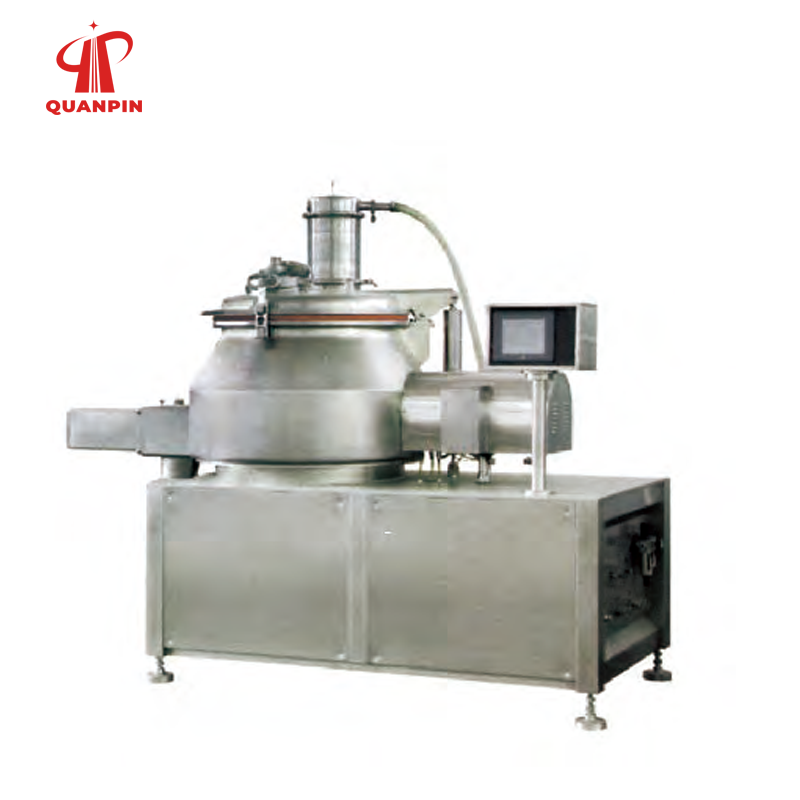
A high shear granulator converts a compatible powder blend and binder into wet granules through coordinated mixing and agglomerate control. In the GHL arrangement, a bottom impeller distributes the binder through the powder while a side-mounted chopper breaks wet agglomerates. Lactose-based formulations illustrate why this combination is useful: liquid must reach the blend without creating isolated wet pockets, and the resulting granules must remain suitable for the following drying and sizing operations. For this duty, review the high shear granulator around the actual feed condition and the required product checks.
The following production sequence explains how lactose-based pharmaceutical powder blends moves through preparation, processing and discharge. Equipment selection should connect the incoming material with the required finished condition: handling behavior, moisture distribution and cleaning access matter alongside output. A machine can provide the required mechanical or thermal action, but the formulation and operating procedure determine whether the resulting product is acceptable. The high speed mixer granulator should be specified with the complete upstream and downstream process in view.
- Specify the complete formulation. Lactose is one component of a defined blend, and the other powders influence wetting and granule behavior. Record the grades and proportions used for evaluation. A granulator selection based only on the word lactose misses the binder system, companion materials and final product attributes that determine the useful operating window. Pharmaceutical product-contact construction must avoid unwanted effects on the product; review 21 CFR 211.65.
- Prepare the powder charge. Follow the agreed weighing, screening and charging sequence so that large foreign agglomerates and handling errors do not dominate the wetting step. The machine should receive the intended formulation in a known condition. Keep the charge identity with the batch through wet processing, discharge and transfer to the dryer. A discussion of High-Speed Mixing Granulator should include loading, cleaning and the acceptance method.
- Establish dry mixing before wetting. The impeller moves the powders within the vessel before binder addition begins. The purpose is to present a reasonably consistent mixture to the liquid distribution step. Dry blending time and loading should be reviewed for the actual batch rather than selected from an unrelated formulation or assumed from vessel capacity. Compare the rapid mixer granulator configuration using representative material rather than equipment size alone. For covered drug manufacture, written production procedures and documented deviations are addressed in 21 CFR 211.100.
- Prepare a consistent binder. Binder concentration and preparation affect how the liquid spreads and how much liquid enters with a given addition. Define the binder recipe, preparation sequence and hold conditions in the production procedure. An inconsistent binder can produce different wet masses even when the same nominal quantity is added to the vessel.
- Coordinate liquid addition with mixing. Add binder so that the circulating powder can receive and distribute it. Localized addition can create dense wet lumps before the rest of the charge becomes adequately wetted. Review the addition arrangement and rate with the mixing action; adjusting only one part of the process can conceal the underlying distribution problem.
- Understand the chopper function. The side chopper breaks wet agglomerates while the impeller moves the main charge. These tools have related but different roles. More chopper action is not automatically a better recipe, because the desired outcome is an acceptable granule population and wet-mass condition rather than the maximum possible mechanical treatment.
- Use the integrated vessel advantage. Mixing and wet granule formation occur in one processing stage, reducing the need for a separate transfer between these operations. This can make the workflow more direct. It does not remove the need to assess discharge, cleaning and the subsequent dryer interface as part of the complete line.
- Define a meaningful wet endpoint. Record observations and measurements that relate to the required granule condition. An elapsed time is easier to record than a changing wet mass, but time alone may not reveal a difference in incoming moisture or binder distribution. Agree an endpoint approach that operators can apply consistently to the selected formulation. Appropriate in-process sampling and tests help assess batch uniformity; their regulatory context is given in 21 CFR 211.110.
- Assess dried granules as well. Wet granules are an intermediate product, and their useful qualities must survive drying and any later sizing. Compare particle distribution, strength and fines against the downstream specification. A wet batch that looks satisfactory inside the vessel may still produce unsuitable handling behavior after moisture has been removed.
- Plan transfer without unnecessary delay. Coordinate the granulator discharge with available drying capacity and suitable receiving equipment. Avoid compressing the wet product during transfer or leaving it in uncontrolled conditions. Define the allowable intermediate handling process so that granulation performance is assessed together with what happens between the vessel and the dryer.
- Review contact surfaces and access. Identify where material can remain around the impeller, chopper, discharge and seals. The cleaning procedure should be possible with the proposed equipment arrangement and production environment. Pharmaceutical documentation and containment requirements are project specifications to agree, rather than attributes established simply by selecting the GHL model name. Written cleaning and maintenance procedures, including necessary disassembly, are addressed in 21 CFR 211.67.
- Build a practical purchase brief. Supply QUANPIN with the formulation, binder, batch output, required granule properties and drying interface. Include installation space, utilities and cleaning expectations. Evaluate the proposed system using representative material and agreed acceptance methods, then record the selected configuration so production personnel know which operating and handling conditions have been reviewed. Equipment design, size and location should facilitate its intended operation, cleaning and maintenance, as specified in 21 CFR 211.63.
YANCHENG QUANPIN MACHINERY CO.. LTD
Sales Manager – Stacie Tang
MP: +86 19850785582
Tel: +86 0515-69038899
E-mail: stacie@qpdryer.com
WhatsAPP: 8615921493205
https://quanpindrying.en.alibaba.com/
Address: Jiangsu Province, China.