High Shear Granulation Endpoint Trials: Build a Signal-to-Product Evidence Plan
By QUANPIN
A useful granulation endpoint is an experimentally justified stopping decision, supported by the wet mass and the dried product. A rising motor-load trace alone cannot establish that a pharmaceutical formulation is ready for discharge.
When specifying a high shear granulator, define the measurement and the associated product tests together. This guide explains how to build an endpoint study without importing a signal threshold from another formulation or machine.
Define the Endpoint Before Selecting a Signal
Start with the product attribute that the trial must protect. Particle-size distribution, granule strength and subsequent tablet behavior answer different questions; choosing one as the sole endpoint can conceal changes in the others.
A rapid mixer granulator trial should therefore connect time-resolved observations to identifiable samples. Record when each sample was removed and which subsequent drying, sizing and compression conditions produced its final test results.
Understand What the Instrument Measures
Torque describes resistance at a rotating shaft, while electrical power includes the behavior of the drive system. Neither measurement should be renamed as a direct measurement of granule diameter or liquid distribution.
A force probe measures another local interaction with the moving bed. Optical observations introduce different spatial and sampling limits. Agree what each signal actually represents before comparing the apparent sensitivity of instruments.
Five Inputs to Record Before a Trial
Material identity
Record the formulation and material lots, including initial moisture and relevant particle-size information. A changed incoming powder can alter wetting and mechanical behavior even when the programmed operating sequence is unchanged.
Working charge and geometry
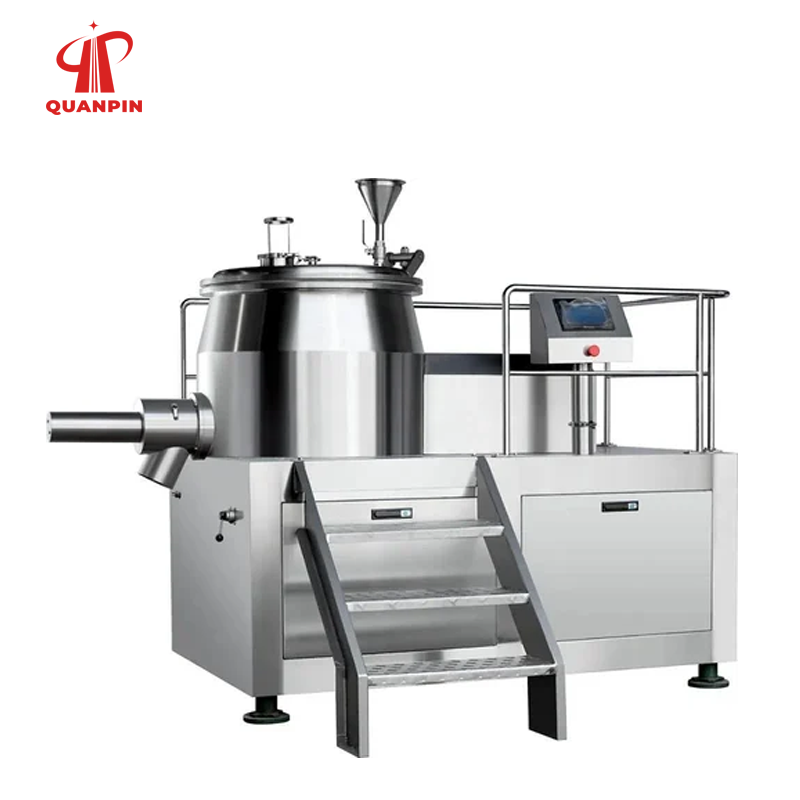
Record the working charge and the geometry of the bowl and blades. Identical rotational speeds do not describe identical mechanical conditions when impeller dimensions or the relationship between powder and blade change.
Liquid-delivery history
Record the quantity, concentration and delivery history of the granulating liquid. Include interruptions and deviations rather than replacing the actual addition history with the intended recipe set point.
Signal acquisition
Record the origin, units and acquisition settings of each process signal. Preserve unsmoothed data alongside any processed trace so that filtering does not hide transient behavior or manufacture an apparent plateau.
Sample treatment
Record the downstream sample treatment. A wet sample that waits before drying is not automatically comparable with one dried immediately, even if the two were collected at the same nominal endpoint.
Design Comparisons That Can Explain the Outcome
An endpoint protocol should include deliberately different stopping times or liquid additions within an approved development plan. Comparing only successful batches limits the ability to distinguish a robust endpoint from a coincidental signal.
Keep sample handling sufficiently consistent to interpret those comparisons. Identify containers, collection positions, elapsed times and storage conditions, and document any material loss caused by sampling or transfer.
Evaluate the dried granules using the intended analytical methods. A proposed signal criterion becomes useful only when its relationship with the chosen attributes remains understandable across the tested operating window.
Treat an unexpected result as information. Repeating a run can check reproducibility, but repeating until a preferred answer appears does not explain whether the original signal or the sample preparation was responsible.
Run the Endpoint Study in Six Stages
Establish the baseline
First establish an empty or appropriate baseline under documented conditions. Where a corrected load is used, state the subtraction method and retain the original measurement rather than reporting only the calculated trace.
Align the event log
Next align the process log with dry blending, liquid delivery and wet massing. A slope change can have a different interpretation depending on which operation was occurring at that moment.
Collect planned samples
Then collect representative specimens at planned points. Avoid assuming that the material most easily reached at a sampling port represents the whole moving bed throughout the process.
Control downstream treatment
Dry and size the specimens consistently with the study objective. If downstream conditions are intentionally varied, label that comparison explicitly rather than treating all final differences as granulation effects.
Inspect correlations
Compare signals with the selected attributes and inspect disagreements. A useful investigation explains where the relationship weakens, not merely where a visually attractive trend can be drawn.
Challenge the decision rule
Finally challenge the proposed decision rule with additional conditions justified by development knowledge. The protocol should say what happens when the signal is missing, noisy or inconsistent with the physical sample.
What Original Research Adds to the Trial Plan
Formulation-dependent torque
A study of heterogeneous formulations investigated inline torque for endpoint determination. Its central relevance is that formulation-dependent behavior must be considered; a recognizable trace from one mixture is not a universal recipe.
Use that original formulation study to frame the questions asked of a trial, rather than copying its settings. A commercial machine still needs its own agreed measurement arrangement and product-specific evidence.
For an enquiry, ask which signal is available, how it is recorded and how samples can be linked to it. Do not assume that a particular monitoring system is included in the quoted equipment.
Direct optical monitoring
An older original investigation studied direct image processing for online granule-growth observation. The optical approach provides a different perspective from mechanical loading, but it also requires a defined view of representative material.
The image-monitoring investigation is relevant when deciding whether a second observation could clarify an ambiguous trace. It does not establish that visual inspection alone can replace all required product testing.
When an image and a load trace disagree, investigate sample visibility, timing and the physical attribute being observed. A surface appearance and a bulk mechanical response need not change simultaneously.
Agitation-power normalization
A scale-up experiment measured agitator torque and calculated agitation power per unit vessel volume. Relationships with granule properties were investigated for specified materials and geometrically related experimental mixers.
The agitation-power study illustrates why geometry and the normalization method belong in the report. Its findings should not be converted into a guarantee for an unrelated formulation or a different machine family.
A high shear mixer granulator specification can request the information necessary for a transfer study. Confirmation of equivalent product performance requires experimental comparison, rather than matching a single number on the control panel.
Evaluate Newer Process Fingerprints Carefully
A later investigation compared in-line force fingerprints with particle-size and dissolution observations while varying water content. Its measured process descriptors were interpreted through the experimental formulation and sampling plan.
The in-line rheometer research supports investigating more than one signal feature. It does not mean that every installation has the same sensor, or that its reported optimum applies to another product.
Another original study used in-line data and an experimental design to develop tablet-property prediction models. The distinction between a measured signal and a model-derived estimate must remain visible in a development report.
The university-hosted predictive study demonstrates a possible research workflow. A model must be checked against relevant independent observations before its output can support decisions beyond the conditions used to develop it.
Investigate Conflicting Evidence
If two endpoint candidates give comparable granule sizes but different downstream behavior, retain both results and inspect the omitted attributes. Similar sieve distributions do not prove identical wet-mass histories or mechanical structures.
If a signal relationship fails after a material-lot change, investigate that change explicitly. The appropriate response may be further development, rather than moving a threshold until the new batch appears to fit.
Prepare the Equipment Enquiry
Prepare an enquiry package containing formulation constraints and the purpose of the endpoint study. Disclose which information is confirmed and which questions remain open before asking for equipment recommendations.
Include the intended batch operation, sample quantities and proposed downstream route. This helps distinguish a granulation-only trial from a complete manufacturing assessment involving drying, sizing and tableting.
Specify the required records and their format. A screenshot of a completed run can be useful, but it cannot replace a time-linked dataset when the investigation depends on transient process behavior.
Ask about access for sampling, cleaning and inspection in the proposed configuration. Those practical arrangements influence whether the agreed study can actually be performed and reproduced.
Identify who will perform analytical testing and approve acceptance criteria. Equipment supply and product-release decisions are different responsibilities and should not be merged implicitly in a quotation.
When comparing high shear granulator price, compare the confirmed supply scopes. Instrumentation, recording, trials and downstream equipment should be included or excluded explicitly before judging the commercial difference.
Choose a Confirmed Configuration
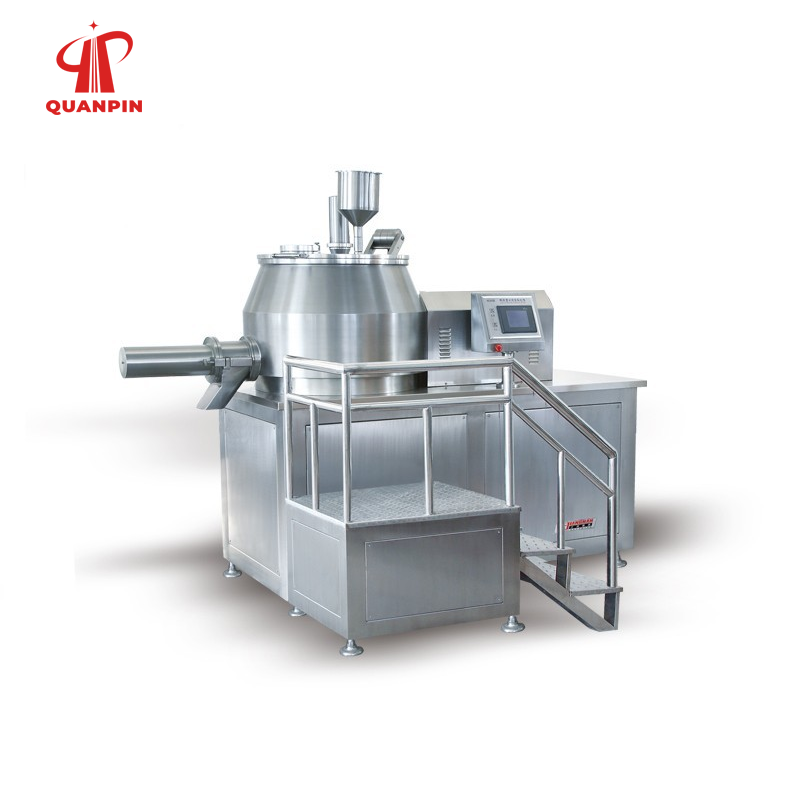
The GHL equipment information is a starting point for a configuration discussion. Request confirmation of the relevant controls and monitoring arrangements instead of inferring them from general descriptions or reference photographs.
A high shear wet granulator should be selected for the material and process duty. An endpoint-development article cannot establish compatibility with a specific solvent, containment requirement or cleaning procedure.
Preserve the Decision Record
Document the proposed stopping rule, its evidence and its limits. Include a response for data-quality problems and a clear distinction between development observations and any approved manufacturing instructions.
Retain the failed correlations as well as the successful ones. A transparent development history makes later investigations more useful than a report containing only the most convincing final graph.
Frequently Asked Questions
Does a torque plateau prove the endpoint?
No. A torque plateau can be a useful observation, but its meaning depends on the formulation, process stage and measurement arrangement. Verify its relationship with the attributes that matter for the product.
Are current and torque interchangeable?
No. Motor current, shaft torque and calculated power are related concepts but are not interchangeable measurements. Describe the actual instrument and signal processing before comparing data between trials.
Can a threshold transfer between machines?
Not without verification. A threshold developed on one machine or scale may not transfer to another geometry, charge or formulation. Use a documented comparison with appropriate samples and product tests.
Can optical monitoring help?
It can. A second observation may help explain an ambiguous mechanical trace, provided the optical view and sampled material are representative. The additional observation still needs a defined interpretation.
Can published settings be copied?
No. Published experimental settings are evidence about the studied system. They provide development questions and possible methods, not automatic operating instructions or guaranteed capabilities for QUANPIN equipment.
What should an enquiry contain?
Provide the material information, process objective, intended downstream route and required records. Agree the trial and acceptance plan before treating a monitoring option as part of a confirmed equipment configuration.
Discuss Your Granulation Requirements
Discuss the material, processing objective and required trials with QUANPIN. Review the equipment information and the relevant industry applications, or send an enquiry through our contact page.
Email sales@qpdryer.com or stacie@qpdryer.com. Call +86 19850785582 or contact WhatsApp +86 15921493205 to discuss the proposed scope.
For process evaluation, consider the high speed mixer granulator for high-shear preparation of a suitable wet granulating mass. Confirm suitability with representative material, the required product properties and the proposed process conditions.