Food Iron-Premix Blending: Keep Elemental Distribution Separate from Bioaccessibility Evidence
By QUANPIN
A food powder can contain consistently distributed total iron without establishing how that iron behaves during digestion. Keep elemental composition, chemical form and biological interpretation separate when designing a conical screw mixer trial for an actual fortified ingredient.
A blending comparison should answer the defined distribution question first. Nutritional assessment requires additional, appropriate evidence and qualified interpretation; a passing equipment trial does not itself demonstrate absorption or a health benefit.
Elemental content and biological endpoints need different evidence
Total iron analysis reports an elemental quantity under the analytical procedure. It does not by itself identify the fortificant’s chemical form, its release from a carrier or its response in a digestion model.
Bioaccessibility generally concerns material made available within a specified digestion assessment, while bioavailability concerns subsequent biological processes. The exact study endpoint and model need to be named rather than grouped under an undefined nutritional-quality score.
Define the fortificant and limit the claim
The actual fortificant and food matrix belong in the development record. Preparations delivering the same elemental mass can differ in composition and physical characteristics, so equal iron content does not establish equivalent formulation behaviour.
This article organizes evidence for a manufacturing discussion. It does not recommend an iron dose, fortification recipe, medical treatment or nutritional claim, and it does not guarantee product efficacy or regulatory acceptance.
Five details needed before comparing iron results
Fortificant identity
Identify the fortificant preparation rather than recording only the word iron. Retain the relevant source documentation and lot identity so that later analytical results refer to the actual material charged.
Elemental reporting basis
State the mass basis used for the total-content result. Distinguish elemental iron per mass of blend from the mass of the fortificant preparation or its carrier.
Analytical endpoint
Describe the analytical preparation and what it measures. A complete elemental determination and an assessment of soluble or released iron answer different questions even when both report a concentration.
Food matrix and preparation
Record the food matrix and any subsequent preparation associated with the assessment. Dry blending, reconstitution, cooking and a laboratory digestion sequence are distinct stages in the evidence chain.
Decision purpose
Define the decision each measurement supports. Distribution acceptance, development of the formulation and nutritional substantiation should retain their separate criteria and responsible personnel.
Read casein-fortificant research within its conditions
An original casein-based fortificant study investigated solubility, digestion-related behaviour and a cellular assessment with ascorbic acid. These outputs describe specific experimental conditions rather than a universal relationship between total iron and absorption.
The original casein-based fortificant investigation illustrates why chemical form and test conditions matter. Its observations cannot be assigned to an unrelated powder blend or interpreted as proof that the mixing operation produces the same biological response.
For a manufacturing comparison, the practical lesson is to identify which result is actually available. A total-content certificate should not be relabelled as a measured digestion or cellular outcome.
If a nutritional endpoint is required, define that work separately with qualified specialists. Preserve its relationship to the actual ingredient and final food rather than inferring it from equipment settings.
Build the manufacturing comparison in six steps
Agree the recipe
Agree the real food recipe and the elemental distribution question. Identify which charged material supplies the iron and what reference will be used for the analytical comparison.
Collect traceable specimens
Collect appropriate input and blend specimens under a documented plan. Preserve sample identity and collection context so that a reported average does not conceal a distribution pattern.
Use the appropriate total method
Use a suitable method for total iron when that is the acceptance endpoint. Keep sample preparation, reporting basis and analytical quality controls attached to the result.
Separate release testing
Where additional solubility or release testing is proposed, identify it as a separate assessment. Its specimen preparation can differ from the elemental method and should not be hidden in a shared label.
Review endpoint-specific observations
Review individual observations against their intended purpose. Do not use agreement in one endpoint to dismiss a measured disagreement in another without a defensible explanation.
Maintain the evidence handover
Maintain a clear handover between equipment assessment and formulation substantiation. A successful distribution trial may support the former while leaving further work necessary for the latter.
Read three formulation and model investigations in context
A carrier-specific iron system
A pea-protein fibril investigation developed and characterized a particular iron-carrying system, including an in-vitro release assessment. Its experimental material was prepared through additional formulation operations beyond ordinary powder mixing.
The original pea-protein iron-fortificant study provides an example of carrier-specific evidence. It does not demonstrate that a DSH mixer creates that carrier structure or that another iron preparation will have the same release behaviour.
When evaluating a proposed ingredient, distinguish the supplied fortificant from a laboratory-made delivery system. Keep the actual preparation route visible before drawing conclusions about its function.

A food-matrix digestion assessment
An original study compared iron bioaccessibility from supplement and microencapsulated preparations within a defined food-matrix assessment. This concerns model-dependent behaviour rather than simple elemental concentration alone.
The original iron-bioaccessibility comparison shows why the tested matrix and chemical forms must accompany the reported endpoint. Its results are not a general purchasing ranking or a nutritional prediction for every fortified powder.
For the blender project, record whether the available evidence concerns the final food or a separate experimental matrix. The difference limits how directly it can support the intended application.
An elemental-iron animal experiment
An animal experiment compared elemental iron powders using haemoglobin-regeneration and relative-bioavailability endpoints. Such a model is a different kind of evidence from composition measurements collected in a manufacturing trial.
The original elemental-iron animal study concerns the tested preparations and model conditions. Its findings should not be presented as a demonstrated human benefit or as a performance measure of QUANPIN equipment.
The transferable manufacturing requirement remains narrow: preserve fortificant identity and distinguish elemental distribution from later biological interpretation. The animal model does not supply a blending time or acceptance threshold.
Connect elemental reporting to the actual mixer trial
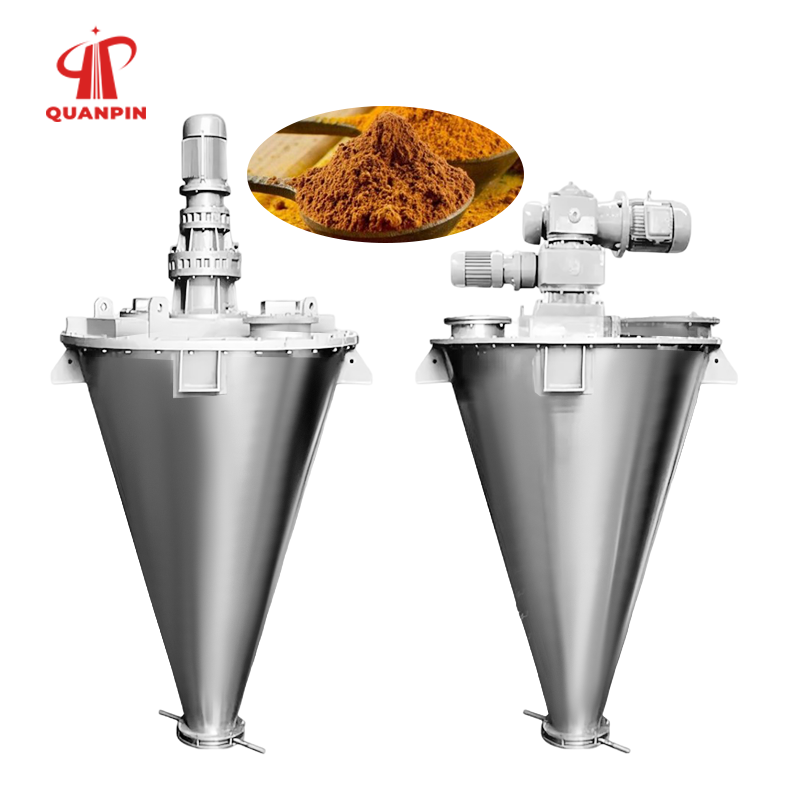
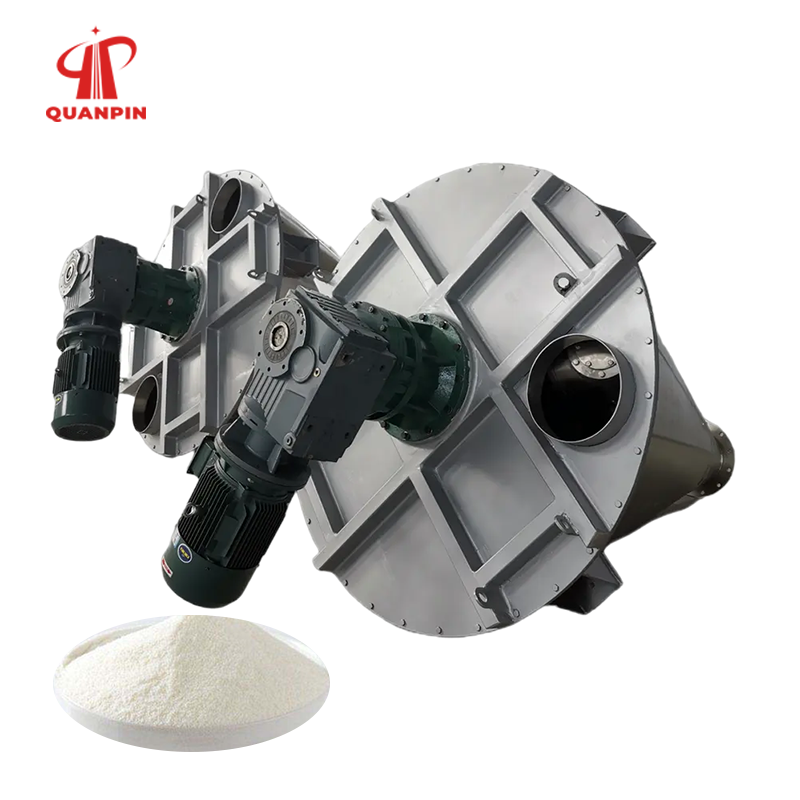
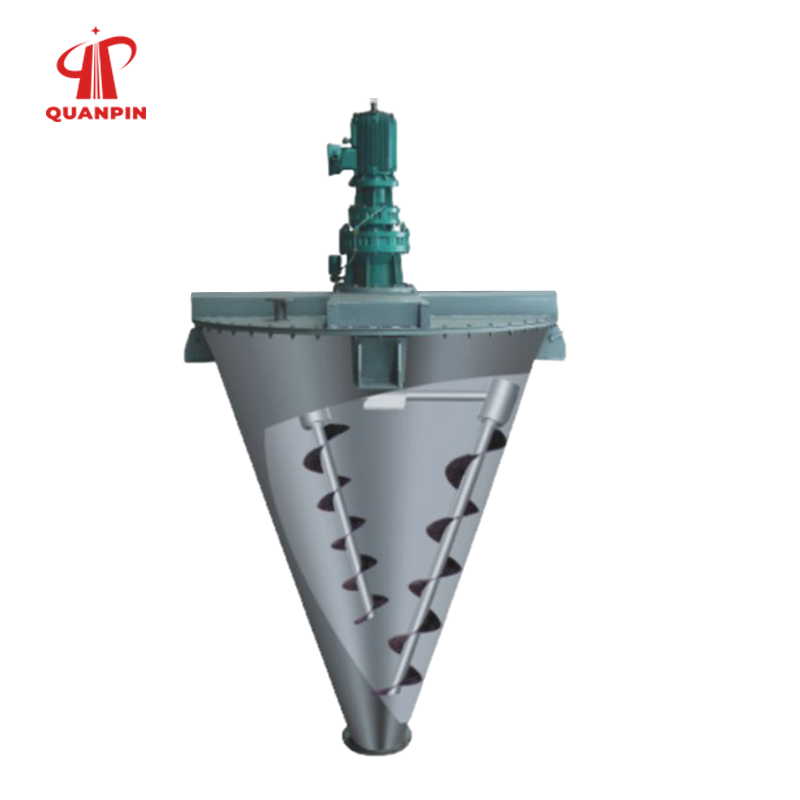
For a double screw cone mixer comparison, specify the actual minor-ingredient addition and the powder handling route. Keep any proposed preblend identified so that sampling results remain traceable to the charged preparation.
Record the relevant analytical reference and mass basis before calculating a percentage or variation statistic. A calculation based on fortificant mass is not automatically equivalent to one based on elemental iron.
If the recipe changes, determine whether the earlier distribution comparison still addresses the new material. A different carrier or fortificant form can change the scope even when the intended elemental content remains constant.
Retain the actual equipment configuration and specimen records together. A general product-family description cannot establish how a particular recipe distributes in an untested supplied arrangement.
Interpret matching and differing results carefully
If total-content results vary, investigate charging, transfer, sampling and the analytical route. Do not assume that the chemical form alone explains the distribution pattern without supporting evidence.
If total-content results agree, retain the separate formulation questions. Consistent concentration is useful evidence for that endpoint but cannot demonstrate an unmeasured solubility or absorption response.
Prepare the powder-duty enquiry and analytical roles
Provide the actual powder duty and fortificant preparation with the enquiry. Identify the intended elemental acceptance measurement without expecting the equipment supplier to design a nutritional programme.
Describe collection access, discharge and the next food-processing operation. Sampling should reflect the actual scope being assessed rather than an unrelated laboratory demonstration.
Confirm product-contact, cleaning and material-handling requirements for the supplied machine. These must be agreed for the project and should not be inferred from a fortification research paper.
Assign responsibility for elemental analysis, formulation studies and approval of any product claims. Keeping the roles clear prevents one passing result from being expanded into unsupported conclusions.
If the final food is reconstituted or cooked, preserve that stage in any later nutritional assessment. Its conditions belong to the actual application and cannot be replaced by the dry-blend recipe alone.
Keep the commercial scope and scientific testing programme separately documented. A double screw conical mixer quotation should explain what is supplied without promising a biological response for the ingredient.
Keep downstream food preparation in the evidence scope
A stable-isotope investigation compared iron compounds in an instant milk drink. It assessed absorption in a specific human study, making its endpoint distinct from cell, digestion-model and animal measurements.
The original instant-milk-drink isotope study concerns that study population, matrix and fortificant comparison. It does not establish a universal result for another powder or authorize a nutritional claim for a new product.
Use human-study evidence within its actual boundaries
A conical screw blender or conical powder mixer proposal should therefore be assessed using its actual mechanical duty and agreed distribution evidence. Additional formulation or nutritional conclusions require their own substantiation.
The final report should name the iron preparation, the elemental reporting basis and the endpoint actually measured. This is more useful than claiming a nutritionally uniform product from a general mixing result.
Frequently Asked Questions
Does total iron establish absorption?
No. Total iron analysis establishes an elemental measurement under its method. Chemical form, release and biological behaviour require appropriate additional evidence rather than inference from concentration alone.
Are equal elemental quantities equivalent preparations?
Not automatically. Different fortificant preparations can deliver the same elemental quantity while differing in carriers or physicochemical characteristics. Identify the actual material before comparing formulation evidence.
Can different models be treated interchangeably?
No. Digestion models, cellular studies, animal experiments and human investigations measure different endpoints. Their methods and applicability limits must remain visible in the development assessment.
Which measurements should be used?
Use measurements selected for the actual acceptance question and food matrix. This article does not prescribe a fortification dose, analytical validation or nutritional-testing programme.
Does distribution prove a nutritional benefit?
No. Consistent distribution supports the measured composition comparison. It does not independently establish that the finished food produces an unmeasured biological outcome or meets a claim-substantiation requirement.
What belongs in an equipment enquiry?
Provide the real fortificant preparation, powder duty, reporting basis and sampling route. Confirm the supplied DSH configuration while keeping formulation and nutritional decisions with the responsible specialists.
Discuss Your Food Premix Mixing Duty
Discuss the material, processing objective and required trials with QUANPIN. Review the equipment information and the relevant industry applications, or send an enquiry through our contact page.
Email sales@qpdryer.com or stacie@qpdryer.com. Call +86 19850785582 or contact WhatsApp +86 15921493205 to discuss the proposed scope.