Food Flavour-Powder Blending: Distinguish Distribution from Release in the Final Recipe
By QUANPIN
A uniformly distributed flavour powder does not necessarily produce the same aroma response in every finished food. The amount present, its release into the surrounding environment and sensory perception are different endpoints that need to retain their own measurement definitions.
For a conical screw mixer trial, establish the ingredient-distribution question before assessing the reconstituted product. A dry-blend comparison can support manufacturing decisions without proving that a flavour is released identically in every beverage, soup or other food matrix.
Distribution, retention and release need separate definitions
Flavour retention describes material remaining under a defined assessment. Release concerns movement from its carrier or matrix under specified conditions. Neither term should be used as a substitute for sensory acceptance without appropriate evidence.
Encapsulated ingredients also contain carrier material. The mass of powder charged is not automatically the mass of flavour compound present, so composition and supplier documentation belong beside the recipe quantity.
Identify the preparation and final application
The actual final application matters. Rehydration, heating and the surrounding matrix can change the conditions under which release is evaluated, making a dry-powder result only one part of the development evidence.
This article organizes a manufacturing comparison rather than a flavour formulation or sensory-testing standard. It does not promise retention, release rates, consumer preference or encapsulation performance for QUANPIN equipment.
Five details needed beside a flavour result
Preparation and carrier
Identify the actual flavour preparation and its carrier. Keep the relevant lot and composition information traceable instead of treating preparations with the same commercial flavour description as equivalent ingredients.
Reported quantity
State which amount is reported: powder mass, total measured flavour or a named marker compound. These are different bases and must remain distinguishable in the analytical comparison.
Application matrix
Record the application and specimen preparation. A reconstituted drink and a dry powder present different environments to a release measurement, even when both originate from the same blend.
Method and observation time
Define the analytical method and observation interval. A single headspace reading and a time-resolved release profile answer different questions and should not share an unexplained quality label.
Sensory assessment purpose
Specify the role of sensory assessment where it is required. Instrumental detection of a compound does not itself establish consumer preference or the complete perceived flavour of the finished recipe.
Read microcapsule release research within its scope
An original microcapsule study investigated dynamic release during storage and rehydration while varying maltodextrin characteristics in a whey-protein system. Its design treats the carrier and material state as part of the release question.
The original maltodextrin and whey-protein flavour study illustrates why a measured powder composition should not be assumed to predict the same release behaviour after rehydration. Its results concern the tested formulation and preparation conditions.
For a blending comparison, preserve the identity of the supplied preparation. Ordinary dry mixing does not establish that the equipment creates the microcapsule structure investigated in a separate encapsulation experiment.
If release changes in the final application, investigate the carrier, matrix and preparation route alongside ingredient distribution. Do not attribute every difference immediately to incomplete mixing.
Build the manufacturing and application comparison in six steps
Define separate questions
Define the dry-blend acceptance question and the later application test separately. Agree which specimens are collected for each purpose and how their identities remain connected throughout the programme.
Retain ingredient references
Retain suitable ingredient references and recipe information. If carrier or flavour loading changes between preparations, document that change rather than comparing equal powder masses as if their contents were necessarily equivalent.
Measure the justified marker
Measure distribution through a method appropriate to the actual marker and matrix. A convenient visible feature should not be treated as a validated indicator of all flavour components without justification.
Prepare application specimens
Prepare the finished-application specimens using the declared procedure. Keep rehydration, heating and waiting stages visible so that a changed sensory or release response remains interpretable.
Report endpoint-specific results
Report the measured endpoint and its time basis explicitly. If several methods are used, preserve their different outputs rather than combining retention, release and sensory observations into one numerical score.
Review both evidence streams
Review the manufacturing and application evidence together while retaining their limits. A passing blend-distribution result may coexist with an application question requiring further formulation work.
Read three encapsulation and food-application experiments
Fruit-oil ingredient manufacture
A fruit-oil encapsulation investigation compared preparation techniques and carrier conditions while assessing powder characteristics and aroma retention. It concerns the production of the flavour ingredient before its possible use in another blend.
The original Pistacia fruit-oil encapsulation study provides an example of preparation-specific aroma evidence. Its drying comparison cannot be presented as the observed performance of a DSH blender or as a guarantee for another flavour preparation.
When selecting a purchased ingredient, distinguish evidence about its manufacture from evidence about its distribution in the proposed recipe. Both may be relevant, but they answer different project questions.

A cyclodextrin coffee application
A cyclodextrin-flavour powder investigation examined preparation and subsequent application in coffee. Its analytical and application work links a defined ingredient to a particular final food context.
The original cyclodextrin-flavour coffee study illustrates why the application matrix belongs in the evidence record. It does not show that every carrier produces the same result or that a coffee result transfers directly to another product.
For a new recipe, retain the specific application test rather than borrowing a favourable sensory conclusion. The manufacturing trial should remain attached to what was actually observed in that formulation.
Retention and perception in soup
An allyl-isothiocyanate encapsulation study assessed retention and sensory perception in sodium-reduced soups. Those endpoints were investigated within selected formulations and preparation techniques rather than inferred from powder quantity alone.
The original encapsulated-flavour soup investigation demonstrates that retention and sensory observations can require distinct measurements. It does not establish a universal preferred ingredient or permit a flavour-improvement claim for an untested recipe.
Use research to clarify the proposed assessment, not to select a favourable outcome in advance. The actual food matrix and intended use still need relevant development evidence.
Connect flavour-preparation identity to the mixing trial
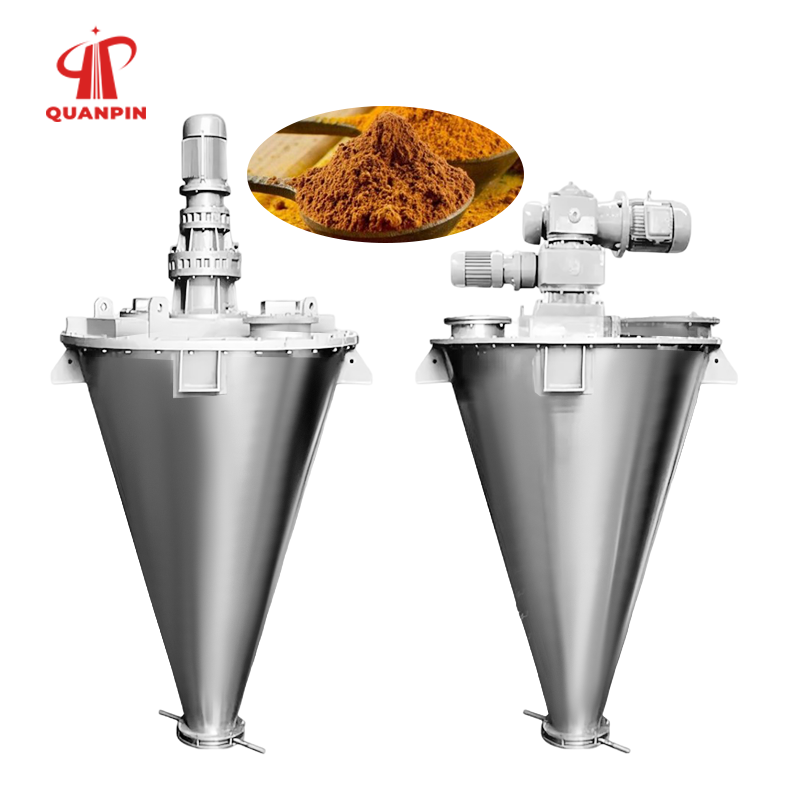
A double screw cone mixer trial should state which flavour preparation enters the vessel and which ingredient or marker will be measured. Keep that description consistent with the material actually used.
Record the addition and transfer sequence where it matters to the comparison. A missing portion of ingredient and a different release response are separate possible causes requiring different evidence.
If a premix is supplied, retain its identity and declared basis. The main-batch calculation should not silently treat every gram of carrier-containing premix as a gram of active flavour material.
Preserve the sampling and analytical route through discharge. Later application tests should be traceable to the relevant blend specimens rather than linked only by a general recipe name.
Investigate different outcomes without assuming their cause
If distribution differs, investigate charging, material handling, collection and measurement. A carrier-release explanation should not dismiss an independently observed ingredient pattern without appropriate supporting evidence.
If distribution agrees but application response differs, investigate the actual preparation and matrix. Keep that finding visible rather than changing the mixer programme without a clear causal basis.
Prepare the equipment and analytical enquiry
Provide the actual powder and flavour-preparation identity with the enquiry. Explain whether the acceptance question is distribution, handling or a later application result requiring separate laboratory work.
Describe the intended charging, discharge and transfer arrangement. The supplier needs the actual material duty rather than an assumption that any ingredient called flavour powder behaves identically.
Identify the proposed analytical marker and the responsible laboratory. Its suitability should be established for the actual matrix; an equipment inspection does not validate the analytical procedure.
Specify which application or sensory work belongs to the project and who approves its interpretation. Separate these responsibilities from supplier mechanical checks and the commercial equipment scope.
Confirm the relevant product-contact, cleaning and access requirements for the supplied configuration. A published encapsulation experiment does not verify construction details or cleanability of an untested installation.
Keep changes in preparation or carrier documented during development. A different ingredient grade can alter the scope even when the same double screw conical mixer and recipe name are retained.
Keep application responsibilities and supplied scope clear
An original emulsion experiment examined how emulsifiers and xanthan gum influenced aroma release. Its model system differs from a dry powder but illustrates that the surrounding formulation can affect the measured release response.
The original food-emulsifier aroma-release study should be read within that liquid-system scope. It does not establish that a dry blender changes emulsions in the same way or supplies a general explanation for every flavour difference.
Use liquid-system research without changing the process claim
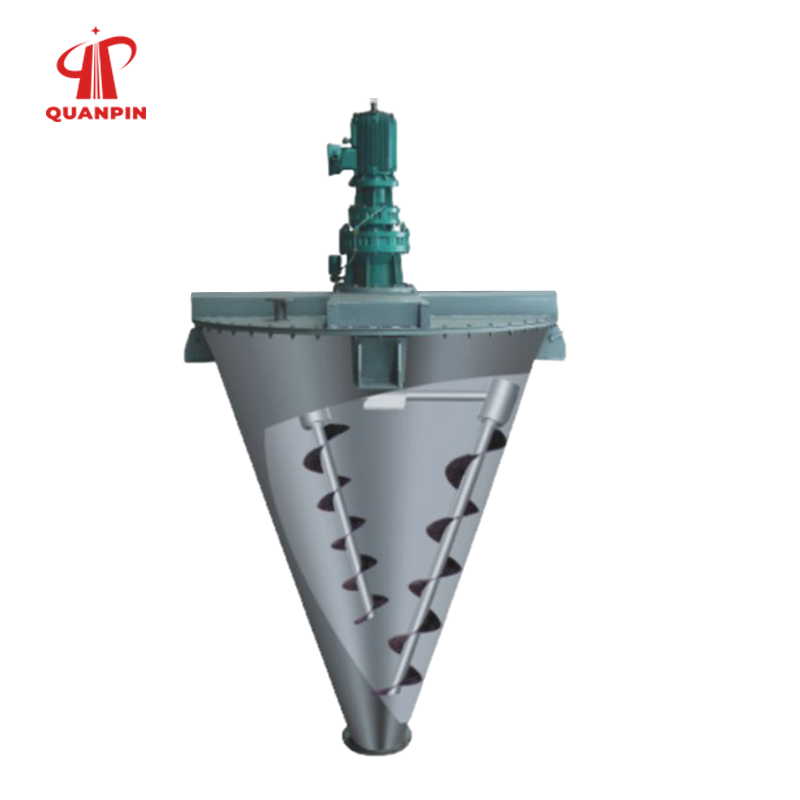
A conical screw blender or conical powder mixer proposal should therefore be assessed on its actual mixing duty and agreed evidence. Claims about final aroma release or consumer response need their own substantiation.
The final report should distinguish flavour preparation identity, distribution measurements, application conditions and sensory observations. That record supports a clearer decision than describing the entire project as flavour uniformity without naming the measured property.
Frequently Asked Questions
Does uniform distribution prove equal release?
No. Distribution and release describe different properties. A consistently distributed preparation can behave differently after rehydration or heating, depending on the actual carrier and food matrix.
Are equal powder masses equivalent?
Not automatically. Carrier content and flavour loading can differ between preparations. Keep the reported basis and actual ingredient identity visible before comparing powder quantities.
Can one marker represent all flavour components?
No. A marker can be useful only for a justified measurement purpose. Its distribution does not automatically establish the behaviour of every volatile or nonvolatile component in the recipe.
Does instrumental release establish sensory acceptance?
Not without relevant evidence. Retention, instrumental release and sensory perception are distinct endpoints, and favourable observations in one application do not guarantee the same result in another.
What should application testing document?
Document the formulation and preparation route used for the actual application test. Keep any change in carrier, rehydration, heating or observation interval separate from the dry-mixing comparison.
What belongs in a supplier enquiry?
Provide the real ingredient preparation, powder duty, sampling route and proposed analytical endpoint. Confirm the supplied DSH configuration while keeping application and sensory decisions with the responsible development team.
Discuss Your Food Flavour Mixing Duty
Discuss the material, processing objective and required trials with QUANPIN. Review the equipment information and the relevant industry applications, or send an enquiry through our contact page.
Email sales@qpdryer.com or stacie@qpdryer.com. Call +86 19850785582 or contact WhatsApp +86 15921493205 to discuss the proposed scope.