Food Coarse-Crusher Trials: Compare Preliminary Output with the Complete Milling Duty
By QUANPIN
A coarse crusher can prepare suitable large feed for a later size-reduction operation. Its value should be judged through the complete route, including the intermediate material and the final product objective.
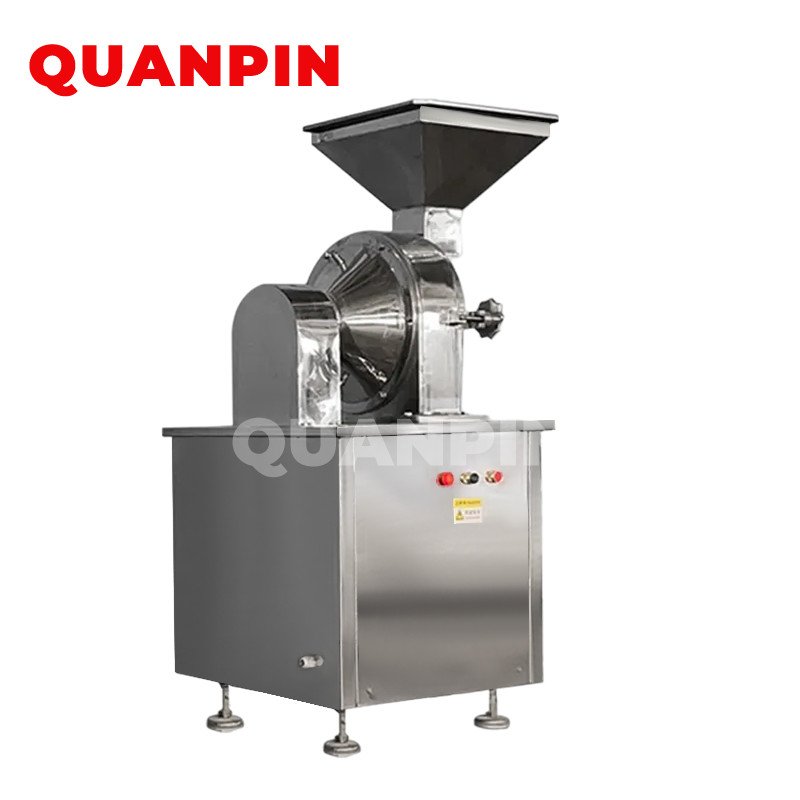
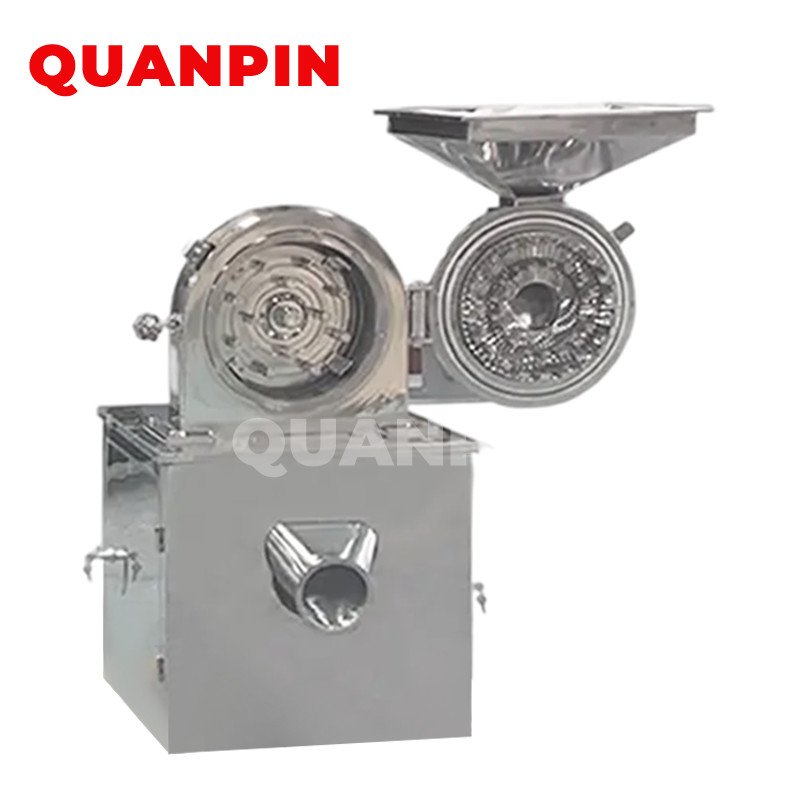
The WF Series Roughness Grinder is preliminary crushing equipment. Review the actual feed and receiving process before deciding whether an additional stage is useful.
Define the Job of the Preliminary Stage
Define the preliminary stage by the condition it must deliver to the next operation. Avoid specifying the smallest possible intermediate particles without a reason linked to that receiving equipment.
Then define what the complete route must achieve. A convenient coarse discharge is not sufficient evidence that the final powder meets its intended requirements.
Separate Intermediate and Final Products
The intermediate product and the accepted final product are different material boundaries. Record both rather than using one favourable sample to describe the complete process.
A coarse grinding machine changes feed form through its confirmed mechanical arrangement. Any benefit to a later mill must be demonstrated with the resulting intermediate material.

Five Inputs for a Route Comparison
Incoming form
Describe incoming pieces, lumps or other feed forms and their size range. A single typical piece may not represent the material that the equipment must receive.
Intermediate target
State the intermediate objective and how it will be measured. Include the receiving machine’s relevant feed requirements without inventing a universal pre-crushing size.
Final product objective
State the final product objective independently. Use an appropriate distribution or application test rather than assuming the intermediate-stage setting establishes the final result.
Material condition
Record material identity, moisture and preparation history. Their influence must remain visible when comparing routes or repeated tests.
System boundary
Define which equipment and operating periods belong in the comparison. Excluding transfers or idle operation can change what an energy figure represents.
Read Food-Material Grinding Evidence Carefully
Original triticale-grain grinding experiments compared several cultivars using a knife mill. They examined grinding energy alongside the resulting particle characteristics.
The material was conditioned grain, and cultivar differences remained part of the study. Its experimental apparatus does not establish a WF operating limit or guaranteed food-product result.
This supports defining the actual food feed before judging a preliminary stage. A later machine receives the intermediate material produced, not an abstract equipment capacity.
An industrial coarse grinder proposal should therefore describe its intermediate duty clearly. Research on another food mill informs the comparison without replacing a representative equipment trial.
Six Boundaries in a Staged Trial
Characterize the feed
Characterize the feed before the first stage. Preserve variations that could make one test easier to process than the proposed production material.
Confirm preliminary equipment
Confirm the preliminary equipment and fitted arrangement with QUANPIN. Do not transfer research knife, hammer or disc geometry into a WF specification.
Measure intermediate output
Measure the intermediate output under a stated method. Its distribution and material condition provide the actual basis for assessing the next stage.
Record the next stage
Record what enters the next machine and what that machine does. An intermediate collection that changes moisture or preparation should be part of the trial record.
Evaluate final product
Evaluate the final product against the same objective for each route. An energy reduction is not a like-for-like improvement if the resulting product is different.
Reconcile the route
Reconcile the route as a whole. Include relevant retained material, transfers and separate collections when explaining the accepted output.
Compare Energy on an Equal Basis
Define the energy numerator
State whether energy means electrical input, mechanical input or another measured quantity. These terms should not share an unqualified number.
An original cinnamon and black-pepper investigation compared energy consumption and size distributions using three milling arrangements. Its researchers controlled the incoming particle dimensions during the comparison.
The study illustrates why feed condition and resulting distribution belong beside an energy result. A favourable measurement on one spice and apparatus is not a transferable WF setting.
Define the product denominator
Define the mass basis used to express specific energy. A figure divided by feed mass can answer a different question from one divided by accepted final product.
Keep moisture basis visible when it affects the comparison. A change in water carried with the feed can alter the mass used in a reported ratio.
Avoid describing motor rating as measured route energy. Rated power identifies a specification; an actual trial requires measurements over a defined operating period.
Compare equivalent objectives
Compare routes that achieve equivalent final objectives. If one route makes a substantially finer powder, the difference includes a changed processing duty.
Keep throughput and operating duration with the material results. A brief selected interval should not silently represent the entire required production cycle.
A coarse pulverizer enquiry benefits from this complete basis. It lets the supplier review the preliminary task without promising an untested downstream advantage.
Interpret Different Mill Principles
An original mango-seed-kernel study separately examined mechanical characteristics and grinding behaviour. It linked material fracture observations with a measured grinding result.
A mechanical test on a kernel and a processing test in a mill are different observations. Do not turn one fracture measurement into a guaranteed continuous processing rate.
The food-material lesson is to describe the feed being broken. A coarse crusher for a brittle ingredient and one processing a fibrous botanical can face different material behaviour.
Keep the confirmed mechanism explicit. The WF cuts and crushes suitable feed with its supplied working arrangement; research hammer, knife or roller geometry must not become an assumed WF component.
Keep Feed Preparation Visible
An original low-moisture wheat-grinding investigation examined feed preparation together with grinding and wholemeal-flour properties. It evaluated a specific food-production objective.
Its findings support retaining moisture and preparation in the comparison. They do not justify dehydrating every food feed or promising the same energy or dough response for another ingredient.
Investigate the Complete Route
An original three-spice knife-milling experiment investigated cinnamon, coriander and star anise while varying loading and grinding time. Their physical properties influenced the size-reduction response.
This supports material-specific preliminary trials, not a universal loading instruction. Any claimed advantage from an added coarse stage still needs a complete, matched comparison.
If the preliminary stage helps feeding but total energy rises, retain both observations. Handling suitability and energy consumption are separate decision criteria.
If final product changes, investigate that difference before ranking energy figures. A changed product objective prevents a straightforward efficiency comparison.
If the intermediate material varies between runs, review the incoming feed and preparation. Do not assume the next mill alone explains the resulting final distribution.
Preserve unexplained observations as part of the comparison. They identify where another representative test or a clearer measurement boundary may be needed.

Prepare the Coarse-Crushing Enquiry
Prepare the enquiry with incoming form, preliminary objective and next-stage requirements. Describe cleaning, collection and installation needs for the actual material.
Explain whether the proposed duty concerns food ingredients, pharmaceutical material or another confirmed application. Match the equipment review to the relevant industry requirements.
Retain the Demonstrated Scope
Retain the route diagram, material identities and measurement bases with the result. An isolated equipment figure cannot describe all operations needed for accepted product.
A useful proposal identifies the preliminary duty demonstrated and any receiving-stage questions still unresolved. It should keep research context separate from confirmed equipment performance.
Frequently Asked Questions
Does an extra stage always save energy?
No. A preliminary stage adds its own work and may change downstream behaviour. Compare the entire route at equivalent final objectives rather than assuming a saving.
Is coarse output the final fine-powder specification?
No. Preliminary output must suit the next operation; the final fine-powder requirement needs its own measurement after the complete route.
Can screen opening replace particle measurement?
No. A fitted opening describes a component. The actual collected size distribution requires a suitable product measurement and a clearly identified specimen.
Can another food material establish WF performance?
No. Published food-grinding tests concern their stated materials and apparatus. They do not provide performance guarantees or settings for a proposed WF duty.
Does feed conditioning belong to the WF?
No. Research that separately conditions feed does not establish that the WF includes those operations. Confirm the supplied coarse-crushing equipment scope with QUANPIN.
What supports a route review?
Provide actual feed characteristics, intermediate and final objectives, the receiving operation and a defined comparison boundary. Explain the product and handling requirements the complete route must satisfy.
Discuss Your Preliminary Size-Reduction Duty
Discuss the material, processing objective and required trials with QUANPIN. Review the equipment information and the relevant industry applications, or send an enquiry through our contact page.
Email sales@qpdryer.com or stacie@qpdryer.com. Call +86 19850785582 or contact WhatsApp +86 15921493205 to discuss the proposed scope.
For process evaluation, consider the pharmaceutical coarse crusher for initial coarse size reduction; the pulverizer machine for grinding suitable prepared dry feed; and the air classifier mill for fine grinding with air classification. Confirm suitability with representative material, the required product properties and the proposed process conditions.