Black Tea Drying Audits: Define Energy Boundaries and Product Acceptance Together
By QUANPIN
A black-tea drying audit should explain which energy enters the assessed system, what useful outcome is counted and whether the dried tea remains acceptable. An efficiency percentage without those definitions is difficult to compare or act upon.
For a hot air circulation oven enquiry, present the intended product duty and the proposed assessment boundary. Published tea-dryer figures can guide an investigation, but they do not establish the performance of a different machine or installation.
Define the Energy and Exergy Boundaries
Energy analysis accounts for quantities crossing a defined system boundary. The boundary might cover a drying chamber, the air-heating arrangement or a more complete production operation, and those choices change the meaning of the result.
Exergy analysis adds a thermodynamic perspective on the usefulness of energy relative to stated reference conditions. It is not another name for electricity consumption and should not be presented as a direct utility-bill saving.
Choose the Operational Question
Begin with the operational question rather than a preferred metric. Locating an important loss, comparing tested operating conditions and evaluating a proposed equipment change require different evidence.
Keep the product objective visible alongside the thermodynamic assessment. An apparently favorable energy result is not sufficient if the tea fails the agreed moisture, chemical or sensory requirements.
Five Records Needed for a Tea-Drying Audit
Tea feed and output basis
Record the tea feed condition and the basis for product quantity. Differences in starting moisture, product handling or the amount of accepted output can affect the relevance of a reported comparison.
Thermal and electrical inputs
Record every energy input included in the calculation. Thermal input and electrical auxiliaries should remain identifiable instead of being combined into an unexplained total or partially omitted.
Assessment period
Record the assessment period and production state. An observation during a particular drying stage should not be represented as an average for the complete production campaign without an appropriate calculation.
Outlets and estimated losses
Record the outlets and losses included in the balance. State assumptions where complete measurement is impractical, and retain the distinction between observed quantities and estimated contributions.
Metric definitions
Record the definitions used for specific consumption and efficiency. The numerator, denominator, units and reference conditions are essential parts of the reported result rather than optional supporting detail.
Design a Comparable Assessment
A useful audit separates the measured operation from the model used to interpret it. Keep the raw observations available and document the assumptions required to construct the energy or exergy balance.
Compare results only after checking their boundaries and bases. A figure per unit of made tea should not be ranked directly against one per unit of removed water without the information needed for a valid comparison.
Where stages are assessed separately, preserve those stage identities in the report. A late-stage observation can suggest a different operational question from one collected earlier in the drying sequence.
Report uncertainty and missing observations in proportion to their importance. A precise-looking percentage should not conceal an assumption that materially changes the interpretation of the system.
Follow Six Steps Through the Audit
Define the control volume
First define the control volume and the question to be answered. Identify the equipment and operations included before placing meters or choosing a calculation from a published paper.
Establish the material basis
Next establish the material basis and sampling plan. Determine how feed and accepted output will be identified, and how the product condition will be linked to the assessment period.
Collect operating observations
Then collect thermal and electrical observations consistently. Record the actual operating state so that changes in production do not become invisible within a single aggregate consumption value.
Construct the balance
Construct the balance using the agreed definitions. Keep measurements and estimates separate, and check whether an apparent imbalance points to missing information rather than an equipment conclusion.
Evaluate the tea
Evaluate the dried tea against the product criteria. Connect those results with the operating condition being assessed instead of treating energy performance and product acceptance as unrelated reports.
Compare justified alternatives
Finally compare justified alternatives and document the remaining questions. An audit can identify where a further trial is useful without yet proving the economics or performance of a proposed modification.
What Original Tea-Drying Research Establishes
Thin-layer thermodynamic study
An original thin-layer tea-drying study investigated drying conditions alongside several thermodynamic indicators. Its experiment considered tea-layer thickness and temperature within a convective hot-air arrangement.
The thin-layer investigation illustrates why the material presentation belongs in the assessment. Its models and performance indicators are specific to the experimental arrangement and cannot serve as guaranteed figures for a tray dryer.
When preparing a hot air drying oven trial, record loading and material presentation rather than describing the condition only by an air-temperature setting. The purpose is a traceable comparison of the tested duty.
Industrial gas-system analysis
A separate original study examined energetic, exergetic and economic aspects of an industrial gas-type black-tea drying system. It considered the drying operation in defined periods and analyzed contributions within that particular system.
The industrial black-tea analysis supports distinguishing stage-dependent observations from a single headline value. Its numerical results belong to the investigated installation and are not a performance specification for QUANPIN equipment.
Use such studies to decide which streams and periods deserve investigation. Do not turn a reported loss contribution into an assumed saving before assessing the feasibility and consequences of changing the system.
Factory multi-response comparison
An original factory experiment with an endless-chain-pressure dryer evaluated drying temperatures alongside energy consumption and chemical and sensory observations of the tea produced.
The ECP temperature study demonstrates a multi-response assessment. The operating condition selected in that factory cannot be copied as a universal optimum for another tea, dryer or manufacturing arrangement.
A practical comparison should retain this combination of product and process evidence. A reduction in a particular consumption indicator is meaningful only within the defined duty and the accepted product outcome.
Separate Heat Generation from Dryer Performance
Heat generation can also be assessed as its own subsystem. An original investigation applied energy and exergy analysis to a coal-fired furnace supplying hot air for a tea-drying installation.
The tea-furnace investigation shows why the air-heating boundary should be stated explicitly. Its fuel and apparatus differ from other heat sources, so its findings do not establish an improvement available in every hot-air system.
Another study examined a three-stage tea-drying system with a continuous vibro-fluidised-bed dryer through a thermodynamic and parametric analysis using literature data.
The university record of that analysis provides a different modeling example. It should not be described as a direct trial of a batch oven, nor as measured evidence for a proposed QUANPIN configuration.
Interpret Conflicting Indicators
If two studies report different efficiencies, first inspect their definitions, reference conditions and system boundaries. A difference in reported numbers is not by itself proof that one dryer is inherently superior.
If the energy indicator improves while tea acceptance deteriorates, report both outcomes. The development question may require a balanced operating window rather than maximizing one thermodynamic value.
Prepare the Drying Equipment Enquiry
Describe the tea material and the intended drying duty when requesting an equipment assessment. Include the feed condition, required final product condition and the observations available from the existing operation.
Identify the proposed heat source and the assessment boundary. State whether the discussion includes heating, air movement, the drying chamber or additional handling operations so that the supply and audit scopes remain understandable.
Provide the required loading arrangement and expected production organization. Confirm these details with the supplier instead of assuming that a general equipment description establishes suitability for the particular tea duty.
Agree the measurements and product tests needed from a trial. Identify which observations can be collected directly and which require an analytical laboratory or a separate thermodynamic assessment.
When discussing hot air tray dryer price, compare confirmed supply scopes. Heating arrangements, utilities, controls and trial services should be identified explicitly before treating different quotations as equivalent.
Ask for an agreed trial report and its limits. A proposal should not promise a particular consumption, exergy efficiency or financial return without relevant evidence for the defined operating conditions.
Confirm the Proposed Tea Duty
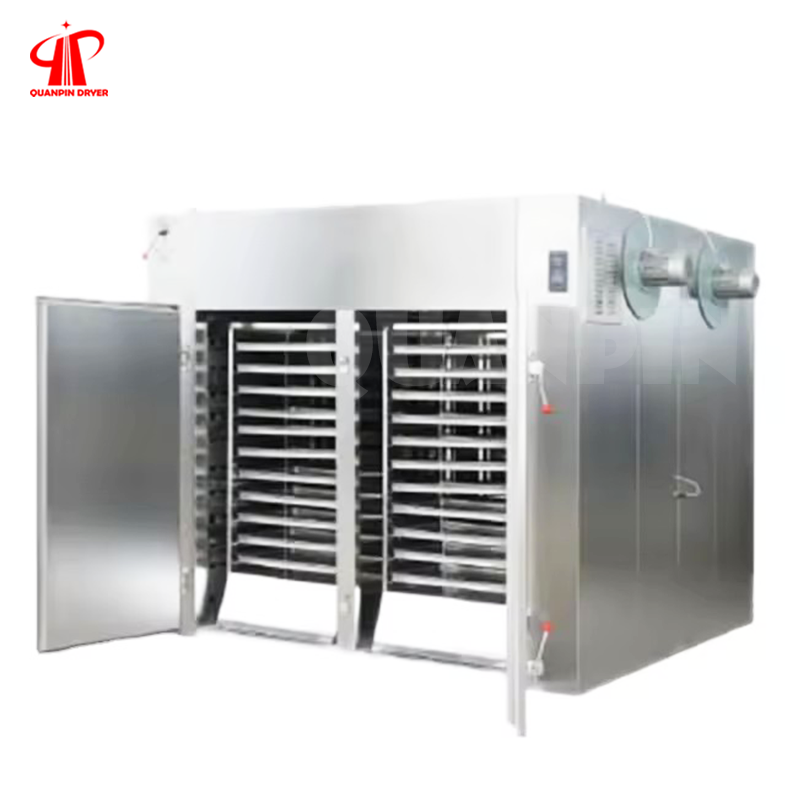
The CT-C equipment information can start a conversation about a batch hot-air duty. It does not establish equivalence with a gas-fired industrial tea dryer, an ECP system or a continuous vibro-fluidised installation.
Select the equipment for the confirmed material, loading and operating requirements. Research on tea-drying thermodynamics provides useful questions, while equipment suitability and performance remain subject to the proposed configuration and trial.
Preserve a Traceable Audit Conclusion
The final report should connect each metric with its boundary, material basis, operating period and calculation. Retain the measurements and assumptions needed for another reviewer to understand the result.
Keep a proposed improvement distinct from a demonstrated outcome. A thermodynamic audit may locate a promising investigation area without proving a saving, a product-quality improvement or a guaranteed equipment payback.
Frequently Asked Questions
Can efficiency percentages be compared directly?
No. An efficiency value needs its definition, system boundary and operating conditions. Without that context, comparing percentages can conceal fundamentally different duties or calculations.
Are energy consumption and exergy the same?
No. Specific consumption describes an energy quantity relative to a stated basis. Exergy analysis uses a thermodynamic reference framework and should not be renamed as a direct electricity-cost measurement.
Can a published temperature optimum be copied?
No. The best result for a tested factory and tea material is not a universal setting. A different duty requires its own process and product assessment.
Does the heat-source boundary matter?
Yes. Whether heating is inside or outside the control volume changes the assessment. State the boundary before interpreting losses or comparing reported efficiencies.
Is lower consumption sufficient?
Not by itself. The tea must also meet the agreed product criteria. A useful trial connects consumption observations with the condition and acceptance of the product produced.
What should an enquiry contain?
Provide the feed and product requirements, heat source, loading arrangement, assessment boundary and proposed tests. Confirm the supply scope and evidence required before adopting a performance or savings claim.
Discuss Your Drying Requirements
Discuss the material, processing objective and required trials with QUANPIN. Review the equipment information and the relevant industry applications, or send an enquiry through our contact page.
Email sales@qpdryer.com or stacie@qpdryer.com. Call +86 19850785582 or contact WhatsApp +86 15921493205 to discuss the proposed scope.
For process evaluation, consider the hot air oven for batch tray drying with circulating hot air. Confirm suitability with representative material, the required product properties and the proposed process conditions.