Bin Blender for Pharmaceutical Powders: Compare Proposed Loading Access with the Actual Handling Route
By QUANPIN
A bin blender loading proposal should be reviewed against the route the pharmaceutical material actually takes. An accessible opening on a drawing does not establish that the planned charging operation is complete or workable.
Define the source container, handling steps and confirmed receiving connection before comparing alternative loading arrangements. Explore matching pharmaceutical applications.
Does the Proposed Access Match the Material Route?
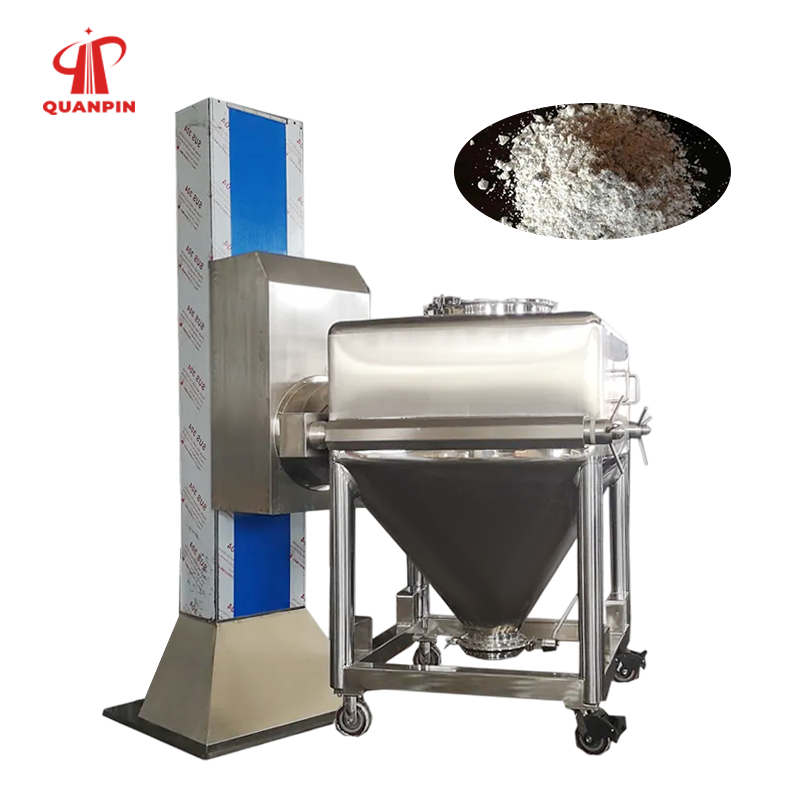
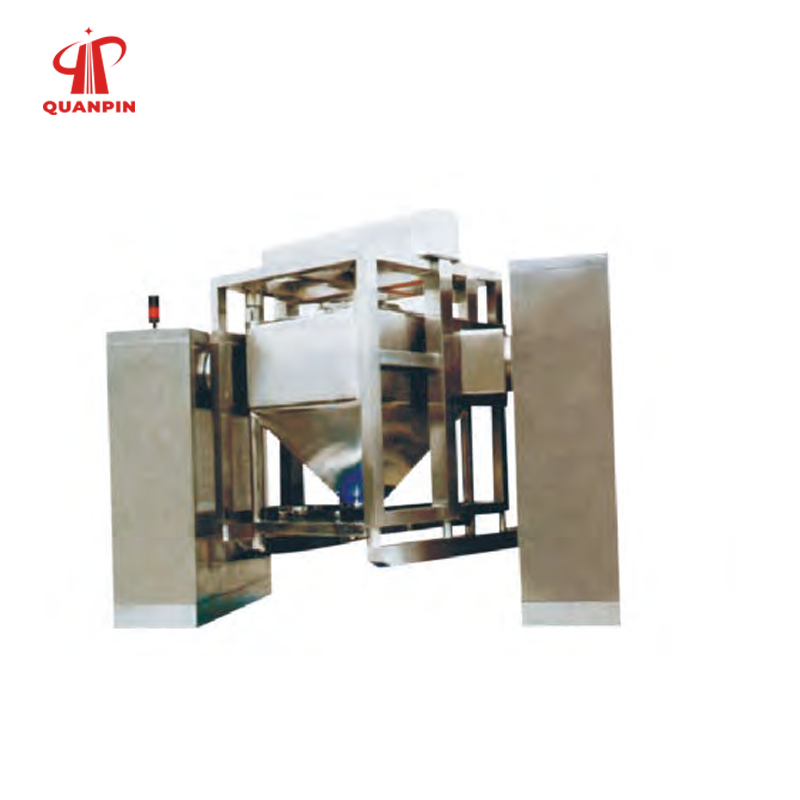
The HLD hopper mixer is reviewed as a hopper-based powder-blending arrangement for compatible formulations.
The proposed configuration must identify its actual loading boundary rather than borrow accessories or handling features from a different installation. Use product-specific development knowledge to justify the attributes being examined. See FDA ICH Q8 pharmaceutical development.
Hopper Loading and the Confirmed Supply Boundary
A hopper mixer machine quotation should distinguish equipment supplied with the mixer from customer-provided transfer arrangements.
A material-route drawing can expose an omitted handoff without claiming a specific lifting or charging capability.
Five Steps to Review the Loading Route
Locate the source material
Identify where the pharmaceutical powder starts its loading journey.
Trace every movement
Trace the physical movements and intermediate holding stages.
Identify the receiving connection
Describe the actual receiving opening and connection.
Assign interface ownership
Assign responsibility for each handling interface.
Review the confirmed arrangement
Review the route using confirmed drawings and approved operating requirements.
Four Handoffs to Make Explicit
An upstream bag, drum or other source container should be described as actually proposed, not selected by assumption.
Any intermediate receiver introduces another product-contact and identification boundary.
The final mixer loading connection must match the confirmed equipment configuration.
Operator tasks and separate handling equipment need an explicit scope when they are part of the proposed route.
Equipment and Facility Loading Interfaces
Source container
The source container establishes the initial material-holding boundary.
External transfer equipment
External transfer equipment performs only the functions confirmed for the proposed project.
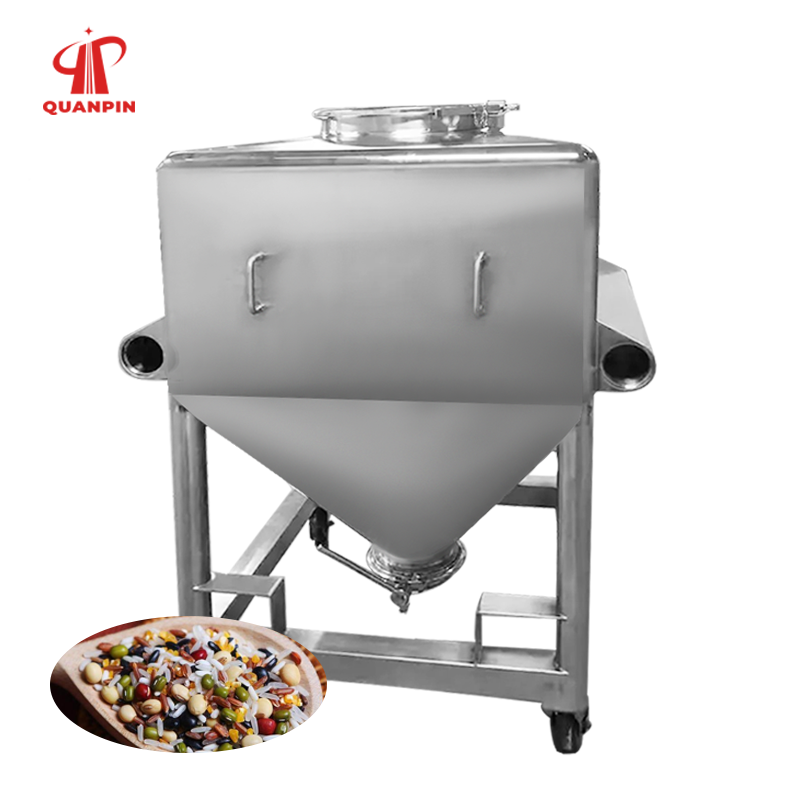
Hopper loading connection
The hopper loading connection is the point where the assigned batch enters the mixing scope.
Closures and seals
Closures and relevant seals need review for the actual material and cleaning conditions.
Access provisions
The installed arrangement determines operating, cleaning and maintenance access.
Receiving and discharge
Receiving and discharge connections belong in the complete process description even when the immediate question concerns charging.
Comparing Drawings with the Real Charging Sequence
Describe the real sequence
For a powder blender, proposed loading access should be compared with the actual preparation and transfer sequence.
A drawing that shows available space does not identify who supplies a missing connecting component.
Identify whether charging requires a container change before the material reaches the mixer.
Identify missing functions
Record which stage establishes the quantity or identity of the charge without inventing a weighing function.
Keep any proposed manual task visible so that the facility team can assess its practical requirements.
A powder mixer specification should describe containment needs without claiming that an untested connection achieves them.
Preserve confirmed engineering information
Review product-contact cleaning across the complete route, including customer-supplied interfaces.
Do not substitute a photograph for confirmed project drawings or dimensional information.
A change in the source container can create a new interface question even when the mixer model remains unchanged.
Pharmaceutical Handling and Contact Requirements
Reviewing the actual route can clarify an incomplete proposal before installation.
It can also separate a loading-access question from a blending-performance question. A development comparison should not be presented as complete validation of an untested production process. See FDA process validation guidance.
It does not establish a safe lifting load, a charging rate or a containment result.
Those requirements need appropriate engineering information and evidence for the real configuration.
Document the Source and Transfer Route
Supply the source-container description and relevant material properties.
Identify each intermediate vessel or transfer stage actually proposed. Assess relevant quality risks using the actual material and process context. See FDA ICH Q9 quality risk management.
Connection Records, Access and Handling Requirements
Provide the confirmed loading connection or mark it as unresolved.
Assign supplier and customer responsibilities for connecting equipment.
List cleaning, access and containment requirements for review.
Preserve the drawing revision used to agree the route. Interpret measurements through process understanding rather than treating an isolated instrument reading as product acceptance. See FDA process analytical technology framework.
Loading and handling must follow the approved procedures for the actual installation.
A convenient opening does not replace a review of mechanical safety, exposure and material-control needs.
Provide QUANPIN with the Complete Loading Scope
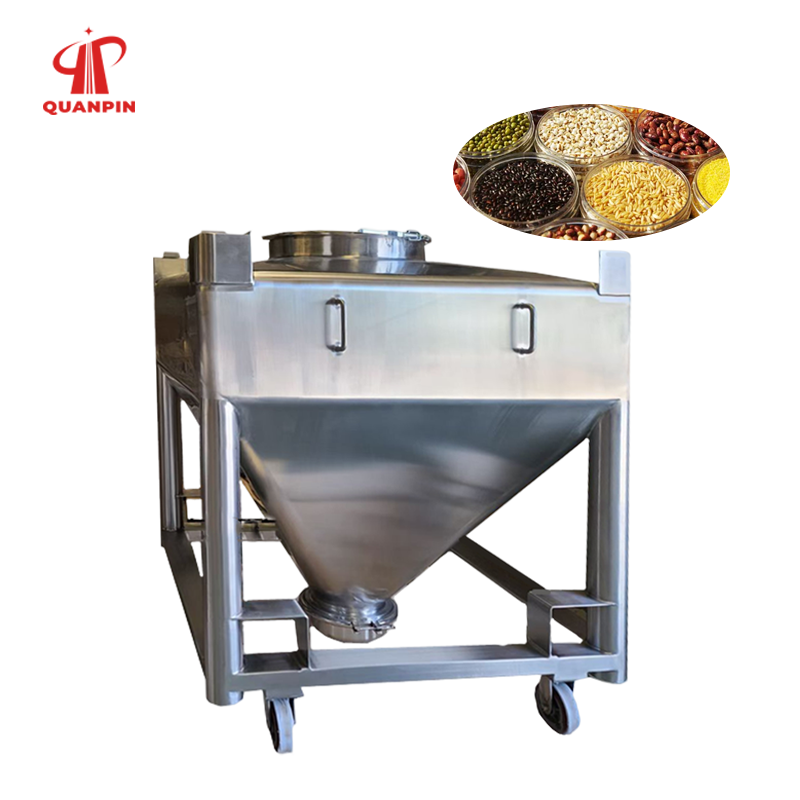
Send QUANPIN the complete material route rather than an isolated image of the mixer opening.
Ask for confirmation of the proposed hopper, connections and any separately supplied loading accessories.
Retain the Agreed Route and Its Limits
A coordinated enquiry should show where equipment supply meets customer handling responsibilities.
The agreed route can then support a representative development or installation review. Retain knowledge and manage adopted process changes through the pharmaceutical quality system. See FDA ICH Q10 pharmaceutical quality system.
Frequently Asked Questions
Does an opening define the full operation?
An opening on a drawing does not establish the complete loading operation.
Are separate handling accessories included?
Separate transfer or lifting equipment is included only when its scope is expressly confirmed.
Why identify intermediate receivers?
An intermediate receiver creates another material and product-contact boundary.
Can a photograph confirm compatibility?
A photograph cannot establish project dimensions or accessory compatibility.
Does a changed source affect the interface?
An unchanged mixer model does not prove that a changed source container uses the same loading arrangement.
What should the route enquiry show?
The enquiry should identify the source, movements, receiving connection and responsible parties.
Discuss Your Bin-Blending Application with QUANPIN
Discuss the matching QUANPIN equipment with QUANPIN. Use the enquiry form or our contact page to describe the actual application.
Email sales@qpdryer.com or stacie@qpdryer.com. Call +86 19850785582, or contact us on WhatsApp: +86 15921493205.
For process evaluation, consider the single-arm lifting hopper mixer for lifting and blending in a single-arm hopper arrangement. Confirm suitability with representative material, the required product properties and the proposed process conditions.