Before Buying High-Shear Wet Equipment: Compare Liquid Binding with Melt Solidification
By QUANPIN
Before specifying a high shear granulator for wet processing, distinguish a liquid-binder route from a melt-binding route. Similar-looking granules can form through different mechanisms and require different equipment.
This educational comparison does not identify the QUANPIN GHL as a heated or melt-granulation system. Any thermal-processing requirement needs separate technical confirmation.
Binding Routes Require Different Process Descriptions
In a liquid-binder route, a formulation encounters the specified liquid and subsequently may require drying. In a melt route, a softened or molten binder can bind particles before solidifying.
These routes should not share an operating description merely because both produce agglomerates. The binding mechanism and subsequent treatment differ.
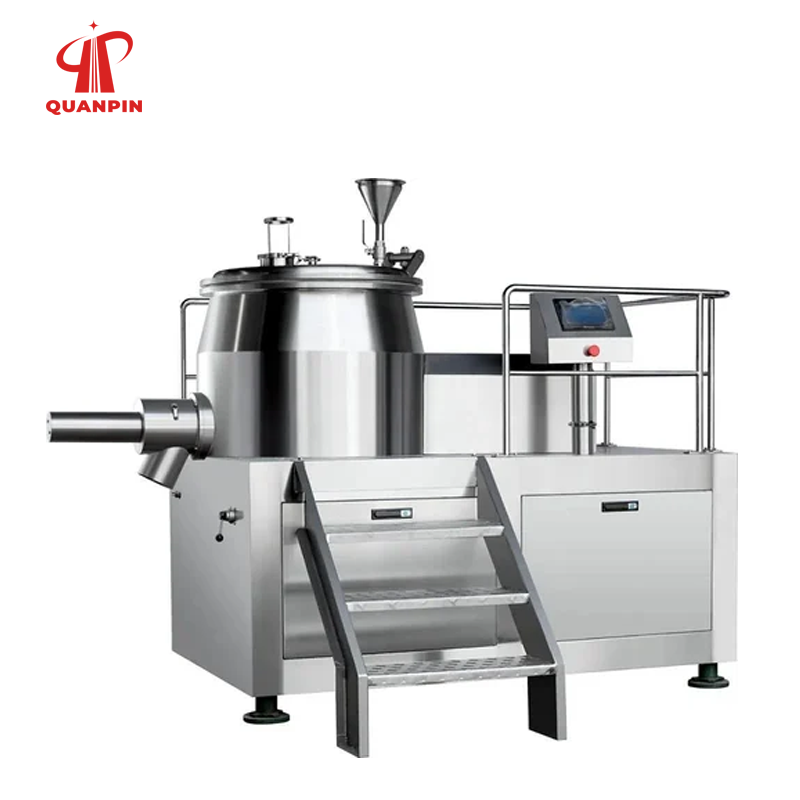
Keep the GHL Wet-Processing Scope Explicit
A rapid mixer granulator enquiry should state the intended wet-processing duty. Do not add a heating capability based on research using another machine.
The comparisons below concern published heated apparatuses and their formulations. They are not supplied-machine demonstrations.
Five Definitions for a Route Comparison
Binder identity
Identify the binding material and the relevant formulation.
Product thermal condition
Distinguish nominal material melting information from the temperature experienced by the product.
Thermal-energy arrangement
Identify how the research apparatus supplies thermal energy.
Subsequent treatment
Describe the subsequent cooling or drying operation separately.
Required product response
Define which final material property the comparison is intended to explain.
Why Binder Solidification Requires Separate Evidence
Solidification can affect a granule after the initially binding liquid has formed.
An original PEG 6000 fluidized hot-melt study investigated crystallization during solidification. Different crystallization behaviour affected particle retention on the studied granules.
The research used thermal analysis and microscopy with its own preparation. It does not provide a universal cooling condition or GHL specification.
Binder behaviour during cooling therefore deserves its own investigation rather than being inferred solely from a nominal melting point.
Six Stages of a Thermal Binding Investigation
Before heating
Before heating, characterize the proposed binder and solids.
During thermal exposure
During thermal exposure, distinguish the product condition from an external setpoint.
During adhesion
During adhesion, identify which material is mobile and which remains particulate.
During continued processing
During continued processing, preserve the actual apparatus and material interaction.
During cooling
During cooling, evaluate the solidification response relevant to the formulation.
During finishing
During finishing, assess the actual granule or tablet attribute rather than assuming it follows from binding alone.
Distinguish Published Thermal Mechanisms
Investigate seed-based growth
Different heated geometries can implement different preparation mechanisms.
An original tumbling melt-granulation study fed meltable and non-meltable material onto seeds in a centrifugal fluidizing apparatus. It investigated material and process factors affecting bead formation.
That mechanism requires the studied thermal and feeding arrangement. It cannot be described as an ordinary GHL wet-massing operation.
Distinguish partial melting
A binder need not be wholly liquid for a thermal preparation to change particle adhesion.
An original hydrogenated-castor-oil bead study investigated a partially melted coating material followed by cooling. Release properties were evaluated for the resulting products.
Its coating and drug-release findings belong to that research route. They do not establish a coating function in the proposed wet high-shear machine.
Assess adsorption and downstream survival
Melt adsorption introduces another mechanism involving a porous adsorbent and a mobile hydrophobic material.
An original melt-adsorption investigation evaluated different waxes and subsequent tablets. The researchers found that downstream compression could disrupt the studied functional particles.
This illustrates why forming particles and preserving their final function are separate questions. Its wax choice and pressing conditions are not transferable instructions.
A Meltable Nucleus Is Another Route
A low-melting nucleus can itself provide the binding material in a fluidized system.
An original fluidized melt-granulation experiment examined nucleus properties and powder adhesion. The mobile material entered the spaces among adhered particles in the studied mechanism.
The result concerns that heated nucleus-based method. It does not establish that the same feed is suitable for liquid-assisted GHL processing.
These examples describe distinct thermal mechanisms. They should not be combined into a generic claim that every granulator performs the same operation.
Translate the Formulation into an Equipment Duty
A high shear mixer granulator comparison should begin with the route required by the formulation. Equipment suitability follows from that duty.
Confirm liquid handling, thermal requirements and subsequent treatment as actual proposal items rather than inferred accessories.
Investigate Different Outcomes
If two routes produce similar size distributions, do not assume equivalent binder structure or final function.
If a product-temperature reading differs from a heating-system setpoint, retain both definitions before interpreting binder behaviour.
If solidification changes particle integrity, investigate the cooling stage instead of attributing every difference to mixing.
If partially softened material adheres in one study, do not assume another binder will behave identically.
If later pressing changes release, distinguish the finishing contribution from the original binding operation.
If a moisture-sensitive formulation motivates a route comparison, evaluate the complete process rather than declaring every melt route preferable.
Prepare the Supplier Comparison
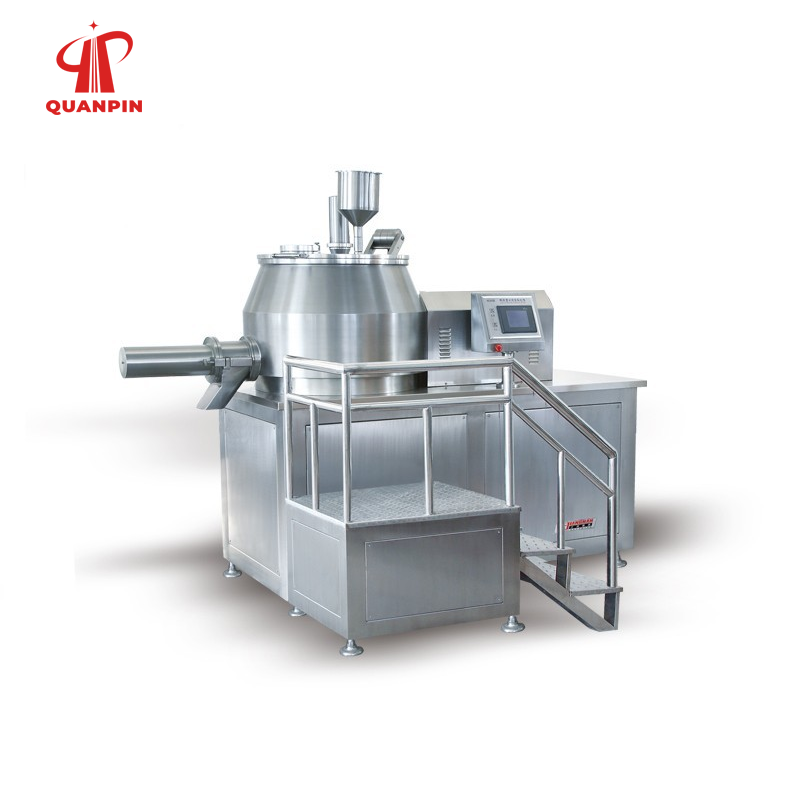
For a high shear wet granulator enquiry, state the intended liquid-assisted duty and identify any alternative route under investigation.
Ask the supplier to confirm what equipment is needed for each route. A comparison may require a different machine or a separate development arrangement.
Compare Confirmed Configurations
A high shear granulator price quotation should cover the confirmed configuration. Thermal processing and cooling cannot be assumed included.
The useful conclusion identifies the binding mechanism, subsequent treatment and tested product response without turning another apparatus into a claimed GHL feature.
Frequently Asked Questions
Does GHL imply thermal capability?
No. The GHL wet-processing product must not be assumed to have heating or melt-processing capability.
Is melting-point data product temperature?
No. Material data and the product thermal history describe different information.
Does adhesion complete the investigation?
No. Solidification behaviour can affect particle structure after adhesion has occurred.
Must every thermal binder be fully molten?
No. Thermal preparation can involve different degrees of softening and different physical mechanisms.
Does similar size establish equivalent product?
No. Similar particle size does not establish equivalent structure or downstream function.
What should the enquiry describe?
Define the liquid-binder duty, alternative mechanism and required product evidence. Confirm every thermal or finishing operation separately.
Discuss Your Wet-Granulation Requirements
Discuss the material, processing objective and required trials with QUANPIN. Review the equipment information and the relevant industry applications, or send an enquiry through our contact page.
Email sales@qpdryer.com or stacie@qpdryer.com. Call +86 19850785582 or contact WhatsApp +86 15921493205 to discuss the proposed scope.
For process evaluation, consider the high speed mixer granulator for high-shear preparation of a suitable wet granulating mass. Confirm suitability with representative material, the required product properties and the proposed process conditions.