The YK process forms granules by working prepared material through a screen with oscillating mechanical action. It relies on the condition of the incoming mass: binder distribution and wet-mass preparation take place upstream. A pharmaceutical team evaluating this route should follow how a damp blend approaches the screen, passes through it and reaches the dryer without being compressed back into a lump.
The attraction is a direct sizing and forming step whose result can be inspected at the outlet. However, screen selection alone cannot correct a feed that crumbles, smears or changes while waiting. A lactose and starch wet blend is a useful example for planning observations, subject to formulation trials. The following sequence connects preparation, passage and drying while keeping equipment operation separate from claims about finished-drug performance.
- Characterize the prepared mass. Break open representative portions and compare their interiors with their surfaces. Dry pockets or highly wet patches indicate a preparation issue before the screen is involved. Record the upstream mixing history so differences in passage can be related to feed condition rather than attributed automatically to the machine. Discuss this step with the Oscillating Granulator supplier. For applicable finished-drug operations, 211.105 requires the site to identify equipment and containers with the material and processing status.
- Control the waiting stage. Define how prepared wet material is held before feeding and examine samples over the expected interval. Surface drying can make a previously workable mass crumbly, while compaction in a deep container can change how it enters. Include the normal production wait in the demonstration when practical.
- Inspect the installed screen. Verify identity, condition and correct assembly through the approved procedure before starting. Openings partly covered by old deposits do not present the same passage as a clean screen. Keep the inspection result with the trial record so output differences have a traceable equipment context. For applicable finished-drug operations, 211.110 requires the site to use appropriate in-process controls and sampling.
- Feed manageable portions. Observe whether material reaches the working region steadily or arrives as large compressed blocks. An uneven supply can make oscillating passage appear intermittent even when the mechanism runs consistently. Establish a practical feeding method with the operators and compare consecutive outlet samples rather than relying on a single handful. Discuss this step with the oscillating granulator machine supplier.
- Watch the forming action. The oscillating element works the damp mass through screen openings. Useful feed deforms sufficiently to pass while maintaining a recoverable granular form. A powdery discharge suggests a different problem from a pasted screen face, so document those conditions separately and investigate their relationship to mass preparation. For applicable finished-drug operations, 211.111 requires the site to establish appropriate production time limits when necessary for quality.
- Respond to smearing through investigation. If wet material coats the screen, examine binder distribution and feed consistency before choosing an equipment change. More forceful working is not automatically a solution. Collect the affected material separately and describe the condition precisely so a supplier can distinguish adhesion from a mechanical assembly problem.
- Assess friable feed separately. A mass that breaks into fines may need a different preparation endpoint from one that smears. Compare the feed and discharge particle populations with appropriate methods. This prevents an apparent increase in small particles being mistaken for successful granulation when the upstream mass lacked sufficient cohesion. Discuss this step with the swing granulator supplier. For applicable finished-drug operations, 211.113 requires the site to apply appropriate procedures to prevent objectionable microbiological contamination.
- Preserve fresh granules during collection. Use a receiving arrangement that avoids avoidable crushing and prolonged deep accumulation. Damp granules can join together again if their surfaces remain adhesive. Observe the receiving tray as part of the process, because a satisfactory screen discharge can deteriorate before the operator carries it to drying.
- Link the dryer loading method. Spread or transfer material according to the intended drying procedure and inspect for clusters formed during handling. The output shape at the screen does not establish the final dried distribution. Compare representative dried samples and consider whether a subsequent sizing step is part of the intended process. For applicable finished-drug operations, 211.115 requires the site to use written procedures and quality-unit review for reprocessing.
- Investigate changed passage over time. A gradual decline in output can reflect screen coating, changed feed or another operating condition. Preserve the sequence of observations rather than averaging the whole run. Stop and inspect using the approved procedure when needed; observations must never require access to moving working components. Discuss this step with the pharmaceutical granulator supplier.
- Evaluate product-contact access. Demonstrate removal, cleaning, inspection and restoration of the screen and relevant working parts. Look for areas that retain damp material after routine emptying. The practical benefit of a straightforward forming route depends partly on whether operators can restore it consistently between pharmaceutical campaigns.
- Request a connected material trial. Give QUANPIN the actual prepared blend, its expected waiting time and the planned drying route. Ask for feed, fresh outlet and dried samples associated with identifiable stages. Select the screen and operating arrangement using evidence from that sequence rather than treating screen designation as a complete process recipe.
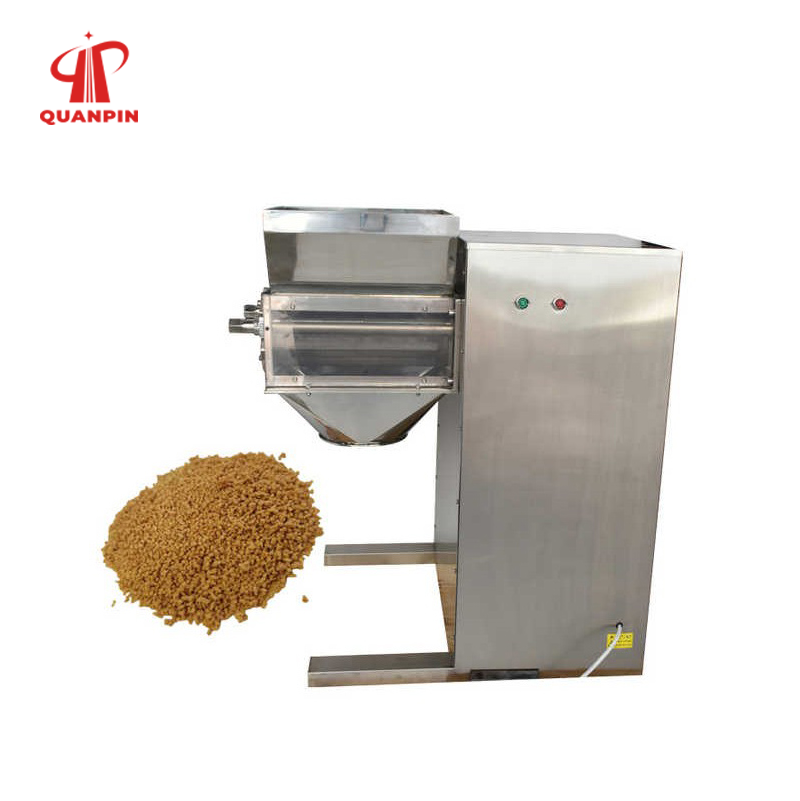
Discuss your material and production route with QUANPIN. Review the corresponding equipment information before arranging a material trial.
YANCHENG QUANPIN MACHINERY CO.. LTD
Sales Manager – Stacie Tang
MP: +86 19850785582
Tel: +86 0515-69038899
E-mail: stacie@qpdryer.com
WhatsAPP: 8615921493205
https://quanpindrying.en.alibaba.com/
Address: Jiangsu Province, China.