The defining feature of this process is oscillating movement that presses prepared mass through a screen. Equipment selection becomes clearer when the team follows the material from preparation through the working zone and into the receiving operation. For pharmaceutical manufacturing, that route must be developed around the actual formulation. A supplier description explains the mechanism; a representative trial establishes whether the selected configuration can produce the condition required by the next stage.
This guide focuses on observable material behavior rather than unsupported output or quality promises. Establish the incoming condition, identify samples by their location or collection time, and compare physical handling with the chosen analytical endpoint. The discussion assumes an appropriately assessed pharmaceutical process. It does not establish suitability for every solvent, potent substance or regulated product, and the equipment itself does not confer regulatory approval.
- Prepare the wet mass before evaluating the granulator. This machine depends on a suitable feed consistency rather than creating every formulation from dry powder alone. Examine whether a sample crumbles, smears or sticks when handled. Those observations help frame a controlled development trial with representative material. Discuss the Oscillating Granulator when reviewing this part of the process.
- Understand the oscillating action. Repeated movement works material against the screen so portions pass through its openings. The screen therefore participates directly in shaping the output. It should be selected with the mass behavior and intended downstream condition in mind, rather than treated only as a convenient accessory. For finished-drug operations within its scope, 21 CFR 211.105 addresses equipment identification; apply that requirement through the manufacturer’s quality system.
- Check the feed for unwanted hard objects. Foreign material or unusually hard lumps can interfere with screen passage and damage the working arrangement. Establish an appropriate preparation and inspection step. Keep the feed identity traceable so an unexpected obstruction can be investigated against the material actually charged.
- Feed at a rate the working zone can accept. Overfilling can compact the mass and obscure whether the screen is passing material consistently. Observe the hopper and the outlet together during trials. A stable-looking upstream pile does not prove that the discharge is uniform through time. Discuss the oscillating granulator machine when reviewing this part of the process.
- Compare a crumbly mass with a plastic one. A crumbly feed may break into short irregular portions, while a plastic feed can smear or form longer pieces. These differences arise from formulation and moisture as well as screen selection. Record behavior before adjusting multiple machine choices at once. For finished-drug operations within its scope, 21 CFR 211.110 addresses in-process controls; apply that requirement through the manufacturer’s quality system.
- Inspect the emerging granules immediately. Determine whether they separate freely or stick together on the receiving surface. Gentle collection can preserve a useful structure that would otherwise be lost through compression. Sampling only after a crowded collection bin may hide what the screen originally produced.
- Consider the influence of screen condition. Blocked openings and physical damage can change local passage and output character. Include inspection before use and after a difficult trial. Screen identity should remain linked to the batch record so later comparisons do not confuse equipment changes with formulation changes. Discuss the swing granulator when reviewing this part of the process.
- Coordinate wet granulation with tray loading. Material deposited in a deep pile may compact and dry differently from material spread promptly in a controlled layer. Define the receiving arrangement before starting. Successful screen passage is only one stage of the route to a usable dried granule. For finished-drug operations within its scope, 21 CFR 211.111 addresses time limitations; apply that requirement through the manufacturer’s quality system.
- Assess pharmaceutical excipient masses through downstream testing. Granule size, friability and flow after drying can differ from the wet appearance. Collect samples that represent the actual discharge period and handling method. Avoid assuming that a visually uniform wet output guarantees uniform blending or tableting behavior later.
- Control the time between preparation and screening. Some formulations change consistency while waiting, making a later portion behave differently at the same screen. Track holding time during trials and investigate any trend. The procedure should describe the feed condition at processing rather than merely its initial preparation. For finished-drug operations within its scope, 21 CFR 211.113 addresses microbiological controls; apply that requirement through the manufacturer’s quality system.
- Review cleaning around the screen and moving parts. Wet residues may remain on both sides of the openings and around attachment points. Confirm practical removal and reassembly with operating staff. A screen that is clean but fitted incorrectly can still compromise repeatable operation and equipment integrity. Discuss the pharmaceutical granulator when reviewing this part of the process.
- Define the procurement trial around real wet mass. Provide QUANPIN with feed consistency, expected variation, receiving dryer and the desired dried product. Ask the supplier to demonstrate passage, collection and cleaning access. Compare acceptable recovered output and handling effort instead of relying only on a short unloaded demonstration. For finished-drug operations within its scope, 21 CFR 211.115 addresses reprocessing; apply that requirement through the manufacturer’s quality system.
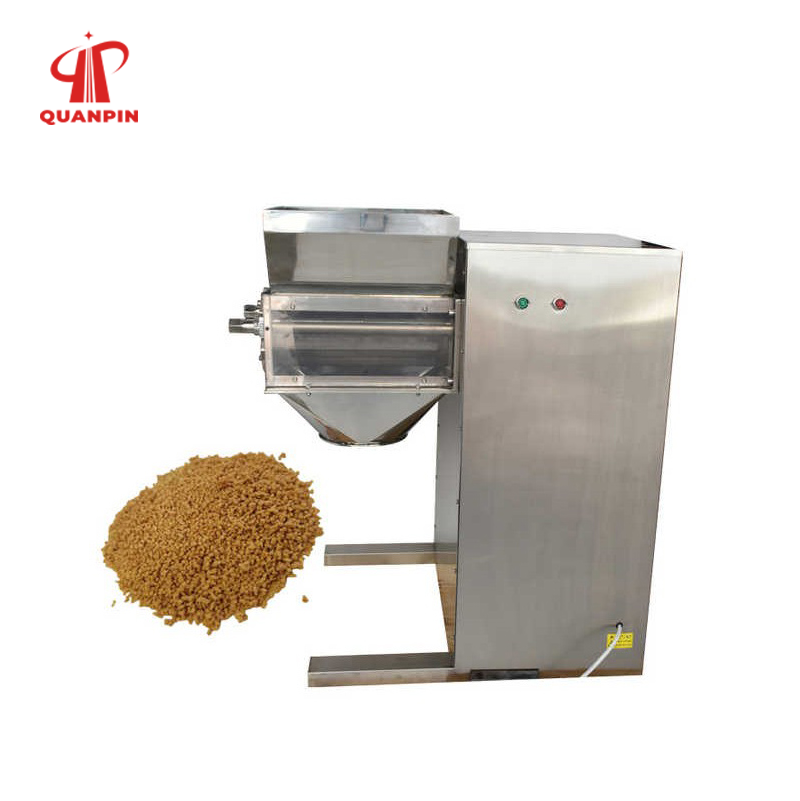
Discuss your material and production route with QUANPIN. Review the corresponding equipment information before arranging a material trial.
YANCHENG QUANPIN MACHINERY CO.. LTD
Sales Manager – Stacie Tang
MP: +86 19850785582
Tel: +86 0515-69038899
E-mail: stacie@qpdryer.com
WhatsAPP: 8615921493205
https://quanpindrying.en.alibaba.com/
Address: Jiangsu Province, China.