High Shear Granulator Chopper Trials: Test Circulation and Impeller Interaction Before Increasing Speed
By QUANPIN
A chopper trial on a high shear granulator should ask what the chopper changes in the moving wet mass, not assume that a faster setting simply produces smaller granules. Circulation, liquid distribution, deposition and breakage can change together.
For pharmaceutical development, organize the trial around a defined response and observe the interaction with the main impeller. This produces a more useful equipment discussion than selecting a chopper speed from an unrelated published recipe.
Define the Chopper Question
State whether the problem is persistent lumps, uneven wetting, poor circulation or a changed granule population. These observations can look similar at discharge while originating from different parts of the process.
Define the required product response separately from the visual observation. A reduction in visible lumps is useful only if the resulting intermediate still meets the handling and downstream requirements of the formulation.
Describe the Installed Arrangement
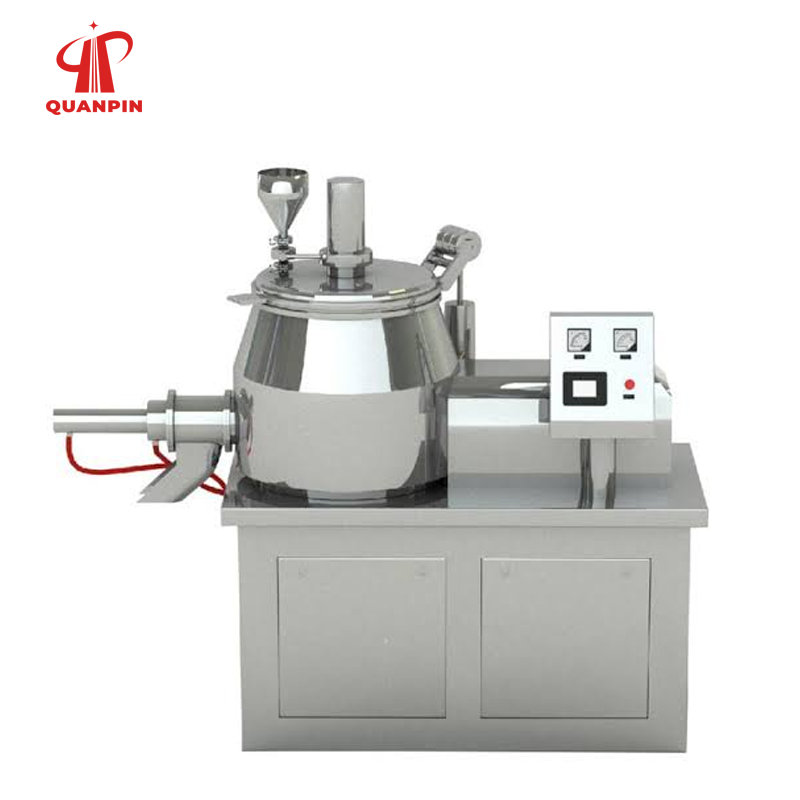
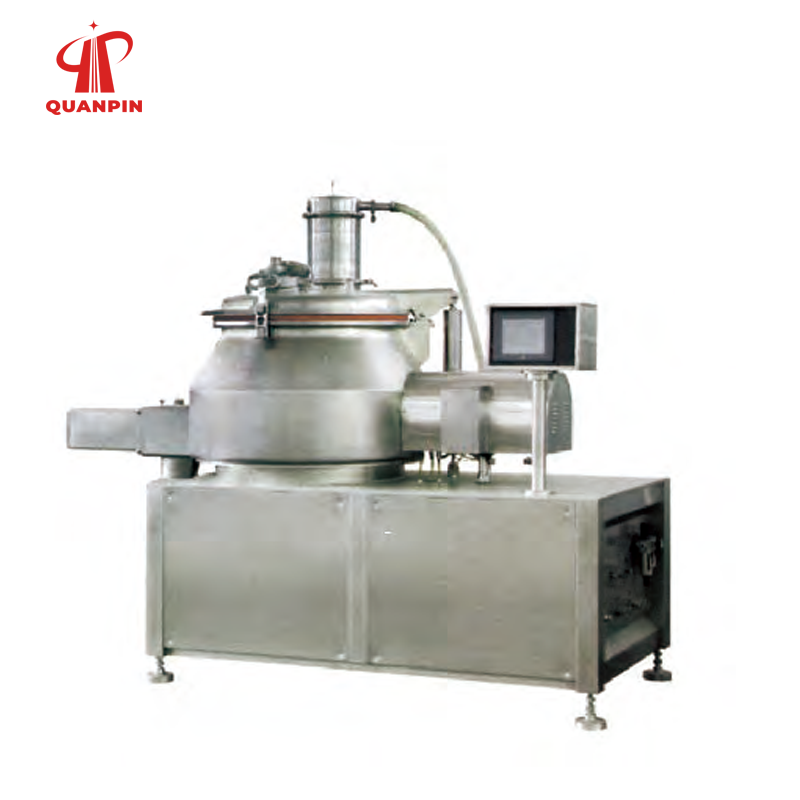
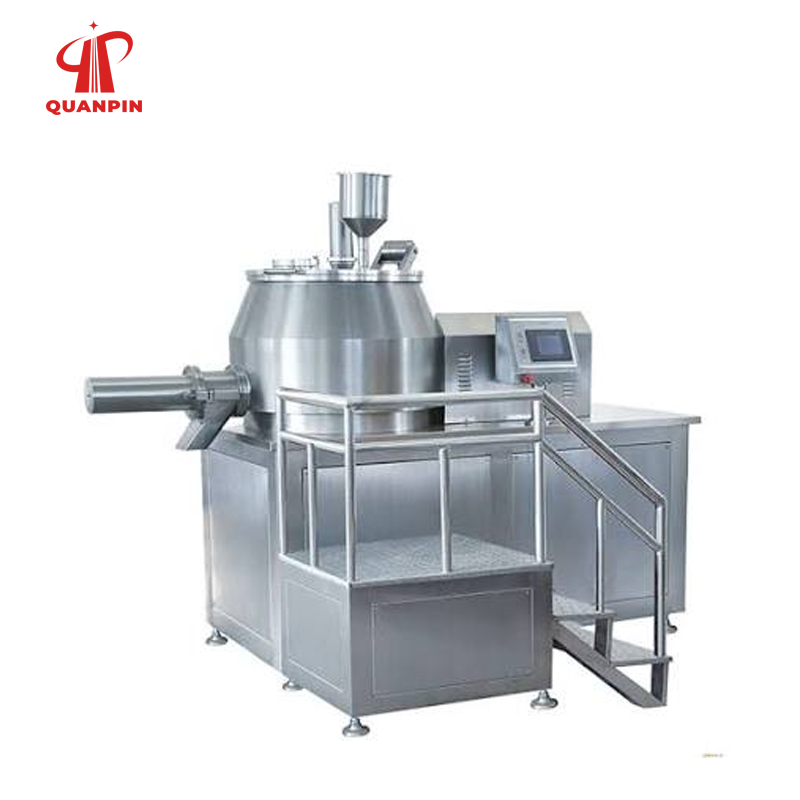
Record the actual impeller and chopper arrangement before planning comparisons. Position, blade form, clearance and the moving mass’s access to the chopper influence what a nominal rotational speed means physically.
Use the supplied configuration as the starting boundary. An academic experiment that removed or redesigned a chopper does not authorize operation outside the safe, approved arrangement of a production rapid mixer granulator.
Five Inputs to the Comparison
Material identity
Keep the formulation and ingredient lots identified. Differences in primary particle properties or wetting behavior can otherwise be mistaken for a response to the selected chopper condition.
Liquid delivery
Record liquid composition, delivered quantity and delivery history. A trial intended to examine mechanical effects becomes ambiguous if the wetting operation also changes without being treated as an experimental factor.
Fill state
Describe fill state rather than mass alone. The moving powder and wet mass need to encounter the relevant mixing zones; an altered loading level can change that exposure.
Operating sequence
Preserve the timing of impeller and chopper operation. A speed used during liquid addition and the same speed applied only during later massing represent different processing histories.
Safe observations
Specify how observations are collected safely. Use approved inspection or measurement arrangements and planned samples; do not interrupt a guarded machine or place objects into operating equipment to inspect circulation.
Treat the Drives as an Interacting System
An original chopper-presence experiment varied chopper and impeller conditions in a placebo formulation. The reported chopper effect depended on impeller speed, with flow interruption and peripheral caking relevant to interpreting the result.
The important development lesson is that the two drives form an interacting system. A chopper condition cannot be judged independently of whether the main mass reaches it and maintains an appropriate circulation pattern.
Similar flowability in recovered granules does not establish that the process followed the same path. Preserve observations during liquid addition and massing alongside the final characterization.
The published preferred condition belongs to the paper’s material, apparatus and tested region. It is not a recommended operating speed for a QUANPIN high shear mixer granulator.
Six Decisions for the Trial Protocol
Reference condition
Choose a reference condition that is documented and relevant to the observed problem. Repeat it where necessary so ordinary batch variation is visible before interpreting a change as a chopper effect.
Impeller interaction
Investigate impeller interaction deliberately. A suitable design should reveal whether a chopper change behaves differently at the selected main-impeller conditions rather than hiding that interaction in separate informal trials.
Controlled wetting
Keep total liquid and addition history controlled when the objective is mechanical comparison. If liquid delivery is also varied, label it as a separate factor and retain the actual delivered values.
Deposition accountability
Distinguish deposition from acceptable product. Material attached to the wall or retained around equipment surfaces should be accounted for rather than ignored because it was absent from the final sample.
Relevant product tests
Use granule measurements linked to the original concern. Size distribution, morphology, recovery and relevant downstream responses provide complementary evidence; no single convenient test explains every mechanical mechanism.
Review conditions
Predetermine the stopping and review conditions. Excessive deposition, unstable operation or another abnormal observation should trigger the approved response instead of being treated as a necessary route to an experimental endpoint.
What Chopper Experiments Establish
Formulation and mass motion
A multi-formulation laboratory study examined impeller speed, chopper speed and kneading duration together. The influence of impeller speed depended on the starting material system, and wet-mass flow and deposition were part of the observations.
That evidence supports keeping formulation and circulation in the interpretation. It does not show that a chopper intervention successful for one powder blend will have the same effect with another binder or excipient system.
When comparing samples, preserve the process phase at which each was taken. A sample after prolonged massing can describe a different balance of growth and mechanical exposure from one collected just after liquid addition.
Author-deposited cellulose study
An original cellulose study deposited by its authors in HAL connected chopper presence, impeller conditions, binder distribution and granule development. The reported usefulness of the chopper differed across the tested impeller region.
For trial planning, this argues for examining a response surface rather than announcing a simple always-on or always-faster rule. The relevant operating region must be established for the actual configuration and material.
The study’s laboratory bowls and powder do not describe a supplied GHL installation. Use the paper to identify observations worth making, then verify which measurements are feasible and appropriate on the proposed equipment.
A limited speed response
An investigation combining granulation and microwave drying found that its selected formulations and conditions gave limited changes in several granule properties when mixer or chopper speeds changed. Drying conditions also affected measured outcomes.
This provides a useful counterexample to assuming every speed change must produce a large final-product difference. A weak observed response may reflect the tested operating region, formulation robustness or the choice of measurement.
Microwave drying was part of that research arrangement and is not an assumed GHL function. A batch chopper comparison should keep its actual downstream drying route explicit when interpreting the recovered granules.
Keep the Processing History Visible
Create a chronological observation sheet with dry mixing, liquid addition and massing marked separately. Record actual conditions and unusual events so a later reviewer can relate the final sample to its processing history.
Keep the sampling and analytical method constant between candidate conditions. Differences in sample preparation, sieve handling or image analysis can create an apparent granule change unrelated to the mechanical trial.
Evaluate distribution tails where the concern is lumps or fines. A similar median can hide a small oversize fraction or increased fines that changes the practical handling decision.
Add recovery and retained-material observations to the quality table. This prevents a condition with considerable deposition from appearing superior simply because only the easiest recovered fraction was tested.
Include Geometry in the Interpretation
An impeller-design investigation reported by Graz University of Technology combined mixing observations, simulations and granulation experiments. Its findings show why blade arrangement and circulation deserve attention alongside nominal rotational speed.
Use that evidence as a caution about machine geometry, not a promise that an alternative blade on another machine will reproduce the paper’s result. Changes to the supplied equipment require their own technical evaluation.
Review Competing Explanations
If a chopper change reduces oversize, ask whether it altered breakup, liquid distribution or access to a previously poorly circulated region. More than one explanation may remain plausible without additional evidence.
If fines increase, inspect recovery and subsequent handling as well as the wet stage. A final dried sample does not independently identify when the smaller material was created.
If no meaningful difference appears, report the tested region and detection limits. A negative comparison can still prevent unnecessary adjustment, but it should not be extended into a claim that the chopper never matters.
Review relevant downstream performance before selecting the preferred condition. A change that produces attractive granule shape can still affect density, compression behavior or another required pharmaceutical response.
Confirm the candidate with a documented repeat and representative material. The required extent of confirmation depends on the development objective and the responsibilities of the formulation and quality teams.
Retain ambiguous findings as questions rather than forcing a mechanical explanation. Additional sampling or a redesigned comparison may be more useful than presenting an unsupported story about the observed granules.
Prepare a GHL Trial Discussion
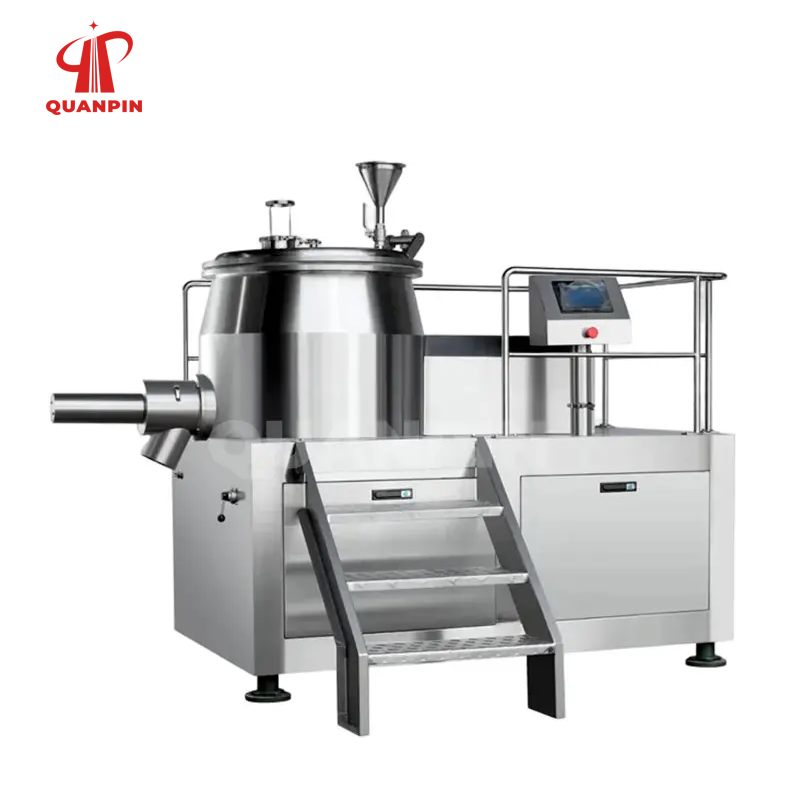
For QUANPIN, prepare the formulation description, loading, wetting sequence, observed problem and intended downstream route. Explain which practical observations must be available during a GHL trial.
Confirm the actual configuration through the GHL product discussion. Do not assume optical tracking, special removable parts or research-only measurement systems are included in a standard installation.
Specify the Verification Scope
A useful high shear granulator price comparison should identify the trial and documentation scope. A quotation that includes only nominal capacity may leave the chopper-interaction question unresolved.
The high shear wet granulator specification should also describe cleaning, discharge and sampling responsibilities. These practical interfaces help ensure that experimental observations can be translated into a repeatable batch procedure.
Chopper Trial Questions
Does faster mean smaller?
Does a faster chopper always make smaller granules? No. Its effect depends on interaction with the moving mass, impeller conditions, formulation and liquid distribution in the tested configuration.
Can drives be isolated?
Can the chopper be evaluated independently of the impeller? Its setting can be changed as a factor, but interpretation should consider whether main-impeller conditions alter circulation and exposure to the chopper.
Should research speeds be copied?
Should a published chopper speed be copied? No. Published settings belong to particular equipment and materials. They can motivate a question but do not establish a safe or effective production setting elsewhere.
Does unchanged size prove no effect?
Does no final size change mean no process effect? Not necessarily. Deposition, recovery, wetting or another response may differ, so interpret the observations that the trial was designed to investigate.
Can the chopper be removed?
May a production chopper be removed to repeat a paper? Only the approved equipment configuration and operating procedure should be used. Research modifications are not operating instructions for a supplied production machine.
What can the trial conclude?
What is a useful final trial conclusion? State the conditions, observed interactions, product responses and limits, then identify the supported candidate procedure without claiming a universal chopper mechanism.
Discuss the Granulation Problem with QUANPIN
Discuss the material, processing objective and required trials with QUANPIN. Review the equipment information and the relevant industry applications, or send an enquiry through our contact page.
Email sales@qpdryer.com or stacie@qpdryer.com. Call +86 19850785582 or contact WhatsApp +86 15921493205 to discuss the proposed scope.
For process evaluation, consider the high speed mixer granulator for high-shear preparation of a suitable wet granulating mass. Confirm suitability with representative material, the required product properties and the proposed process conditions.