Food Pulverizer Procurement: Hand Over Material and Installation Information Beyond Fineness
By QUANPIN
A food-powder fineness specification is not a complete description of the information needed before selecting a pulverizing system. The project must also identify the actual material, the dust generated and the responsibilities for assessing the surrounding installation.
An air classifier mill enquiry should keep product-performance questions and site risk assessment connected without confusing them. Meeting a particle-size comparison does not establish that an entire production line is suitable for handling that material.
A product-size specification does not define the whole installation
Food origin does not remove the need for a material-specific assessment. Familiar ingredients can present different concerns when processed into a fine, dispersed powder than when handled in their original bulk form.
A published incident report helps explain why project boundaries matter, but it is not an operating manual for another facility. The actual assessment requires competent personnel and the applicable current requirements for the site’s jurisdiction.
Limit the claim and assign qualified review
This article concerns information handover for procurement and development. It does not provide ignition tests, equipment-protection designs, housekeeping procedures, exposure limits or operating settings and should not be used as a substitute for a qualified assessment.
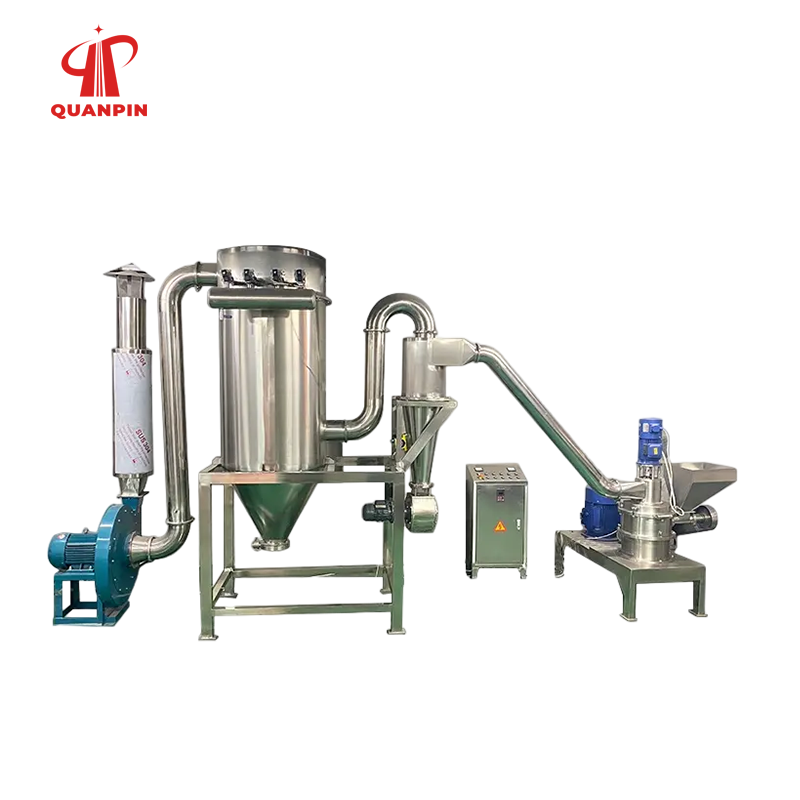
QUANPIN equipment suitability and any proposed controls must be confirmed for the actual supplied configuration and installation. A general WFJ description or catalogue image does not establish an explosion-protection certification or a safe process design.
Five information boundaries before an equipment trial
Food material identity
Identify the food material and its relevant composition and preparation history. A trade name alone may not describe differences between formulations or lots that matter to the project review.
Feed and powder states
Describe the expected feed and collected powder states separately. Information about a coarse incoming ingredient should not silently be treated as characterization of every dust fraction produced during processing.
Material-data provenance
Provide existing relevant material data and identify its source. Keep the tested specimen, method and condition attached to a result rather than transferring a number from a vaguely similar material.
Installation boundary
Map the intended equipment boundary, including feeding, collection, discharge and transfer. An isolated mill quotation cannot describe every interface or activity in the actual installation.
Decision responsibilities
Identify who is responsible for the material assessment, installation review and acceptance decisions. These roles should be clear before a trial is proposed, not inferred after equipment delivery.
Read a food-industry incident within its actual scope
The CSB Imperial Sugar investigation documented a catastrophic food-industry event involving combustible sugar dust and the wider handling installation. Its findings concern the actual incident circumstances and deficiencies identified by that investigation.
The original Imperial Sugar report provides evidence that a familiar food ingredient and associated powder-handling operations require more than a product-size specification. It does not supply a design calculation or acceptance rule for another mill.
A procurement discussion should therefore identify the full intended material route. The lesson is about the completeness of the project information and review, not a claim that every sugar-processing installation has the same failure mechanism.
Do not convert a historical incident’s material measurements into universal values for a different recipe. The actual powder and conditions need an assessment suitable for the intended application.
Organize the procurement handover in six steps
Define the duty
Define the food duty and the proposed installation boundary. Distinguish what the mill supplier provides from upstream and downstream equipment, buildings and procedures owned by other project participants.
Gather material evidence
Gather the available material characterization with its provenance. If necessary information is absent, keep that absence visible and assign the next assessment step to qualified personnel before proceeding with the relevant activity.
Describe the trial route
Describe the proposed trial material and its handling route. A development test should not be assumed appropriate merely because the planned batch is smaller than a commercial run.
Agree documentation
Agree the documentation and acceptance responsibilities. Mechanical inspection, material characterization and site risk review are different activities even when coordinated within the same project programme.
Review interfaces
Review proposed interfaces and changes with the responsible specialists. A later modification in collection or transfer can change the installation scope and should not inherit an earlier approval without consideration.
Record the actual scope
Keep the final decision attached to the actual configuration and documented material duty. A successful powder-size trial supports that measured objective, not every unmeasured aspect of the system.
Use three institutional sources for distinct project questions
A food-milling incident investigation
The CSB Didion Milling investigation concerns a food milling operation and the circumstances of a fatal incident. Its report examines the installation and organizational context rather than presenting particle size as the sole determinant of risk.
The original Didion Milling investigation is relevant to a food-processing project because it addresses an actual milling environment. Its findings should not be repackaged as generic operating instructions or a legal conclusion about an unrelated facility.
For procurement, preserve the distinction between product performance and installation assessment. A supplier demonstration cannot substitute for reviewing the actual material route, responsibilities and conditions of the planned site.
UK food dust guidance
HSE publishes guidance specifically addressing dust-explosion hazards in food operations, including milling and grinding. It describes food powders as a category requiring appropriate consideration of their handling context.
HSE’s food-industry dust guidance supports including the actual substance and process in the project review. Its UK context must remain visible; it is not an international equipment certification or a universal design prescription.
The responsible specialists should determine which current requirements and assessment methods apply to the project. This article does not transfer historical or jurisdiction-specific provisions into a substitute engineering specification.
US grain-processing technical context
OSHA’s grain-processing technical material describes hazards associated with that industrial context. Its discussion considers equipment and material handling across multiple operations rather than treating milling as an isolated particle-size transformation.
The OSHA grain-processing technical chapter provides a distinct US institutional perspective on the scope of the review. It should not be treated as approval of a particular machine or read as a complete checklist for every food powder.
The practical handover requirement is to identify what falls inside the proposed system and who reviews it. Any specific compliance or protection decision requires appropriate, current project-level expertise.
Keep the proposal tied to the actual material duty
An air classifying mill proposal should state the actual feed material and intended powder duty. Keep uncertainty about other formulations or untested conditions explicit instead of extending a successful comparison beyond its evidence.
If a customer supplies existing test information, retain the specimen description and laboratory context. A result associated with another fraction or preparation may not answer the question for the proposed process.
Record material or interface changes during development. Revising the recipe, collection arrangement or transfer destination can alter the scope even when the same equipment model remains in the proposal.
Keep commercial and technical documents consistent about what is supplied. An omitted interface should not become an assumed supplier responsibility merely because it appears in a schematic of a complete production line.
Resolve information gaps before relying on assumptions
If required material information is missing, obtain an appropriate assessment through the responsible project team. Guessing from appearance, food familiarity or a different ingredient’s data does not resolve the information gap.
If proposed installation details change, revisit the relevant review before relying on earlier decisions. A valid conclusion remains tied to its actual boundary and assumptions rather than to the machine name alone.
Prepare the supplier enquiry with explicit responsibilities
Provide the real food material, formulation identity and preparation history with the enquiry. Identify available data and unresolved questions without substituting generic information from an unrelated powder.
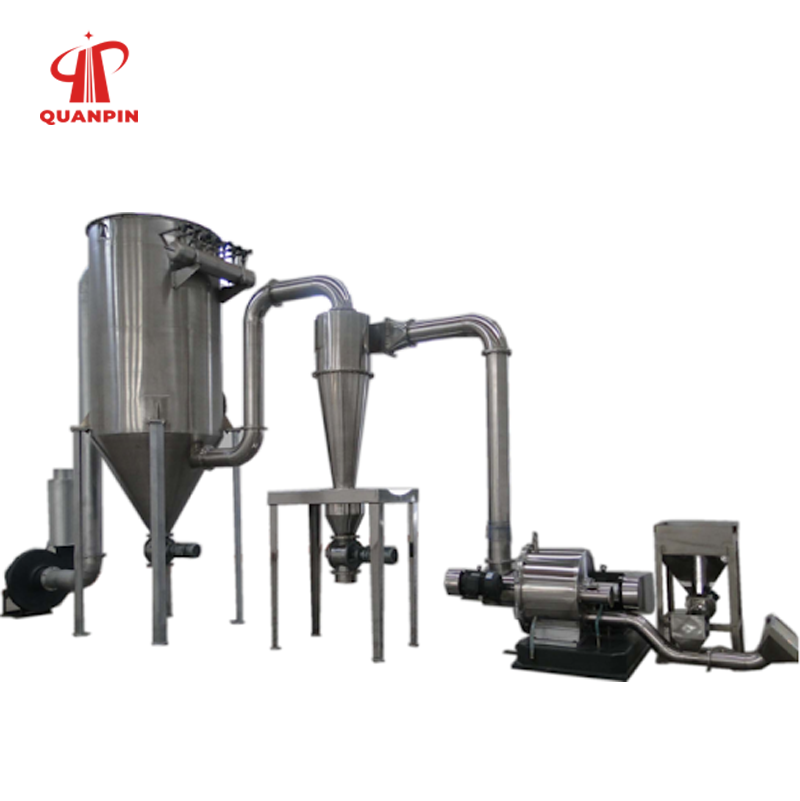
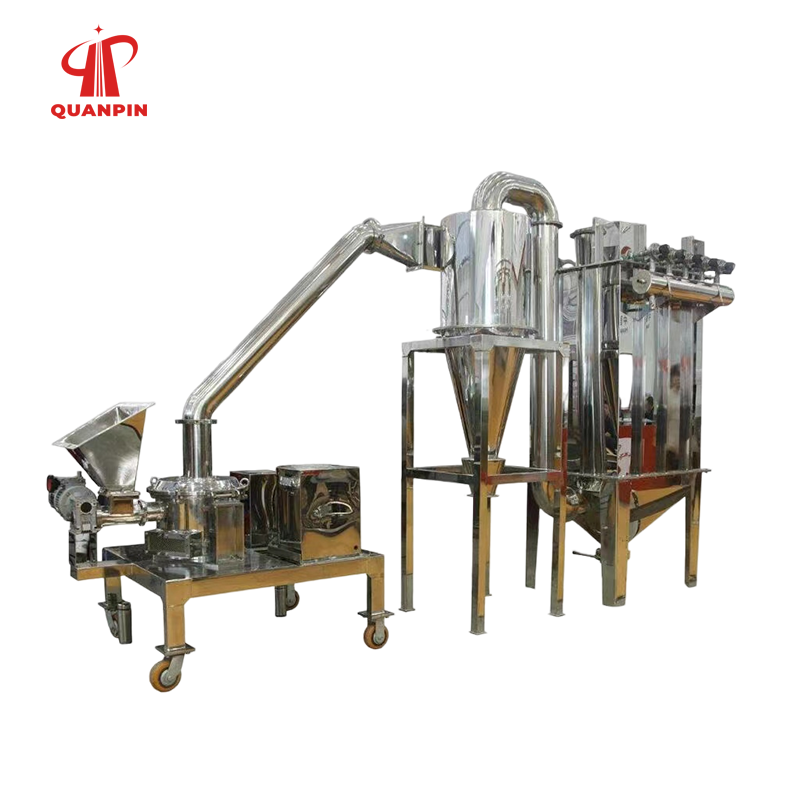
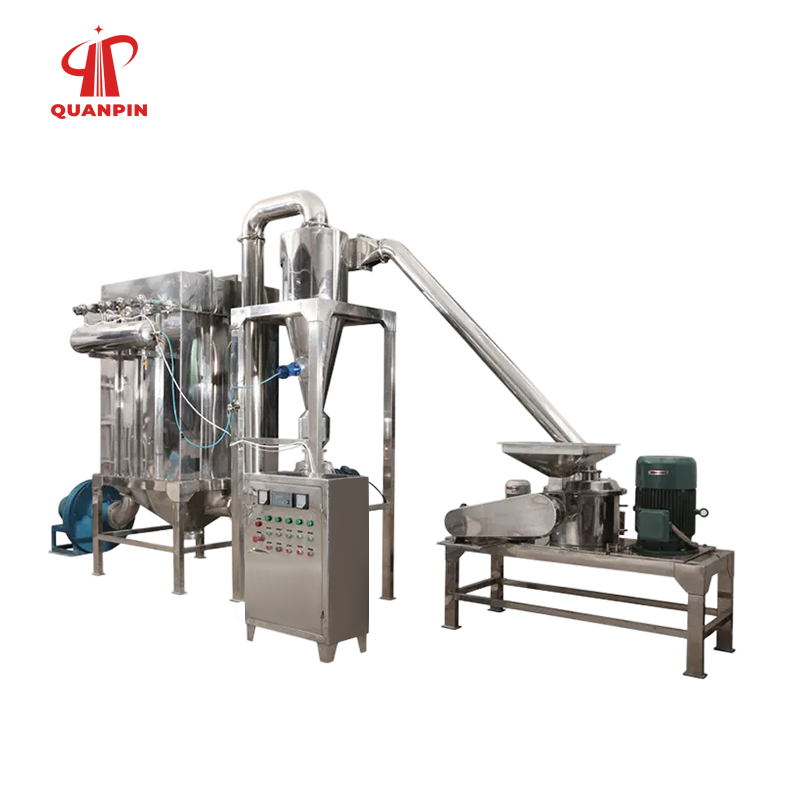
Describe feeding, milling, collection, discharge and subsequent transfer at the level needed to establish responsibilities. A simplified block diagram can help identify boundaries but is not a complete engineering design.
State which material characterization and installation reviews are planned and who approves them. The equipment supplier needs to understand the intended evidence programme and the limits of its own scope.
Identify any proposed acceptance documents or certifications precisely. Do not assume that a general fine powder grinder description includes a protection rating, material approval or site qualification that has not been confirmed.
Keep trial arrangements subject to the relevant assessment before proceeding. The purpose of the development programme is to obtain evidence within an agreed scope, not to use a small experiment to bypass unresolved project questions.
Document how changes will be communicated among supplier, operator and other specialists. A complete handover is especially important when several parties provide different sections of a processing system.
Keep trials and changes within the assessed scope
HSE’s grain-dust publication addresses occupational exposure to grain dust, including relevant food-processing contexts. That is a separate assessment purpose from the fire and explosion questions described in other sources.
The original HSE grain-dust exposure guidance illustrates why one dust-related result cannot be assumed to resolve every concern. This article does not prescribe exposure limits or replace the qualified occupational-health assessment for the actual site.
Distinguish occupational exposure from other dust questions
An ACM mill proposal should therefore identify the real material and installation responsibilities while retaining separate product and risk-assessment evidence. No general powder specification can serve as an unlimited approval of the complete operation.
A useful procurement record states what is known, which conditions were assessed, who approved each part and what remains unresolved. That is more informative than an unsupported description of the whole project as safe or fully qualified.
Frequently Asked Questions
Does fineness establish installation suitability?
No. Particle size is one material descriptor. It does not independently establish the suitability of a complete powder-processing installation or resolve all relevant material and occupational considerations.
Does food origin eliminate material concerns?
Not automatically. Food origin does not eliminate the need to evaluate the actual powder and process context. Familiarity with an ingredient is not a substitute for an appropriate assessment.
Can existing test data always be transferred?
Only when its relevance is justified by qualified personnel. Keep the specimen identity, condition and method attached to existing data rather than transferring results from an unrelated preparation.
Do incident reports prescribe operating settings?
No. Incident reports document specific investigations and can inform the scope of project questions. They do not supply operating settings or a protection design for another facility.
Who approves the different project parts?
Different project activities require their responsible specialists, including material characterization, site review and mechanical supply. Define the roles explicitly rather than assuming a supplier demonstration covers the entire installation.
What belongs in a supplier enquiry?
Provide the actual food duty, material data, interfaces and proposed acceptance responsibilities. Confirm the supplied WFJ configuration while keeping site-specific assessment and compliance decisions with competent project personnel.
Discuss Your Food Pulverizing Duty
Discuss the material, processing objective and required trials with QUANPIN. Review the equipment information and the relevant industry applications, or send an enquiry through our contact page.
Email sales@qpdryer.com or stacie@qpdryer.com. Call +86 19850785582 or contact WhatsApp +86 15921493205 to discuss the proposed scope.