Chickpea Milling: Separate Cotyledon Cell Integrity from Flour Particle Size
By QUANPIN
Chickpea flour particle size describes the dimensions of dispersed particles. Cotyledon cell integrity describes whether the walls surrounding intracellular material remain continuous. A purchase specification that treats these measurements as interchangeable can accept flour with the right size distribution but the wrong behaviour in a cooked food.
Start with the intended application: dispersibility, texture and thickening require different evidence from a programme investigating starch accessibility. For an air classifier mill enquiry, state both the required physical flour characteristics and the structural observations needed to evaluate the ingredient. Establish priorities before changing a milling condition.
What Cell Integrity Adds to a Size Result
A flour particle may contain a cluster of cells, one separated cell, broken cell-wall material or released starch and protein. Its outside dimension alone does not identify which of these structures dominates. Two samples with overlapping size distributions can therefore justify different interpretations of their microstructure.
Define integrity operationally. Ask the laboratory to distinguish apparently intact cells, ruptured cells and multicellular fragments using a documented preparation and imaging method. Do not assign a universal percentage threshold without establishing what the count represents and whether that count predicts the intended food response.
Define the Chickpea Ingredient Objective
Laser diffraction provides a useful distribution for process comparison when dispersion and analysis are consistent. Record the measurement basis and distribution width as well as the median. A size result obtained with aggressive dispersion may describe a different particle population from the flour as added to a recipe.
Keep sieve retention and laser diffraction results in separate fields. They are complementary observations, not automatic equivalents. A sieve cut describes passage under a defined procedure, while an optical measurement depends on dispersion and an analytical model; neither independently verifies the continuity of a cell wall.
Keep Preparation and Specimens Traceable
Particle envelope
For microscopy, obtain representative subsamples from the same retained sample used for size testing. Inspect several fields rather than selecting only the clearest intact cells. Record the imaging preparation because hydration, staining and mechanical handling can change what is visible and complicate comparisons between batches.
Cell wall continuity
A useful image set shows both the overall particle population and closer views of individual boundaries. Label observations conservatively: visible wall outlines are evidence of structure, while enzyme permeability requires additional investigation. A particle that looks whole should not automatically be described as an impermeable capsule.
Median and distribution width
The study comparing chickpea and durum wheat cell walls combined in vitro digestion with microscopy and found that intact plant structures limited starch accessibility. Its contrast between tissue types reinforces the need to verify the material being processed rather than transfer cereal assumptions directly to chickpea.
Dispersion conditions
For dry milling, the procurement question is how the selected process fractures the supplied seed material. For hydrothermally treated material, cell separation may also be important. Describe the incoming feed as raw, cooked, dried or otherwise prepared so that competing trial proposals actually address the same material.
Clusters and individual cells
Do not describe a flour made by separating cooked cells as if it were simply a finer version of raw dry-milled flour. The preparation routes introduce different histories. Comparing them can be informative, but the resulting contrast cannot isolate a milling effect without additional experimental controls.
Interpret the Initial Milling Evidence
Separate the effect of preparation from the effect of the final size cut. Preserve a record of soaking, heating, drying and storage whenever these operations are used. This record allows a later change in thickening to be investigated without assigning every difference to the grinder.
A recent dry roller-milling study of yellow pea and chickpea reports flours differing in cellular structure and particle size while retaining similar composition. It supports testing cell preservation as an ingredient-development objective; the accessible abstract does not establish operating instructions for a different mill.
Treat that roller-milling result as a research comparison, not a throughput or nutritional guarantee for QUANPIN equipment. Its material preparation, mill configuration and analytical conditions belong to the study. A proposed air classifying mill must be assessed with the buyer’s feed and application protocol.
The appropriate comparator is the existing acceptable ingredient, retained under suitable storage conditions and tested alongside the candidates. A reference product anchors interpretation when laboratory conditions differ from a published paper. Include its preparation history and supplier specification in the trial file.
Compare the Structure and Function Measurements
Released intracellular material
Composition should be checked when fractions are separated or recombined. A change in protein, starch or hull content can alter application behaviour independently of cell integrity. Sampling only the preferred fine fraction and comparing it with whole flour can obscure this distinction.
Dry feed
Research on pea and lentil roller-milling configurations shows that individual flour streams and recombinations can differ in physical and functional properties. These are other pulses, so the paper supplies a reason to track streams rather than a chickpea-specific prediction or a QUANPIN performance comparison.
Cooked feed
If the production process combines streams, retain their mass contributions and identifiers. A blended size distribution can conceal a mixture of intact cellular material and extensively disrupted flour. An average particle diameter cannot recover that blend history after the streams have lost their identities.
The role of the comparator
The chickpea flour-blend study of cellular intactness examines both in vitro starch digestion and thickening. Its reported responses differ, supporting separate tests for these two objectives. Use the accessible abstract and highlights for this limited conclusion rather than reconstructing unavailable experimental details.
Stream composition
Choose blend ratios as trial variables and measure their effects. Do not assume that replacing part of a conventional flour with a cellular fraction produces a proportional change in viscosity or digestion. Keep the application formulation fixed when testing the first relationship.
Blend ratio
Thickening depends on the recipe and processing conditions as well as the ingredient. Compare candidate flours at the same defined solids basis, water addition and thermal history. If the recipe must subsequently change, document that optimisation separately from the original ingredient comparison.
Read Research Within Its Material Boundaries
Application concentration
A lower laboratory digestion rate and a suitable application viscosity are different acceptance outcomes. A candidate can be promising in one test and unsuitable in another. Report that trade-off directly instead of collapsing both responses into a single claim that the flour is better.
The sonication study of intact chickpea cells linked increased macronutrient digestibility to changes in the cell-wall barrier rather than molecular degradation of starch or protein. This is evidence about a distinct treatment, not proof that dry pulverising creates the same mechanism.
Its practical value for a milling programme is the warning that structural appearance and functional accessibility require different evidence. Retaining a cellular outline does not settle how a processed wall behaves. Use a digestion method appropriate to the research question if accessibility is an intended outcome.
Pasting response
Measure the raw flour when the question concerns the ingredient delivered by the mill. Then evaluate a separately identified cooked sample when the question concerns the food after preparation. Combining those two stages in one result makes it difficult to locate the origin of a change.
Store pre-cooking and post-cooking observations with separate sample identifiers. Include the date, sample preparation and analytical method in the record. This is especially helpful when a process change improves dry handling but produces an unexpected response during hydration or heating.
An industrial screening trial should begin with a single well-mixed feed lot divided between candidate conditions. Keep the dehulling status and incoming moisture record available. If a new lot must be introduced, identify that change rather than allowing it to appear as an equipment effect.
Digestion response
Select an initial comparison that changes one practical processing variable at a time. The purpose is to understand a response, not to find the smallest number on the particle-size report. Retain enough material from each condition for repeat measurements and a realistic application check.
At each condition, collect flour after the process has reached a representative operating state. Record where the sample was taken and whether collected fractions were recombined. A sample from one outlet should not silently stand in for the overall saleable product.
Compare the samples using size distribution, microscopy and the chosen application measurement. Add compositional or damaged-starch testing when these are needed to explain a difference. Avoid a large analytical package whose results have no defined role in the purchasing decision.
Preserve the Cooking and Testing Conditions
Before reviewing results, agree how to handle disagreement between measurements. Matching size with differing microscopy calls for investigation of particle structure. Matching microscopy with differing viscosity calls for review of formulation, composition and thermal preparation before attributing the result to analytical error.
Repeat the most promising condition on another representative lot. This challenges whether the selected process remains useful as raw material changes. The repeat is a validation step, not a reason to average away a lot-specific failure that matters to production.
If a finer flour thickens more, inspect both starch release and the application conditions rather than treating size as the complete explanation. If two flours show similar viscosity, that alone does not establish equivalent cellular integrity or equivalent behaviour in a digestion assay.
When imaging and size results appear inconsistent, review sampling first. Segregation can make two small portions different even if they came from the same bag. Recombine or resample according to a documented method before using the discrepancy to justify a machine adjustment.
Recognize the Limits of Each Response
Report uncertainty in the same language as the observation. Use descriptions such as more visible ruptured cells under the agreed preparation rather than unsupported absolute claims of complete encapsulation. Preserve representative images so a later reviewer can understand the basis of the conclusion.
Do not convert in vitro observations into health claims for a finished product. A milling trial establishes behaviour under its own methods and conditions. Any intended consumer claim needs evidence applicable to the actual food, preparation and population rather than an equipment brochure.
Build a Material-Specific Equipment Enquiry
An ACM mill enquiry should describe the feed history, target size distribution, intended food and tests planned to assess cell structure. Ask the supplier to explain how a representative sample trial would be organised and what material quantities and collection arrangements it requires.
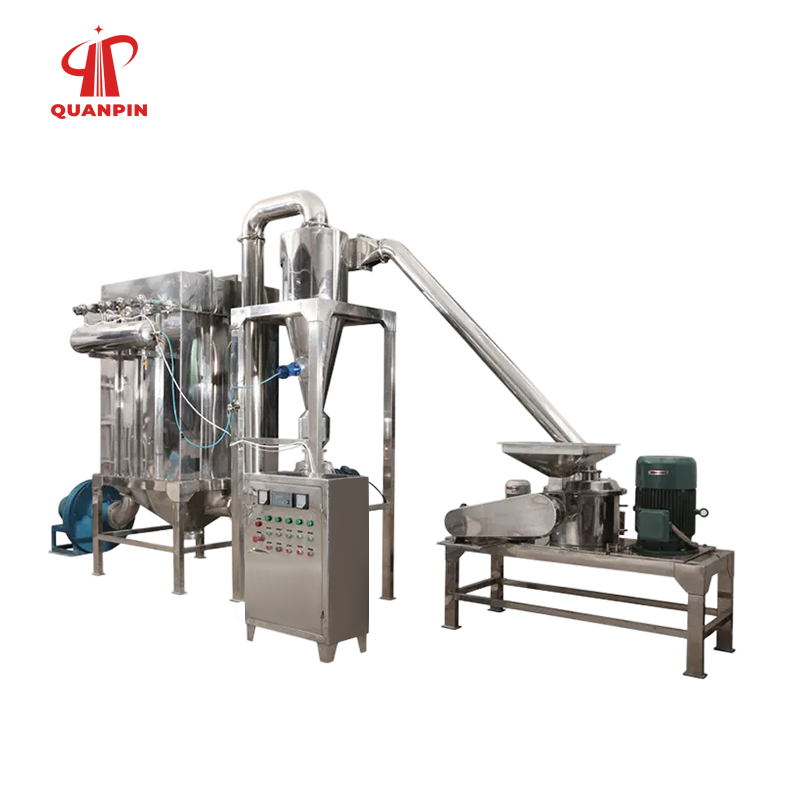
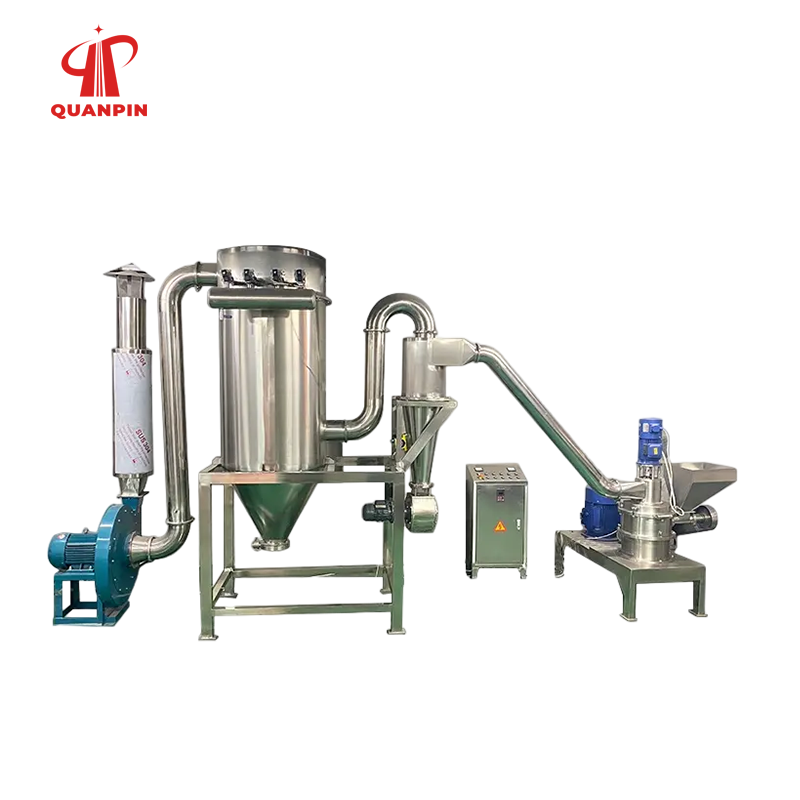
The WFJ Series Fine Pulverizer can be considered within that enquiry. Its suitability for a particular chickpea ingredient must be demonstrated by the agreed trial; none of the research cited here establishes a WFJ guarantee for cell preservation, viscosity or digestibility.
When comparing a fine powder grinder proposal with another process route, compare the delivered ingredient and collection boundaries. A reported result for one selected fraction may be irrelevant if production needs the combined output. Ask which flour population each proposed acceptance measurement represents.
Include practical requirements such as cleaning access, material transfer and sample collection in the discussion, with site requirements supplied by the buyer. These considerations affect whether the evaluation can be reproduced in production, even though they do not substitute for ingredient performance evidence.
Write separate acceptance fields for particle distribution, observed microstructure and application behaviour. Attach the method and sample preparation to each field. This makes a rejected result actionable: the parties can see whether the issue is fineness, structural disruption or performance in the recipe.
Keep machine operating settings in the trial record rather than presenting them as universal recipes. A setting that produces an acceptable flour from one lot may need reassessment for another. Specify how changes will be recorded and how a new condition will be approved internally.
Keep the Trial Within Its Defined Scope
Define the production sample plan before final acceptance. Decide whether the reference sample represents a steady operating interval, multiple collection points or a combined batch. The plan should match the ingredient actually supplied to the downstream food process.
Assign responsibility for microscopy and application testing before commissioning. An equipment supplier and a food laboratory may provide different parts of the evidence; a shared sample identifier keeps those contributions traceable to the same production condition.
Agree the Acceptance Evidence
Preserve the accepted flour, analytical records and application preparation instructions together. They provide a practical baseline for future troubleshooting. A purchase file containing only a median particle size cannot explain a later complaint about texture or thickening.
Can a particle-size report prove that chickpea cells are intact? No. It describes a dispersed particle population under a specified measurement procedure. Microscopy supplies additional structural information, and accessibility testing addresses a different functional question where that question is relevant.
Frequently Asked Questions
Does coarse flour prove cell integrity?
No. A particle-size description does not identify the condition of every cotyledon cell. Use an appropriate structural observation alongside the size measurement.
Do roller-milling findings determine an impact-mill setting?
They can inform the ingredient-development question. Different mechanisms and material histories require an actual trial rather than transferring a published machine setting.
Is the finest flour always the preferred ingredient?
The preferred ingredient depends on the food application. Compare the size requirement with the structural and functional responses that the application needs.
Does cell integrity establish a health outcome?
No. The cited structural and in vitro digestion observations do not establish an individual clinical outcome or a health guarantee for the finished food.
Which material should be used in the trial?
Use representative chickpea material with its preparation history recorded. Preserve sample identities through milling, cooking and testing where those stages form part of the question.
What belongs in the supplier enquiry?
Provide the actual chickpea preparation, intended food, fineness requirement and proposed structural and application measurements. Agree the machine duty and acceptance responsibilities explicitly.
Discuss Your Chickpea Milling Duty
Discuss the material, processing objective and required trials with QUANPIN. Review the equipment information and the relevant industry applications, or send an enquiry through our contact page.
Email sales@qpdryer.com or stacie@qpdryer.com. Call +86 19850785582 or contact WhatsApp +86 15921493205 to discuss the proposed scope.