DSH Enzyme Powder Blending: Define the Activity Assay Before Interpreting Distribution
By QUANPIN
For an enzyme-containing powder blend, weighed ingredient mass and measured catalytic activity are different quantities. A mixing comparison should establish what was distributed and what analytical response was measured, rather than treating protein quantity or a recipe percentage as proof of functional activity.
A conical screw mixer enquiry should therefore identify the intended enzyme preparation and the development question. The equipment discussion concerns material handling and distribution; enzyme identity, assay suitability and activity interpretation require their own evidence and responsible personnel.
Activity and ingredient quantity describe different properties
An activity unit depends on the assay definition. Substrate, preparation conditions and the reaction measurement belong beside the reported number, so two values carrying the same abbreviation should not automatically be compared as equivalent.
A protein concentration measurement answers another question. Enzyme preparations may contain other proteins, inactive enzyme or carriers. Knowing the total protein quantity does not establish how much catalytic activity is present under a defined assay.
Define the incoming material and comparison purpose
Start with the actual material as supplied and the proposed blend composition. Record how incoming activity is declared and which procedure will be used to evaluate the development specimens before deciding what a successful comparison means.
This article describes an evidence framework, not an enzyme application recipe or a health claim. It does not establish a product dose, food safety limit, assay method validation or activity-preservation guarantee for commercial QUANPIN machinery.
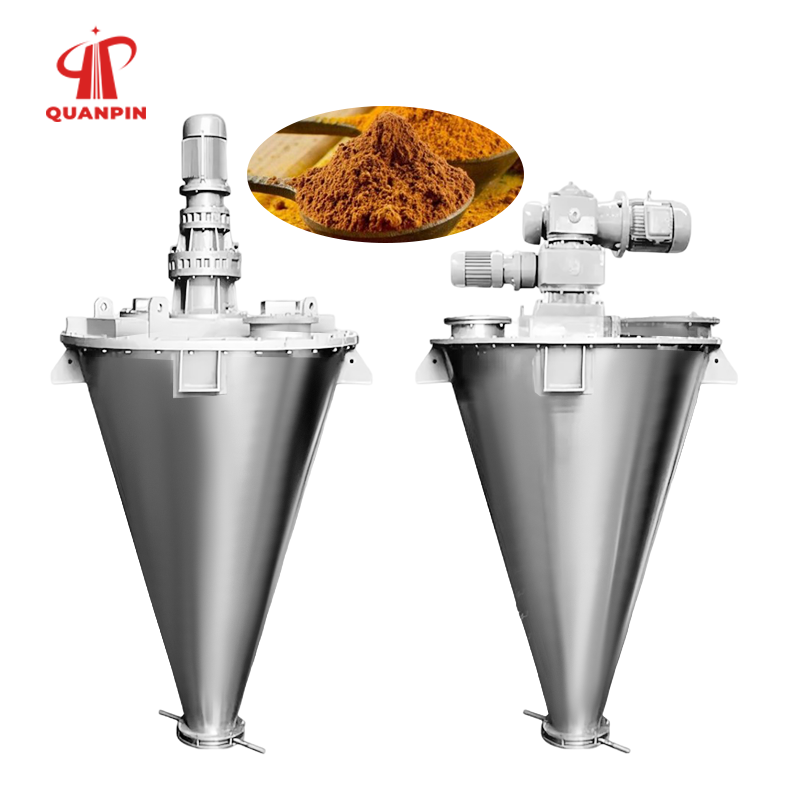
Five details required beside an activity result
Preparation identity
Identify the enzyme preparation and relevant carrier materials. Retain the lot information and supplier documentation used by the laboratory, while avoiding assumptions that preparations sharing a common enzyme name have identical composition.
Substrate and unit definition
Specify the analytical substrate and the reported unit definition. An activity result without those details may be unsuitable for comparison with an incoming certificate or a result from another laboratory.
Specimen preparation
Record how powder specimens are dissolved or extracted before testing. That preparation is part of the measurement and can influence the enzyme made available to the assay.
Analytical conditions
Retain the temperature, pH and observation time specified by the analytical procedure. These are assay conditions, not automatically recommended conditions for the blending operation or the product’s eventual application.
Comparison objective
Agree whether the objective is spatial distribution of measured activity, recovery relative to the charged preparation or stability during a defined interval. These comparisons need different calculations and reference specimens.
Read an analytical pipeline without overextending its findings
A study of fruit proteolytic products combined soluble-protein measurements, proteolytic activity, stability assessment and protein characterization. Its results show why protein quantity and measured protease response should not be treated as interchangeable descriptors.
The original fruit-protease analytical pipeline study concerns particular preparations and methods. It supports naming the measured endpoint but does not demonstrate that every low activity result represents mixing damage or that another assay will rank preparations identically.
For a powder blend trial, pair the activity result with the preparation and reference basis used to obtain it. Preserve the distinction between an inactive fraction, a poorly extracted specimen and a genuine difference in ingredient distribution.
If several analytical observations are available, interpret them together with qualified personnel. A single number should not be expanded into a claim about enzyme integrity, product performance or an unmeasured biological effect.
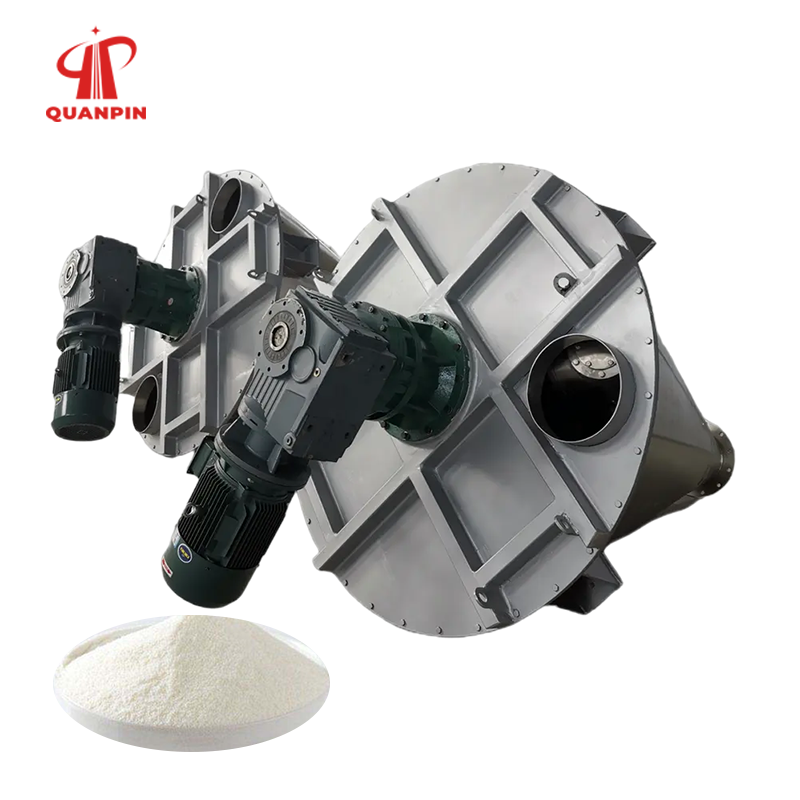
Organize the enzyme blend comparison in six steps
Define the trial stage
Define the trial objective and the material state to be sampled. Decide whether the comparison concerns immediately discharged powder or a specimen after a stated interval, and keep those conditions traceable.
Collect input references
Collect appropriate incoming-material references alongside blend specimens. Their purpose is to anchor the comparison under the same analytical route, not to assume that a certificate generated elsewhere is numerically interchangeable.
Prepare the actual matrix
Prepare specimens using a documented method suited to the actual matrix. If the carrier or another ingredient interferes, address that analytical issue before attributing the result to the mixer.
Report the correct basis
Report the measured activity with its mass or volume basis. Distinguish units per gram of blend, per gram of preparation and per milligram of protein so that dilution is not misidentified as loss.
Inspect specimens and repeats
Inspect individual specimens and analytical repeats before calculating a batch summary. A distribution pattern and poor assay repeatability create different questions even if both increase the numerical variation.
Review the acceptance question
Compare the observations with the declared acceptance question. Keep the activity calculation, composition evidence and any follow-up investigation available instead of reducing the complete study to a single general uniformity label.
Read three experimental applications within their boundaries
Reaction conditions and substrate
A soy-protein hydrolysis study characterized different enzymatic treatments using declared activity and reaction conditions. The experimental programme illustrates the importance of method and substrate when comparing enzyme-related responses.
The original soy-protein enzymatic-hydrolysis investigation concerns reactions in prepared systems. Its results do not establish how those enzymes behave during dry blending or prescribe processing conditions for a different food matrix.
The transferable lesson is to preserve definitions. A laboratory result obtained with one substrate and reaction setting is not automatically a direct predictor of the enzyme’s response in the proposed application.

Characterizing the enzyme input
An eel-protein hydrolysate study assessed proteolytic activity of the enzyme preparations before applying them in hydrolysis experiments. That sequence separates characterization of an input from the outcomes produced in the subsequent reaction.
The original eel-protein hydrolysis study provides an example of assessing an enzyme input before evaluating a treated product. Neither the substrate system nor its conclusions should be copied as an acceptance method for an unrelated powder blend.
A blender comparison can follow the same logical separation without reproducing the reaction recipe: identify the input, establish the relevant analytical reference and then interpret observations from the prepared mixture.
Powder storage and activity
A freeze-dried tuna-pepsin investigation evaluated enzyme powder characteristics and activity during storage under defined conditions. Its design treats physical powder properties and enzyme response as separate observations within the tested preparation.
The original tuna-pepsin powder study concerns its particular enzyme and stabilizing system. It does not establish a universal humidity limit or show that another preparation will preserve activity for the same period.
If a development comparison includes a hold or storage interval, document the actual conditions and use a suitable reference. A time-related change should not be assigned to the preceding mixing step without evidence.
Connect the reporting basis to the charged blend
A double screw cone mixer trial should keep the charged mass balance distinct from the activity calculation. Adding carrier intentionally changes units per gram of blend even when the enzyme’s total measured activity is otherwise unchanged.
Where ingredient distribution is assessed using activity, first establish that the method is suitable for the blend matrix. Otherwise a spatial result may partly reflect extraction or interference rather than the actual ingredient pattern.
Record collection time and location with specimen identity. If samples experience different delays or preparation conditions, the resulting activity values may not form a fair process comparison.
Retain analytical blanks and controls required by the chosen method. The appropriate controls depend on the assay and matrix and should be determined by qualified laboratory personnel, not invented from a generic equipment article.
Investigate unexpected results before changing mixing
If a blend result differs from expectation, compare the incoming reference, calculation basis and specimen preparation first. A lower value per gram may reflect dilution or a changed reference basis rather than loss of catalytic function.
If a measured difference remains after those checks, investigate the actual processing and handling history. Keep possible mechanisms as hypotheses until supported, and avoid assuming that longer mixing will restore an unexplained analytical response.
Prepare a clear equipment and analytical enquiry
Provide the actual enzyme preparation, carriers and powder characteristics in the enquiry. The supplier needs the handling duty, while the development team needs the analytical purpose and boundaries of the comparison.
Describe how the powder is loaded, discharged and transferred for sampling. A representative laboratory comparison requires attention to the actual route rather than only the nominal vessel setting.
State whether the project includes a proposed hold interval after blending. Identify responsibility for preserving and recording specimens during that period so that activity changes remain interpretable.
Confirm the proposed product-contact and cleaning requirements for the supplied machine. Enzyme-containing powders require a site-specific assessment; this article does not specify occupational exposure controls or authorize a cleaning method.
Assign responsibility for analytical method suitability and result approval. Equipment supply, laboratory analysis and decisions about the formulated product should have clear owners within the project.
Keep the equipment configuration and test record together. Changes in carrier, preparation or sampling route can require another assessment even when the same mixer family is used.
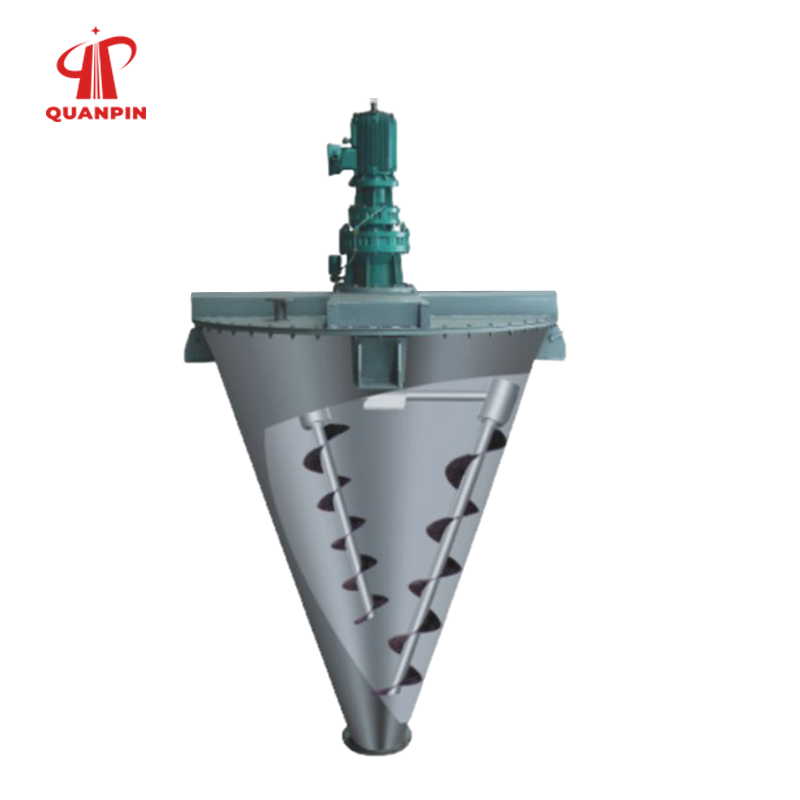
Keep the supplied configuration and records together
Research on bromelain recovery from pineapple by-products compared enzymatic activity using gelatin and casein digestion methods. It also examined preparation-related differences within the studied material streams.
The original bromelain recovery investigation illustrates why the activity method and preparation origin must remain visible. Its extraction and drying sequence is not a dry-blending recipe or evidence of an activity-enhancing mixer capability.
Decide what the activity evidence actually establishes
A double screw conical mixer proposal should be judged against its genuine material-handling duty. A conical screw blender or conical powder mixer description does not itself establish enzyme preservation, activation or application performance.
The final comparison should state what activity was measured, under which method, relative to which reference and at which stage. That is more useful than claiming functional uniformity from an unspecified protein or ingredient measurement.
Frequently Asked Questions
Does protein content establish activity?
No. A preparation can contain inactive enzyme and other proteins. The total protein measurement and a defined catalytic activity assay describe different properties and should retain their separate purposes.
Are all activity units interchangeable?
Not automatically. Substrate, conditions and unit definitions can differ. Establish whether the methods and reporting bases are comparable before combining values from certificates or laboratories.
Does lower activity per gram prove loss?
No. Carrier addition changes the reporting basis. A result per gram of final blend must be interpreted using the charged composition, suitable references and the actual analytical method.
How should a powder specimen be prepared?
The laboratory should select preparation and controls appropriate to the matrix. Document extraction or dissolution rather than assuming that every powder releases the same measurable activity through one generic procedure.
Can reaction studies predict dry blending?
Not without evidence. The studies involve particular reactions, drying preparations or storage conditions. They help frame analytical questions but do not establish dry-blender performance for another enzyme or recipe.
What belongs in the enquiry?
Supply the real powder duty, preparation identity, reporting basis, proposed assay and specimen handover route. Confirm the supplied DSH configuration while keeping enzyme activity decisions with the responsible development team.
Discuss Your Enzyme Powder Mixing Duty
Discuss the material, processing objective and required trials with QUANPIN. Review the equipment information and the relevant industry applications, or send an enquiry through our contact page.
Email sales@qpdryer.com or stacie@qpdryer.com. Call +86 19850785582 or contact WhatsApp +86 15921493205 to discuss the proposed scope.
For process evaluation, consider the double-screw conical mixer for conical screw blending of suitable powders. Confirm suitability with representative material, the required product properties and the proposed process conditions.