Double Cone Blending: Plan Compatibility Screening Without Confusing It with Distribution
By QUANPIN
A well-distributed pharmaceutical powder blend can still raise formulation-compatibility questions. Mixing describes distribution; compatibility concerns what happens when ingredients coexist under defined conditions. Keep those questions distinct when planning a double cone blender trial and the laboratory programme supporting it.
The development team should know which measurements address composition and which investigate potential interactions. A visually unchanged mixture, an ingredient assay or a shifted thermal peak each provides limited information; none alone establishes every aspect of formulation stability.
Two questions that require different evidence
A physical mixture combines ingredients without proving that they remain unchanged indefinitely. Contact, moisture, temperature and storage conditions can affect the investigation, so retain the material history alongside the identity and proportions of the components.
Compatibility assessment belongs to qualified formulation and analytical personnel. This article organizes the equipment handover and evidence questions; it does not recommend a drug formulation, diagnose incompatibility or establish a medicinal product release criterion.
Define the physical preparation route
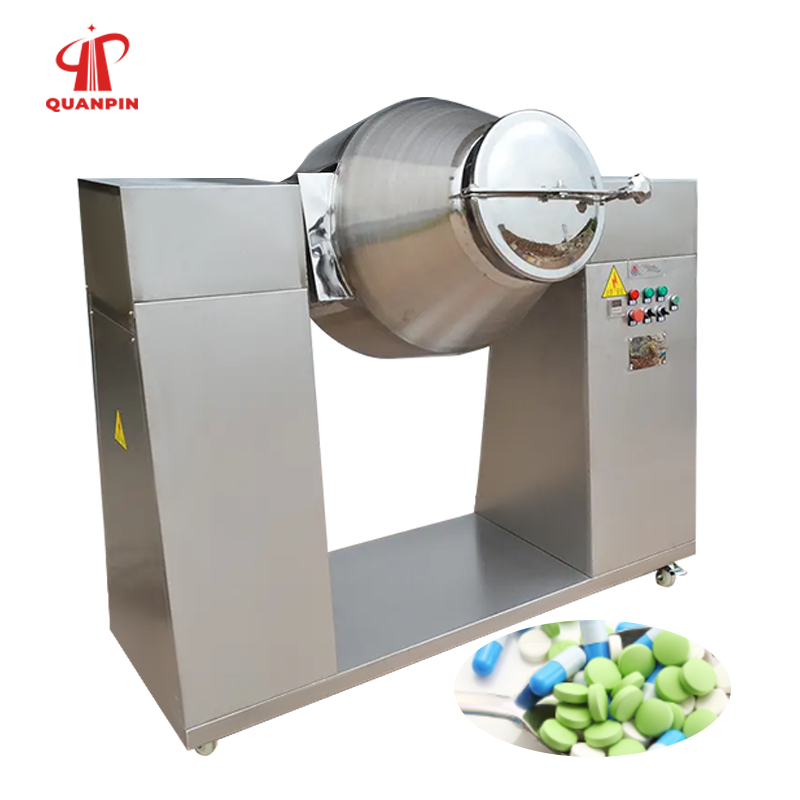
For a double cone mixer enquiry, identify the intended blending duty and what happens before laboratory evaluation. Distinguish ordinary mixing from grinding, heating or solvent treatment, since those preparation routes impose different conditions on the material.
Do not translate results from deliberately stressed laboratory specimens directly into a claim about normal manufacturing. A useful investigation explains why each condition was chosen and which process or storage question it can answer.
Five details to retain with a mixture
Ingredient identities
Record the actual ingredient identities and relevant grades. Generic names can conceal differences in preparation or composition, so the laboratory comparison should use the materials associated with the proposed formulation.
Screening ratio
State the preparation ratio and the reason for choosing it. A screening mixture may differ from the final recipe; retain that distinction rather than reporting its observations as direct evidence about the finished formulation.
Preparation route
Describe how the comparison specimen was prepared. Hand mixing, tumbling and grinding should not be treated as interchangeable procedures merely because each produces a vessel containing both ingredients.
Exposure history
Record temperature, humidity and exposure time where relevant to the study. An apparent disagreement between laboratories may reflect a different specimen history rather than a failure of either analytical instrument.
Decision purpose
Agree the decision that the investigation supports. Screening for a possible interaction, investigating a suspected cause and demonstrating stability are different tasks requiring appropriately scoped evidence.
Understand what thermal screening can reveal
An arbidol hydrochloride study combined thermal, spectroscopic and diffraction techniques in its excipient investigation. The experimental design illustrates the value of comparing observations made under different measurement conditions rather than relying on a single analytical feature.
The original arbidol-excipient study distinguishes elevated-temperature screening from non-thermal observations of mixtures. Its compound-specific findings do not identify which excipients are suitable for another active ingredient or establish performance of a commercial blender.
When a thermal scan changes a specimen, the measured response concerns that programmed experiment. Ask whether additional evidence is needed to investigate the mixture under the conditions relevant to the actual development question.
A thermal event can overlap with another component’s response or reflect more than one physical process. Keep the original curves and controls available so that a summary label does not conceal the basis for interpretation.
Organize the development comparison in six steps
Define the question
Define the formulation question and the role of the blending trial. The equipment demonstration should not be expected to substitute for a laboratory investigation of material interactions or storage behaviour.
Retain individual controls
Collect the required individual ingredients as well as prepared mixtures. Reference measurements help the analytical team determine whether a feature belongs to a component, its preparation history or the combined specimen.
Prepare traceably
Prepare specimens using documented procedures. If a stress condition or alternative mixing route is introduced deliberately, identify it as a separate comparison and preserve the reason for its inclusion.
Select complementary methods
Choose complementary methods through the analytical plan. The choice should follow the suspected mechanism and evidence needed, not the assumption that adding more instrument names automatically strengthens a conclusion.
Review the conditions
Review observations against the actual preparation and exposure conditions. Avoid interpreting a difference as a manufacturing effect before checking the laboratory handling that preceded the measurement.
Document unresolved points
Carry unresolved questions into the development decision explicitly. A screening signal may justify further work without proving that an ingredient combination is unsuitable under every relevant condition.
Read three formulation investigations within their scope
Stressed drug-excipient specimens
A linagliptin investigation used thermal and spectroscopic methods with chemometric analysis to study mixtures involving pharmaceutical excipients. It considered stressed conditions, showing why exposure history is part of the compatibility question.
The original linagliptin study concerns a specific drug and selected excipients. Its conclusions should not be copied into another formulation merely because an excipient name also appears in the new recipe.
For the blender project, the useful lesson is to label specimens by both composition and condition. This supports interpretation without claiming that the machine itself determines chemical compatibility.
Multicomponent compatibility questions
A study of penciclovir, lysine hydrochloride and pharmaceutical excipients examined solid-state characterization and compatibility through combined analytical observations. It included mixtures containing more than one active component in its formulation assessment.
The original penciclovir and lysine study illustrates that the relevant comparison can involve more than isolated binary pairs. The actual formulation context still needs justification; this research does not supply a universal testing matrix.
If a development programme moves from screening pairs to a more complete mixture, preserve the relationship between those stages. A result from one composition should not silently replace evidence about another.
Drug-polymer material states
An investigation of drug-polymer compatibility used chemometric-assisted ultraviolet spectrophotometry alongside other characterization methods. Its preparation routes included physical mixtures and polymer-associated systems, which are different material states.
The original drug-polymer investigation provides another example of method-specific evidence. It does not show that an analytical procedure developed for one system can be used unchanged to approve all dry powder blends.
Document which material state was actually measured and how it was obtained. Changes introduced during analytical preparation must remain distinguishable from changes potentially associated with the original blending operation.
Connect the laboratory handover to the blender trial
For a double cone powder mixer comparison, define sampling and handover without assuming a chemical transformation. Record the physical mixing route and let the analytical evidence determine which additional questions require investigation.
Keep the tested ingredient lots traceable through collection and laboratory receipt. Substituting another grade or lot during follow-up can alter the comparison and should be recorded clearly.
If the laboratory requires a specimen after a defined hold, identify that condition separately from the immediately collected mixture. Otherwise an apparent process effect can become confused with a storage interval.
Retain controls and individual observations with the final interpretation. An equipment acceptance summary should identify any unresolved formulation question rather than compressing all laboratory work into one passing label.
Investigate conflicting observations responsibly
When two analytical methods disagree, examine what each measures and which conditions it imposes. A disagreement can be informative and should not be resolved simply by selecting the result that favours the purchase decision.
If a suspected interaction remains unresolved, obtain further assessment through the qualified development team. Changing the mixer setting without a clear mechanism may not address the material question being investigated.
Prepare the equipment enquiry and laboratory roles
Provide the actual blend duty and relevant ingredient characteristics in the enquiry. Keep confidential formulation information within the agreed project arrangements while supplying enough detail to evaluate equipment suitability. When requesting a double cone blender price, separate the supplied mechanical scope from laboratory formulation assessment.
Describe the proposed preparation, collection and laboratory transfer route. Clarify whether the study includes any additional treatment after mixing so that results are not mistakenly attributed solely to the blender.
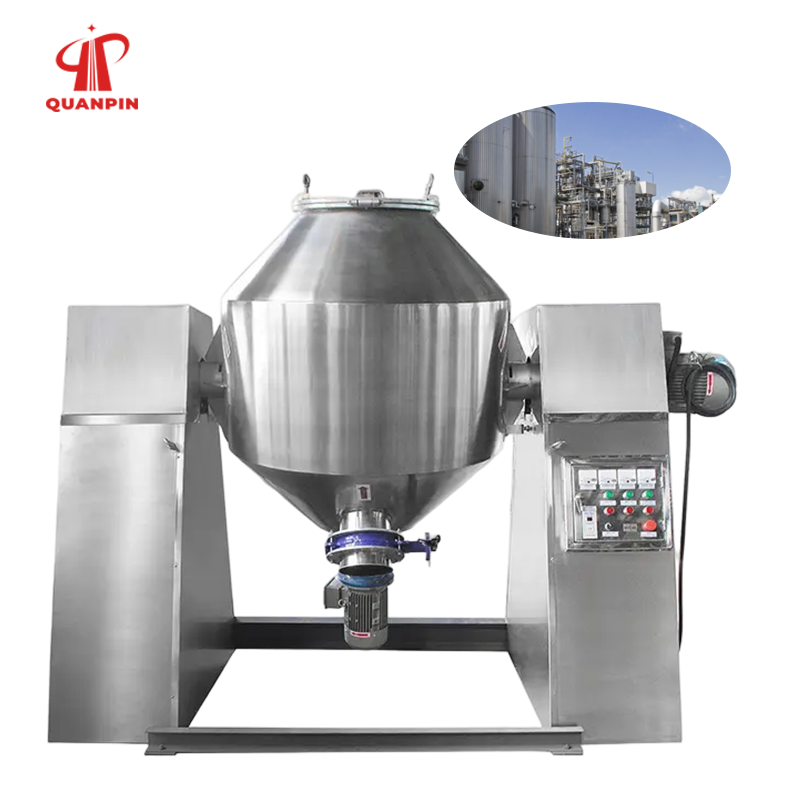
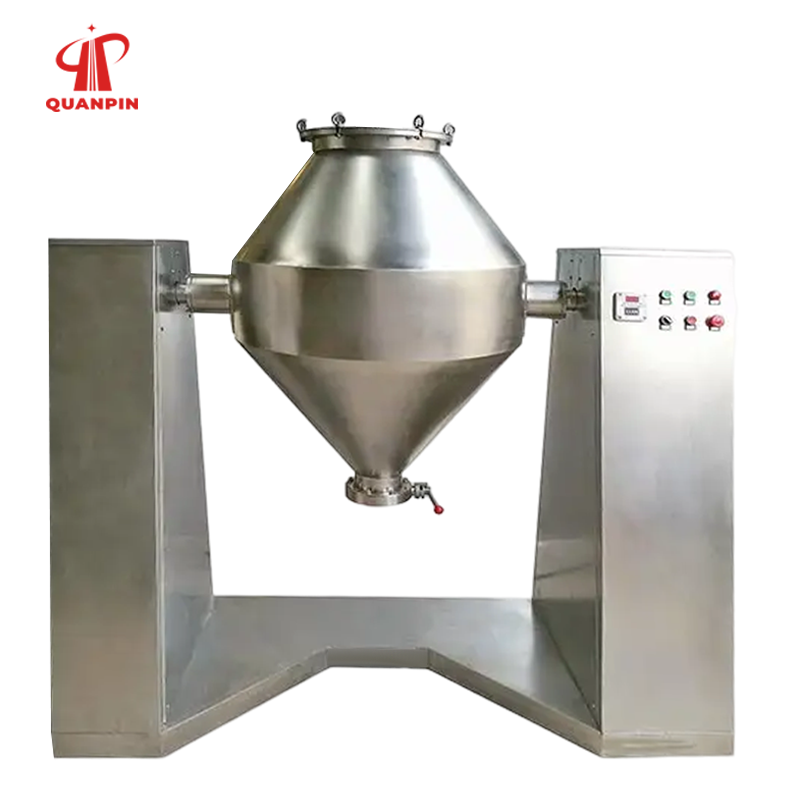
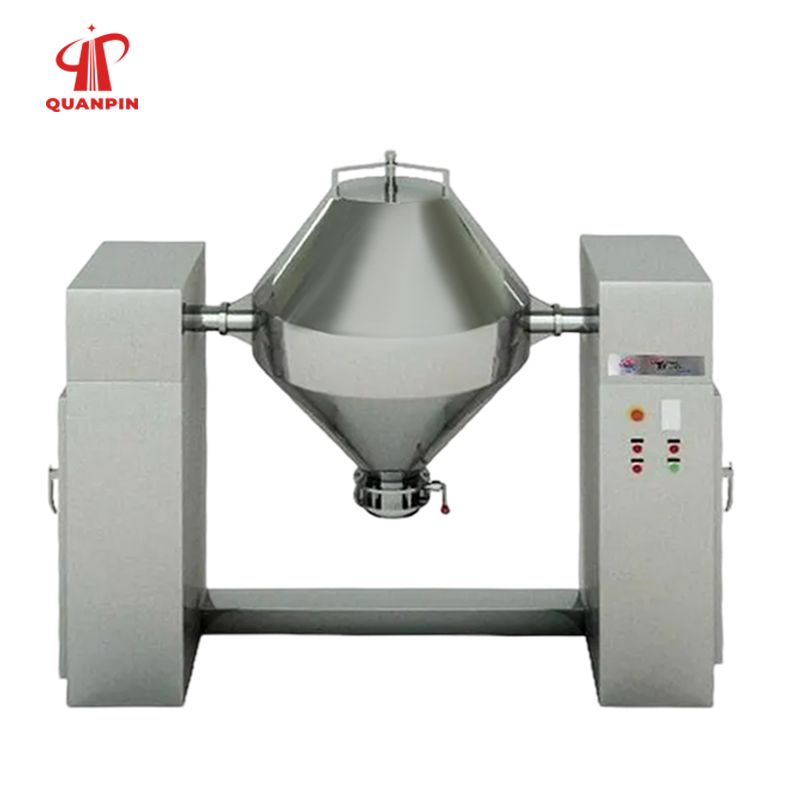
State which construction and cleaning requirements apply to the proposed configuration. These should be confirmed in the equipment scope rather than inferred from a published formulation paper or a product photograph.
Identify who designs the compatibility study, who performs measurements and who approves conclusions. Equipment supply and pharmaceutical formulation assessment are related project activities with different responsibilities.
Specify the records needed to associate specimens with trial conditions. An unexplained sample label is insufficient when later decisions depend on distinguishing an immediate mixture from a stressed laboratory preparation.
Agree how the project handles unresolved findings before the trial. A clear route for additional assessment prevents a general factory demonstration from being reported as complete formulation validation.
Keep project records and decisions explicit
An ambroxol hydrochloride study combined thermo-analytical and spectroscopic approaches under non-isothermal conditions. Its design reinforces the importance of keeping the thermal programme and complementary evidence attached to the conclusion.
The original ambroxol compatibility investigation concerns its selected compound and mixture conditions. It does not establish a universal temperature limit, ingredient approval or chemical-stability guarantee for a QUANPIN machine.
Assess mechanical and formulation evidence separately
A double cone tumble blender proposal should therefore be assessed using its genuine mechanical scope and relevant trial evidence. Separate formulation questions should remain with the responsible pharmaceutical development and quality personnel.
The strongest handover is explicit about what was measured, under which conditions and what remains unresolved. A clear boundary is more useful than a broad compatibility claim unsupported by the actual experiment.
Frequently Asked Questions
Does uniformity establish compatibility?
No. Ingredient distribution and compatibility answer different questions. A blend can meet a composition comparison while still requiring appropriate investigation of material interactions and stability under relevant conditions.
Does a shifted thermal peak prove failure?
Not automatically. Thermal screening imposes a programmed temperature history and can produce overlapping events. Qualified interpretation and complementary evidence may be needed for the actual formulation question.
Can grinding results describe tumbling?
No. Grinding, solvent treatment and heating change specimen preparation conditions. Their results cannot be attributed to an ordinary tumbling operation without evidence connecting those different processing routes.
Which methods should be selected?
Use methods selected for the actual question and materials. The studies illustrate possible approaches, but no combination of named instruments automatically proves compatibility for every formulation.
What belongs in specimen records?
Retain ingredient identity, lot, ratio, preparation route, exposure conditions, sampling time and analytical method. These records support interpretation when results differ or additional investigation becomes necessary.
What should the equipment enquiry include?
Supply the real blending duty and proposed specimen handover, then confirm the actual SZH configuration. Keep formulation compatibility decisions separate from the equipment quotation and mechanical acceptance process.
Discuss Your Pharmaceutical Blending Duty
Discuss the material, processing objective and required trials with QUANPIN. Review the equipment information and the relevant industry applications, or send an enquiry through our contact page.
Email sales@qpdryer.com or stacie@qpdryer.com. Call +86 19850785582 or contact WhatsApp +86 15921493205 to discuss the proposed scope.
For process evaluation, consider the double-cone blender for gravity-driven blending in a rotating double cone. Confirm suitability with representative material, the required product properties and the proposed process conditions.