Pharmaceutical Milling Trials: Reconcile Solid-State Methods Before Setting Acceptance
By QUANPIN
A pharmaceutical powder can become smaller while its solid structure also changes. Pair particle measurements with an appropriate solid-state assessment instead of accepting size as evidence that crystallinity remained unchanged.
An air classifier mill proposal concerns the physical processing duty. Where a material has a specified solid form, identify the methods required to investigate relevant changes during development.
Define structure alongside particle size
Crystalline order, local molecular arrangement and thermal glass transitions are related but different observations. Instruments responding to different structural features need not report identical percentages for a milled specimen.
This discussion concerns development and analytical interpretation. It does not recommend a drug formulation, establish clinical performance or prescribe operating conditions for a commercial pharmaceutical process.
Choose methods for a stated question
Define the analytical question before selecting methods. Detecting remaining crystallinity, identifying a polymorph and quantifying an amorphous fraction require different evidence and suitable reference materials.
A fine powder grinder trial should retain starting material and representative processed specimens. The laboratory needs that comparison to distinguish incoming conditions from processing-associated changes.
Record five material and process inputs
Initial solid form
Record chemical identity, grade and initial solid form. A shared generic name does not establish that separate feed lots began with equivalent physical structures.
Formulation identity
Identify formulation components and proportions. A pure compound and a polymer-containing mixture are different specimens, even when their intended final particle distributions appear similar.
Milling mechanism
Describe the configuration and collection route. Research using ball milling or jet milling does not establish an equivalent response for every mechanical pulverizer.
Process observations
Record available process observations. Equipment settings and measured product conditions should remain distinct rather than being treated as interchangeable evidence of the material’s temperature history.
Handling interval
Preserve collection-to-analysis time and handling conditions. Structural relaxation or recrystallization after processing can affect the specimen that is ultimately submitted to the laboratory.
Interpret analytical agreement carefully
An original XRPD, DSC and Raman comparison found that milling-induced disorder estimates required careful interpretation. Particle-size effects and the structural feature detected affected the analytical question. Read the original multimethod disorder comparison.
The lesson is to state what each measurement represents. Investigate discrepancies with suitable references rather than choosing whichever method produces the most convenient numerical result.
A broadened diffraction pattern alone should not automatically become a validated amorphous percentage. Ask the laboratory to explain calibration and possible contributions from particle size.
An air classifying mill comparison can connect a powder result with a declared structural assessment, without claiming that particle dimensions replace appropriate solid-form evidence.
Run the characterization plan
Retain references
Prepare comparable feed portions and retain an initial reference. Keep their handling and storage histories connected to the condition of the material before processing.
Control factors
Agree trial factors and sampling. Avoid changing formulation and configuration simultaneously when the intended comparison is to understand the effect of the milling operation.
Measure size
Measure particle distributions consistently. Preserve dispersion preparation with each result so laboratory agglomerate breakup is not mistaken for a difference created by processing.
Allocate specimens
Allocate matched portions for structural methods. Material heated during thermal analysis cannot subsequently be treated as an unchanged equivalent for another structural measurement.
Document calibration
Document reference preparation and calibration. Different routes to prepare amorphous standards can influence what a calibration actually represents for the processed powder being assessed.
Review combined evidence
Review combined evidence before acceptance. Retain original traces and assumptions rather than reducing a complex analytical record to an unexplained crystalline-or-amorphous label.
Read milling research within its scope
Dissolution and agglomeration
A simvastatin experiment considered size, disorder and dissolution. Its primary-size advantage did not automatically become a dissolution advantage because agglomeration affected the product response. Read the original simvastatin milling study.
This finding supports application testing after characterization. It does not establish that structural disorder is always irrelevant or that another compound will behave identically.
Keep solid-form evidence and intended-use performance connected while reporting separate measurements. Each result belongs to its method, specimen preparation and investigated material.
Time-dependent transformations
A kinetic study followed milling-induced polymorphic changes through diffraction and calorimetry. The investigated transformations included an intermediate amorphous phase between initial and final crystalline forms. Read the original transformation kinetics study.
A single final specimen may therefore miss relevant stages of transformation. Choose sampling appropriate to the development question and practical observations available in the actual trial.
The mechanism belongs to the studied compounds and arrangements. It does not demonstrate either a desired transformation or its avoidance in an untested commercial installation.
Formulation and morphology
Research on polymer-containing mixtures examined relationships between polymer properties and ball-milling amorphization kinetics. Formulation was an explicit experimental variable rather than a neutral background component. Read the original polymer kinetics investigation.
A lactose jet-milling study assessed phase purity alongside morphology. This illustrates checking structural state when particle engineering is the development goal, rather than relying only on dimensions. Read the original lactose jet-milling study.
Neither experiment supplies QUANPIN operating settings. Different mechanisms, formulations and materials require their own trials before a project-specific equipment claim can be supported.
Investigate measurement differences
Compare methods using matched specimens and declared reporting bases. Apparent agreement is meaningful only when samples and analytical questions are sufficiently comparable across the measurements.
Inspect diffraction patterns, thermal traces and spectroscopic models. Software-generated percentages should remain traceable to the reference preparation, calibration procedure and assumptions behind the calculation.
If methods disagree, review sensitivity and the structural feature observed. Averaging incompatible percentages does not necessarily provide a better description of the material’s actual state.
Assess the practical importance of a detected change separately. A measurable difference requires appropriate product assessment instead of an automatic assumption that the change is beneficial or unacceptable.
Test repeatability and handling limits
Challenge a promising result with another representative lot or repeated run. A single selected specimen does not establish robustness across ordinary variations in feed material.
Keep untested storage intervals explicit. A measurement shortly after processing does not demonstrate that the same structural state persists throughout subsequent packaging, transfer or storage.
Prepare a solid-state-aware enquiry
Provide material identity, grade and known solid-form requirements for an enquiry. Include representative feed and available characterization rather than only a general product description.
State the physical target and measurement method. Distinguish a distribution requirement from a single nominal sieve designation or an unsupported requirement for very fine material.
Identify structural changes relevant to the project. Ask the laboratory which methods and reference materials can address those changes at a useful sensitivity for the intended decision.
Describe collection, transport and storage. The specimen arriving for analysis should represent the intended processing boundary rather than an uncontrolled period of exposure after the trial.
Allocate sampling and documentation responsibilities. Clarify what the supplier records and which characterization activities require the customer’s laboratory or another qualified analytical provider.
Compare an ACM mill quotation against that scope. Price alone cannot establish solid-form preservation or downstream performance without evidence relevant to the actual material and application.
Match equipment to the duty
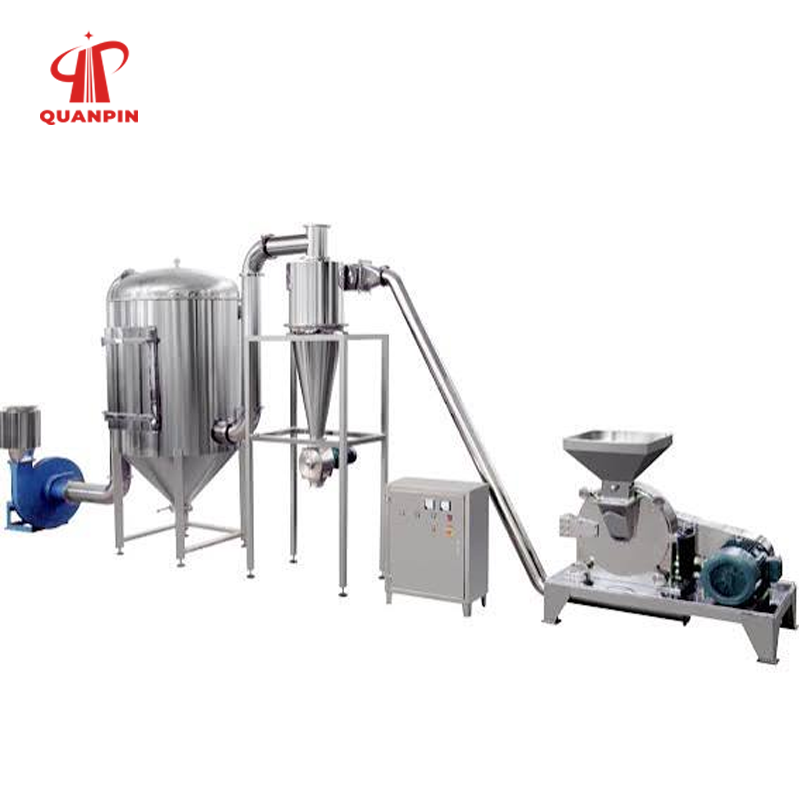
Choose equipment for the real duty. Confirm contact materials, cleaning and collection interfaces from the supplier’s offer rather than borrowing an academic apparatus specification.
Do not treat a published milling duration as a universal recipe. Scale, mechanism, loading and formulation can change the process history and the resulting analytical response.
Retain an acceptance record
A defensible record connects starting form, process observations, specimens and characterization methods. Application testing should remain linked to those observations through consistent sample identifiers.
If a structural requirement cannot yet be evaluated, retain that development gap explicitly. It should not disappear into a statement that the particle-size requirement passed.
Frequently Asked Questions
Does size establish solid form?
No. A particle distribution measures dimensions under its method. It does not identify every solid form or quantify amorphous content without separate relevant characterization.
Why can methods disagree?
Different methods observe different structural features and use different references. Review the underlying evidence before treating an apparent numerical disagreement as an instrument error.
Does broadening quantify amorphous content?
Not by itself. Size and other disorder can affect diffraction features. Quantification requires a suitable reference, method and assessment of potential interference with the measurement.
Can mixtures share pure-compound results?
No. Polymer-containing formulations are different material systems. Their experimental responses cannot automatically be transferred to a pure starting compound processed in another arrangement.
Does disorder guarantee improvement?
No. Structure and performance are separate questions. Evaluate the relevant application through an appropriate method instead of assuming that any amorphous contribution improves the product.
What belongs in the enquiry?
Start with representative feed, a physical target and known solid-form requirements. Agree characterization, sampling boundaries and handling conditions before comparing equipment configurations.
Discuss Your Milling Trial
Discuss the material, processing objective and required trials with QUANPIN. Review the equipment information and the relevant industry applications, or send an enquiry through our contact page.
Email sales@qpdryer.com or stacie@qpdryer.com. Call +86 19850785582 or contact WhatsApp +86 15921493205 to discuss the proposed scope.