Powder Milling Specifications: Distinguish Specific Surface Area from Surface Energy
By QUANPIN
A milling result can change the amount of accessible surface and the character of that surface. Keep specific surface area and surface energy as separate measurements when defining a pharmaceutical powder trial.
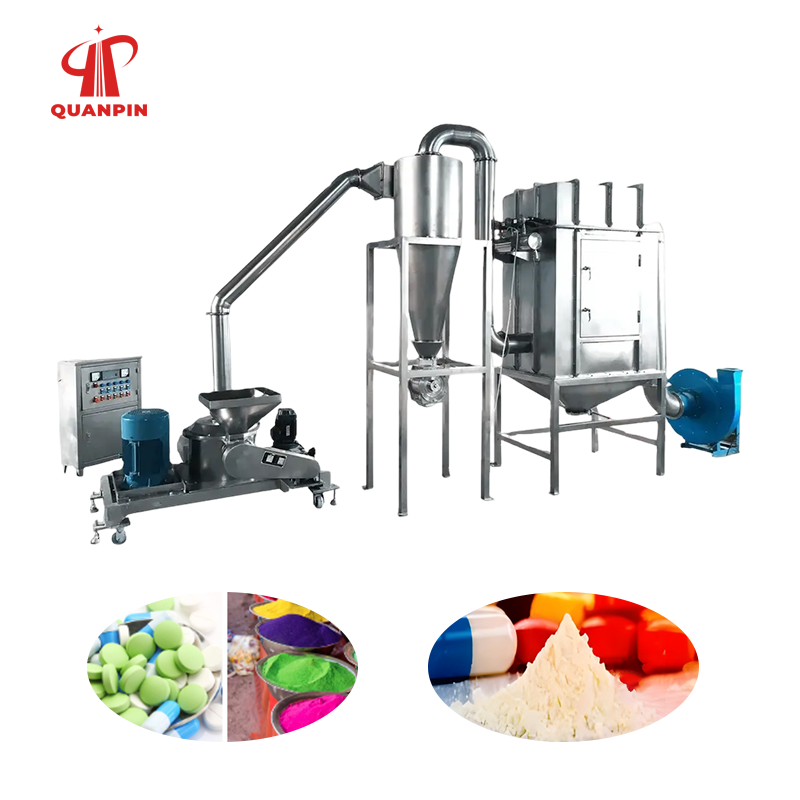
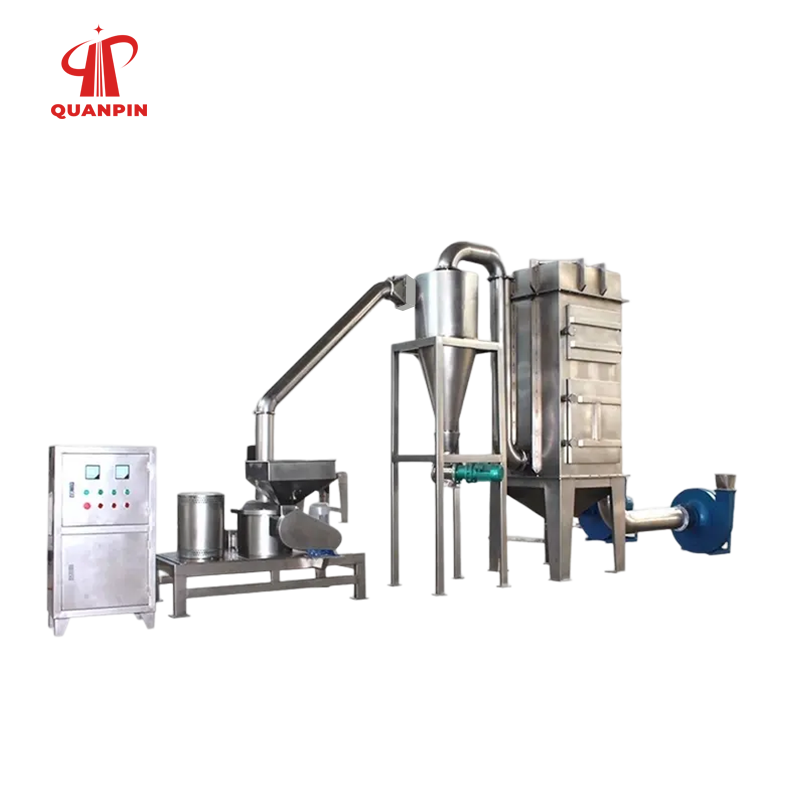
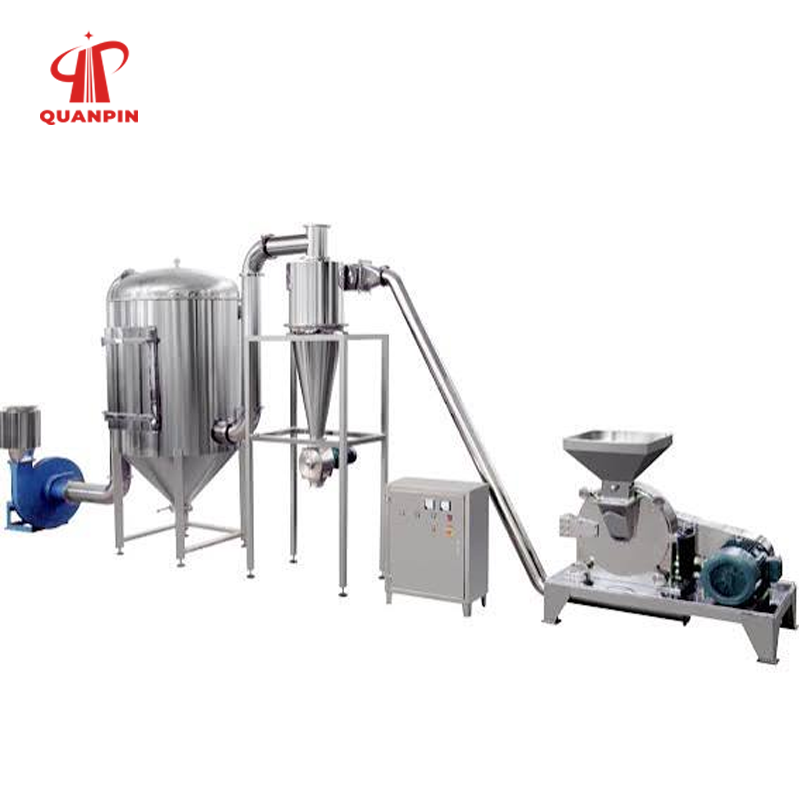
An air classifier mill proposal should state the physical powder duty. If surface properties matter to downstream processing, agree the relevant characterization rather than relying on particle size alone.
Name the surface property before setting a target
Specific surface area expresses measured surface relative to sample mass. Surface energy describes energetic interactions at the surface; it is not another name for the number of square metres per gram.
Neither quantity automatically determines application performance. The intended powder response needs its own test, especially when changes in shape, surface chemistry or agglomeration accompany milling.
Choose the method for the actual question
Define why a surface measurement is required. Investigating gas-accessible area, comparing surface interaction distributions and evaluating a formulation response are different questions with different methods.
A fine powder grinder trial can provide specimens for those methods. It cannot establish a surface-property specification merely by producing a nominal mesh size or a visually finer powder.
Record five inputs for a useful study
Material identity
Record material identity and grade. Different excipient preparations can differ physically even when the chemical name is the same, so retain a representative incoming specimen.
Formulation components
State whether additives or other formulation components are present. Co-processing a mixture is not an equivalent experiment to milling the unmodified starting powder.
Processing configuration
Describe the grinding and collection configuration. Published jet-milling, coating and roller-compaction experiments should not be treated as interchangeable demonstrations of another machine’s capabilities.
Conditioning history
Preserve sample conditioning and exposure history. Adsorbed water or other surface species can affect measurements, making storage and preparation relevant parts of the experimental record.
Method and units
Identify the surface method and reporting units. A gas-sorption result and an inverse-gas-chromatography energy distribution should remain distinctly labelled rather than merged into an unexplained surface-value column.
Keep measurement and acceptance separate
The IUPAC physisorption report provides authoritative terminology and discusses advantages and limitations of gas adsorption for surface-area and pore analysis. It is methodological guidance rather than an excipient acceptance certificate. Read the original IUPAC physisorption technical report.
Use that distinction when commissioning work. Ask the laboratory how its method addresses the actual powder and what preparation assumptions are required for interpreting the measurement.
A surface area estimated from an idealized particle geometry need not equal gas-accessible area. State the model or measurement behind a number before comparing it with another report.
An air classifying mill study should therefore retain particle distributions and surface measurements separately. Agreement in one does not establish agreement in all other powder attributes.
Run a controlled surface-characterization comparison
Divide the feed
Divide a traceable feed lot into controlled trial groups. Preserve the reference material in the same documented handling chain as the processed specimens.
Control the factors
Agree process factors before testing. If an additive is under investigation, identify both its presence and the preparation route rather than attributing every change to size reduction.
Collect representative powder
Collect representative powder using a defined plan. Avoid comparing an initial feed average with a convenient selected processed fraction unless that fraction is the explicit product boundary.
Allocate matched portions
Allocate matched portions to surface and particle measurements. Laboratory preparation for one method may change the specimen and cannot always precede another method without affecting comparability.
Record the laboratory method
Record conditioning, test gas or probes and analysis settings. Retain the laboratory report and original results needed to understand the derived surface-area or energy value.
Evaluate the application
Evaluate a relevant downstream response separately. A surface measurement helps explain behaviour but should not replace an application test or become an unsupported claim of better performance.
Read processing evidence within its limits
Surface energy and particle engineering
A proof-of-concept investigation modified lactose surface energies and examined related blend behaviour. Its co-milling and coating routes were deliberately defined parts of the experimental material preparation. Read the original surface-energy particle-engineering experiment.
The authors did not find that surface energy alone accounted for every observation after particle engineering. Other changes in particle properties complicated the transfer from an energetic trend to an application result.
Use that finding to avoid overinterpreting a single measurement. A mechanistic explanation should remain conditional when morphology or other physical attributes also changed between specimens.
Additives across multiple operations
An original study of additives in dry milling considered powder processing and subsequent tableting. An aid to one operation did not provide a universal improvement across all assessed responses. Read the original additive milling and tableting study.
This supports defining the downstream question in advance. A proposed additive, processing route or observed surface change should be evaluated against the actual product requirements rather than described as inherently beneficial.
Do not transfer an academic additive recipe into an equipment quotation. The customer’s formulation and suitability assessment remain project-specific, and no laboratory result qualifies an untested commercial arrangement.
Processing comparisons and metrology
A chitin investigation compared roller compaction and ball milling using multiple powder-characterization methods, including specific surface area. Different stress-inducing operations produced different combinations of measured properties. Read the original chitin processing comparison.
NIST’s titanium-dioxide reference material certificate specifies its intended gas-sorption instrument calibration and performance-testing use. It provides a metrological reference, not a target area for pharmaceutical excipients. Read the original NIST reference-material certificate.
These examples distinguish method control from product acceptance. Verifying an instrument does not establish that a particular excipient meets its formulation requirements or that an unrelated processing route is suitable.
Investigate results without combining unlike quantities
Review the complete measurement definitions before comparing batches. Different preparation procedures, probes or analysis assumptions can make apparently similar surface numbers inappropriate for direct ranking.
Inspect surface area together with particle distribution and morphology. An apparent inconsistency can prompt investigation of agglomeration or accessible structure, rather than proving that one instrument is wrong.
Keep surface-energy components or distributions labelled as reported. Compressing multiple energetic observations into one undocumented average can conceal the comparison that the original method intended.
Where a change is found, test its practical importance through the agreed response. Do not infer universal flow, adhesion, dissolution or compression improvement from the direction of one surface measurement.
Test repeatability and environmental limits
Repeat promising comparisons on representative material. A single carefully prepared specimen does not demonstrate the consistency of normal incoming lots or the complete operating range.
Preserve untested conditions as limitations. A result after one conditioning route cannot establish that humidity exposure or storage will leave the surface response unchanged.
Prepare a surface-property-aware enquiry
Provide material identity, feed preparation and current measurements for an enquiry. Include representative feed rather than assuming another excipient’s surface characterization describes the proposed duty.
State the physical target and its method. Explain whether surface measurements are exploratory development tools or established acceptance criteria with a defined reporting procedure.
Describe the application that motivates the surface question. This gives the supplier and laboratory a practical context without asking either to promise an unverified formulation outcome.
Specify the specimens and process records required from a trial. Keep accepted powder and other collected fractions identifiable so measurements can be assigned to the intended product boundary.
Agree transport and conditioning responsibilities. Document how material will reach the laboratory and what preparation occurs before the measurement, including any controlled environmental exposure.
Compare an ACM mill proposal against this scope. An academic surface measurement cannot establish commercial capacity, energy use or product performance without relevant evidence from the actual project.
Select equipment for the physical duty
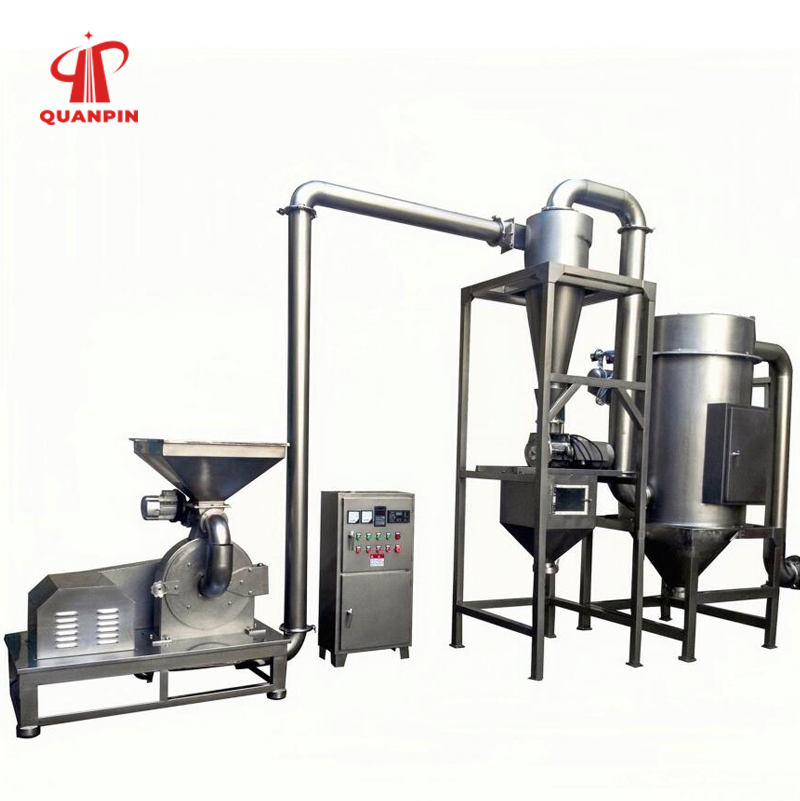
Select equipment for the material and proposed physical duty. Confirm the offered contact materials, cleaning arrangements and collection interfaces rather than inferring them from a generic machine category.
Avoid importing a published time or operating setting as a universal specification. Scale, mechanism and formulation affect the process history that creates the specimens being assessed.
Retain an auditable acceptance package
An acceptance package should connect feed identity, tested configuration, sampling, conditioning, surface methods and application observations. Preserve the data needed to investigate disagreement later.
If a required surface property is not yet measurable by an agreed method, retain that uncertainty explicitly. Passing particle size does not silently resolve the missing characterization question.
Frequently Asked Questions
Are area and energy the same?
No. Specific surface area measures accessible surface relative to mass, while surface energy concerns interactions at a surface. Their reporting units and experimental methods are different.
Does geometry predict measured area?
Not automatically. A geometric estimate uses assumptions about particle shape and size. A gas-sorption experiment measures access under its own conditions, which should be stated in the comparison.
Does higher surface energy improve performance?
No. Particle engineering can change several attributes simultaneously. Assess the intended application instead of treating a direction of surface-energy change as a universal product improvement.
What does a reference material establish?
Its purpose is to help calibrate or verify an instrument within the certificate’s stated scope. It is not an excipient specification or an equipment performance guarantee.
Can additive and pure-powder results be pooled?
No. Co-processing introduces a different material and preparation route. Keep additive identity and method explicit and assess their effect against the actual downstream requirement.
What should the enquiry include?
Start with representative feed, a physical powder target and the reason surface properties matter. Agree sample handling, laboratory methods and the relevant application test before comparing proposals.
Discuss Your Powder Milling Project
Discuss the material, processing objective and required trials with QUANPIN. Review the equipment information and the relevant industry applications, or send an enquiry through our contact page.
Email sales@qpdryer.com or stacie@qpdryer.com. Call +86 19850785582 or contact WhatsApp +86 15921493205 to discuss the proposed scope.