Buckwheat Flour Milling: Preserve the Hydration Timeline When Measuring Rutin
By QUANPIN
Buckwheat flour can change after it meets water. A milling comparison intended to measure rutin should therefore preserve the interval between hydration and analysis, rather than treating every prepared extract as the same material.
An air classifier mill enquiry should connect the required particle distribution with the customer’s actual food preparation. Dry grinding, laboratory extraction and dough making are different operations requiring separately documented observations.
Define the hydrated result before comparing milling
Rutin is a flavonoid glycoside. Endogenous rutinosidase can hydrolyse it, producing quercetin. A result measured after hydration can consequently reflect biochemical activity as well as release from the grain structure.
This article concerns ingredient development and analytical interpretation. It does not establish a health benefit or recommend a processing treatment for improving nutrition, and it does not qualify a particular commercial mill.
Match the study to the intended food
Define whether the product will become dry flour, hydrated dough or an infusion. The relevant sample preparation follows that use, rather than an unspecified intention to maximise an assay value.
A fine powder grinder trial should retain a dry reference and a documented food-application protocol. These allow unexpected analytical differences to be investigated without automatically blaming the machine configuration.
Record five material and preparation inputs
Species and cultivar
Identify the buckwheat species and cultivar. Common buckwheat and Tartary buckwheat should not be pooled into one unnamed material group when comparing their rutin-related behaviour.
Anatomical fraction
Record whether the feed is grain, bran or another separated fraction. Different anatomical proportions can affect incoming composition, independently of any difference created during grinding.
Previous thermal processing
Document previous heating and drying. The same particle-size description does not establish that two incoming materials retain equivalent endogenous enzyme activity after different preparation histories.
Moisture and analytical basis
State incoming moisture and the reporting basis for chemical measurements. Retain dry-matter calculations so changes in water content cannot silently alter the interpretation of reported concentration.
Water-contact protocol
Describe the planned contact with water, including mixing and holding conditions. This is a process variable, rather than an inconsequential laboratory detail to omit from an equipment trial.
Why a timestamp belongs with the assay
An early noodle-processing investigation reported decreasing rutin and increasing quercetin during preparation and preservation. Its interpretation considered enzymatic degradation and the amount of water added to the flour mixture. Read the original enzymatic degradation during noodle processing.
That study does not demonstrate a universal reaction rate for every flour. It supports recording the preparation history before comparing analytical results from nominally similar milled materials.
Retain timestamps for water addition, mixing completion and sampling. When samples cannot be analysed immediately, agree a laboratory preservation procedure that addresses the analytes and method actually being used.
An air classifying mill trial should not be judged by a single unexplained rutin value. Keep the analytical result connected to the dry powder and its subsequent preparation history.
Run the comparison in six controlled steps
Divide the feed
Divide a traceable feed lot into the intended trial groups. Preserve an unground reference when practical and retain enough material to investigate differences that are found later.
Record the mill
Record the actual grinding configuration and collection route. Do not substitute a category name for information about the equipment that produced the submitted powder specimen.
Measure the powder
Measure the particle distribution using a consistent preparation procedure. Report the distribution rather than assuming that an identical nominal sieve designation establishes identical physical material.
Control hydration
Prepare matched hydration experiments with an agreed water-to-flour basis. If water quantity is itself under investigation, identify it explicitly as an experimental factor rather than changing it informally.
Preserve the specimens
Sample according to a declared timeline and preserve specimen identity throughout analysis. The laboratory should explain how its procedure controls continuing changes after the nominal sampling time.
Assess the food
Review chemical measurements alongside the intended food assessment. Bitterness or another product response requires an appropriate evaluation; it cannot simply be inferred from every numerical change in one compound.
Use original research within its boundaries
Concurrent release and transformation
Research comparing flour and dough identified two concurrent processes after contact with water: release of rutin from grain structures and release of rutin-degrading enzymes into the aqueous system. Read the original rutin and quercetin in flour and dough.
These processes explain why interpreting a hydrated result as a direct measure of dry milling is incomplete. The measured amount belongs to the preparation method and observation time.
For procurement, translate that distinction into a controlled comparison. Keep hydration conditions consistent first, then investigate deliberate changes in formulation or preparation through separately identified experiments.
Genetic differences
A genetic investigation identified Tartary buckwheat lines with trace rutinosidase activity and compared their bitterness with normal-activity material. Cultivar identity was therefore an important part of the experimental explanation. Read the original trace-rutinosidase genetic investigation.
This is not evidence that an ordinary grinder creates a trace-enzyme cultivar. A machine proposal must not borrow a plant-breeding result as a claimed processing capability.
Where incoming lots differ, review their identity before interpreting an apparent grinding benefit. A controlled trial should avoid changing cultivar and milling conditions together without recognising the confounding effect.
Thermal treatment and infusion
A heat-treatment study examined gelatinization and rutinosidase denaturation using specific analytical methods. Heating was an additional transformation, rather than a synonymous description of particle-size reduction. Read the original heat treatment and enzyme denaturation.
Research on roasted Tartary buckwheat bran compared successive beverage infusions with those from roasted grain. Its extraction sequence illustrates why fraction identity and repeated infusion belong in a beverage test description. Read the original roasted bran successive infusion study.
Neither experiment supplies operating settings for a QUANPIN installation. Use their scope to identify missing questions, then establish the actual material response through an appropriate trial.
Interpret the preparation timeline
Plot rutin and quercetin observations against the declared preparation timeline. Preserve the dry reference as a separate condition rather than assigning it an artificial hydration time.
Show replicate variation and the laboratory’s reporting basis. A smooth trend line should not conceal individual results or uncertainty around measurements close to the method’s practical limit.
If results disagree, check sample identity, fractions, hydration timing and analytical recovery. A repeat with corrected preparation may be more informative than immediately changing grinding severity.
Avoid assuming that all measured quercetin appeared during grinding. The analytical preparation can include water contact and holding that must be considered when interpreting the result.
Challenge the protocol with another lot
Use a second lot to challenge a promising protocol. Agreement within a single selected material is not the same as demonstrated robustness across normal supply variation.
Keep the application decision explicit. A flour for dough and a roasted infusion ingredient may require different assessments even when both are described commercially using rutin-related language.
Prepare a testable milling enquiry
For an equipment enquiry, provide species, cultivar and anatomical fraction wherever known. Include a representative feed rather than only a generic description of buckwheat powder.
State the required particle distribution and its measurement method. Identify which properties are acceptance criteria and which are exploratory measurements intended to guide further development.
Provide the actual feed preparation history, moisture and handling condition. These facts help establish a meaningful grinding duty without inventing capacity or temperature guarantees.
Describe collection and sampling requirements. Accepted powder and other collected fractions should remain identifiable so a chemical result can be traced to the material actually evaluated.
Explain the downstream hydration or infusion protocol to the supplier. An ACM mill quotation can address the proposed physical duty, while application testing requires separately defined responsibilities.
Compare proposals against the same scope and evidence requirements. An unexplained price difference does not establish superior ingredient quality, and an academic result does not establish commercial performance.
Select equipment for the physical duty
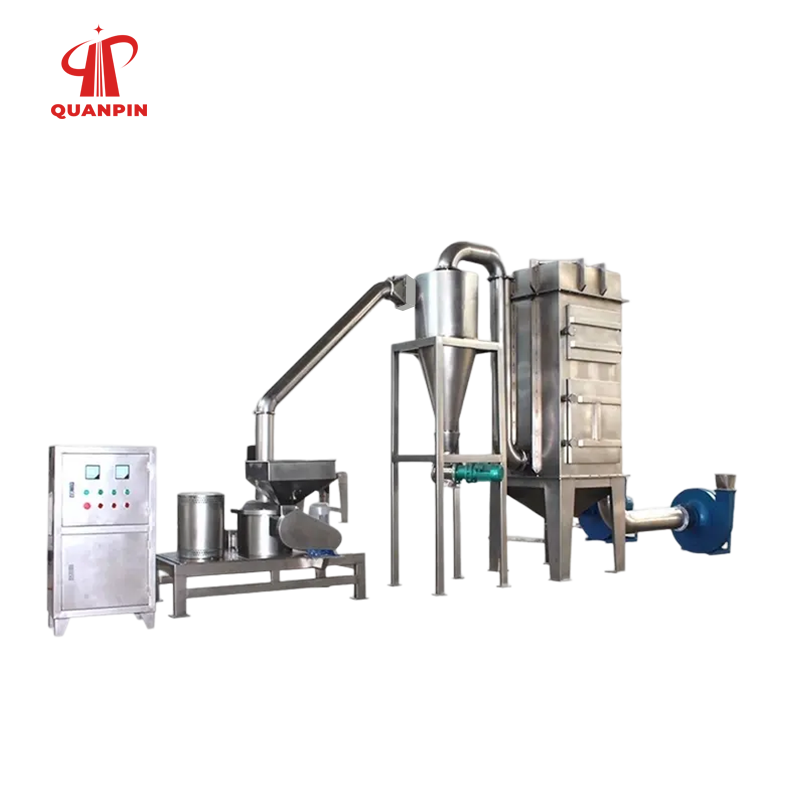
Select a configuration after reviewing the feed and trial outcome. Confirm contact materials, cleaning arrangements and proposed collection interfaces from the supplier’s actual offer.
Do not import published heat-treatment settings into a dry-milling specification. Additional thermal processing changes the process route and must be evaluated as a separate proposal.
Keep the acceptance record complete
Accept the analytical comparison when material identity, particle preparation, hydration history and measurement method remain connected. A concentration table without those records is an incomplete development result.
If enzyme activity or preservation remains uncertain, state that limitation in the trial report. Further laboratory work should address the specific uncertainty rather than imply that the equipment has already resolved it.
Frequently Asked Questions
Does finer mean more rutin?
No. Finer particles can change physical preparation, but the measured rutin response also depends on material identity, enzyme activity and subsequent hydration. Test the actual ingredient under a declared method.
Can buckwheat types be pooled?
Not automatically. Species and cultivar can differ in composition and enzyme activity. Keep those identities explicit instead of treating one buckwheat name as an adequate analytical specification.
Why record hydration time?
Because contact with water can permit concurrent release and enzymatic transformation. Two samples analysed after different holding periods may no longer represent an equivalent comparison.
Does milling inactivate enzymes?
No. A controlled heat treatment is a different operation with different effects. A grinding machine should not be described as providing demonstrated enzyme inactivation without relevant project evidence.
Does an assay establish product benefit?
No. An analytical concentration does not establish sensory acceptance or a health outcome. Evaluate the intended food through appropriate methods and keep conclusions within their demonstrated scope.
What should a first enquiry contain?
Start with a traceable feed, a physical powder target and a fixed preparation timeline. Agree sampling, preservation and analytical responsibilities before comparing equipment configurations.
Discuss Your Buckwheat Milling Trial
Discuss the material, processing objective and required trials with QUANPIN. Review the equipment information and the relevant industry applications, or send an enquiry through our contact page.
Email sales@qpdryer.com or stacie@qpdryer.com. Call +86 19850785582 or contact WhatsApp +86 15921493205 to discuss the proposed scope.