Dry Food Blending: Plan Environmental Monitoring Around Charging and Discharge
By QUANPIN
An environmental monitoring plan around dry food blending asks where contamination could enter or persist. It does not measure whether salt, spice or another ingredient is evenly distributed. Keep hygiene verification and composition testing connected to the process while preserving their different purposes.
For a conical screw mixer handling a low-moisture ready-to-eat food, identify exposure points before defining sampling access. Ingredient charging, openings, transfer connections and surrounding traffic belong in the assessment. The actual plan requires the site’s qualified food safety team and applicable legal requirements.
Why environmental evidence needs its own plan
Low moisture does not establish absence of pathogens. A dry formulation and a clean-looking machine are insufficient evidence for microbiological acceptance. The assessment must consider ingredients, equipment, surroundings and handling, rather than treating the mixer as an isolated vessel.
The recommendations here organize an equipment discussion, not a validated sanitation procedure. They do not specify a disinfectant, sampling frequency, release decision or universal environmental limit for a particular facility or product.
Define the food and process context
Start with the product’s intended use and hazard assessment. A recipe receiving an effective subsequent control may have a different process context from a ready-to-eat powder. Confirm that context rather than assuming every dry blend has the same requirements.
The site’s food safety plan should determine how environmental observations, test results and corrective actions are used. A supplier’s equipment demonstration cannot replace that responsibility or qualify the entire production environment.
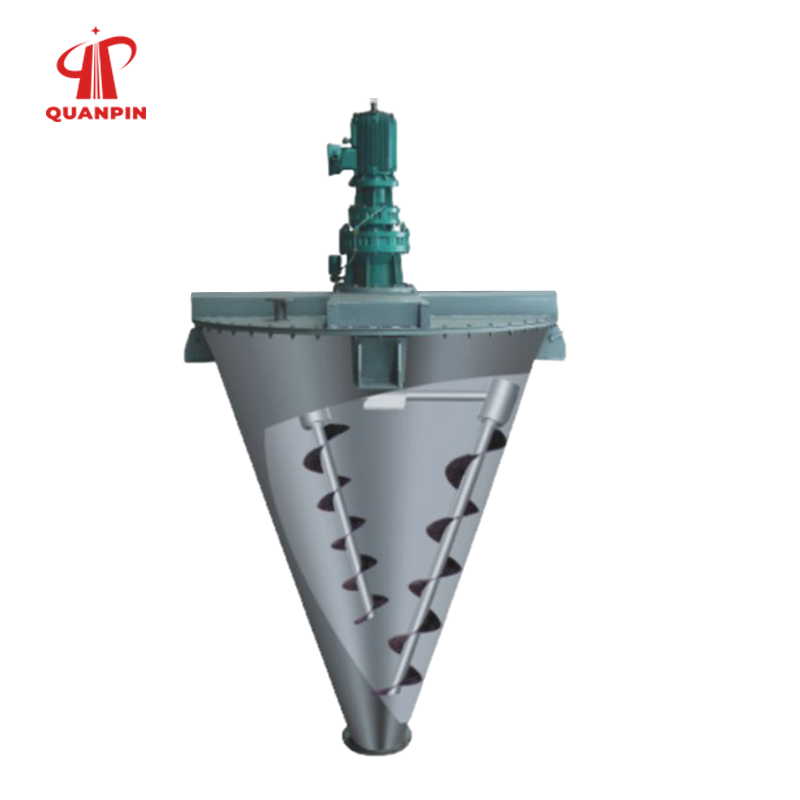
Five boundaries to map around the mixer
Charging exposure
Map where ingredients are exposed during charging. Include the handling of bags, containers and tools, while distinguishing actual product-contact surfaces from nearby areas that could affect exposed material.
Discharge and transfer
Describe the discharge interface and what happens immediately afterward. Record whether material enters a closed connection or an open container; the observation boundary should follow the real handling route.
People and material movement
Identify people and material movement near exposed powder. The purpose is to understand potential pathways and responsibilities, not to infer that every observed movement necessarily contaminates the product.
Moisture management
Describe moisture sources and how the facility manages them. Include maintenance events and exceptional cleaning, rather than considering only the ordinary dry production state visible during a supplier visit.
Responsible personnel
Assign responsibility for selecting sampling sites, methods and responses. An equipment quotation should clarify access and construction details while leaving food safety decisions with appropriately qualified personnel.
Read low-moisture guidance with its correct status
FDA’s 2025 draft guidance for low-moisture ready-to-eat foods discusses sanitation programmes, environmental monitoring, product testing and corrective actions. It is a draft distributed for comment, not a final binding equipment specification or evidence that a particular mixer is approved.
Use that document to frame questions about the surrounding operation. Its coverage of low-moisture ready-to-eat foods does not mean every recipe, process or facility can use the same monitoring arrangement.
FDA’s explanation of environmental sampling distinguishes collecting samples from the production environment from collecting the food itself. It also explains how such sampling can contribute to understanding contamination risks and evaluating controls.
A negative environmental result applies to the specimen, location and method used. It is not a complete demonstration that every surface or every portion of a batch is free of a hazard.
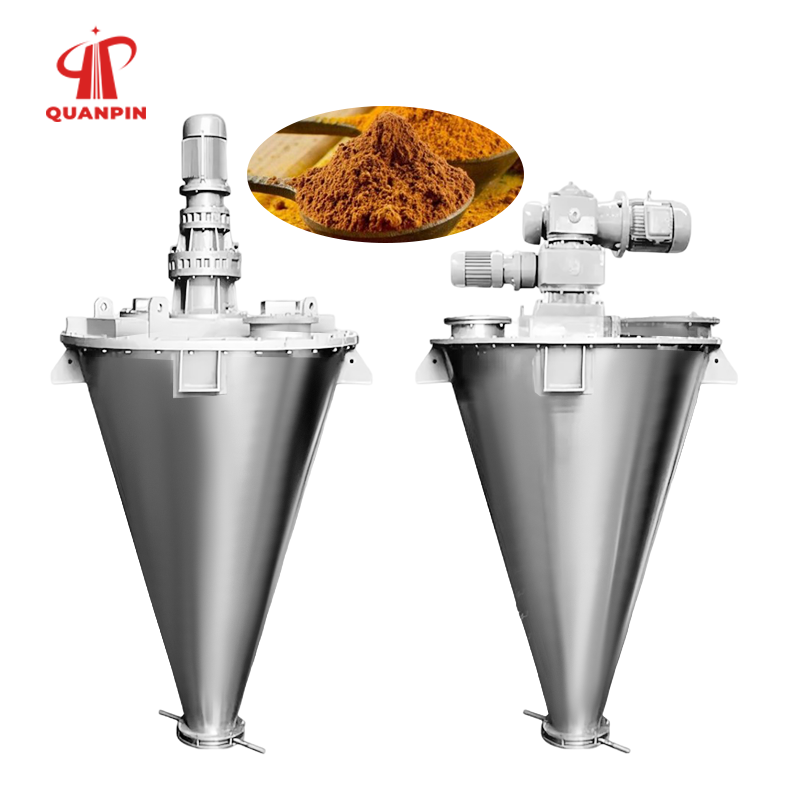
Build the monitoring discussion in six steps
Define the boundary
Define the process boundary with a simple flow description. Mark charging, mixing, discharge and transfer alongside the relevant surrounding activities so that the team can identify what is included in the review.
Review actual access
Review access under actual operating conditions. A surface reachable during maintenance may not be accessible safely during production, and an apparently convenient sampling point may not answer the intended monitoring question.
Select sites by assessment
Choose sites and methods through the facility’s risk assessment. Keep their selection rationale documented instead of copying a diagram from an unrelated installation or using distance alone as the deciding factor.
Record collection context
Record the operating and sanitation state when collecting a sample. A result obtained after an unusual interruption should retain that context rather than being pooled silently with routine observations.
Set review responsibilities
Define how results will be reviewed and escalated before sampling begins. The responsible team should know who receives the information and which established procedures govern investigation and product decisions.
Review patterns
Review patterns over time while preserving individual results. Recurrence at a location can raise different questions from a single isolated observation, but interpretation still requires the method and process context.
Use three FDA documents for distinct questions
Product and environmental sampling
FDA’s overview of food sampling activities describes product and environmental sampling within its surveillance and regulatory work. This distinction helps explain why collecting finished food and collecting environmental specimens are complementary activities rather than interchangeable proof.
For a blender trial, composition samples can establish information about a measured ingredient under a defined plan. They do not automatically provide microbiological information when the laboratory method was designed only for chemical concentration.
Likewise, an environmental specimen does not report the distribution of a minor ingredient in the discharged batch. Keep analytical purpose explicit on the sample label, laboratory request and final report.
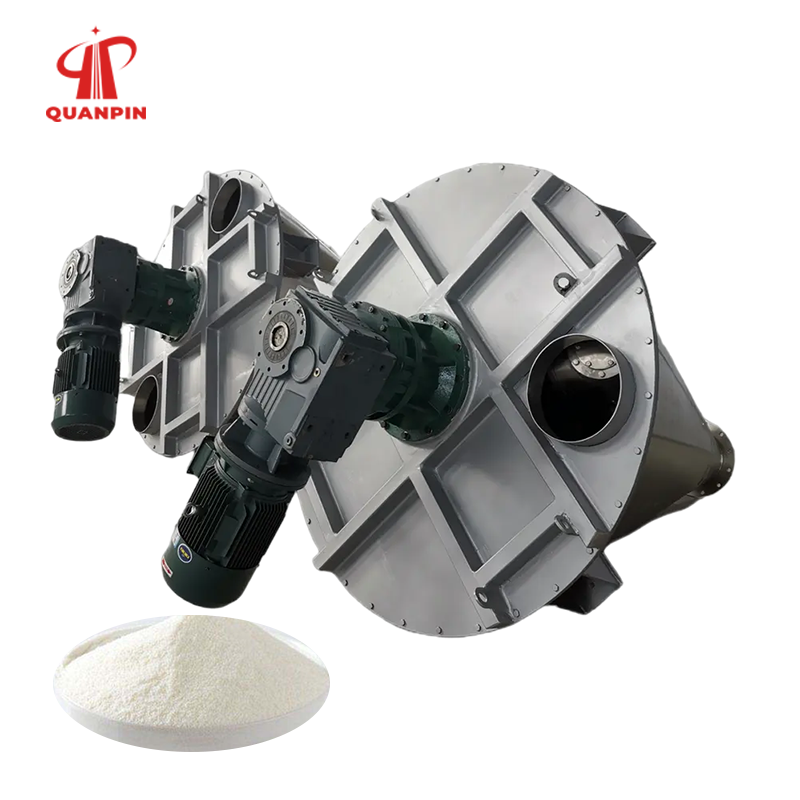
Moisture in dry production environments
FDA’s March 2023 letter to the powdered infant formula industry highlights concerns about water in areas intended to remain dry, together with environmental contamination and corrective action practices. Its specific industry context must remain visible.
The agency’s original infant-formula industry letter is relevant as a documented example of why moisture management matters in dry production environments. It is not a ready-made sanitation protocol for seasoning powder or another unrelated recipe.
If a facility uses wet cleaning for a particular reason, the site’s qualified team must assess the complete procedure and return-to-production conditions. Do not assume that adding water universally improves hygiene or that avoiding it universally solves contamination.
A product-specific compliance programme
FDA’s infant formula compliance programme describes inspection and sampling activities for that regulated product category. Its environmental sampling discussion includes areas around product exposure and blending operations, illustrating the need to consider the process setting.
The original infant formula compliance programme concerns FDA oversight of infant formula. Its instructions should not be relabelled as universal legal requirements for all food mixers or presented as a certification standard for QUANPIN equipment.
The transferable engineering question is narrower: can the agreed configuration support the site’s documented access, inspection and handling needs? The product-specific monitoring and compliance decisions require their own assessment.
Connect the assessment to the supplied configuration
A double screw cone mixer enquiry should describe the food material and its intended use. Include whether the blending operation occurs before or after other controls, while avoiding claims that the mixer itself provides a microbial reduction step.
Clarify how equipment components are identified during disassembly and reassembly. The site needs an agreed arrangement for inspecting and returning the actual product-contact parts to service under its established procedures.
Discuss seals, connections and other construction details with the supplier for the proposed configuration. Do not infer hygienic design approval or cleanability from a catalogue photograph or a general product-family description.
Keep records of the tested configuration and trial material. If a connection or discharge arrangement changes, review whether the earlier access and handling assessment still describes the supplied installation.
Keep investigations and decisions traceable
When an environmental result prompts concern, follow the site’s established investigation and corrective-action procedures. Do not use a repeat negative result alone as a substitute for understanding an unresolved contamination pathway.
When ingredient distribution fails its comparison, investigate the mixing and analytical evidence separately. A hygiene investigation may proceed alongside it, but the two findings should not be merged into an unexplained claim of overall equipment failure.
Prepare a food-equipment enquiry with clear responsibilities
Provide a description of the powder, recipe and normal handling state. Include relevant exposure during loading and discharge so that the supplier can discuss the actual equipment interfaces rather than an abstract vessel.
Identify the facility’s cleaning approach and who approves it. Any proposed change in cleaning chemistry, moisture use or disassembly must be assessed through the site’s own procedures and applicable requirements.
Describe inspection and sampling access needs before finalizing the arrangement. Equipment availability and safe access should be confirmed for the relevant operating states rather than assumed from an empty-machine demonstration.
State what documentation the project requires for the supplied product-contact parts and connections. Missing material or construction information should be clarified in the proposal rather than supplied through assumptions from similar machines.
Explain the roles of the equipment supplier, operating team and laboratory. A clear division prevents a general factory inspection from being reported as a validated food safety programme.
Plan the installation handover with the surrounding line in view. Open transfer, container handling and maintenance access remain relevant even when the mixer itself matches the agreed mechanical scope.

Confirm the genuine DSH equipment scope
QUANPIN’s DSH range provides a genuine equipment reference for discussing a double screw conical mixer. Selection still depends on the material duty, supplied construction and the site’s documented handling and hygiene needs.
A conical screw blender image does not establish a microbial control capability, sanitation validation or regulatory approval. Confirm the actual equipment scope and keep process safety claims tied to appropriate evidence.
Decide what the available evidence establishes
Accept the project evidence only for the purpose it actually addresses. Mechanical inspection, composition testing and environmental monitoring have different outputs, and none should silently stand in for the others.
A useful development decision may be to improve an interface or clarify responsibility before testing again. Keeping an unresolved pathway visible is more informative than treating an incomplete monitoring plan as a successful equipment qualification.
Frequently Asked Questions
Does dryness prove absence of pathogens?
No. Low moisture can restrict growth under particular conditions without demonstrating absence. The site’s hazard assessment must consider the actual product, process and environmental pathways.
Can blend assays replace environmental tests?
No. An ingredient assay and an environmental microbiological test answer different questions. Their results should retain the method, specimen identity and decision purpose for which each was collected.
Should every dry mixer be wet cleaned?
Not automatically. The selection of cleaning methods and return-to-production conditions requires a product- and site-specific assessment. This article does not prescribe a sanitation procedure or chemical treatment.
Are the cited documents universal requirements?
No. The 2025 document cited here is a draft. The infant formula letter and compliance programme also have specific contexts and should not be presented as universal mixer requirements.
Who chooses the monitoring programme?
The facility’s qualified food safety personnel should determine sites, methods and responses through the applicable assessment and procedures. The supplier can clarify equipment access and configuration without replacing that responsibility.
What should a supplier enquiry include?
Provide the actual conical powder mixer duty, product exposure points, cleaning approach, access requirements and responsibility map. Confirm the supplied arrangement before treating a general equipment demonstration as evidence for a complete production programme.
Discuss Your Food Powder Mixing Requirements
Discuss the material, processing objective and required trials with QUANPIN. Review the equipment information and the relevant industry applications, or send an enquiry through our contact page.
Email sales@qpdryer.com or stacie@qpdryer.com. Call +86 19850785582 or contact WhatsApp +86 15921493205 to discuss the proposed scope.