Flour Milling Assessment: Separate Collected-Powder Size from Airborne Dust Exposure
By QUANPIN
A fine powder grinder trial produces material for a particle-size assessment. It does not independently measure the dust a worker breathes while charging, operating, collecting or cleaning around the process.
For food-flour applications, separate the accepted product distribution from airborne exposure evidence. A satisfactory powder specification and an exposure assessment concern different samples, units and conditions.
Product Size and Air Concentration Are Different
Collected-powder size describes the material submitted to the selected laboratory preparation. It is not a concentration of airborne material in a worker’s breathing zone.
An airborne concentration relates sampled particulate mass to sampled air volume under a defined method. The represented task and duration are part of its interpretation.
Define the Assessment Responsibility
This distinction prevents an inappropriate inference: a coarse product is not automatically evidence of low exposure, and a fine product does not supply a measured workplace concentration.
The workplace assessment should be planned by a suitably qualified occupational-health professional under applicable local requirements. A product trial cannot replace that assessment or establish legal compliance.
Five Inputs for Interpretable Evidence
Material identity
Identify the flour and any ingredients present during the task. The dust released during handling may not be represented adequately by a generic product description.
Product measurement
State the product-size method and represented collected fraction. Retain this physical acceptance question separately from the air-sampling objective.
Work activity
Describe the tasks and working conditions to be assessed. Charging, bag handling and cleaning can have different release opportunities from steady operation.
Airborne fraction
Define the airborne fraction and sampling approach through the competent assessment. Different sampler conventions should not be silently renamed as one interchangeable dust measurement.
Represented duration
Record the duration and operating context with each exposure result. A sample without its task description leaves an important part of the interpretation missing.
Keep the Work Activity Visible
The HSE’s general workplace-dust guidance distinguishes assessment of exposure from simple awareness that a dusty material is present and discusses sampling under normal working conditions.
That principle applies to the evidence question around a flour-milling proposal. Determine which work activity the measurement represents rather than treating a laboratory product specimen as an air sample.
The guidance concerns occupational exposure and does not cover every hazard of dust. In particular, this article does not provide combustible-dust design, explosion protection or respiratory-protection selection instructions.
An industrial pulverizer enquiry can identify the proposed handling arrangement, but equipment scope and workplace exposure assessment still require separate confirmation.
Six Stages around the Milling Task
Before charging
Before charging, identify the material and the way it enters the proposed arrangement. Product properties alone do not describe the actual task.
During operation
During normal operation, document the conditions relevant to the assessment. An observation from a different load or handling route may represent another situation.
During collection
During collection, record the transfer and packaging arrangement. A powder result does not describe how the collection task releases material into the surrounding air.
During sampling
During sampling, preserve the method, represented fraction and duration. These details define what an airborne concentration means.
During other tasks
During cleaning or maintenance, retain the different work activity explicitly. A steady-operation measurement cannot automatically characterize a separate task.
During review
During review, compare evidence that answers the same question. Do not merge product dimensions, airborne mass concentration and visual observations into an unexplained overall score.
Distinguish Sampling Fractions
Flour-specific assessment
Flour-specific official guidance illustrates why the represented person and task matter when interpreting exposure measurements.
The HSE guidance for flour-related work identifies flour mills among affected workplaces and describes dust-generating activities including bag emptying, sieving and cleaning. The represented work activity belongs in the assessment record.
Its sampling framework belongs to its stated jurisdiction and method. It is not a universal acceptance specification for a QUANPIN installation or a reason to copy a flow rate into an unassessed workplace.
Total airborne particulate
An airborne dust result also depends on the fraction the method is designed to collect. The name of that method belongs beside the reported number.
The official OSHA personal air-sampling guidance treats total-dust and respirable-dust sampling separately and describes the collection equipment and method records relevant to interpreting the result.
It does not report the collected flour’s particle-size distribution or identify a particular ingredient. Its applicability must be considered for the actual assessment rather than assumed from the presence of powder.
Respirable particulate
A size-selective airborne method measures a different defined fraction and should remain distinguishable from a total-particulate method.
The official HSE MDHS14/4 method distinguishes inhalable, thoracic and respirable aerosol fractions. It determines mass concentration from collected aerosol mass and the measured sampled air volume using a suitable size-selective sampler.
These official methods illustrate measurement distinctions, not a recommendation that one automatically supplies the right flour-exposure assessment. Inhalable, total and respirable results are not interchangeable labels.
Compare Evidence with the Same Objective
Begin a useful comparison by identifying the measurement objective. If the question concerns product size, preserve the accepted material fraction and laboratory method.
If the question concerns workplace exposure, preserve the person or location, work activity, sampling method and represented period. The occupational assessor determines the appropriate approach.
If another operating arrangement is being considered, describe the changed handling route explicitly. An exposure conclusion should remain attached to the conditions actually evaluated.
If only a visual observation is available, label it as an observation. It should not become an unmeasured mass concentration or a declaration that exposure is adequately controlled.
Use Visual Checks within Their Limits
The HSE’s guidance on simple dust checks explains that fine dust can be difficult to see in ordinary lighting and describes observations that can reveal escapes.
Such checks can help identify issues for review, but they are not substitutes for the selected exposure measurement. The absence of a conspicuous cloud does not supply a quantified result.
Investigate Contrasting Findings
If product size is acceptable but dust is observed during transfer, retain both findings. Product acceptance does not settle the workplace assessment.
If one handling task appears less dusty than another, record the task difference without assigning a numerical reduction that was not measured.
If total and respirable values differ, check the represented fractions and methods before treating the difference as an error. They answer different sampling questions.
If a short task sample and a longer-period result differ, preserve their durations. An unqualified comparison can obscure the exposure pattern the assessment is intended to characterize.
If a dust collector is included in a proposal, confirm its actual supply and interfaces. Its presence alone does not demonstrate a particular breathing-zone exposure result.
If a workplace assessment changes the required handling arrangement, document that requirement separately from the mill’s product-size objective. Both need an agreed acceptance basis.
Prepare the Milling Enquiry
For a pulverizer machine enquiry, describe flour identity, required size and proposed charging, collection and transfer tasks. Identify the separate occupational assessment responsibilities.
An industrial pulverizer price comparison should distinguish the quoted equipment from occupational assessment and laboratory responsibilities. Keep the represented configuration and handling route consistent; an exposure result from another arrangement is not its acceptance evidence.
Confirm Equipment and Assessment Scope
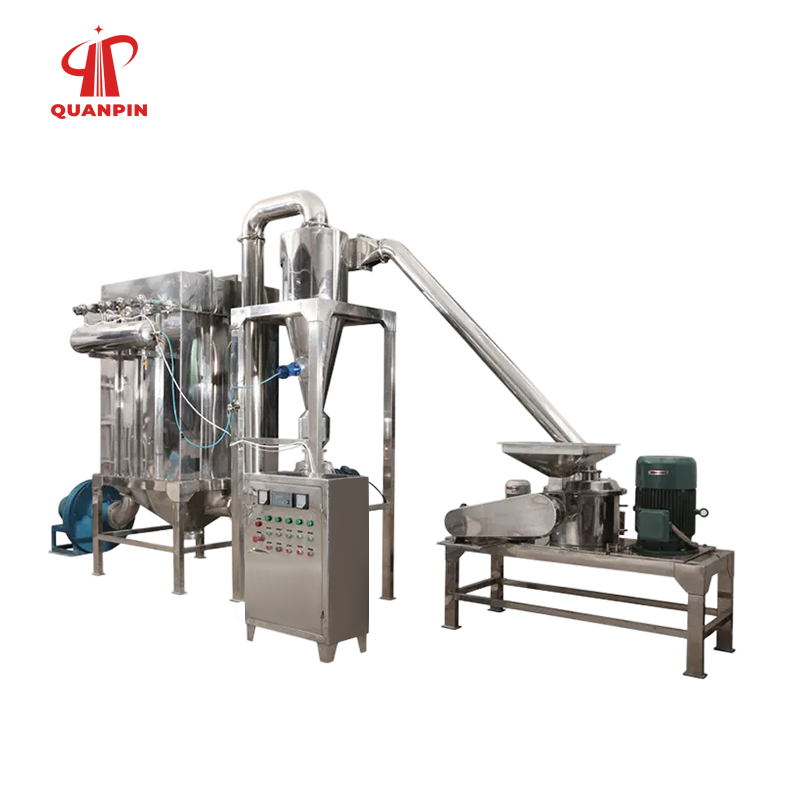
Review the QUANPIN WFJ equipment information against the food-flour duty. Confirm which handling and collection components are actually proposed.
A universal pulverizer quotation should distinguish supplied equipment from workplace evaluation. No air-concentration guarantee or compliance conclusion follows from a particle-size demonstration alone.
Frequently Asked Questions
Does a powder specimen measure exposure?
No. A collected-powder specimen describes the submitted material. It does not measure airborne mass concentration in a worker’s breathing zone.
Does no visible cloud establish low exposure?
No. Fine dust may be difficult to see under normal lighting. A visual observation cannot independently establish a quantified or acceptable exposure.
Are dust fractions interchangeable?
No. Total, inhalable and respirable measurements use different conventions or sampling arrangements. Preserve the method and intended fraction with each result.
Does one task represent every task?
No. Work activities differ. A measurement should remain connected to the charging, operation, transfer, cleaning or maintenance conditions actually represented.
Does a collector establish compliance?
No. The inclusion of dust-collection equipment does not independently demonstrate a workplace exposure level. Its scope and actual performance need appropriate assessment.
What should the enquiry define?
Provide the material, product-size target, handling tasks and proposed configuration. Identify the competent occupational assessor and the distinct exposure question before interpreting trial results.
Discuss Your Flour-Milling Duty
Discuss the material, processing objective and required trials with QUANPIN. Review the equipment information and the relevant industry applications, or send an enquiry through our contact page.
Email sales@qpdryer.com or stacie@qpdryer.com. Call +86 19850785582 or contact WhatsApp +86 15921493205 to discuss the proposed scope.