Hot Air Herb Drying: Distinguish Enzyme Activity from Browning and Chlorophyll Change
By QUANPIN
A dried culinary herb can become darker without its colour identifying the reaction responsible. Enzymatic activity and non-enzymatic changes require different evidence.
For a hot air tray dryer for herbs, define the appearance and chemical questions separately before comparing equipment trials.
Separate Appearance from Reaction Evidence
Enzymatic browning involves enzyme-mediated reactions. A colour measurement does not directly quantify residual enzyme activity.
Non-enzymatic reactions and pigment transformations can also change appearance after enzymes have been strongly inhibited.
Define the Dryer and Pretreatment Boundary
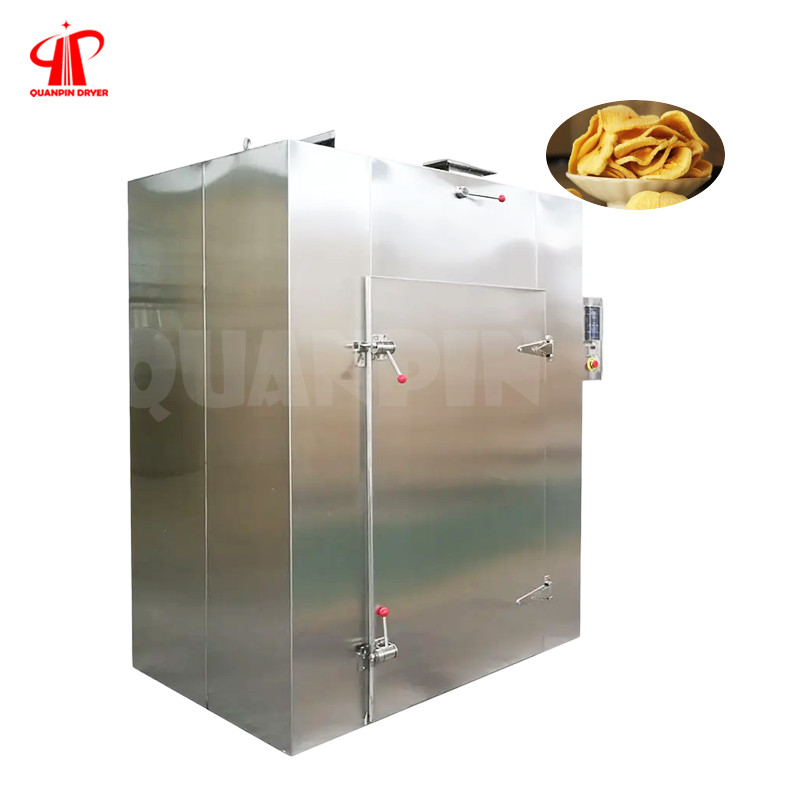
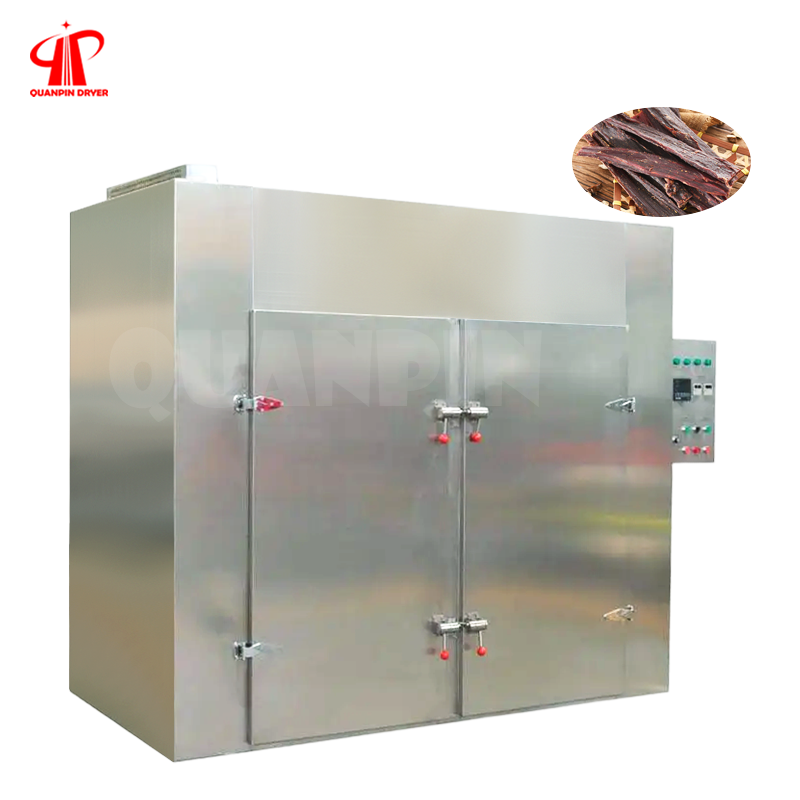
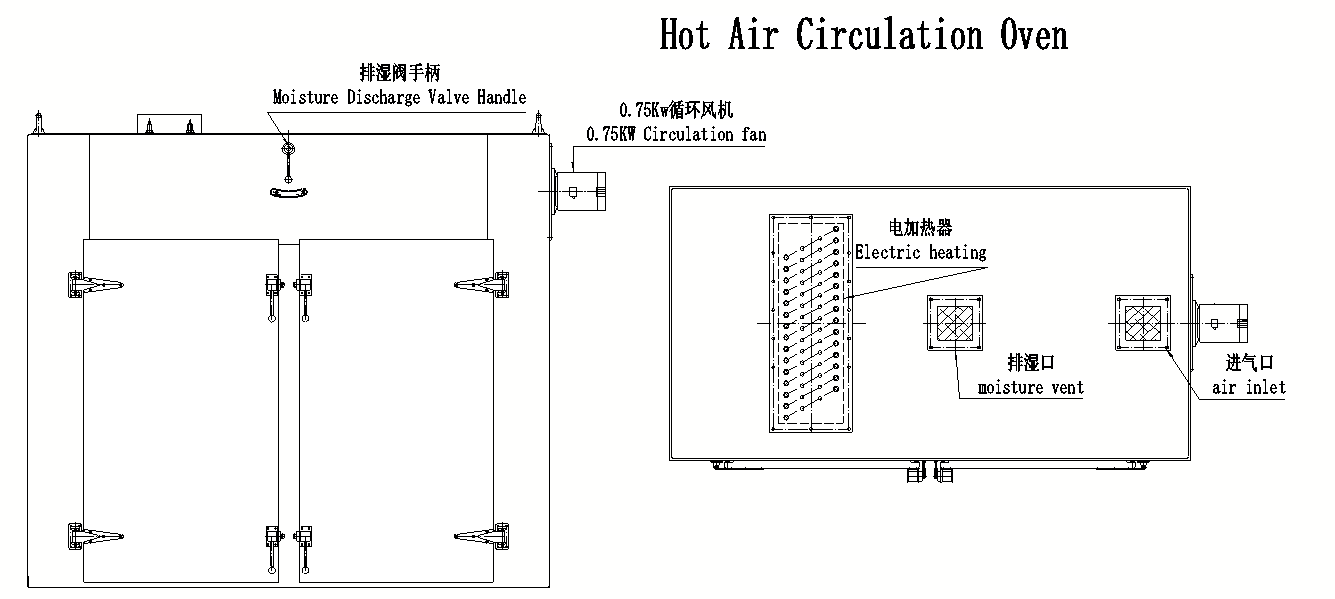
A hot air circulation oven supplies the confirmed drying environment. It does not establish the biochemical stability of an untested herb.
Preserve blanching and other pretreatments as separate operations. They are not assumed features of the CT-C equipment.
Five Inputs for a Herb Comparison
Botanical identity
Identify the species, plant part and lot. Different herbs need not have the same starting pigments or enzyme activities.
Pretreatment history
Record pretreatment and any measured residual enzyme activity. A preparation label alone cannot establish complete inactivation.
Colour method
Define the instrumental colour method and reference specimen. Preserve the coordinates and specimen preparation used.
Chemical assay
Identify the pigment or chemical assay. Chlorophyll, browning index and enzyme activity describe different analytical responses.
Sample handling
Record the specimen handling and interval to analysis. Post-drying exposure can complicate a comparison attributed to drying.
Read Enzyme-Inactivation Research Carefully
Original tarragon research strongly inhibited oxidases before comparing drying methods, then measured browning and chemical changes. Read the original herb-drying experiment.
The authors found that browning persisted after enzyme inhibition. Their laboratory observations do not establish that all herbs follow the same reaction pathway.
Vitamin-C depletion was more closely correlated with browning than the measured Maillard products. Correlation in that experiment is not proof of a universal mechanism.
Use the study to frame an analytical question rather than copy its drying programme or assume that blanching always prevents discoloration.
Follow Six Specimen Boundaries
Receiving
At receiving, retain botanical identity and actual material condition. A later comparison requires a documented starting point.
Preparation
At preparation, record washing, cutting and any pretreatment. Keep upstream changes visible instead of attributing them to the dryer.
Loading
At loading, identify the material represented by each specimen. Tray position alone does not describe its biochemical history.
Drying
During drying, retain the actual process observations. A hot air drying oven setpoint is not an enzyme-activity assay.
Collection
At collection, label the specimen and time. Do not combine materials with different preparation histories without documenting that combination.
Analysis
At analysis, apply suitable methods separately and retain the link between colour, pigment and enzyme specimens.
Choose Measurements for the Mechanism
Define the food objective
Begin with the required food quality attribute. A preferred appearance does not guarantee the preferred result for every measured compound.
If enzyme suppression matters, measure relevant residual activity. Do not substitute a statement that blanching occurred.
A browning index is a defined response. It should not become an assumed complete assay of Maillard chemistry.
Preserve the analytical basis
For chlorophyll analysis, retain extraction and calculation procedures. Green appearance alone cannot quantify pigment retention.
Use consistent reporting denominators. Water removal can increase concentration per unit wet mass without increasing the total amount present.
Retain uncertainty and unresolved signal overlap. A mechanistic conclusion should remain limited to the available evidence.
Compare matched histories
Compare matched preparation histories where feasible. If pretreatment and drying both change, report their combined intervention clearly.
A tray dryer trial can provide specimens for agreed analyses. It does not replace laboratory interpretation of biochemical results.
Keep the equipment demonstration distinct from the research. None of these papers establishes a guaranteed QUANPIN colour or enzyme outcome.
Retain Complementary Quality Responses
Original indirect-solar drying research evaluated mint and basil using colour and several physicochemical responses. Read the original herb-drying experiment.
Its apparatus differs from a CT-C oven. The useful comparison preserves several quality measurements rather than ranking ingredients by appearance alone.
Total phenolics and antioxidant assays also have method-specific meanings. They do not independently identify the reaction causing a colour difference.
Retain the intended culinary use. General descriptions of medicinal herbs do not establish clinical benefits for the dried food.
Keep Species and Aroma Questions Distinct
Original thyme, mint and ironwort research found species-dependent responses to sun, shade and oven drying. Read the original herb-drying experiment.
Essential-oil composition and visible colour remained different observations. The findings do not support one universally preferred drying route.
Interpret Concentration and Method Differences
Original research on four mint species compared chemical composition after drying and freezing. Read the original herb-drying experiment.
Species affected starting composition and processing response. A general commercial name should not hide that botanical distinction.
Retain the fresh reference and material basis for retention calculations. Concentration after drying is not automatically total compound recovery.
A favourable pigment result does not prove that all aroma compounds survived. Those questions require appropriate separate analyses.
Original mint research compared electrohydrodynamic, oven and natural drying, measuring colour and chlorophyll separately. Read the original herb-drying experiment.
Electrohydrodynamic drying uses a different arrangement. Its results do not imply that CT-C equipment includes electrical-field treatment.
Prepare the CT-C Food-Drying Enquiry
Provide QUANPIN with botanical identity, preparation history and intended food use. State the separate appearance and chemical questions.
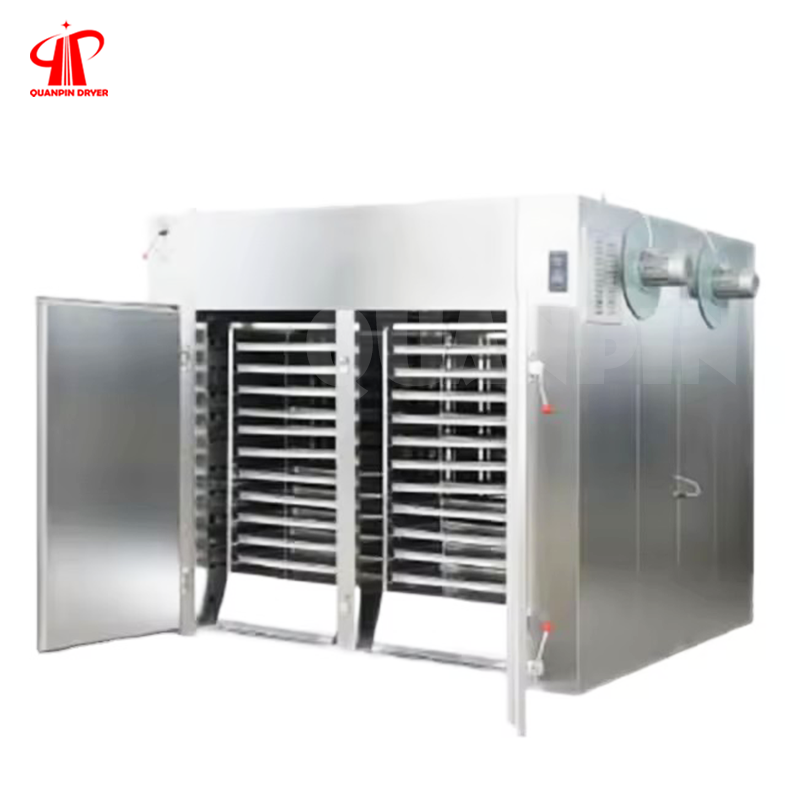
A hot air tray dryer price comparison should include the confirmed equipment scope, agreed material trial and separately assigned analytical responsibilities.
Retain Measured and Unresolved Findings
Retain process records, reference specimens and analytical reports together. Mark any reaction interpretation that remains uncertain.
Conclude separately about measured appearance and supported chemistry. Avoid describing every darker leaf as an enzyme-control failure.
Frequently Asked Questions
Does darkening prove enzyme activity?
No. Colour does not uniquely identify an enzyme-mediated reaction or quantify residual activity.
Does inhibition prevent all browning?
No. Non-enzymatic reactions and pigment changes may continue after strong inhibition of the enzymes studied.
Does blanching prove complete inactivation?
No. The effectiveness of blanching requires relevant activity evidence when enzyme suppression is the actual question.
Is chlorophyll identical to green colour?
No. Chlorophyll content and instrumental colour are different responses with separate methods and reporting units.
Can published rankings specify CT-C outcomes?
No. Species, pretreatment and specimen histories limit transfer between published experiments and a proposed CT-C trial.
What should accompany an enquiry?
Provide botanical identity, preparation, reference material and separate appearance, pigment and enzyme questions. Assign responsibility for interpreting results.
Discuss Your Herb-Drying Duty
Discuss the material, processing objective and required trials with QUANPIN. Review the equipment information and the relevant industry applications, or send an enquiry through our contact page.
Email sales@qpdryer.com or stacie@qpdryer.com. Call +86 19850785582 or contact WhatsApp +86 15921493205 to discuss the proposed scope.
For process evaluation, consider the hot air oven for batch tray drying with circulating hot air. Confirm suitability with representative material, the required product properties and the proposed process conditions.