GHL Granules for Tableting: Separate Intermediate Strength from Compression and Recovery
By QUANPIN
A strong granule and a strong tablet are different mechanical outcomes. A high shear granulator development study should not assume that an intermediate resistant to handling will necessarily form the strongest compact.
This guide examines how deformation, pressure history and the tableting apparatus affect the interpretation of granulated pharmaceutical material. It concerns compression evidence rather than a universal granulation endpoint.
A Granule and a Tablet Are Different Mechanical Structures
Granule strength concerns an individual agglomerate or a defined population. Tablet tensile strength concerns the compact formed from material under a specified pressing history.
The transition between them can involve rearrangement, deformation and fragmentation. A resistance measured before pressing does not quantify all those mechanisms.
Define the GHL-to-Press Interface
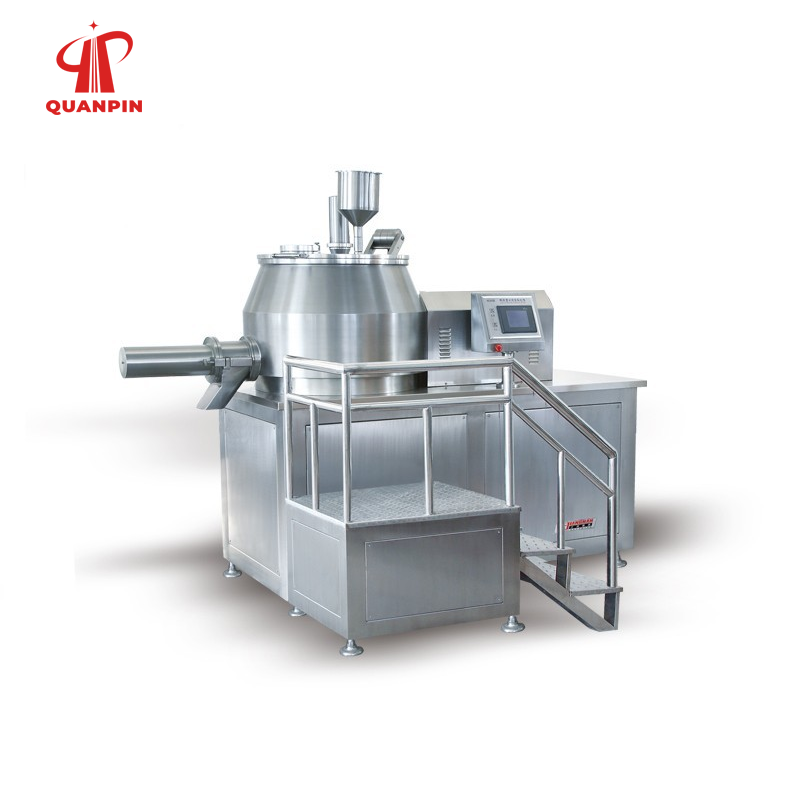
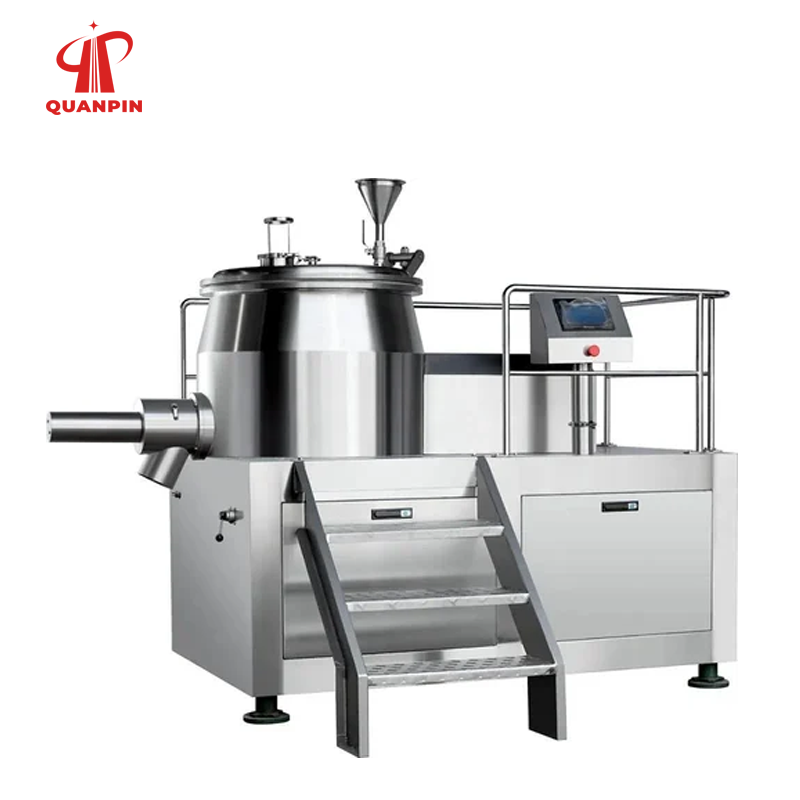
A rapid mixer granulator supplies an intermediate to the next operation. The subsequent press introduces its own mechanical conditions.
Keep the GHL material preparation separate from the tableting experiment when attributing a change. A tablet result is not a direct measurement of the granulator.
Five Conditions behind a Strength Comparison
Material population
Define the material population entering compression, including whether an intermediate was classified before testing.
Pressure basis
State the pressure or force basis used. A nominal machine setting and the actual material loading condition are not interchangeable.
Loading sequence
Keep the loading and unloading sequence with the measurement. Recovery can occur after the imposed load changes.
Strength-test definition
Identify the strength test applied to the tablet. Breaking force, indentation and tensile-strength calculations answer related but different questions.
Compression apparatus
Identify the apparatus and compression rate. A static comparison need not reproduce a rotary press response.
Why the Compression Apparatus Matters
The equipment applying compression can alter a material ranking.
An original high-shear granule and compression study found different tablet-hardness patterns between its static and rotary compression arrangements. Flow and compression speed affected the rotary response.
The study does not supply a universal particle-size recommendation. Its relevance is that a material comparison is conditional on the pressing arrangement.
A favourable laboratory compact therefore needs its apparatus context before being compared with production tablets.
Six Stages of the Compression Response
During filling
During filling, the material occupies a defined volume and arrangement. This starting state contributes to the later response.
During early loading
During early loading, particles can rearrange before other deformation mechanisms dominate.
During deformation
During further loading, deformation or fracture can change the available contacts between particles.
At maximum loading
During maximum loading, the compact has a state different from the loose material originally tested.
During unloading
During unloading, stored elastic energy can contribute to recovery.
During testing
During testing, the final compact response is evaluated after the chosen loading history.
Interpret Structure and Mechanical Models Carefully
Assess internal granule structure
Internal granule structure can influence how material responds to compression.
An original theophylline high-speed granulation study associated favourable tableting granules with porous, loose internal structures. The authors discussed deformation and particle movement during compression.
This was a formulation-specific interpretation. It cannot identify an optimal GHL endpoint for another drug or substitute for testing the resulting tablets.
Distinguish deformation contributions
Compression analysis can distinguish different contributions to the deformation response rather than reporting one final force.
An original powder-plasticity investigation used force–displacement, Heckel and compression-energy analyses to relate model powder mixtures to tablet tensile strength.
Its prediction equation belongs to the materials and tests investigated. A high shear mixer granulator proposal cannot claim equivalent tablet strength from that equation without an applicability assessment.
Review linked process variables
A complete wet-granulation-to-tableting experiment also contains interactions among processing and material variables.
An original wet-granulation tableting modeling study investigated relationships among process parameters, material attributes and quality attributes in an acetaminophen model case.
The statistical model is not an operating instruction for GHL. It illustrates the need to consider linked variables rather than assigning a final tablet change to one isolated intermediate property.
When Powder Measurements Become Predictors
Low-pressure mechanical measurements can be investigated as predictors of later compact properties, but the prediction range must be tested.
An original powder-mechanics feasibility study compared low-to-medium-pressure properties with tablet measurements after higher-pressure compaction. Correlations were demonstrated for the formulations tested.
The measured responses included different strength and friability tests. A correlation within that experiment does not make every low-pressure powder test a validated tablet predictor.
Retain calibration and independent prediction as different steps. A fitted relationship is useful only within the evidence supporting its application.
Distinguish Handling and Tableting Objectives
A high shear wet granulator investigation should define whether the decision concerns intermediate handling or final tablet mechanics.
Those questions can both matter, but one measurement should not silently replace the other.
Investigate Mechanical Results that Differ
If granules resist handling but form weaker tablets, investigate how they deform or fragment during the pressing history. The observations are not inherently contradictory.
If laboratory and rotary results rank materials differently, compare filling, rate and loading conditions before rejecting either observation.
If a higher maximum load changes strength, retain the loading path rather than describing only the new endpoint value.
If recovery changes after unloading, examine the relevant elastic response and the test timing.
If hardness and tensile-strength results differ, check the method definitions and specimen geometry. They need not be interchangeable scales.
If a model fits one formulation but fails another, identify the material or pressure-range change before extending its prediction.
Prepare the Linked Granulation and Compression Study
For a GHL enquiry, state how the granulated intermediate will be pressed and which final mechanical attribute matters.
Agree how the supplier trial and the tablet-compression study will be linked, particularly when different organizations perform them.
Compare the Confirmed Trial Scope
A high shear granulator price comparison should retain the actual material-trial scope. A separate pressing investigation cannot be assumed included.
The useful result identifies both the intermediate tested and the loading history that produced the final compact.
Frequently Asked Questions
Does strong granule mean strong tablet?
No. Granule resistance and compact strength describe different structures and loading conditions.
Do laboratory and rotary presses agree?
Not necessarily. Filling and compression rate can change the observed response.
Does maximum pressure describe the whole test?
No. The loading and unloading history can affect rearrangement, deformation and recovery.
Is one correlation universally predictive?
No. A feasibility correlation must be assessed for the material and range where it will be used.
Why distinguish strength methods?
They apply different stresses and definitions. Identify the test rather than treating all strength values as equivalent.
What should the enquiry describe?
Describe the intermediate, pressing arrangement, loading history and required tablet test. Keep intermediate-handling evidence separate from compact performance.
Discuss Your GHL Granulation Application
Discuss the material, processing objective and required trials with QUANPIN. Review the equipment information and the relevant industry applications, or send an enquiry through our contact page.
Email sales@qpdryer.com or stacie@qpdryer.com. Call +86 19850785582 or contact WhatsApp +86 15921493205 to discuss the proposed scope.
For process evaluation, consider the high speed mixer granulator for high-shear preparation of a suitable wet granulating mass. Confirm suitability with representative material, the required product properties and the proposed process conditions.