V-Blender NIR Monitoring: Assess Calibration Transfer from Static Samples to Moving Powder
By QUANPIN
A pharmaceutical V blender monitoring study should assess whether its analytical calibration remains suitable when stationary samples are replaced by moving powder. Static prediction accuracy alone does not demonstrate dynamic measurement performance.
Treat calibration transfer as a separate development task. The verified mechanical mixer description does not establish that NIR instrumentation, an optical interface or a validated analytical model is supplied.
Define Calibration and Transfer
A calibration relates recorded spectra to reference information for selected specimens. Its represented formulation, range and preparation define its starting scope.
Transfer asks whether that relationship remains suitable under changed measurement conditions. Specify what changes rather than describing a model as universally reusable.
Describe the Moving Measurement
A V mixer presents changing powder surfaces during rotation. The acquisition variability may differ from that of a stationary laboratory specimen.
Evaluate predictions against appropriate reference measurements in the intended arrangement. Do not assume spectral preprocessing automatically resolves every presentation difference.
Five Inputs for a Transfer Study
Formulation
Identify the formulation and target components. A calibration for one mixture is not automatically a concentration method for another.
Range and reference
State the concentration range and reference method. Predictions need an explicit quantity and analytical basis.
Optical arrangement
Describe the actual instrument and optical arrangement. A familiar sensor name does not document specimen presentation.
Acquisition mode
Record whether spectra are obtained statically or during motion. The acquisition mode belongs in the comparison.
Performance check
Define how transferred predictions will be checked. Keep model fitting distinguishable from evidence about receiving-condition performance.
Read Static-to-Dynamic Research within Scope
An original portable-NIR pharmaceutical study investigated static and dynamic acquisition for a complex powder mixture and examined calibration transfer to in-line monitoring.
The researchers evaluated acquisition variability and spectral preprocessing. Their findings treat transfer as an experimentally assessed problem rather than an automatic step.
The reported performance belongs to that instrument, mixture and procedure. It does not establish an analytical capability or acceptance limit for another V type mixer.
A monitoring proposal should identify which aspects are demonstrated and which require further study. Research evidence cannot replace validation for the proposed configuration.
Six Boundaries in the Transfer Study
Intended material
Identify the intended formulation and raw-material condition before collecting spectra. Preserve grade or preparation changes that could affect the measurement.
Calibration specimens
Prepare calibration specimens through a documented procedure. Their reference composition must remain connected to their actual identity.
Original measurement
Describe the original measurement arrangement. Stationary cups and moving powder beds should not share an undocumented presentation assumption.
Receiving measurement
Collect spectra under the intended receiving arrangement. Retain observed differences rather than assuming equal settings establish equal measurements.
Reference comparison
Compare predictions with appropriate reference results. A plausible concentration profile is not independently a prediction-error assessment.
Applicability
State the demonstrated applicability after comparison. Identify ranges, formulations or configurations that remain outside the available evidence.
Compare Material, Position and Prediction Evidence
Material representation
Material representation belongs in the model scope. A physical-property difference can change spectra without an equivalent change in composition.
An original cohesive-powder investigation examined raw-material variability using natural-product powders, an excipient and an adaptive NIR endpoint approach.
Its calibration-free endpoint method answers the study’s particular question. It is not a universal quantitative concentration calibration for every powder system.
Observation position
Observation position defines the material interrogated. Different locations can encounter different movement or composition during the same blending operation.
An original multipoint-NIR study monitored several positions in a laboratory pharmaceutical blender and used models for quantitative analysis of the investigated compositions.
Its location-dependent observations support assessing the intended optical position. They do not prescribe a probe layout for another vessel.
Prediction validation
Prediction validation concerns the quantity actually required. A local ingredient concentration needs reference evidence appropriate to that quantity and specimen.
Keep the evaluated range and reference specimens visible. Agreement near one nominal composition does not establish performance across all proposed formulations.
A V powder blender enquiry should distinguish mechanical trials from analytical-model validation. These activities need separate responsibilities and deliverables.
Keep Research Apparatus Distinct
An original resonant-acoustic mixing study combined NIR and chemometrics while considering the studied equipment configuration and component concentrations.
That apparatus differs from a V-shaped tumbling vessel. Its monitoring method does not transfer acoustic-mixing features or validated predictions to QUANPIN equipment.
Keep mechanism and sample presentation explicit when interpreting a research calibration. Similar analytical terminology does not establish equivalent physical measurement conditions.
Confirm proposed optical interfaces and specialist services separately. Do not add research accessories to the standard equipment scope by implication.
Identify the Spectral Attribute
An original lubricant-blending investigation used ATR infrared and NIR measurements to examine magnesium-stearate and starch mixtures during blending.
Its comparison illustrates different sensitivities to particle-surface changes. The measured spectral attribute must remain distinct from an assumed universal concentration indicator.
Investigate Prediction Differences
If static predictions succeed but dynamic predictions deteriorate, investigate acquisition and presentation differences before assigning the result solely to poor blending.
If a new lot changes spectra, compare material properties and reference measurements. A spectral shift alone does not establish every underlying cause.
If probe locations disagree, retain their respective positions and observations. Averaging can conceal an important measurement-location question.
If a model operates outside its represented range, identify the limitation. Extrapolated values should not silently receive the status of demonstrated predictions.
Assign responsibility for reference analysis, model maintenance and instrument operation before the study. These duties may involve specialists separate from the mechanical supplier.
Retain unresolved observations in the development record. A favourable selected profile cannot describe the complete analytical scope.
Prepare the Monitoring Enquiry
Prepare the enquiry with formulation, blending objective and monitoring question. Identify the proposed instrument and calibration as separate items needing review.
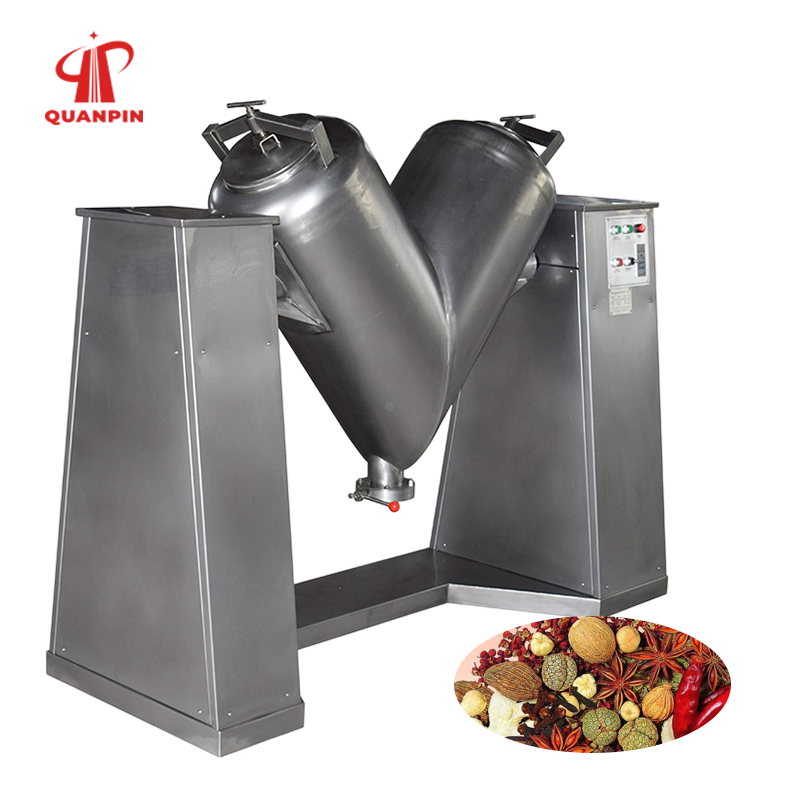
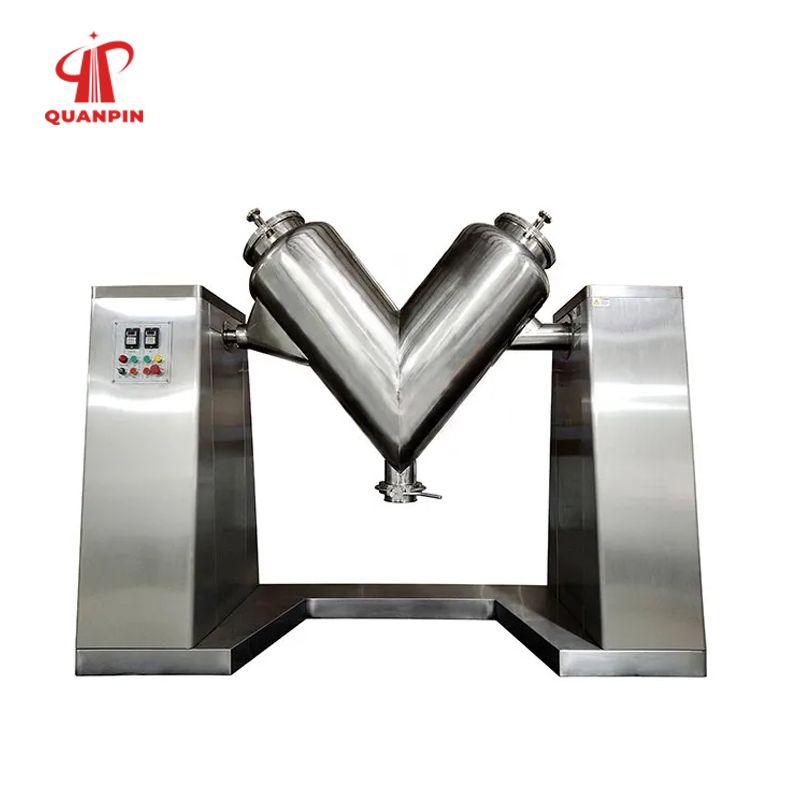
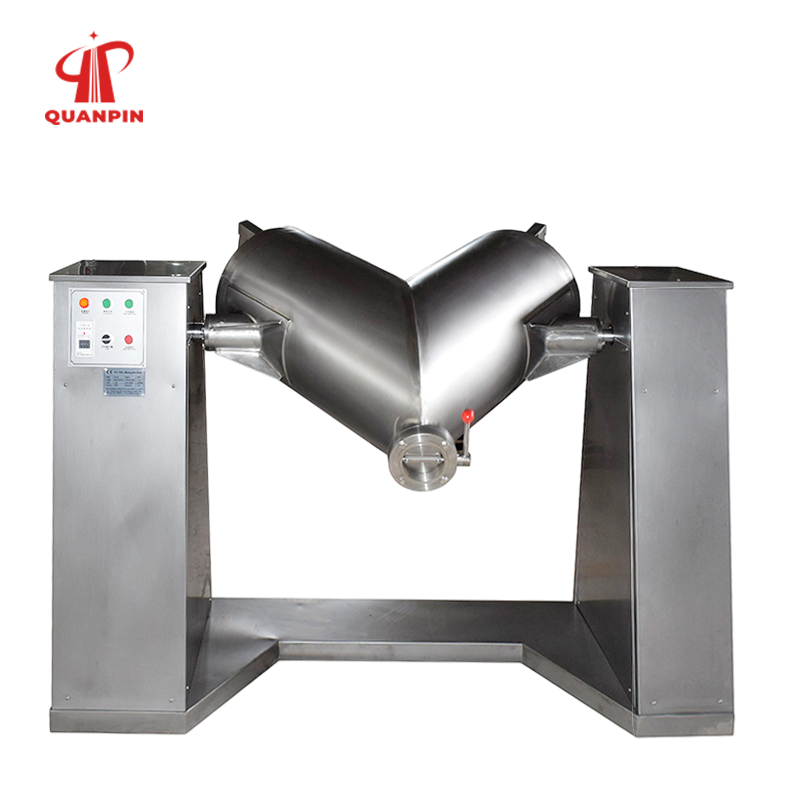
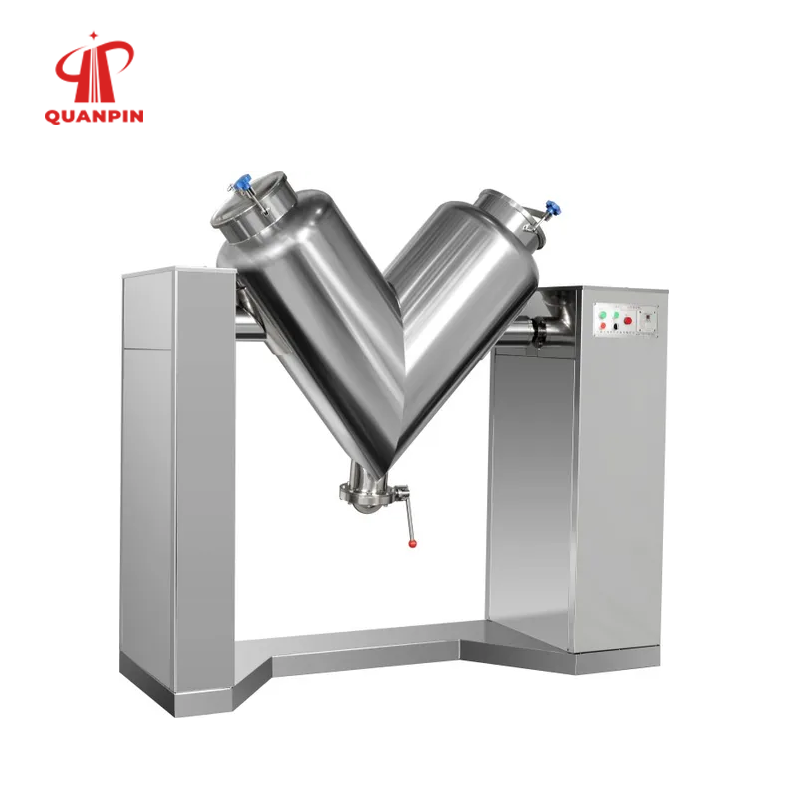
Review the verified V cone blender for its mechanical duty within the pharmaceutical industry application. Confirm any optional analytical interface independently.
Retain the Applicability Record
Retain calibration design, reference methods and acquisition arrangements together. Those records make subsequent changes interpretable.
A useful proposal explains where predictions have been demonstrated and where development remains. It does not imply that a standard mixer includes a validated NIR system.
Frequently Asked Questions
Does static accuracy establish dynamic accuracy?
No. Moving powder can introduce different acquisition variability. Evaluate the intended dynamic arrangement against suitable reference measurements.
Can one model serve every mixture?
No. Formulation, range and presentation define applicability. A changed system needs assessment rather than automatic calibration reuse.
Is calibration-free detection concentration analysis?
No. An endpoint algorithm and a quantitative concentration model may answer different questions. State the actual analytical output.
Do probe differences prove an instrument fault?
No. Different locations can observe different material movement and composition. Investigate the measurement arrangement before attributing every disagreement to the sensor.
Does a V blender include validated NIR?
No instrumentation or model is established by the mechanical description alone. Confirm sensors, interfaces and services separately.
What should the transfer study specify?
Provide formulation, target components, range, reference method, instrument and sample presentation. Define the performance the transfer study must demonstrate.
Discuss Your Blending Requirements
Discuss the material, processing objective and required trials with QUANPIN. Review the equipment information and the relevant industry applications, or send an enquiry through our contact page.
Email sales@qpdryer.com or stacie@qpdryer.com. Call +86 19850785582 or contact WhatsApp +86 15921493205 to discuss the proposed scope.