Food-Powder Milling and Screening: Distinguish Passing Yield from Classification Efficiency
By QUANPIN
A food-powder milling trial should distinguish how much material passes a sieve from how accurately the sieve separates the intended fractions. A large passing fraction alone does not establish classification efficiency.
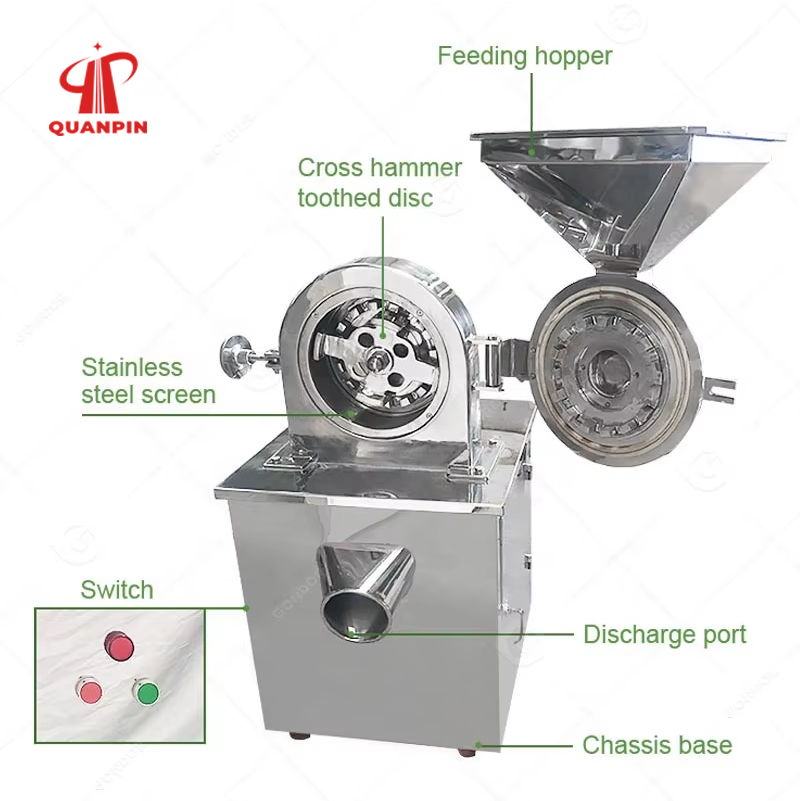
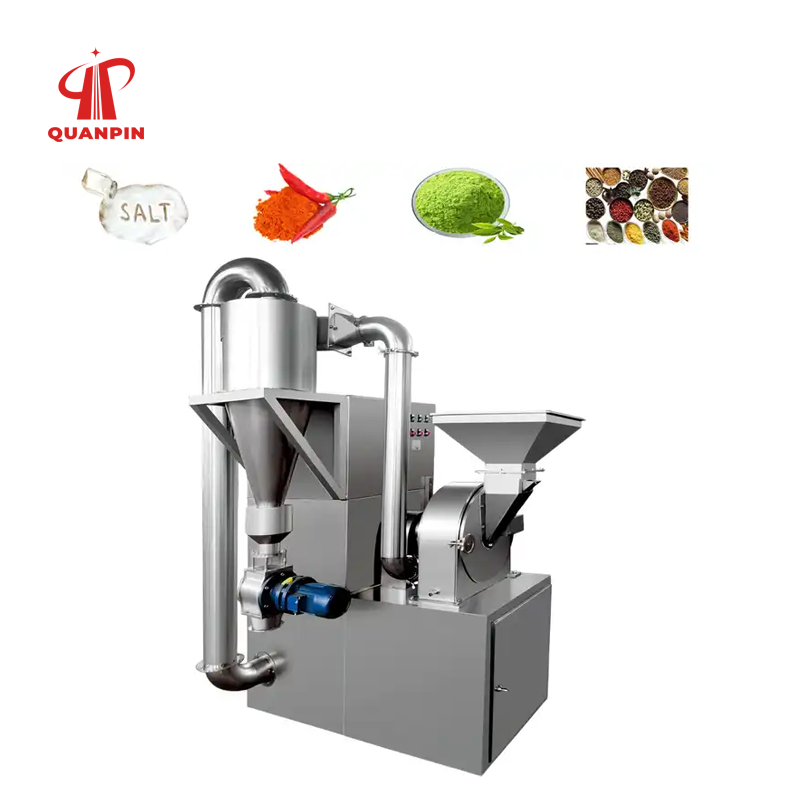
For a pulverizer machine followed by screening, define the product and any return stream together. Review the actual food application through the verified QUANPIN equipment and industry links.
Define Yield and Correct Separation
Passing yield is the mass collected below the selected screen relative to a stated feed basis. It is a collection result, not automatically a measure of correct particle placement.
Classification performance asks which particles reached each outlet. Evaluate the contents of both passing and retained material when misplaced particles matter to the trial.
Separate Mill Output from Screen Performance
A fitted opening describes a component. Particle shape, cohesion and the actual screening procedure influence whether collected material corresponds to the intended separation.
Keep the pulverizer and the downstream screen as distinct operations. Do not attribute a screen’s performance to the milling chamber without evidence from the intervening material.
Five Inputs for the Comparison
Food ingredient
Identify the food ingredient and its preparation. Flour type and incoming condition belong in the comparison rather than being hidden under the general word powder.
Screen reference
Record the screen reference, opening and installed arrangement. A nominal designation does not document every condition governing particle passage.
Fraction boundaries
Define the feed, passing fraction and retained fraction. Describe any material held in equipment or collected elsewhere instead of silently excluding it.
Assessment method
State how the fractions will be assessed independently. A second analytical method must have a suitable specimen preparation and reporting basis.
Product objective
Choose the required product objective before adjusting the route. A return stream should be justified by the actual receiving duty rather than assumed to require another milling pass.
Read Flour-Sieving Evidence within Scope
An original USDA flour-sieving study compared stacked and reverse sieving with several grain flours and investigated preparation and operating factors.
Its results showed that sieving procedure affected the separation and protein differences between fractions. The procedure was not merely a passive reading of an immutable particle-size distribution.
These findings concern the study’s flour and laboratory arrangements. They do not provide validated settings or a promised efficiency for QUANPIN milling and screening equipment.
Use that distinction when reviewing an industrial pulverizer trial. State what the screen actually collected and what independent evidence supports the desired separation.
Six Material Boundaries to Follow
Incoming feed
Identify the material entering milling. Preserve changes in incoming grade or preparation that could alter the screened distribution.
Milling arrangement
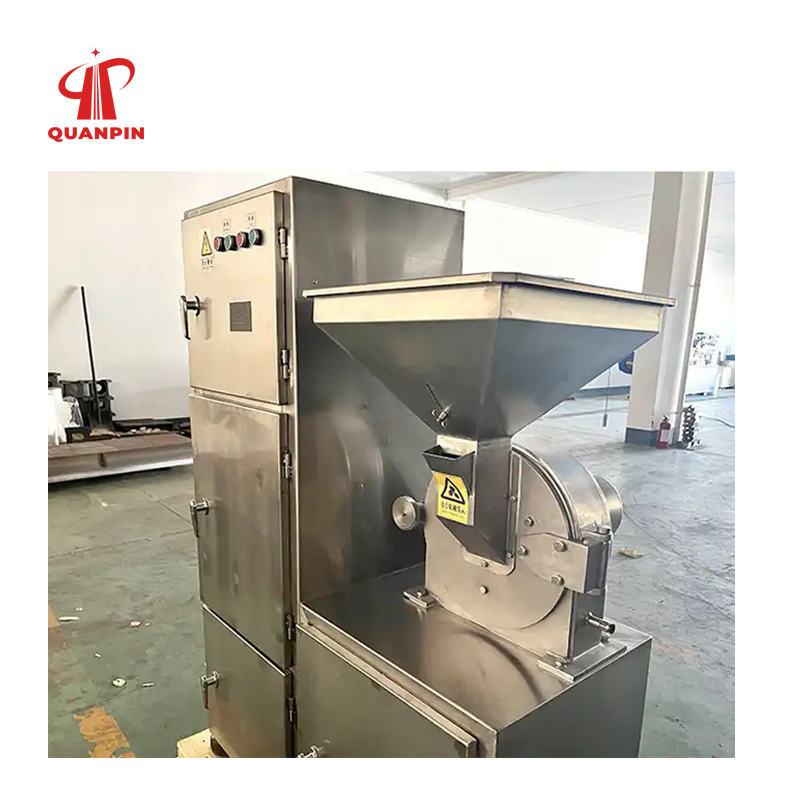
Confirm the milling arrangement. A powder grinding machine produces material for evaluation; its name does not specify the behaviour of a separate receiving screen.
Screen feed
Describe the feed delivered to screening. Collection, storage or handling between operations can change the condition being tested.
Passing collection
Collect the passing fraction with its actual run identity. Record the quantity and the assessment used to judge whether it meets the product objective.
Retained collection
Collect retained material separately. Its presence does not independently prove that every retained particle is larger than the nominal opening.
Complete recovery
Account for the complete collection boundary. A balance that omits retained inventory or dispersed material can misrepresent the reported fractions.
Compare Yield and Particle Placement
Passing yield
Passing yield should use a clear mass denominator. Distinguish total received feed from the material actually recovered within a selected collection period.
Keep moisture basis consistent where relevant. Changes in material water content can affect a mass comparison without describing a different separation.
Report the objective alongside the yield. More passing material may be desirable only if that material remains within the required product specification.
Misplaced particles
Assess misplaced fine material in the retained stream using a justified method. Its measurement asks a different question from the mass retained alone.
Assess coarse material in the passing stream where that is relevant to product acceptance. Define the property measured rather than labelling a fraction correct from its destination.
Preserve separate results before combining fractions. Pooling can conceal the very classification difference the trial was intended to investigate.
Rate and quality
A gyratory-sifter experiment involving flour-processing researchers investigated bed depth, motion and sieve geometry as influences on sifting performance.
The study found that operating conditions changed capacity and rate under its apparatus. Its findings support documenting the screening conditions, not copying a preferred setting to another installation.
Keep rate and separation quality distinct. A greater processing rate does not by itself show that both collected fractions have the intended composition.
Interpret Independent Size Measurements
An original wheat-flour sieving investigation compared sieving duration and wheat classes, and also compared the resulting size measurements with laser diffraction.
The reported size depended on the method and investigated conditions. Independent assessment therefore needs its own analytical basis rather than an assumption that every method gives the same number.
This does not make one method universally right and another wrong. State which measured entities and preparation conditions are relevant to the actual food specification.
A universal pulverizer enquiry should retain that distinction when a downstream sieve result is used to judge milling. Identify the tested fraction and the procedure producing it.
Keep Food Application Evidence Separate
An original fractionated-wheat-flour bread study evaluated defined sieve fractions in a food application. Its fraction names were operational descriptions tied to the separation procedure.
That application evidence is separate from a mechanical efficiency test. A fraction’s suitability for bread does not independently establish how accurately a production screen classified every particle.
Investigate the Return Stream
If passing yield rises while the product becomes unacceptable, examine the passing fraction rather than accepting the yield improvement alone.
If retained material contains particles expected to pass, review feed condition and screening procedure together. Do not assume that the milling operation failed from the retained mass alone.
If the proposed route returns retained material to milling, assess what that return actually contains. Reprocessing is an additional treatment with its own product implications.
An original flour-sifter dispersal investigation measured airborne wheat particles and allergen movement. It shows that material can follow an air-dispersal path during the studied sifting operation.
That evidence does not quantify losses from another enclosed system. It supports identifying the actual collection boundary and keeping food cross-contact questions separate from separation yield.
Do not reclassify dispersed or otherwise uncollected material as accepted product. Record its actual status under the trial’s established material-accounting procedure.
Prepare the Equipment Enquiry
Prepare the enquiry with food ingredient identity, milling objective, downstream separation purpose and the required fraction assessments. Explain whether any retained stream will be returned or removed.
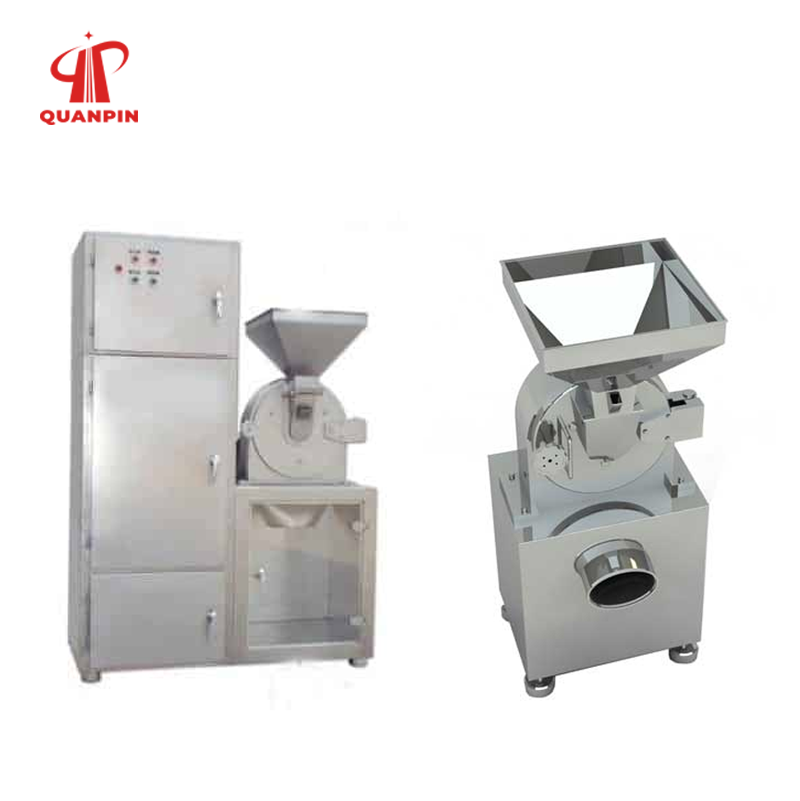
Review the High-Efficiency Pulverizer Unit for the actual size-reduction duty and confirm any separate screening scope with QUANPIN. Match the application to the food industry requirements.
Retain the Complete Separation Record
Retain the fraction masses, methods and operating conditions with each result. An isolated passing percentage leaves too much of the separation unexplained.
A useful proposal connects the desired food powder with measured fractions and a defined receiving route. It should identify unresolved classification questions without promising untested performance.
Frequently Asked Questions
Is passing yield classification efficiency?
No. Passing yield reports collected mass, whereas efficiency requires a definition of correct separation and suitable evidence about the fractions.
Is everything retained necessarily oversize?
No. Material can remain retained for reasons other than its nominal size. Assess the actual retained material under a justified analytical method.
Must different sizing methods agree?
No. Different methods can describe different entities and preparation conditions. Keep the method and specimen basis with each reported distribution.
Should retained material always return to milling?
No. Returning material adds another treatment. Its benefit depends on what the stream contains and what final product is required.
Does screening yield demonstrate cross-contact control?
No. Food cross-contact and dispersed material require their own evaluation. A favourable passing percentage does not demonstrate those controls.
What should the enquiry include?
Provide the food feed, milling objective, screen identification, passing and retained boundaries, assessment methods and intended return route. State the product criteria the trial must demonstrate.
Discuss Your Food-Powder Processing Trial
Discuss the material, processing objective and required trials with QUANPIN. Review the equipment information and the relevant industry applications, or send an enquiry through our contact page.
Email sales@qpdryer.com or stacie@qpdryer.com. Call +86 19850785582 or contact WhatsApp +86 15921493205 to discuss the proposed scope.