CH Trough Mixer for Food Pastes: Separate Moisture Content from Yield Behaviour
By QUANPIN
A trough mixer enquiry for food powder and paste should distinguish the amount of water added from the mechanical behaviour produced. Equal water percentages can give very different resistance to movement in different formulations.
This guide examines the transition from a particulate mixture to a structured food paste. It separates powder strength, paste yielding and viscoelastic measurements before those results are used to discuss a CH application.
Powder Strength and Paste Yielding Are Different Measurements
A powder shear test measures a particulate material under its specified consolidation conditions. A paste rheology test imposes deformation on a continuous or connected structure; the reported quantities are not interchangeable.
Yield behaviour describes the onset of substantial deformation under a particular test. Its interpretation requires the test method, sample condition and formulation rather than a consistency label alone.
Define the CH Food-Mixing Question
An S type mixer enquiry should identify the actual powder-and-liquid system. Do not infer a drive requirement or mixing time directly from a laboratory yield-stress value.
A pharmaceutical trough mixer and a food application can share equipment terminology while having different material requirements. This article concerns food ingredients and does not establish suitability for a pharmaceutical formulation.
Five Conditions behind a Rheology Result
Water-content basis
State the water basis: added water, total moisture and dry-solid ratio describe different quantities. Keep the actual definition with a comparison.
Solid composition
Identify the solid composition. Protein-rich and starch-rich systems need not respond to water in the same way.
Particle condition
Retain particle-size information when studying the starting powder. It can influence movement before a paste has formed.
Deformation method
Identify the deformation method used for the paste. A small oscillation and a large imposed deformation interrogate different responses.
Temperature and time
Describe temperature and elapsed preparation time. A structured food system can evolve while it is awaiting measurement.
Why Moisture Does Not Produce One Universal Flow Trend
Adding moisture does not simply turn every powder into a progressively easier-flowing material. Changes in cohesion and contact behaviour can precede formation of a paste.
An original food-powder moisture experiment compared corn meal, wheat farina and sugar. Their dynamic and shear responses changed differently with moisture.
These were coarse-powder tests, not CH paste-mixing trials. Their relevance is that a common water-content change need not produce a common mechanical response.
Avoid applying a powder flow factor as a numerical paste-yield criterion. It belongs to the particulate test and its consolidation state.
Six Material Stages from Powder to Food Paste
Incoming powder
First identify the incoming powder condition. This establishes the material before the liquid-related structure develops.
Liquid distribution
During wetting, distinguish the total added liquid from the distribution of that liquid through the solids.
Paste formation
As a connected paste forms, assess the response using a method appropriate to that material state.
Imposed deformation
During deformation, distinguish resistance to initial yielding from the subsequent flow response.
Recovery and resting
After deformation, examine whether the structure recovers or changes with time when that matters to the receiving operation.
Later food processing
During later processing, preserve the distinction between mixing behaviour and finished-food texture. A satisfactory paste observation cannot establish baking performance.
Read Food Rheology within Its Experimental Scope
Compare formulation-dependent pastes
Composition can change a paste response even when the preparation objective remains the same. Compare the actual material system rather than a generic food-paste category.
An original milk-powder and rye-flour paste study assessed rheology together with printing and baking outcomes. The formulation influenced paste properties and later structural behaviour.
That research concerns food printing, not CH performance. It illustrates why a material that behaves acceptably during one deformation can respond differently during a later operation.
Distinguish linear and nonlinear response
Small-amplitude oscillation is useful for examining a structure without imposing the same deformation as intensive processing. A response measured there is not a direct measure of mixer load.
An original starch paste and gel experiment compared neutral and sugar鈥揳cid systems. Differences could be more evident in nonlinear deformation than in the linear viscoelastic region.
The study involved prepared starch systems. It does not show that a CH mixer heats or gelatinizes starch, or that its supplied arrangement reproduces the research preparation.
Retain the initial powder context
The starting particles also matter before the material reaches a paste state. A size-based comparison must retain composition because different ingredients can behave differently.
An original food-powder particle-size study compared rheometry with an extrusion observation. The relationships depended on the corn, wheat and sugar systems investigated.
The extruder was a different apparatus. Its observations cannot become a CH throughput or mixing-energy specification.
Protein Concentration and Nonlinear Deformation
Protein pastes provide another example of concentration-dependent structure. Their response can change with deformation amplitude as well as water content.
An original fish-protein paste investigation compared water-to-protein conditions using small- and large-amplitude oscillatory measurements. The tests revealed concentration-dependent weak-gel and nonlinear responses.
Those findings support selecting a measurement for the actual deformation question. They do not supply a universal water fraction or processing condition for another food paste.
A useful interpretation keeps material composition, test deformation and intended handling together. A single modulus cannot describe every aspect of practical movement.
Connect the Measurement with the Intended Duty
A powder and paste mixer development comparison should identify whether it concerns wetting uniformity, resistance to movement or subsequent paste handling. These objectives can require different observations.
Ask which actual trial measurements can be collected on the proposed machine. Published rheology data are not a substitute for that equipment-specific assessment.
Investigate Apparently Conflicting Responses
If water increases resistance in a powder test, this is not necessarily inconsistent with easier flow in a later paste. The material state and measurement have changed.
If two pastes have similar small-strain moduli but behave differently during handling, examine their response beyond the linear region.
If nominally identical recipes give different results, check moisture basis, temperature and elapsed preparation time before assigning the difference to the mixer.
If an apparent yield value changes with the test method, retain the method distinction. Do not average incompatible definitions into a supposed material constant.
If a paste changes while resting, the time of measurement belongs to the result. An immediate test and a delayed test may describe different structures.
If final food texture differs, investigate the later treatment separately. Mixing and baking or extrusion contribute different changes.
Prepare a Representative CH Trial
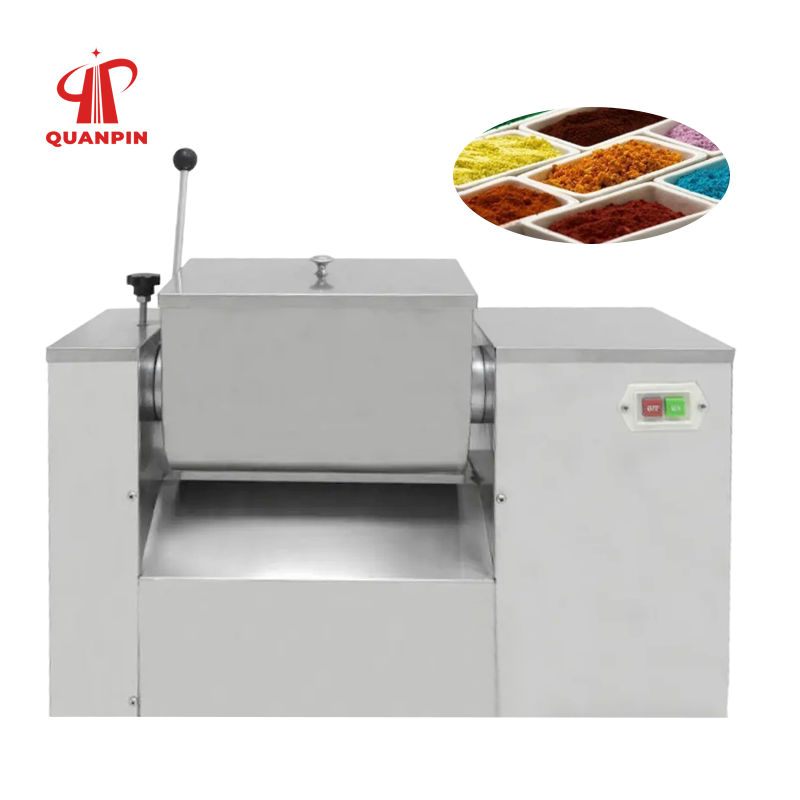
Provide the food composition, moisture definition and incoming material condition when discussing a CH trial. State the unresolved deformation or handling question.
Agree on a comparison that includes the actual paste and receiving arrangement. Confirm the supplied mixer and any separately required thermal or finishing operations.
Report the Meaning of Each Measurement
A useful report pairs material observations with their test conditions. It identifies which response can support the equipment decision and which remains untested.
This makes the enquiry more specific without turning a rheological parameter into a machine guarantee. The supplied arrangement and representative material still determine the practical trial.
Frequently Asked Questions
Does equal moisture give equal behaviour?
No. Different ingredients can bind water and form structures differently. Retain composition and the water-content definition.
Is powder strength paste yield stress?
No. Powder strength and paste yielding arise from different tests and material states. Their numerical values cannot be substituted directly.
Does a modulus describe all handling?
No. Small-amplitude measurements describe a limited deformation region. Large-deformation behaviour may differ.
Can yield stress specify mixer power?
No. A laboratory rheological value does not independently establish mixer torque, power or capacity.
Does measurement time matter?
Yes. Temperature, preparation history and elapsed time can affect a structured food material and should accompany the result.
What should a CH enquiry include?
Identify the material, moisture basis, relevant deformation and required handling response. Confirm what the actual CH trial can measure.
Discuss Your CH Mixing Application
Discuss the material, processing objective and required trials with QUANPIN. Review the equipment information and the relevant industry applications, or send an enquiry through our contact page.
Email sales@qpdryer.com or stacie@qpdryer.com. Call +86 19850785582 or contact WhatsApp +86 15921493205 to discuss the proposed scope.
For process evaluation, consider the ribbon blender for ribbon-driven mixing of suitable powder batches. Confirm suitability with representative material, the required product properties and the proposed process conditions.