WFJ Food-Powder Trials: Measure Starch Damage Separately from Particle Size
By QUANPIN
An air classifier mill enquiry for starch-containing food powders should distinguish the required particle-size distribution from the permitted change in starch structure. One result cannot automatically supply the other.
For a WFJ trial, evaluate both properties using the actual food material and its intended use. Explore the relevant QUANPIN industry applications when defining the food-processing duty.
Define Two Different Powder Properties
Particle size describes the dimensions of the measured particles or dispersed entities. The result depends on the measurement technique and how the specimen is prepared.
Starch damage is an operationally measured alteration of starch, commonly investigated through a defined assay. Report the method rather than inferring a damage percentage from a size curve.
Describe the Starch-Containing Feed
A flour particle can contain starch together with protein and other constituents. Its measured dimensions need not equal the dimensions of an individual starch granule.
Identify whether the feed is an isolated commercial starch or a flour. Those materials have different compositional contexts even when their botanical origin is the same.
Five Inputs for a Useful Comparison
Botanical identity
Record the crop, cultivar or commercial grade and lot. Keep substitutions visible because the incoming starch structure and surrounding material can differ.
Preparation history
Describe prior drying, soaking or other preparation. A comparison between prepared feeds may include changes introduced before the milling step.
Size measurement
Specify the size technique, dispersion conditions and reporting basis. Agglomerate breakup during analysis can influence the apparent powder distribution.
Damage measurement
Identify the starch-damage assay and sample-conditioning instructions. Preserve its reporting units so results from unlike procedures are not silently combined.
Intended food function
State the intended food function, such as a defined pasting or baking evaluation. A powder specification should explain why the selected properties matter.
Why Fineness Does Not Define Starch Damage
In an original rice-flour milling study, gradual particle-size change did not clearly correlate with measured starch damage across the investigated processes.
The researchers also examined structural disorder and powder-water interactions. Their work supports measuring the properties independently rather than applying a universal size-to-damage conversion.
Those findings belong to the studied rice samples and milling histories. They do not predict the starch-damage outcome of a proposed QUANPIN configuration.
A fine powder grinder trial should therefore retain both analytical records. Specify the required size range and the separate material-property question before comparing runs.
Six Boundaries in the Trial
Identify incoming material
Identify the incoming food material and its actual condition. A familiar starch name does not describe moisture, preparation history or previous mechanical treatment.
Confirm the milling arrangement
Confirm the supplied milling and classification arrangement with QUANPIN. Do not assume a research jet mill or water mill is mechanically identical to the WFJ.
Collect identified powder
Collect powder with a defined run and fraction identity. Preserve any separate collections that the trial plan requires rather than selecting only the preferred fraction.
Divide specimens appropriately
Divide specimens through an appropriate laboratory procedure. The portions used for sizing, damage analysis and food-function testing should represent the stated powder condition.
Apply separate analyses
Apply each analysis under its own suitable method. A photograph or a favourable sieve observation cannot replace a starch-damage measurement.
Compare the intended food use
Compare the powder in its intended food system. A material-property change can have different implications in different formulations, so the acceptance question must remain explicit.
Compare Size, Damage and Functional Tests
Particle-size evidence
A particle-size result answers a dimensional question. State whether the distribution concerns dispersed particles, remaining aggregates or a sieve-classified fraction.
Different dispersion histories can change the entities being measured. Keep preparation instructions with the distribution rather than reporting only a single average.
For an air classifying mill comparison, identify which collected powder the size report represents. Classification and laboratory dispersion create different boundaries.
Starch-damage evidence
A damage result answers a separate analytical question. Its interpretation should identify the material and the procedure used to detect or quantify alteration.
An original comparison of crop starches and flours examined pulverization, starch damage and pasting properties together, finding that starting crop characteristics affected their response.
The study used its own impact-milling apparatus. It provides food-material evidence, not validated operating instructions or performance figures for QUANPIN equipment.
Functional evidence
Functional tests address how the powder behaves under selected conditions. A pasting measurement involves a prescribed preparation and heating history rather than an unconditioned powder observation.
Choose an application test that reflects the intended product. A result relevant to one bread formulation does not establish a universal optimum for noodles, sauces or other foods.
Keep these three lines of evidence connected through specimen identity. Their value comes from explaining the same material, not forcing every measurement into one ranking.
Keep Crop and Cultivar Effects Visible
An original rice-mutant flour investigation examined cultivar, milling conditions and bread-related properties. It illustrates why botanical and formulation context belongs beside a flour comparison.
The researchers evaluated specific bread preparations. Their relationship between flour properties and loaf response is not a general recipe or acceptance limit for every food.
Compare incoming lots before assigning an unexpected result solely to the mill. Material variation and processing variation should remain distinguishable in the trial account.
An ACM mill proposal should retain the actual crop and feed specification. Similar final size distributions do not establish that two incoming materials have undergone identical structural change.
Distinguish Dry and Water-Based Preparation
A water-milled rice-flour study examined soaking conditions, particle size and starch damage. Its preparation route included water and subsequent dewatering.
That route differs from a dry fine-pulverizing duty. The research supports recording preparation history without implying that the WFJ includes wet milling or dewatering equipment.
Investigate Conflicting Results
If size improves while a damage result changes unfavourably, check the actual acceptance requirement first. There is no single direction of change that is automatically best for every food.
Then check the analytical basis and specimen identity. A changed dispersion procedure or a different collected fraction can make nominally comparable size reports describe different materials.
Research on pre-cooking rice grinding and texture separately evaluated rice paste and flour preparations. Its cooked-material observations show why downstream preparation matters to an interpretation.
Do not transfer its cooked-rice conclusions to an untested flour product. Use the intended product’s own evaluation when deciding whether a measured powder difference is acceptable.
Keep the grinding objective explicit during troubleshooting. A finer target should be justified by the food application rather than assumed to be a complete quality improvement.
Retain observations that do not follow an expected trend. They may identify crop effects, differing treatment histories or a measurement question requiring further work.
Prepare the Food-Milling Enquiry
Prepare the enquiry with feed identity, desired powder dimensions and the proposed separate starch-property tests. Describe the intended food use and available analytical support.
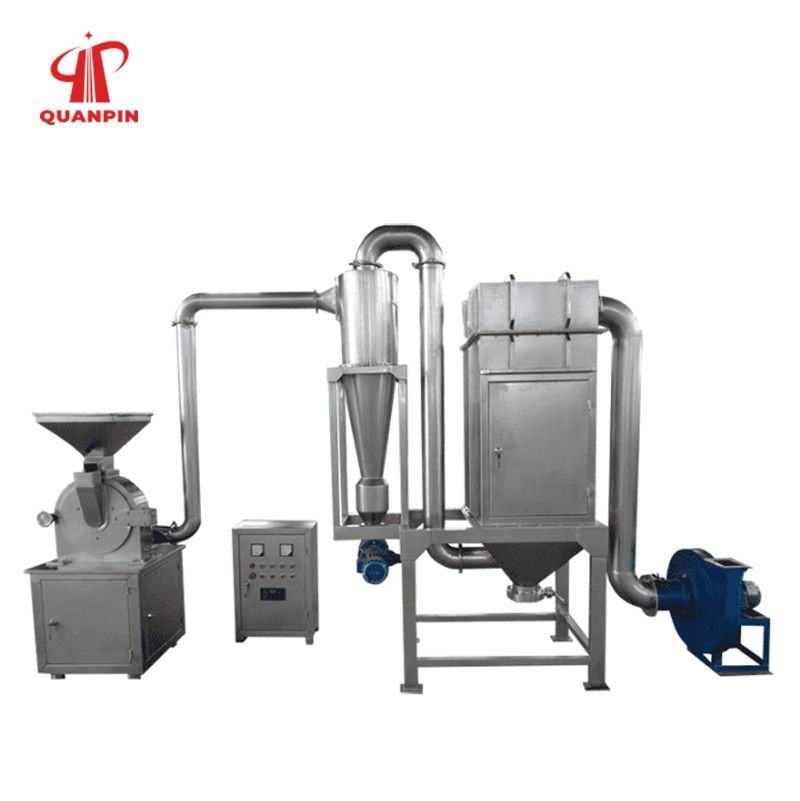
The WFJ Series Fine Pulverizer should be reviewed against that material-specific duty; its product identity does not establish a food-formulation outcome.
Retain the Analytical Basis
Retain methods, specimen preparation and reporting units with every result. A spreadsheet of unqualified averages makes later comparisons harder to interpret.
A useful milling recommendation explains what has been demonstrated for the actual powder and which structural or food-function questions still require testing.
Frequently Asked Questions
Does finer powder always have more damage?
Not universally. Different materials and milling routes can change particle size and starch damage differently. Measure both instead of assuming a fixed relationship.
Is flour particle size starch-granule size?
No. Flour particles can contain several constituents or aggregates of granules. State what the measurement actually resolves and how the sample was dispersed.
Does damaged starch mean unsafe food?
No such conclusion follows from the term alone. Starch damage describes a material property measured by a defined procedure; food-safety requirements are assessed separately.
Can wet-milling results specify a WFJ?
No. Water-based research uses a different material-preparation route. It does not establish that a dry WFJ system has the same mechanism or resulting properties.
Can one crop define every starch?
No. Crop, cultivar, preparation and intended use affect the comparison. Published relationships belong to the materials and analytical conditions actually investigated.
What should the enquiry include?
Provide feed identity, preparation history, particle-size objective, separate starch-damage method and intended food-function evaluation. Explain which criteria must be demonstrated during the trial.
Discuss Your Food-Powder Milling Trial
Discuss the material, processing objective and required trials with QUANPIN. Review the equipment information and the relevant industry applications, or send an enquiry through our contact page.
Email sales@qpdryer.com or stacie@qpdryer.com. Call +86 19850785582 or contact WhatsApp +86 15921493205 to discuss the proposed scope.