Double Cone Mixer for Catalyst Supports: Separate Solid Transport from Liquid Distribution
By QUANPIN
A double cone blender can redistribute a granular bed while still exchanging material slowly between regions. For chemical catalyst-support development, visible tumbling therefore does not by itself establish how uniformly a subsequently added liquid would be distributed.
This guide separates dry-solid transport from liquid-content uniformity. It discusses published research on specially configured double-cone systems; it does not identify the QUANPIN SZH mixer as an equipped impregnation vessel or a vacuum dryer.
Two Distribution Questions in One Particle Bed
Particle circulation and exchange across the vessel are different movements. A bed can repeatedly turn over within one region while particles cross into another region more slowly.
For a double cone mixer enquiry, define whether the intended duty is dry blending alone. Liquid addition, chemical compatibility and any process containment require separate confirmation rather than inference from a research apparatus.
Confirm a Mixing Duty rather than a Drying Duty
The rotating vessel moves the charge through tumbling. The relevant research question is how material travels through its geometry, not simply whether every visible particle moves.
A double cone powder mixer should be evaluated on the intended solid material. A model using free-flowing beads explains a transport mechanism but does not establish performance with an untested cohesive formulation.
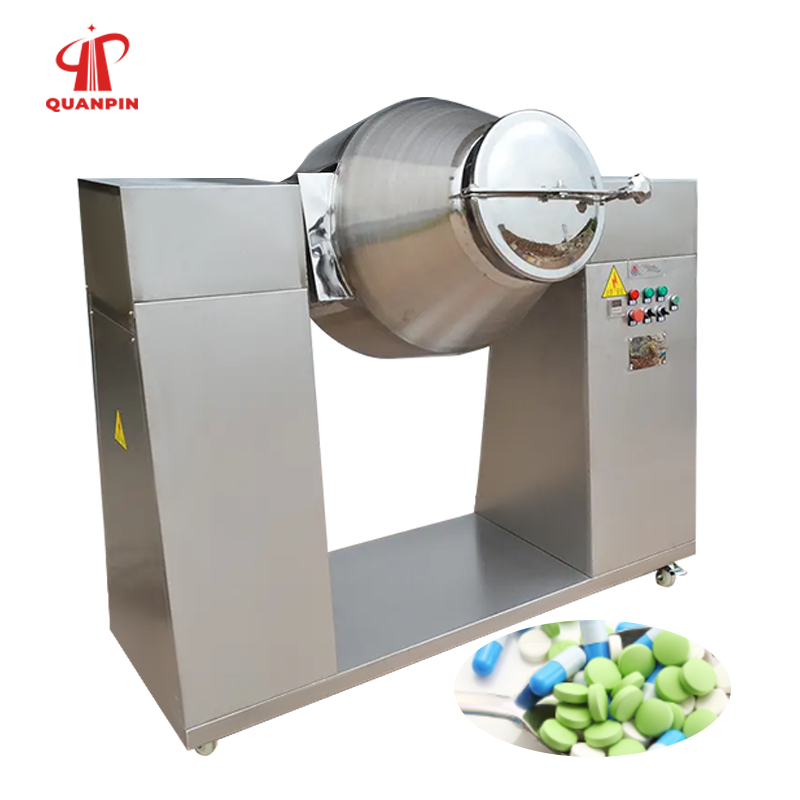
Five Definitions for a Transport Study
Support morphology
Identify the solid support, its particle shape and its size distribution. These properties define the material whose transport or liquid exposure is being investigated.
Initial component placement
Define the initial placement of distinguishable solid fractions. The chosen arrangement determines which transport direction a blending experiment is capable of resolving.
Vessel geometry
Describe the vessel geometry and any internal modification. A modified research vessel and a standard supplied vessel are separate configurations.
Liquid application question
If liquid distribution is an intended research question, identify how it is applied and measured. Do not describe a dry-solid tracer as a direct measurement of liquid concentration.
Measurement region
Specify whether the observation concerns the visible surface, internal solid composition or liquid content on particles. These measurements can give different pictures of the same bed.
What Internal Geometry Changes
Published double-cone experiments compared a standard vessel with a stationary deflector. The central issue was whether internal geometry changed exchange between regions.
The original deflector experiment used visual observations and layered image analysis to quantify tracer concentration. A geometry change promoted cross-vessel transport in that studied system.
The finding explains why shape and internals matter. It does not establish that a deflector is included with SZH equipment, or that the reported improvement transfers to another charge.
When comparing geometric alternatives, keep the composition question unchanged. Otherwise an apparently improved result can reflect a different observation rather than improved transport.
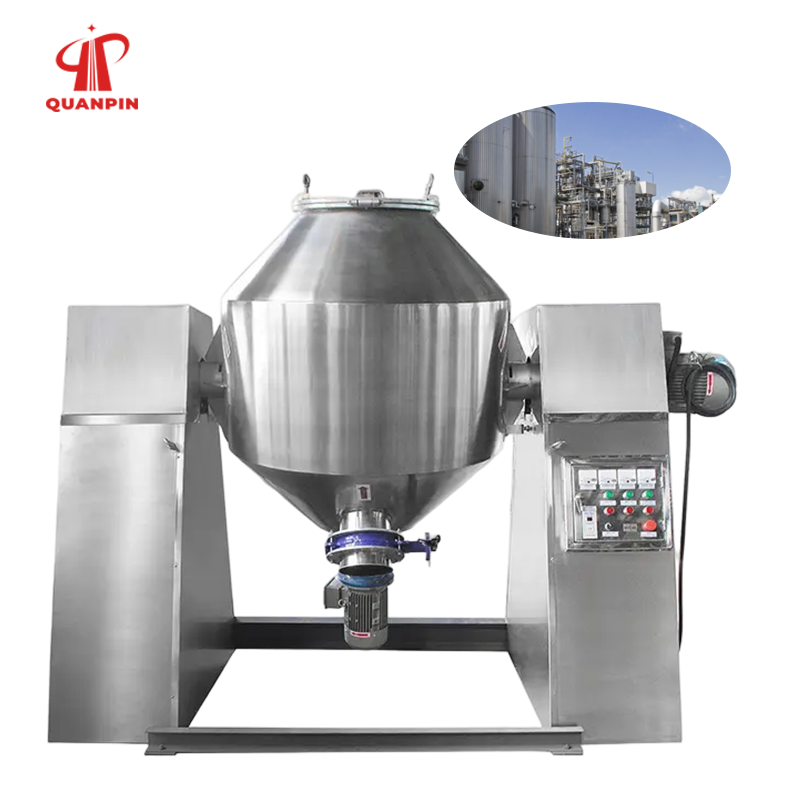
Six Mechanisms to Keep Distinct
Circumferential circulation
Circumferential circulation moves particles around the rotating bed. It can be rapid while exchange along the vessel remains the limiting transport process.
Cross-region exchange
Cross-region exchange moves particles between previously separated portions of the charge. Its importance depends on how the components were initially placed.
Surface renewal
Surface renewal exposes different particles at the moving surface. This is relevant to surface application, but does not independently establish exposure of the entire internal population.
Liquid deposition
Liquid deposition introduces a second distribution problem. The amount contacting a particular region can differ even when total delivered liquid is measured accurately.
Interparticle transfer
Interparticle liquid transfer can subsequently change that distribution. A model of solid movement alone does not automatically represent transfer between contacting particles.
Particle shape
Particle shape can alter both motion and exposure. Preserve the actual morphology rather than substituting a generic spherical support in the interpretation.
Read Double-Cone Research in Its Actual Context
Compare geometry-specific transport
Particle-tracking experiments can examine small movements along the axis of a tumbler that are easily missed in an overall view of circulation.
An original axial-drift study combined experiments and particle simulations in spherical and double-cone tumblers. It found depth-dependent movement and related axial drift to the sloping vessel wall.
This is evidence about monodisperse model grains and vessel geometry, not a catalyst-product test. It shows why a visibly circulating bed can contain transport components that require a more spatially resolved measurement.
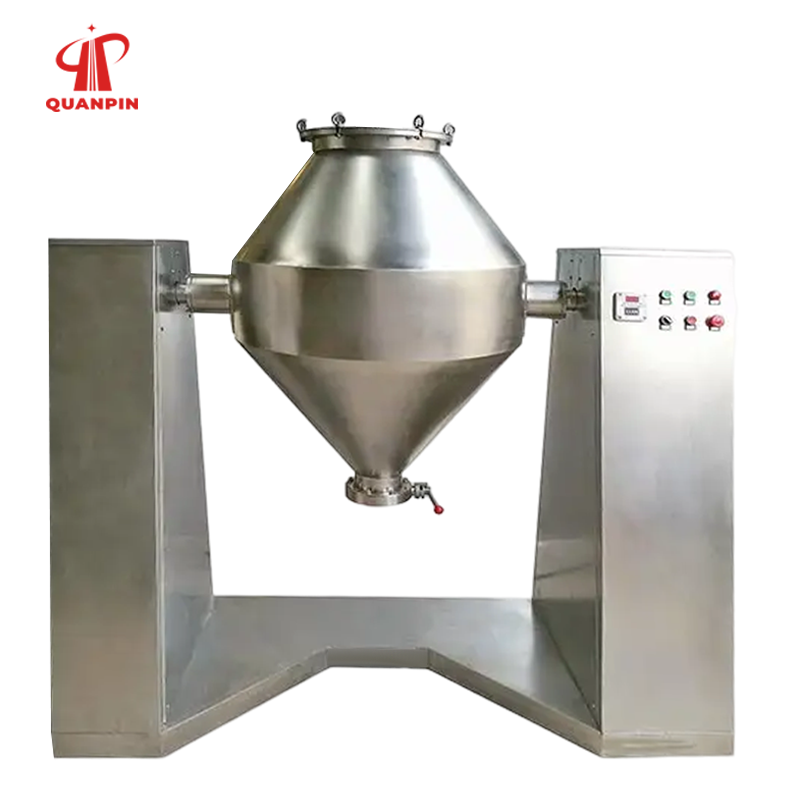
Connect transport with application
Catalyst-preparation experiments provide a more direct application of transport to a particle bed. They investigate where solids travel and how that influences a potential application pattern.
The original catalyst-support mixing investigation used tomography and image-based concentration measurements. The authors connected nonuniform regional transport with the need to consider liquid application across the bed.
The important distinction is spatial: refreshing the surface does not guarantee equal exposure of every region. A total liquid quantity cannot describe the distribution within the charge.
Distinguish particle and liquid models
A later study explicitly modeled liquid deposition and transfer between particles. This adds a separate physical description to the calculation of particle trajectories.
The computational and experimental impregnation study compared its model with a geometrically corresponding single-nozzle research system. Liquid delivery and filling conditions affected fluid-content uniformity within the tested range.
Those results remain specific to the apparatus and material used. They are not a recommendation for liquid application rate, filling fraction or rotation speed on an SZH mixer.
Why Particle Morphology Matters
Particle morphology is another independent consideration. A shape that moves differently may also spend different periods in regions exposed to an applied liquid.
An original spheres-and-cylinders investigation compared experimental and modeled double-cone impregnation. It related axial mixing and liquid-content uniformity for the shapes and conditions studied.
That relationship gives a reason to investigate the real support morphology. It does not justify replacing a measured liquid distribution with a generic mixing index in a different chemical system.
Where liquid addition is outside the supplied mixer scope, keep the educational comparison separate from the equipment proposal. A dry mixing demonstration answers a narrower question than a complete impregnation process.
Define the Supplied Equipment Scope
A double cone blender price comparison should retain the confirmed dry-mixing arrangement. Additional liquid-handling functions require their own technical scope and evidence.
The double cone tumble blender concept does not imply solvent recovery, heating or vacuum drying. Those duties require separately specified equipment and must not be borrowed from double-cone dryer descriptions.
Interpret Apparently Conflicting Observations
If the surface appears homogeneous while internal sections differ, the observations are compatible. They represent different regions and need not indicate an analytical failure.
If solid composition appears uniform while liquid content differs, investigate deposition and transfer mechanisms. A satisfactory dry-solid result cannot eliminate a separate liquid-distribution problem.
If two particle shapes produce different transport, review geometry and material contact assumptions before attributing the change solely to rotation time.
If a simulation predicts uniformity more quickly than experiments show, examine its particle properties and liquid-transfer assumptions. Model agreement must be demonstrated for the response being used.
Keep the research scale and the proposed equipment scale distinct. A mechanism observed in a model vessel can guide a question without defining the performance of a larger supplied installation.
Chemical-material compatibility remains a separate assessment. None of these mixing studies establishes that an arbitrary catalyst support and liquid are suitable for a proposed installation.
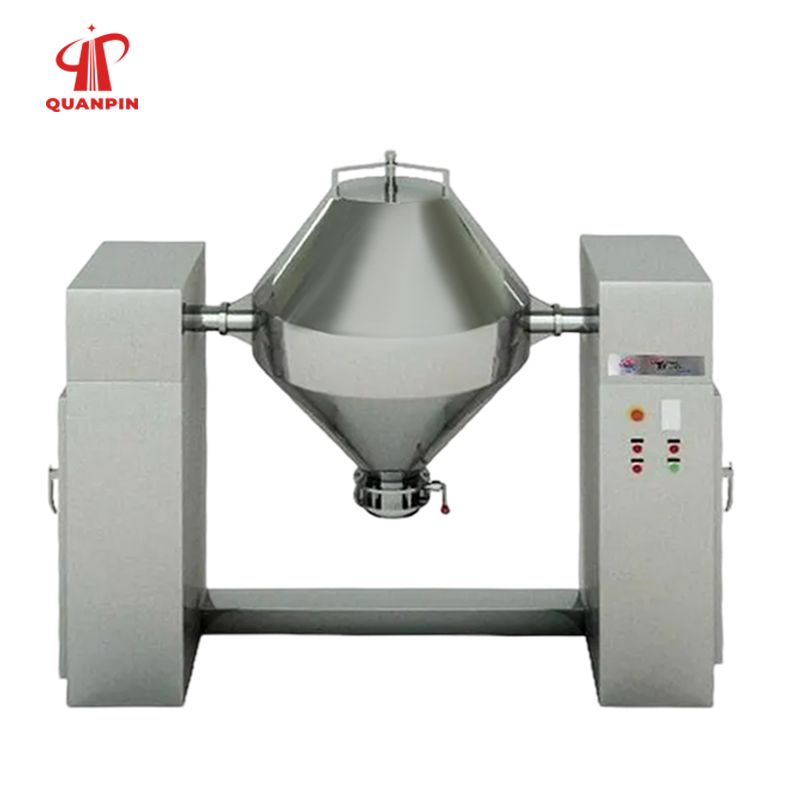
Prepare a Dry-Solid Mixing Enquiry
For a dry catalyst-support blending enquiry, explain the starting component arrangement and the composition question. Ask which confirmed mixer arrangement can be tested with representative solids.
If the project also includes impregnation, identify it explicitly as a separate requirement for review. Do not assume the research nozzle, internals or liquid-transfer functions are supplied.
State What the Evidence Demonstrates
Compare observations that address transport with observations that address chemical-material quality. Uniform appearance cannot establish activity or a complete catalyst specification.
A useful development conclusion states which regions exchange particles, what was measured and which additional application questions remain unresolved.
Frequently Asked Questions
Does visible tumbling prove whole-bed exchange?
No. Visible circulation shows movement at the observed location. It does not independently establish exchange between all regions or equal exposure to an applied liquid.
Does a dry blend prove liquid uniformity?
No. Dry-solid concentration and liquid content are different responses. Liquid deposition and transfer require their own measurements when they form part of the intended process.
Is a research deflector a supplied feature?
No. A published modified vessel is a research configuration. Any internals included with the proposed machine must be confirmed in the equipment scope.
Why retain particle morphology?
Particle shape can affect motion and contact behaviour. A spherical model is not automatically representative of cylindrical or irregular chemical supports.
Can research settings be copied?
No. The cited apparatuses support research conclusions within their tested ranges. They do not provide universal SZH settings or guaranteed chemical-product outcomes.
What should the enquiry describe?
State the dry-solid mixing duty, representative particle properties and the required composition evidence. Identify liquid addition separately if the project requires it.
Discuss Your Double-Cone Mixing Application
Discuss the material, processing objective and required trials with QUANPIN. Review the equipment information and the relevant industry applications, or send an enquiry through our contact page.
Email sales@qpdryer.com or stacie@qpdryer.com. Call +86 19850785582 or contact WhatsApp +86 15921493205 to discuss the proposed scope.
For process evaluation, consider the double-cone blender for gravity-driven blending in a rotating double cone. Confirm suitability with representative material, the required product properties and the proposed process conditions.