YK Oscillating Granulator: Define a Reference Sample for Comparing Granule Appearance
By QUANPIN
A reference sample makes a granule-appearance comparison traceable only when its identity and condition are known. It should represent a defined process stage rather than an attractive handful selected after the event.
For the YK oscillating granulator, distinguish the prepared feed, immediate outlet material and any later dried or transferred granules. See pharmaceutical applications.
YK Working Principle and Material State
The verified working principle uses a reciprocating rotor to work compatible material against a screen.
An oscillating granulator machine can have a wet-forming or compatible dry-sizing duty; the actual feed condition determines the application under review. Use product-specific development knowledge to justify the attributes being examined. See FDA ICH Q8 pharmaceutical development.
Define the Reference and Observation Question
Choose the observation question before choosing the reference. Comparing two photographs cannot answer an undefined pharmaceutical quality question.
A useful reference describes the material, sampling boundary and preparation method so that another reviewer can understand the comparison.
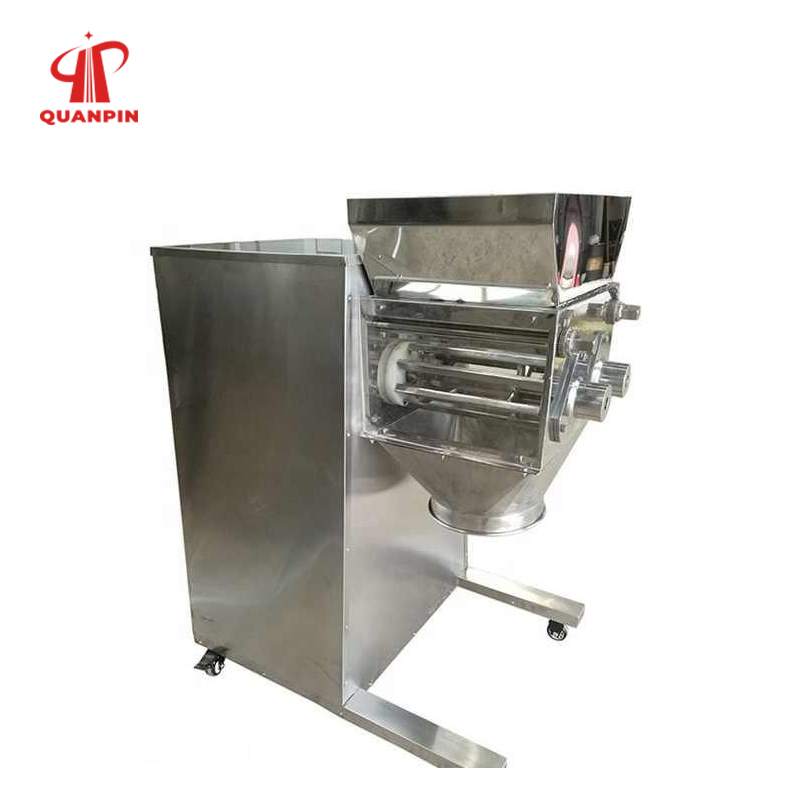
Five Steps to Define a Comparison
Identify the process stage
Identify the formulation and processing stage represented by the reference.
Describe reference collection
Describe how the reference was collected and retained.
Record the equipment
Record the YK configuration used for the comparison material.
Present comparable samples
Observe samples under a consistent documented presentation.
Assess relevant attributes
Assess appearance alongside the relevant analytical requirements.
Sample-State and Preparation Boundaries
A reference taken before drying is not automatically comparable with a sample taken after drying.
Record any preparation needed to present the samples, including actions that could change visible clumps or fines.
Avoid selecting only the most uniform portion of a container. The observation should remain connected to the sampling plan.
Keep a comparison sample’s storage and exposure history visible when they could affect the observation.
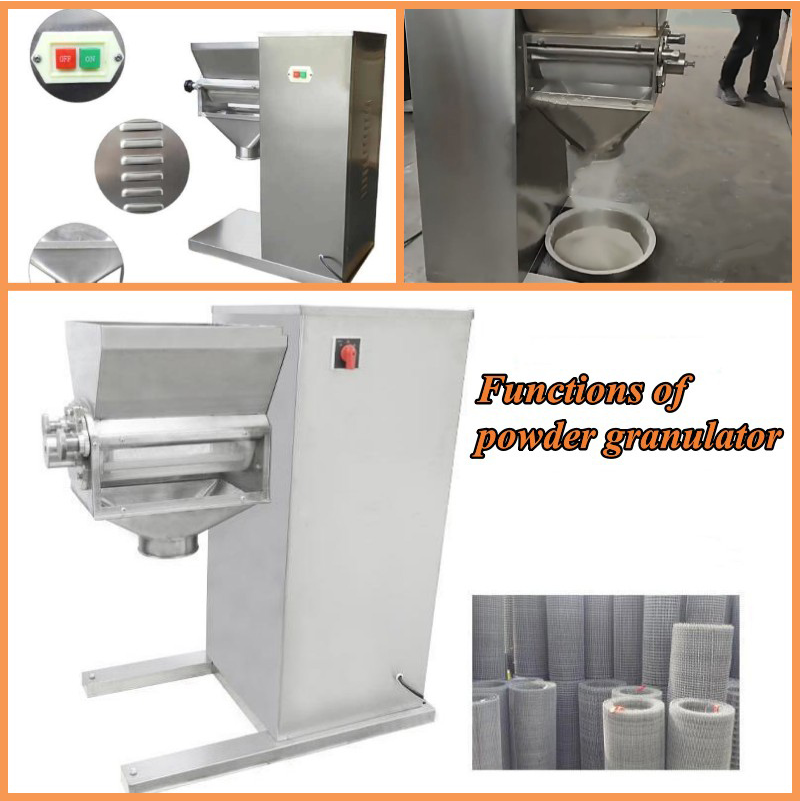
Equipment and Observation Interfaces
Feed presentation
The feed arrangement establishes the actual wet mass or dry agglomerates entering the working assembly.
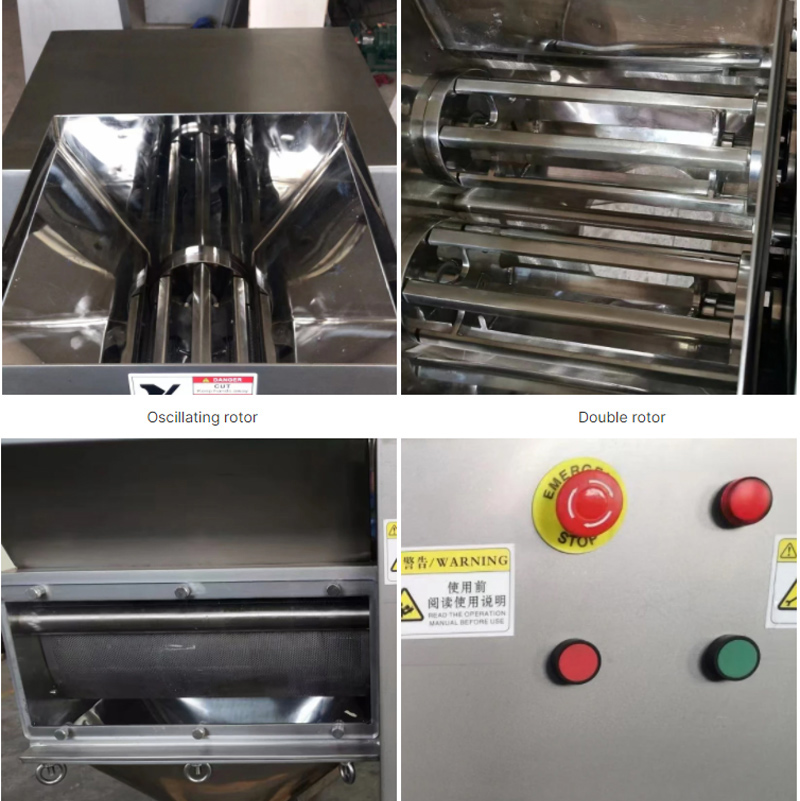
Reciprocating rotor
The reciprocating rotor provides the mechanical action reviewed for the material.
Fitted screen
The screen is part of the fitted processing configuration rather than a complete laboratory particle-size method.
Outlet collection
The collection arrangement defines the immediate outlet boundary.
Subsequent processing
A subsequent dryer or transfer operation creates another stage that needs separate identification.
Cleaning and access
Cleaning and safe access provisions belong to the actual installed equipment, not the appearance photograph.
Interpreting Appearance and Analytical Evidence
Define the observation question
A swing granulator enquiry should distinguish the observation method from the machine’s operating instructions.
Describe what the comparison seeks to investigate: visible lumps, shape differences or another defined attribute.
An unexplained statement that one sample looks better does not establish which process variable produced the difference.
Preserve sample identity
Keep the reference and comparison sample labels attached to the actual photographs or observations.
If sampling stages differ, state that limitation instead of presenting the images as a controlled equipment comparison.
For a pharmaceutical granulator, appearance is one possible development observation rather than an automatic release decision.
State material-state differences
A wet granulation reference should identify whether binder addition, sizing, drying or further handling has already occurred.
Do not infer chemical composition, moisture or complete particle distribution from the image alone.
Use the formulation’s appropriate analytical methods when those attributes matter to acceptance.
Benefits and Limits of a Reference Sample
A well-identified reference can help a technical team discuss an observed difference without losing its process context.
It can also reveal that an apparent equipment comparison actually used different material states. A development comparison should not be presented as complete validation of an untested production process. See FDA process validation guidance.
The reference does not provide a universal target appearance for every pharmaceutical formulation.
The actual formulation and intended next process determine which observations are useful.
Reference Identity and Input Records
Specify the batch or development identity of the reference.
Record the point where the sample leaves the process. Assess relevant quality risks using the actual material and process context. See FDA ICH Q9 quality risk management.
Records, Handling and Safety Requirements
Describe sample preparation and presentation without guessing an undocumented procedure.
Identify any storage or handling between collection and observation.
Keep the fitted screen and relevant equipment configuration traceable.
Retain the associated analytical results and explain their separate purposes. Interpret measurements through process understanding rather than treating an isolated instrument reading as product acceptance. See FDA process analytical technology framework.
Do not reach into operating equipment to obtain a more convenient reference sample.
Follow the approved sampling, isolation and exposure-control procedures for the actual installation.
Prepare the YK Application Enquiry
Send QUANPIN the reference description and the specific appearance question.
Provide the actual feed condition, fitted arrangement and downstream boundary rather than relying on photographs alone.
Evidence and Limits of the Appearance Comparison
A technical review should explain which differences were observed and which conclusions remain unsupported.
Preserve the comparison method and limitations with the trial records so that later observations use a clear basis. Retain knowledge and manage adopted process changes through the pharmaceutical quality system. See FDA ICH Q10 pharmaceutical quality system.
Frequently Asked Questions
What makes a useful reference?
A reference sample needs a defined material identity and process stage; attractive appearance alone does not make it representative.
Can wet and dried samples be compared directly?
Wet and dried samples represent different states unless the comparison explicitly accounts for that distinction.
Does appearance establish analytical properties?
A photograph cannot independently establish moisture, composition or a complete particle-size distribution.
Does screen identity establish acceptance?
The fitted screen identifies the processing arrangement, but the pharmaceutical product still needs appropriate acceptance evidence.
Can sampling bypass safe access procedures?
Sampling should follow an approved safe procedure; a desire for visual evidence does not justify access to moving equipment.
What should the enquiry include?
The enquiry should include the reference identity, collection point, preparation history, observation question and relevant analytical results.
Discuss Your YK Application with QUANPIN
Discuss the confirmed YK Oscillating Granulator application with QUANPIN. Use the enquiry form or the contact page to describe your project.
Email sales@qpdryer.com or stacie@qpdryer.com. Call +86 19850785582, or contact us on WhatsApp: +86 15921493205.