Rice Flour Milling: Specify Starch Damage and Cooking Response Alongside Fineness
By QUANPIN
Rice flour can pass the same sieve and still behave differently in a cooker. Milling changes both particle dimensions and the condition of starch granules. A useful purchasing specification therefore connects fineness, starch damage and the intended heating process.
For a producer evaluating an air classifier mill, the practical question is whether the selected flour produces the required hydration and cooked texture. A finer powder is valuable only when its functional response remains suitable for the actual formulation.
Why Fineness Alone Misses Functionality
Damaged starch means starch granules whose structure has been disrupted during processing. It is not interchangeable with gelatinized starch. Mechanical disruption can alter accessibility to water and enzymes before the ingredient undergoes the controlled heating used in food manufacture.
Gelatinization describes structural changes when starch is heated with sufficient water. Pasting includes the subsequent development and breakdown of viscosity during heating, holding and cooling. These measurements answer different questions, so a specification should identify the property actually needed.
Start with the Food Application
Begin with the food rather than a universal fineness target. A dry coating, a cooked sauce and a frozen dumpling place different demands on flour. Record the intended water addition, heating history and texture assessment before choosing the acceptance tests.
Keep rice variety and fraction consistent during a trial. Glutinous rice differs from ordinary rice in starch composition, while whole-grain flour introduces additional constituents. Changing raw material and milling conditions together makes it difficult to attribute a functional change correctly.
Separate Five Different Measurements
Particle distribution
Particle size describes the dimensions of measured flour particles, which may contain several constituents. A size distribution does not directly report the proportion of disrupted starch. Retain distribution information rather than reducing every sample to a single mesh label.
Damaged starch
An enzymatic damaged-starch assay provides information that particle sizing cannot replace. Use the same laboratory procedure across comparisons and report its basis. Results obtained through different methods should not be combined into a supplier ranking without investigating their comparability.
Cold-water hydration
Cold-water hydration tests characterize behavior before cooking. Specify water temperature, flour concentration, mixing and separation conditions. A flour that takes up water quickly at room temperature does not necessarily retain the greatest amount of water after a complete heating cycle.
Gelatinization analysis
Thermal analysis helps distinguish the temperature range and energy associated with gelatinization under defined moisture conditions. It does not reproduce every industrial cooking process. Compare laboratory results with an application test instead of treating a calorimetry trace as a finished-product guarantee.
Pasting profile
A pasting test follows viscosity through a prescribed temperature and shear program. Peak viscosity, final viscosity and setback describe different parts of that response. Select the relevant features from the process problem rather than demanding every value be maximized simultaneously.
Read Comparisons of Milling Routes
A study comparing milling methods across three rice types examined dry, semi-dry and wet preparation of indica, japonica and glutinous broken rice. Milling method affected starch damage, particle distribution and thermal behavior, while rice type also influenced the measured response.
The study found that wet milling minimized starch damage while producing finer particles in its samples. This comparison is useful because it separates small particle dimensions from an assumption of greater damage. Its results remain specific to the varieties, preparation routes and laboratory methods investigated.
An equipment comparison becomes stronger when it includes a suitable reference flour already accepted by production. Test that reference with every trial series. This helps identify laboratory drift and shows whether a numerical difference is meaningful against an established manufacturing baseline.
Do not copy the operating conditions of another laboratory into a commercial specification. Feed moisture, variety, mill geometry and analytical preparation can differ. Use published work to choose measurements and hypotheses, then verify their relevance with the actual rice and equipment.
Understand the Role of Feed Conditioning
Water-content evidence
An experimental study of water content during semidry grinding examined glutinous rice flour using hydration, thermal, rheological and structural measurements. Within its tested conditions, higher feed water content was associated with lower damaged starch and higher gelatinization-related enthalpy.
Limits of equipment transfer
This experiment concerns conditioned glutinous rice and semidry grinding. Its findings do not establish the performance of a QUANPIN machine or an ACM mill. The transferable lesson is to document feed conditioning and measure the resulting functionality, rather than treating moisture as an incidental sample detail.
Choose the useful functional response
The conditioned samples also differed in solubility and rheological behavior. That does not establish a universal preference for wetter milling feed. Define the useful flour response from the food application and confirm equipment suitability before considering any change to material conditioning or the preparation route.
Track mechanical history
Residence time is useful to record when comparing processing conditions, but it should be defined consistently. Include recirculated material and any repeated passes. A nominally short milling operation can still expose part of a batch to substantially more mechanical treatment.
Separate heat and damage
Separate temperature management from starch-damage control. Cooling addresses thermal exposure; mechanical forces can still disrupt granules. A low discharge temperature is an operating observation, while damaged starch is an analytical result. Neither measurement makes the other unnecessary during process development.
Avoid appearance-based conclusions
Do not infer starch damage from flour appearance. Whiteness, surface feel and sieve passage can be useful observations, but they have multiple causes. Treat them as supporting records and reserve functional conclusions for measurements that directly address the property in question.
Interpret Cold and Hot Hydration Separately
What the dumpling experiment measured
An original glutinous-rice and dumpling experiment compared wet milling, low-temperature impact milling and roller milling. The dry-milled samples showed more damaged starch than the wet-milled sample. Low-temperature processing therefore did not remove the need to characterize mechanical damage in that experiment.
The same experiment measured hydration at different temperatures. Dry-milled samples showed higher room-temperature hydration measures, while wet-milled flour had greater water absorption and swelling after heating. This distinction explains why a single unspecified water-absorption result can mislead a development team.
For a practical comparison, keep cold hydration and hot swelling as separate acceptance fields. Record their methods alongside the results. If one improves while the other declines, discuss the food process rather than averaging the two measurements into an ambiguous overall score.
Reproduce the food process
The dumpling study also evaluated actual products, including cracking and cooking-related characteristics. This is useful because laboratory flour properties do not completely describe product quality. A manufacturer should preserve an application test that includes the most consequential production and consumer-use steps.
A frozen product trial should include the relevant freezing, holding and cooking sequence. Measuring fresh dough alone may miss the defect that matters commercially. Keep the reference flour and candidate flour under the same handling conditions to avoid confounding the milling comparison.
The study used a particular glutinous rice material and experimental methods. Its results are evidence of a mechanism and an example of application testing, not universal commercial acceptance limits. Establish limits from the intended product and repeated production-relevant trials.
Translate evidence into the milling duty
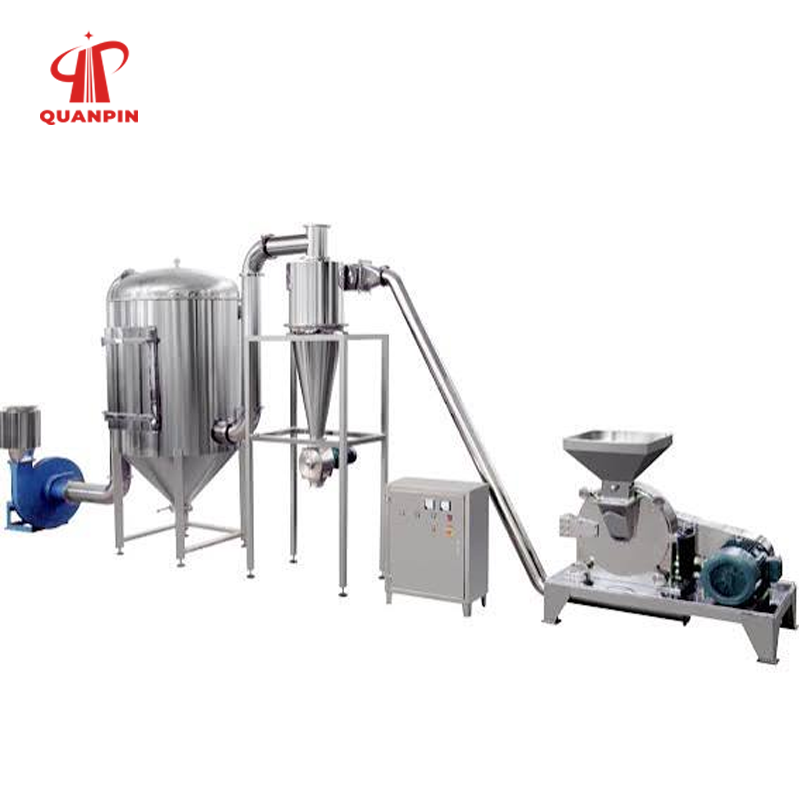
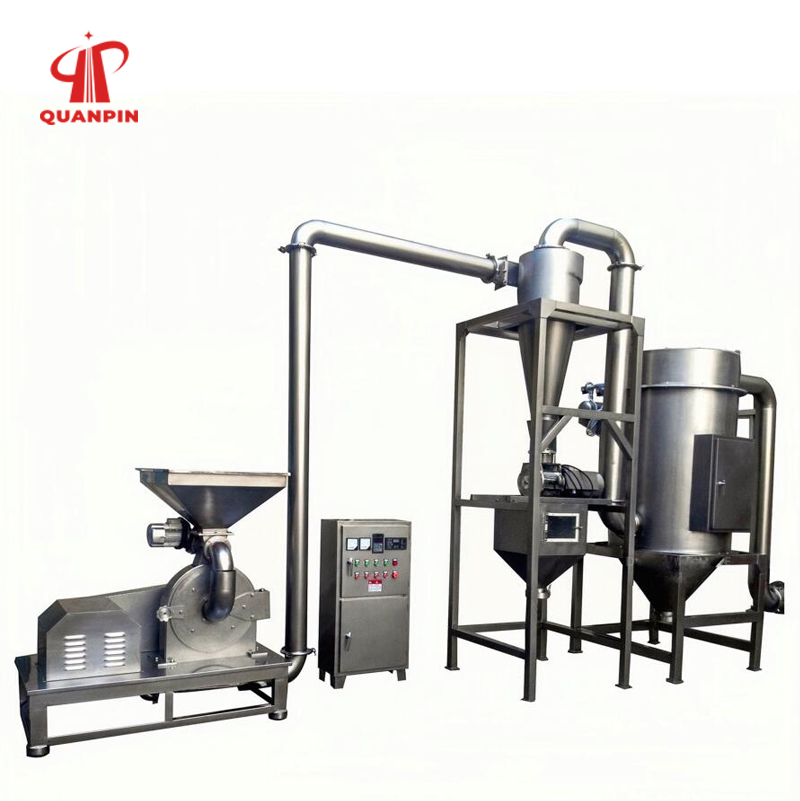
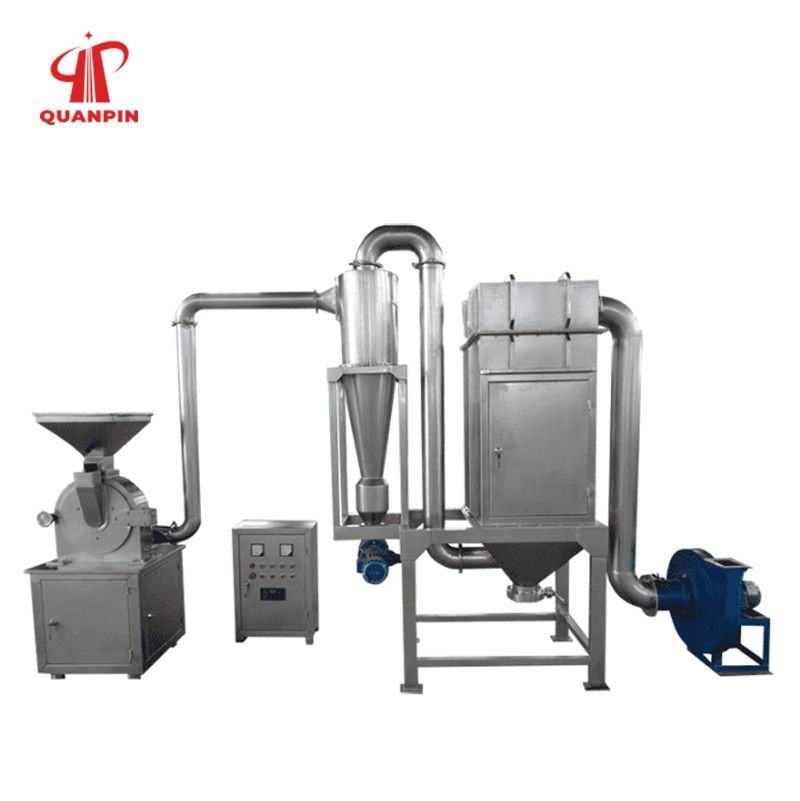
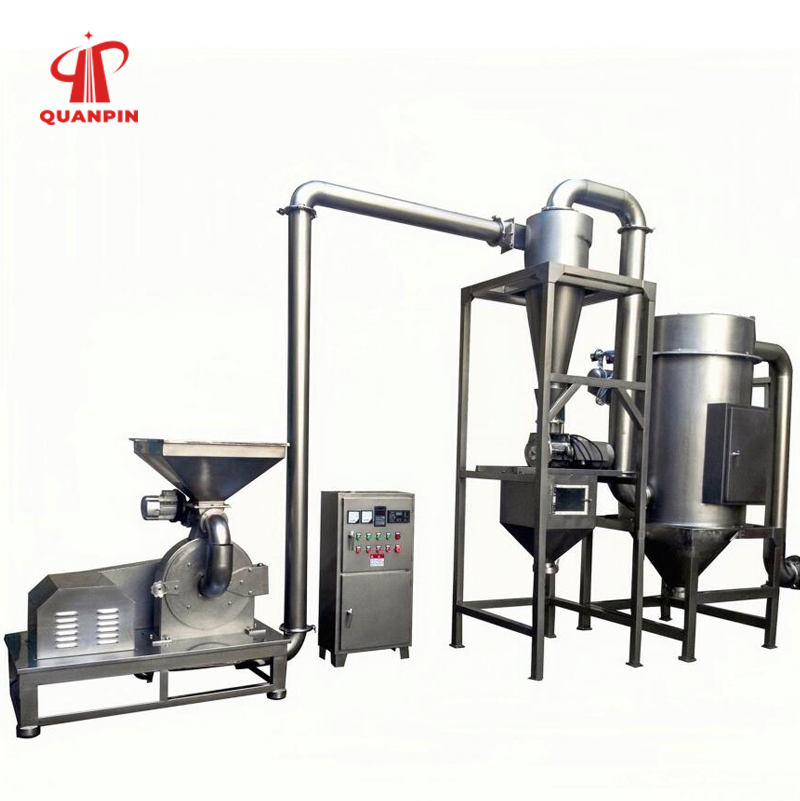
An air classifying mill combines grinding with particle classification, but classification does not certify a particular starch structure. Flour selected by size can still differ in damage and pasting response. Include both size and functionality in a milling acceptance record.
For the QUANPIN WFJ Series Fine Pulverizer, confirm the proposed configuration and material suitability directly with the equipment team. Do not assume that a laboratory milling paper verifies a specific machine’s cooling capability, starch-damage result, throughput or finished-product texture.
When describing a fine powder grinder requirement, provide the rice fraction, incoming moisture range, existing flour reference and application problem. This gives the supplier a testable duty. A request for the smallest possible powder offers much less guidance about useful process performance.
Keep Classification and Starch Structure Distinct
A study of rice-flour powder properties found that particle-size change did not clearly correlate with starch damage across its milling processes. Its structural analysis reinforces the need to avoid using particle size as the sole proxy for processing-induced starch changes.
In practice, two samples with similar median size should remain separate candidates until their damage and cooking results are compared. Conversely, different particle sizes do not automatically mean unacceptable performance. A functional specification can allow sensible variation while protecting the finished product.
Use one sample-identification system from raw rice through flour and application testing. Include batch, milling condition and collection time. Without that traceability, a promising viscosity result can become detached from the settings and material required to reproduce it on a later day.
Sample after stable operation and define how the sample represents the run. Start-up material and retained material may have different histories. If the production objective includes consistent flour, examine variation within the run instead of testing only one convenient end-of-run portion.
Read Correlations Within Their Experimental Scope
Research on MR263 rice flour produced by different grinding routes examined relationships among damaged starch, particle distribution, pasting and thermal profiles. Its variety-specific design is a reminder to interpret correlations within the materials and methods actually investigated.
Correlation does not identify a universally adjustable control variable. Several flour properties can change together when the processing route changes. Use a controlled trial to assess whether changing one operating condition produces the needed application response with the selected raw material.
Plan a Representative Equipment Trial
Prepare a trial sheet before the first run. Include feed identity, preconditioning, relevant machine settings, throughput observations, discharge temperature, sample code and laboratory methods. Reserve space for deviations so an interrupted or unstable run is not silently treated as representative.
Change one major operating variable at a time during the initial comparison where feasible. This is an experimental planning choice, not a guarantee of an optimal setting. A narrow, interpretable first series is more useful than many samples with poorly documented differences.
Collect enough flour for analytical work, application testing and retained samples. Agree the required quantities with the laboratory and development team beforehand. A sample sufficient for particle sizing may be inadequate for repeat cooking trials or investigation of an unexpected result.
Control storage between milling and testing. Seal and identify samples, record the elapsed time, and use a common handling procedure. Different moisture exposure can affect flour behavior and weaken the interpretation of differences originally attributed to the milling condition.
Compare candidate settings on useful output rather than nominal production alone. A condition that generates more flour but fails the application specification does not provide equivalent accepted output. Include rework and rejected material when reviewing the practical value of the trial.
Review results in a matrix linking particle distribution, damaged starch, thermal response and application outcome. This makes disagreements visible. For example, a finer sample with a poorer cooked texture should trigger investigation rather than automatic selection because it appears to satisfy a headline fineness target.
Define the Acceptance Window
Translate successful results into an acceptance window that reflects measured repeatability. A single successful batch is insufficient to establish a narrow production limit. Repeat the promising condition with representative material and retain the application benchmark used to judge whether the change remains useful.
Write corrective actions against the observed defect. Excessive cooked viscosity, weak structure and slow cold dispersion are different problems. Avoid a generic instruction to increase grinding whenever the finished food changes, because greater milling severity may shift several flour properties at once.
Prepare a Useful Supplier Discussion
Keep the approved analytical methods with the purchasing specification. Report moisture basis, sample preparation and the relevant temperature program. A supplier and customer can disagree about identical flour when they use different laboratory procedures without recognizing that the procedures differ.
Include a change-control trigger for raw rice, milling route and major equipment modifications. Recheck the relevant functionality when those inputs change. This approach preserves the connection between an accepted flour specification and the process conditions that originally established its suitability. A technically useful quotation request includes a representative sample and a clear test objective. Ask QUANPIN to review the actual milling duty against the required flour properties. Discuss equipment selection after establishing the desired application result and the evidence needed to accept a trial.
Frequently Asked Questions
Does finer flour always have more damaged starch?
Does finer rice flour always contain more damaged starch? No. Particle dimensions and starch disruption can change differently across milling routes. Measure both when damage affects the food application, and compare samples under the same analytical procedures before drawing an operating conclusion.
Does cooling prevent starch damage?
Does low-temperature milling prevent starch damage? Cooling can limit heat exposure, but it does not eliminate mechanical forces. The glutinous-rice experiment showed substantial damage in its cooled impact-milled sample. Assess the actual flour rather than treating the temperature label as proof of intact starch.
Are gelatinization and pasting temperatures identical?
Is gelatinization temperature the same as pasting temperature? They come from different measurements and describe different responses. Thermal analysis follows changes under its specified conditions, while a pasting test measures viscosity development under a temperature and shear program. Identify the method when reporting either value.
Can cold absorption predict cooked texture?
Can cold-water absorption predict cooked texture? It is informative but insufficient. The cited dumpling experiment showed different hydration rankings before and after heating. Test the actual cooking sequence and evaluate the finished food when the acceptance decision depends on cooked structure or texture.
Can research settings become machine specifications?
Can published milling settings be used as QUANPIN specifications? No. Research settings belong to the apparatus, rice and methods used in that experiment. Confirm proposed equipment details separately and establish performance through a representative trial rather than transferring laboratory values into a supplier guarantee.
Which measurements should a trial prioritize?
What should a rice-flour milling trial measure first? Start with particle distribution, damaged starch and an application-relevant cooking test, then add thermal or pasting analysis when it resolves the process question. Keep the reference flour, sample handling and methods consistent across the comparison.
Discuss Your Rice Flour Milling Duty
Discuss the material, processing objective and required trials with QUANPIN. Review the equipment information and the relevant industry applications, or send an enquiry through our contact page.
Email sales@qpdryer.com or stacie@qpdryer.com. Call +86 19850785582 or contact WhatsApp +86 15921493205 to discuss the proposed scope.