Oat Flour Milling: Connect Stabilization History with Post-Milling Storage Quality
By QUANPIN
Oat flour milling is also a storage decision. A batch can meet its particle-size target at discharge and develop unacceptable flavor later. A useful process specification therefore connects the incoming grain’s stabilization history, the milling duty and the intended period before use.
When evaluating an air classifier mill for oats, separate three questions: whether the material mills consistently, whether the flour suits the food application and whether its quality remains acceptable during storage. A successful answer to one does not establish the others.
Separate Hydrolysis from Oxidation
Hydrolytic rancidity involves the release of free fatty acids from lipids. Oxidative deterioration involves reactions that can generate primary and secondary oxidation products. They interact, but a measurement of free fatty acids does not provide a complete description of oxidation or flavor.
For process development, treat stabilization, grinding and storage as connected operations with different purposes. Stabilization addresses relevant enzyme activity; grinding controls particle preparation; packaging and handling influence subsequent exposure. Do not expect a milling adjustment alone to replace a validated stabilization and storage program.
Define the Feed and Intended Holding Period
Identify whether the feed is raw groats, heat-treated groats, flakes or previously milled material. Record the supplier lot and documented treatment history. These distinctions affect the interpretation of storage results and prevent a milling comparison from silently comparing different ingredient starting points.
Define the actual destination of the flour. Material used promptly in a cooked process has a different holding requirement from flour sold through a long distribution chain. State the proposed storage duration, packaging and application before asking the equipment team to judge the duty.
Record Five Inputs Before Comparing Mills
Raw material identity
Record cultivar or the available lot description rather than assuming all oats have identical lipid composition. Where detailed cultivar information is unavailable, retain supplier and batch traceability. This allows later storage differences to be investigated without making unsupported claims about their cause.
Stabilization evidence
Document the stabilization step and its verification separately from the flour’s particle-size result. A statement that oats were heated does not identify the achieved enzyme condition. Ask for the relevant treatment and testing information rather than inferring effectiveness from a toasted aroma.
Fineness method
Specify the required fineness with an agreed measurement method. Sieve passage and a laser-diffraction distribution are not interchangeable descriptions. Keep the size method consistent across trials so a storage-related comparison is not confused by poorly defined physical differences between samples.
Time before packing
Record the interval between milling, cooling, packing and testing. For development work, these intervals are part of the sample history. A freshly packed sample and an open sample held overnight should not be treated as equivalent material merely because they share a milling setting.
Package and environment
Describe the actual package and storage environment used in the trial. Include the closure, fill quantity and relevant temperature observations. An unlabeled instruction to store under normal conditions is insufficient when the final product may pass through several different warehouse and transport environments.
Read Industrial Processing Evidence
A study of industrial oat processing stages measured enzymes, lipids and volatiles through operations including kilning and steaming. Combined processing reduced lipase and peroxidase activity while also developing compounds associated with toasted and nutty aromas. Stabilization and flavor formation therefore deserve joint attention.
The practical implication is to preserve the feed’s processing history in a milling trial. If two samples originate from different heat treatments, changes in their aroma cannot automatically be attributed to the grinder. Compare like-for-like inputs when investigating the effect of milling conditions.
A pleasant initial aroma is not sufficient evidence of stable flavor throughout storage. Evaluate the product at the times relevant to the commercial plan. Keep a time-zero record so later changes can be separated from aroma already present immediately after processing and packing.
Do not transfer the industrial study’s outcomes into claims about a particular QUANPIN installation. The research identifies relevant variables and measurements. Equipment suitability, processing sequence and the resulting flour quality must be confirmed with representative material and the configuration actually proposed.
Balance Stabilization with Ingredient Function
Kilning and protein solubility
Research on kilning and liquid oat-base production found that treatment temperature and humidity affected lipase inactivation and protein solubility. Its design demonstrates that optimizing stabilization can involve functional tradeoffs, particularly where the flour will become a liquid ingredient.
Dryness does not prove stabilization
The same work examined storage of non-kilned kernels and found increasing lipase activity under its tested conditions despite declining moisture and water activity. A dry appearance alone is therefore not a suitable substitute for evidence about the stabilization state of the incoming oats.
Protect application performance
For a liquid oat application, ask the development team which properties need protection after grinding. Protein recovery, viscosity, dispersion and flavor may all matter, but they need separate acceptance methods. A storage improvement should not be accepted without checking its effect on the intended formulation.
Respect experimental conditions
Keep the kilning experiment’s laboratory conditions within their original scope. A published treatment schedule is not a universal instruction for commercial material. Differences in equipment, load and raw oats require validation of the actual process rather than copying a time-and-temperature combination.
Cooling and stabilization differ
Cooling during grinding and stabilization before grinding perform different jobs. Cooling can manage processing temperature, while stabilization is assessed against the relevant enzyme and quality outcomes. A low flour discharge temperature does not demonstrate that native lipid-related enzymes have been inactivated.
Prepare an interpretable mill trial
An ACM mill trial should therefore receive feed with a known treatment history. Ask the supplier to record the physical milling results and retain samples for downstream evaluation. Do not frame a successful fineness test as evidence of shelf life or enzyme control.
Interpret Long-Term Storage Research
Kilned and non-kilned flour
A long-term study of kilned and non-kilned oat flours followed different oat materials during storage. Rapid free-fatty-acid formation in the non-kilned material and differences among treated materials showed why initial enzyme information alone did not explain every subsequent storage response.
For an ingredient specification, use that finding as a reason to combine an appropriate initial check with a storage study. Avoid selecting a raw material solely because one starting measurement looks favorable. Follow the quality attributes that determine whether the flour remains usable over time.
The experiment does not justify assigning its storage duration or numerical outcomes to another flour. Its grain materials and storage conditions define its evidence. A commercial shelf-life statement requires a study designed for the actual ingredient, package, distribution conditions and acceptance criteria.
Cultivar and volatile differences
A study of Finnish oat cultivar batches measured lipid composition and volatile changes during flour storage. It found differences among materials and associations between stored samples and several volatiles, including hexanal. Batch composition and subsequent flavor development belong in the same investigation.
A process-development team can apply this by retaining incoming lot information and comparing more than one representative lot before final acceptance. If only one convenient sample is tested, the result may describe that batch well while leaving routine raw-material variability insufficiently examined.
Do not use one volatile as a universal pass-or-fail test without validating its relationship to the actual product. Different food matrices and sensory expectations affect interpretation. Establish which chemical indicators explain quality changes in the intended flour and application before assigning commercial limits.
Aging involves interacting changes
A study comparing raw and drum-roasted oat flour used lipidomics and proteomics to investigate long-term aging. Heat treatment slowed several changes in the tested material. This supports examining storage as a set of interacting changes rather than relying on a single freshness number.
Advanced analytical tools can help diagnose an unexplained problem, but they do not all belong in a routine purchasing specification. Choose routine measurements that answer the acceptance question, and reserve specialized analyses for investigations where they can distinguish plausible mechanisms or guide a corrective trial.
These studies provide evidence about oat processing and storage, not performance data for a fine powder grinder. Use them to plan a trial and choose meaningful checks. Confirm equipment claims separately, and avoid attaching a published storage improvement to machinery that the researchers did not test.
Design the Sample Handling Plan
Start a storage comparison with enough sample for each planned time point and for repeats. Agree quantities with the laboratory before milling. Reopening one small bag repeatedly can create a changing exposure history and leave insufficient material when an unexpected result needs confirmation.
Use separate, clearly identified packages for planned sampling where practical. Keep the package type and filling procedure consistent within the comparison. The aim is to observe the selected milling and storage conditions rather than differences caused by repeated handling of the samples.
Retain a reference flour that already performs acceptably in the intended application. Test it alongside candidates using the same schedule and methods. A reference makes the practical significance of a change easier to assess than interpreting an isolated analytical value without product context.
Document deviations such as damaged seals, delayed packing or unusual storage temperatures. Do not quietly combine affected samples with the planned set. A storage test is valuable only when the team knows which exposures each result actually represents and can interpret departures honestly.
Choose Tests That Answer the Quality Question
Choose hydrolysis measurements with the laboratory and state their units and sample basis. Free-fatty-acid and fatty-acid-value results may be reported differently. A supplier and customer need a shared method before comparing figures or setting a limit intended to control incoming ingredient quality.
Choose oxidation measurements to match the question and sampling schedule. Primary and secondary products describe different parts of deterioration. A single favorable result should not override contradictory sensory observations or other relevant evidence; investigate the disagreement before using the measurement as an acceptance shortcut.
Run a Controlled Milling and Storage Trial
Create a sampling plan before running the air classifying mill. Record feed identity, major settings, observed throughput, discharge temperature and collection time. Collect material after stable operation and retain any start-up fraction separately if it may have a different processing history.
Keep particle-size acceptance independent from the storage evaluation. A sample can pass one test and fail another. Reporting separate results helps the team identify whether to adjust milling, review stabilization, reconsider packaging or investigate raw material rather than changing everything at once.
If comparing different fineness levels, use the same incoming oat lot and packaging procedure where possible. Keep the study small enough to interpret. A trial that simultaneously changes raw material, heat history, grinder settings and storage conditions cannot clearly identify the effect of fineness.
Include a time-zero sensory assessment using a defined preparation and evaluation method. Dry flour odor and the flavor of a cooked suspension answer different questions. Select the format relevant to the customer’s use and apply it consistently at every scheduled evaluation point.
Review any accelerated storage design with a qualified laboratory. Elevated-temperature testing can support comparisons, but translating it directly into commercial time requires justification. Do not convert a short experimental study into a shelf-life promise merely by applying an assumed multiplication factor.
Keep a real-condition study running when the commercial decision depends on long storage. Record the actual environment and maintain retained samples. The purpose is to confirm the proposed supply and use plan, including whether the selected package protects acceptable quality under relevant conditions.
Set Acceptance Before Reviewing Results
Set acceptance criteria before viewing the candidate results. Identify the defects that would prevent use and define the associated sensory or analytical decision method. This reduces the temptation to accept a convenient operating condition and invent a favorable interpretation after the trial has finished.
When results disagree, check sample identity, preparation and method comparability before changing the equipment. Investigate whether the problem already existed in the feed or appeared during storage. This sequence helps prevent unnecessary grinder adjustments when the evidence points to an upstream or downstream cause.
Specify the Milling Duty and Quality Requirements
Write the approved flour specification as a connected record: feed treatment status, physical flour requirements, agreed quality tests and storage conditions. Keep supporting methods accessible. The specification should explain what was accepted and how it can be reproduced, not merely list a preferred particle size.
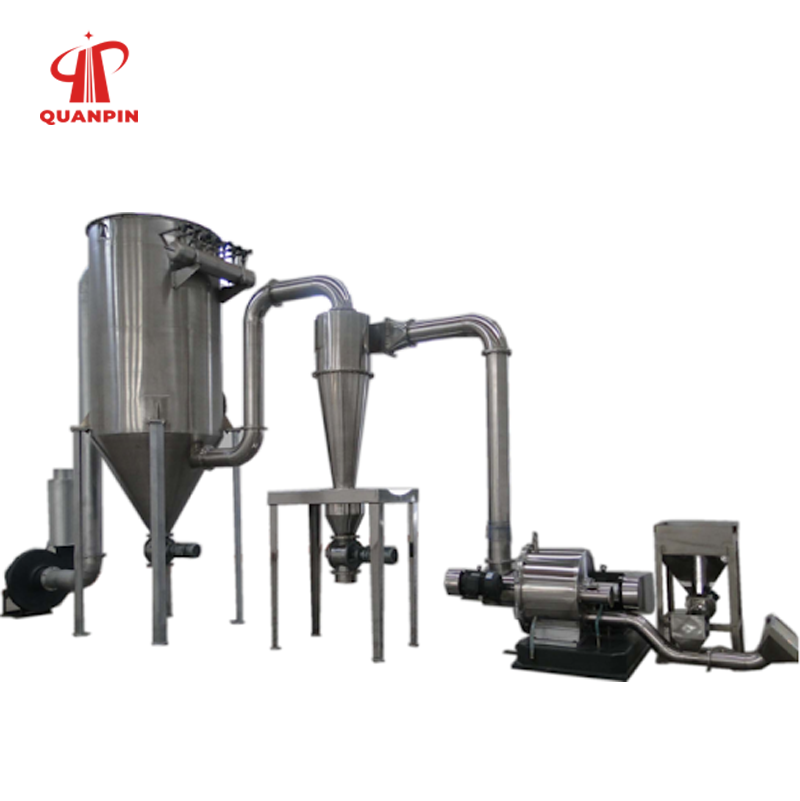
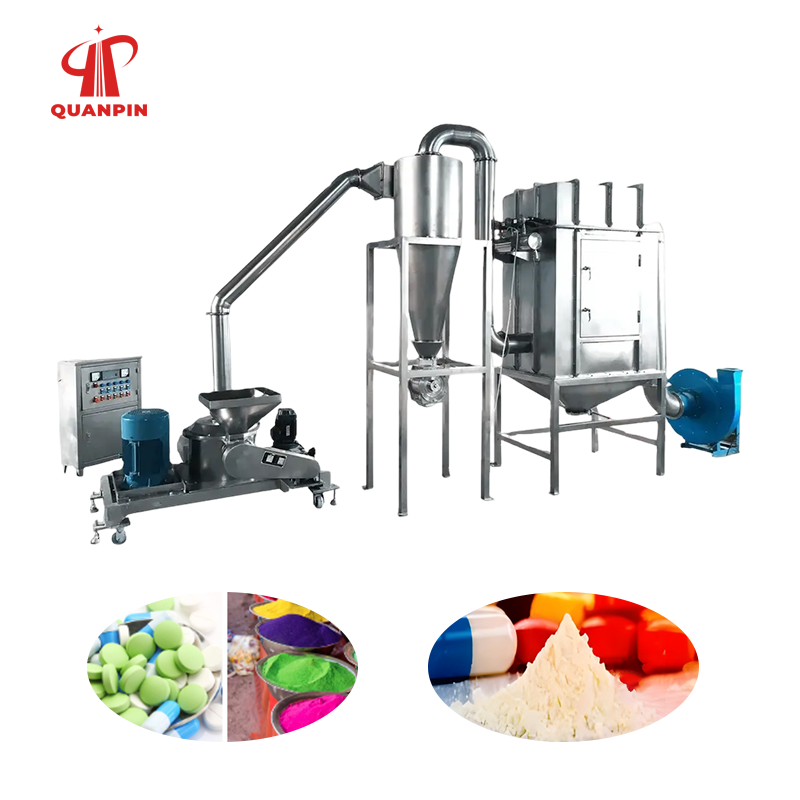
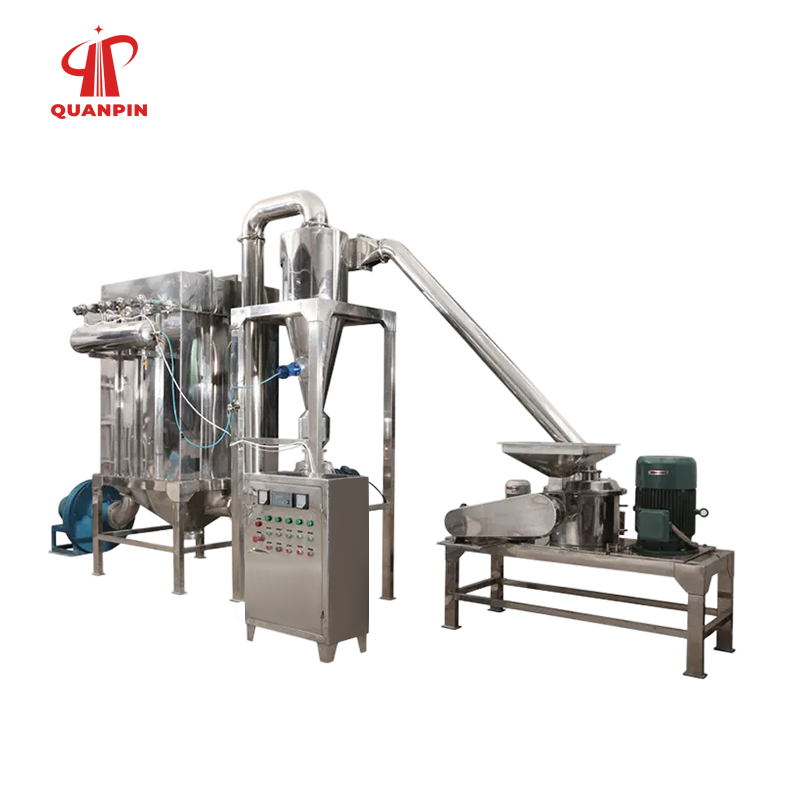
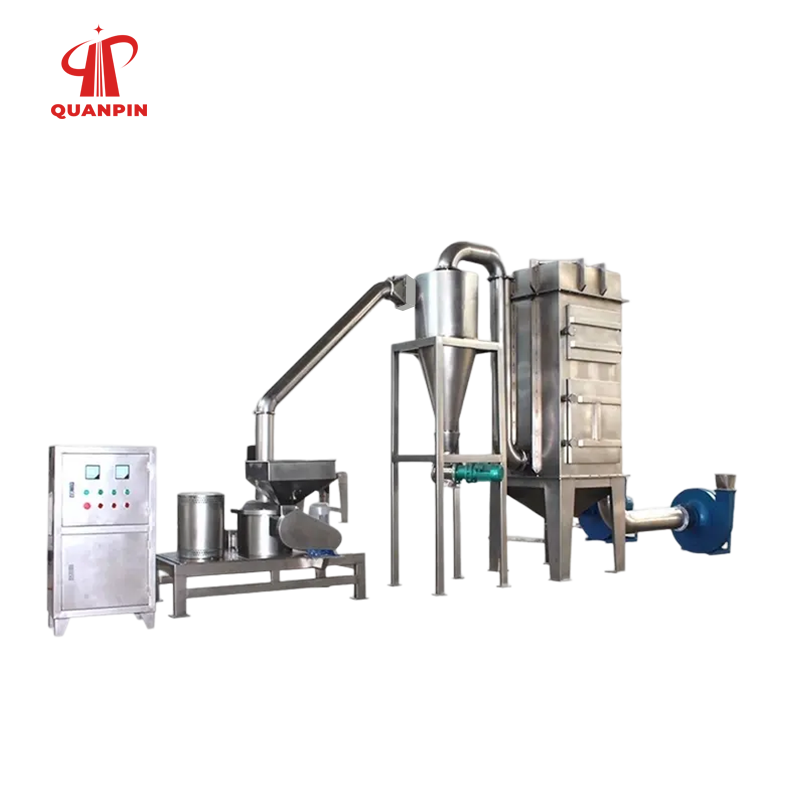
For a QUANPIN WFJ Series Fine Pulverizer discussion, provide representative oats, treatment history and the intended flour application. Ask the equipment team to review the milling duty against measurable requirements. Treat storage validation as part of the ingredient development work and confirm configuration-specific capabilities directly.
Frequently Asked Questions
Can milling stabilize raw oat flour?
Can milling stabilize raw oat flour? Grinding prepares particles; it should not be assumed to inactivate the enzymes relevant to storage deterioration. Confirm stabilization through the appropriate process and tests. A successful milling run or low discharge temperature does not establish a stable ingredient.
Do free fatty acids describe all oxidation?
Does low free-fatty-acid content prove that flour has no oxidative deterioration? No. Hydrolysis and oxidation require related but distinct evidence. Use the tests appropriate to the quality problem and examine sensory observations alongside chemical results rather than allowing one starting measurement to answer every storage question.
Does toasted aroma confirm stabilization?
Can toasted aroma confirm that oats were stabilized correctly? Aroma can reflect processing reactions, but it is not a direct measurement of residual enzyme activity or future storage quality. Retain the documented heat-treatment history and verification results, then evaluate the flour over the planned storage period.
Is the finest flour always best?
Is the finest oat flour always the best choice? The required size depends on the food application and processing system. Compare candidate fineness levels on dispersion, texture and storage performance where relevant. A smaller particle specification has little value if the ingredient fails another essential requirement.
Can research duration become a guarantee?
Can a published storage duration become a supplier shelf-life guarantee? No. Published results belong to the tested flour, package and environment. Establish the commercial statement using representative material and relevant conditions, with defined acceptance criteria and a documented evaluation plan appropriate to the intended supply chain.
What should an oat milling inquiry include?
What information should accompany an oat milling inquiry? Provide the feed form, stabilization history, lot description, target particle measurement, intended application and proposed holding conditions. Include a representative sample and an accepted reference flour if available, so the trial can address useful product performance as well as milling behavior.
Discuss Your Oat Flour Milling Duty
Discuss the material, processing objective and required trials with QUANPIN. Review the equipment information and the relevant industry applications, or send an enquiry through our contact page.
Email sales@qpdryer.com or stacie@qpdryer.com. Call +86 19850785582 or contact WhatsApp +86 15921493205 to discuss the proposed scope.