Powder Wettability for Wet Granulation: Compare Contact-Angle Methods Before a GHL Trial
By QUANPIN
Powder wettability results support wet-granulation development only when the measurement method is identified. A contact angle inferred from a packed bed and one photographed on a compact represent different experimental preparations.
For a high shear granulator enquiry, ask what the laboratory result describes before treating it as a process setting. The practical objective is to make the evidence useful for selecting a controlled material trial. Include the proposed material and test question when preparing a high shear wet granulator enquiry.
Define the Wetting Question
Contact angle describes a liquid–solid interaction under stated conditions. For powders, the reported value also depends on how the measurement accesses a particulate surface.
A laboratory comparison should therefore identify both the powder and the liquid. A water measurement cannot silently stand for a prepared binder solution whose composition differs.
Choose the Laboratory Decision
Write the intended decision before commissioning tests: screen candidate liquids, investigate an observed wetting difference, or check whether two measurement procedures are comparable.
These are separate questions. None establishes the complete performance of a rapid mixer granulator without observations from the relevant formulation and process.
Five Records Behind a Contact Angle
Powder identity
Identify the actual powder lot, grade and preparation history. A material name alone may conceal a particle-size distribution change between the specimens being compared.
Specimen preparation
Record whether the surface was pressed into a compact, poured into a cell, tapped or otherwise prepared. Preparation belongs with the result because it defines the specimen.
Test liquid
Identify the test liquid and its preparation. Keep a measurement using deionized water separate from one using a polymer-containing binder liquid.
Raw observation
Retain the raw observation: droplet images, penetration mass or pressure history. A fitted angle without its underlying record is harder to investigate when laboratories disagree.
Calculation model
State which model converted the observation into a contact angle. Document the assumptions about pore geometry, liquid properties and the selected fitting interval.
Distinguish the Measurement Routes
A sessile droplet makes an accessible surface visible, but making a powder compact introduces another preparation step. Its relevance must be considered for the particular material.
A penetration experiment examines liquid entering a bed of particles. The rate reflects the liquid–solid system together with the geometry and preparation of that bed.
A pressure-based method observes a different signal again. It still requires a defined physical interpretation rather than treating pressure as a direct granulation acceptance limit.
Choose a method because it answers the material question. Avoid choosing solely because its reported number resembles an existing supplier specification.
Six Controls for Comparable Results
Particle-size distribution
Keep the particle-size distribution associated with each specimen. A change in the distribution can complicate comparisons even when the nominal chemical identity remains constant.
Bed preparation
Record the packing procedure in enough detail for another analyst to reproduce it. Do not label every prepared bed simply as loose powder.
Measurement cell
Document the cell and support arrangement. These are part of the measurement system rather than incidental accessories outside the test record.
Liquid conditions
Keep the liquid identity and temperature conditions with the test. Compare like preparations before attributing an observed difference to powder surface chemistry.
Angle definition
State whether the reported angle represents a changing advancing condition or an equilibrium interpretation. These descriptions should remain visible in the laboratory summary.
Independent preparations
Use replicate preparations to examine repeatability. Repeated analysis of one prepared bed does not explore the variability introduced by preparing new beds.
What Original Materials Studies Establish
Closed-bed preparation evidence
A closed-bed capillary-suction study investigated powder-bed preparation and surface-area estimation using water and inorganic powders. It provides a useful example of a measurement-development problem.
The researchers compared tapping with compression under shear. Their reported improvement in bed homogeneity and reproducibility concerned their experimental method and tested materials.
For a pharmaceutical programme, the transferable lesson is to document and examine preparation effects. The study does not establish a universal preparation pressure or wet-granulation recipe.
Capillary-diameter model evidence
An ordered-particle simulation study examined how characteristic capillary diameter affects inferred capillary pressure. Its abstract reports limitations in diameters based on fluid motion.
The investigators proposed diameters associated with the narrowest flow channel and compared them with simulation results. This is evidence about the model representation of a particle structure.
It supports checking the calculation assumptions when a reported angle changes. It does not establish that every real formulation has the ordered geometry used in the simulation.
Other material-specific findings
An inorganic-powder penetration study considered graphite, zinc oxide and calcium fluoride with organic liquids. Its abstract discusses tortuosity and additional resistance in interpreting penetration data.
Separately, a coal-powder investigation questioned pressure-formed surfaces and reported particle-size-distribution effects among its tested samples. Coal results should remain explicitly identified as coal results.
A silica-surface study compared water-vapour adsorption with contact-angle measurements at different scales. It illustrates why two observations described as wettability need not represent the same surface question.
Build a Defensible Comparison
Build a comparison sheet with one row per independently prepared specimen. Include powder identity, liquid, preparation, observation, model and result instead of retaining only a final ranking.
Separate differences within a method from differences between methods. A between-method discrepancy can remain informative without forcing both techniques to produce an identical number.
If the powder changes during liquid exposure, record that observation and seek an appropriate material investigation. Do not automatically interpret every changing signal as contact-angle behaviour alone.
Agree how questionable observations will be reviewed before comparing samples. Preserve unsuccessful preparations and the reason for excluding a result from a reported comparison.
Keep the Pharmaceutical Decision Separate
For pharmaceutical development, keep laboratory wetting characterisation separate from the established product-quality evaluation. A favourable laboratory comparison cannot independently establish drug-product performance.
The responsible development team should decide which formulation-specific measurements accompany a trial. Contact-angle screening can inform that discussion while retaining its experimental limits.
Connect Screening with a Granulation Trial
Carry the screened material and liquid identities into the high shear mixer granulator trial record. Otherwise the laboratory comparison may describe a different system from the one processed.
Record the actual addition and processing sequence used in the trial. The connection between screening and processing depends on knowing what the equipment actually received.
Observe the resulting granules using methods selected for the development question. Do not substitute a laboratory wetting ranking for measurements of the produced intermediate.
When observations disagree with the screening expectation, investigate the material and experimental histories first. Changing the machine setting immediately can obscure the reason for the discrepancy.
Repeat only the comparison needed to resolve the uncertainty. For example, reproducing the bed preparation may answer a method question more directly than running another manufacturing batch.
Report the eventual relationship as formulation-specific evidence. A useful correlation in one trial programme is a hypothesis to examine when either material or liquid changes.
Prepare a GHL Discussion
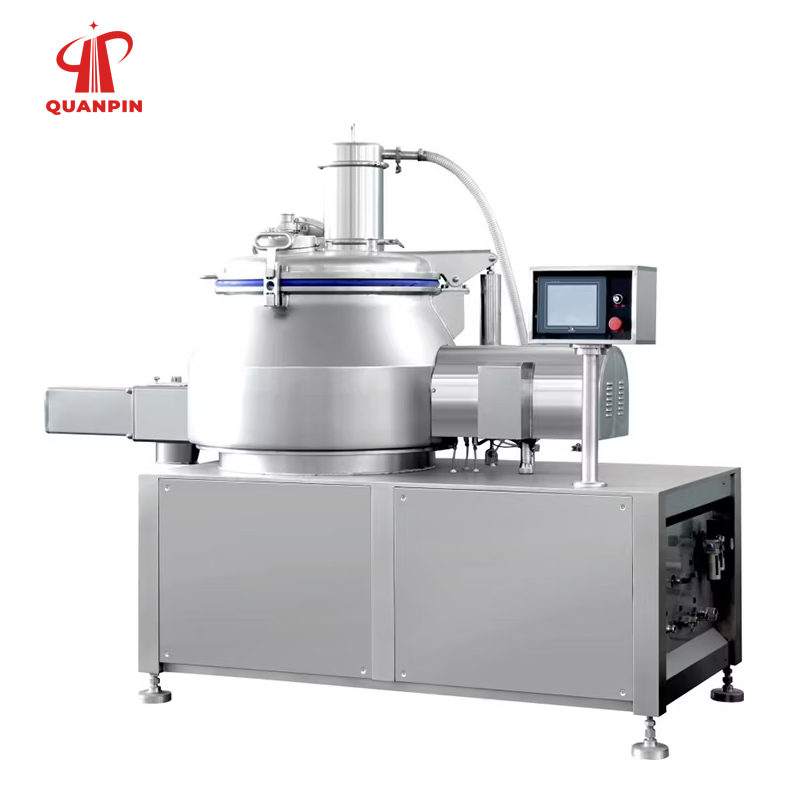
A GHL discussion should include the intended powder, prepared binder and the laboratory question. The equipment enquiry becomes more useful when the supplier can understand the proposed material trial.
Keep any requested equipment capability tied to the application evidence. This article does not assign operating limits, validated configurations or performance guarantees to a QUANPIN model.
Compare the Trial Scope
When comparing a high shear granulator price, identify what material testing and documentation the quotation includes. An equipment price alone does not explain the scope of development evidence.
Ask for a clear description of proposed trial observations and deliverables. Agree who supplies materials and who evaluates the resulting granules before comparing trial proposals.
Powder Wettability Questions
Can methods disagree?
Can two contact-angle methods disagree? Yes. Different specimen preparations, observations and calculation assumptions can create different experimental results that need investigation.
Does water represent every binder?
Does water testing represent every binder? No. Preserve the identity of the liquid actually tested and verify the relevance of a different prepared liquid.
Does angle select a setting?
Does a lower measured angle select the machine setting? No. It describes the specified laboratory experiment and needs a separate connection to formulation-specific processing evidence.
Can inorganic studies define pharmaceutical limits?
Should inorganic-powder studies define pharmaceutical limits? No. They can illustrate measurement issues, while pharmaceutical acceptance decisions require evidence appropriate to the actual product.
What does replication check?
Is a repeat measurement enough to check preparation variability? Reanalysing one specimen addresses a different question from preparing and testing independent powder beds.
What belongs in the enquiry?
What should accompany an equipment enquiry? Provide the material and liquid identities, wetting-method description, intended process question and proposed evaluation of the resulting granules.
Discuss Your Application with QUANPIN
Discuss the material, processing objective and required trials with QUANPIN. Review the equipment information and the relevant industry applications, or send an enquiry through our contact page.
Email sales@qpdryer.com or stacie@qpdryer.com. Call +86 19850785582 or contact WhatsApp +86 15921493205 to discuss the proposed scope.
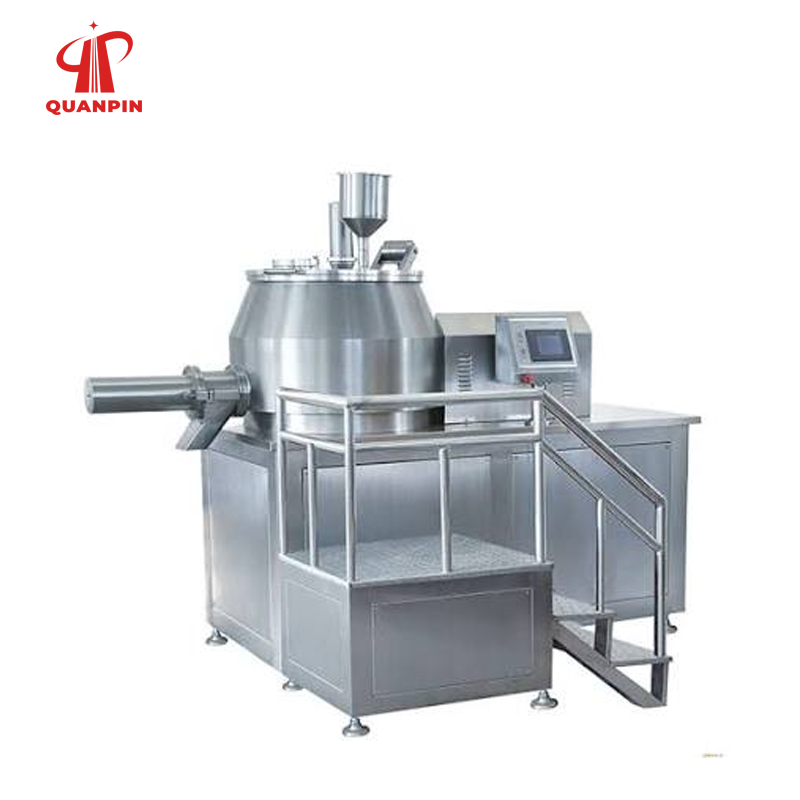
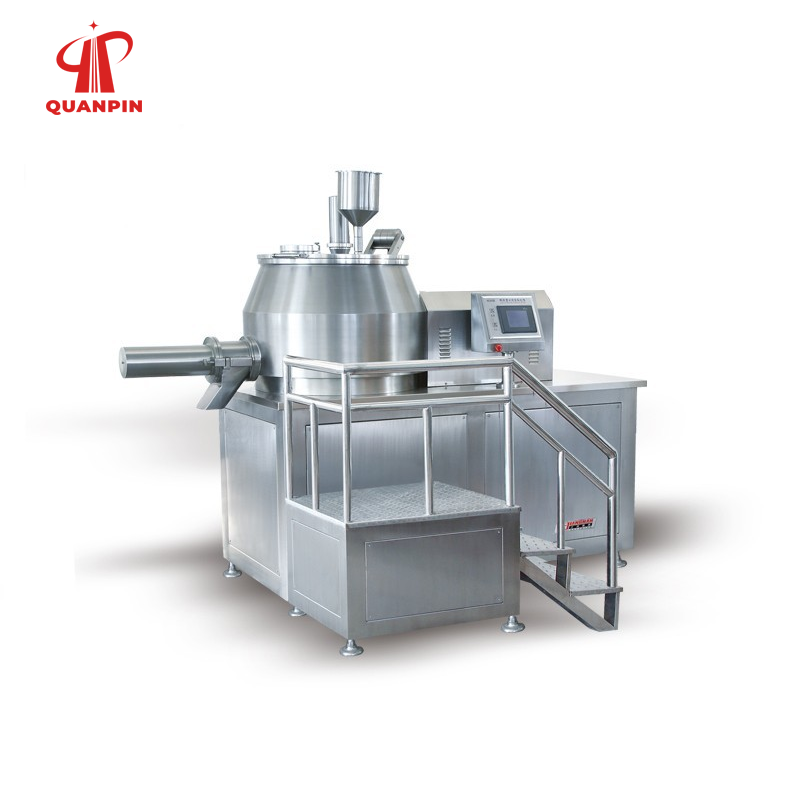
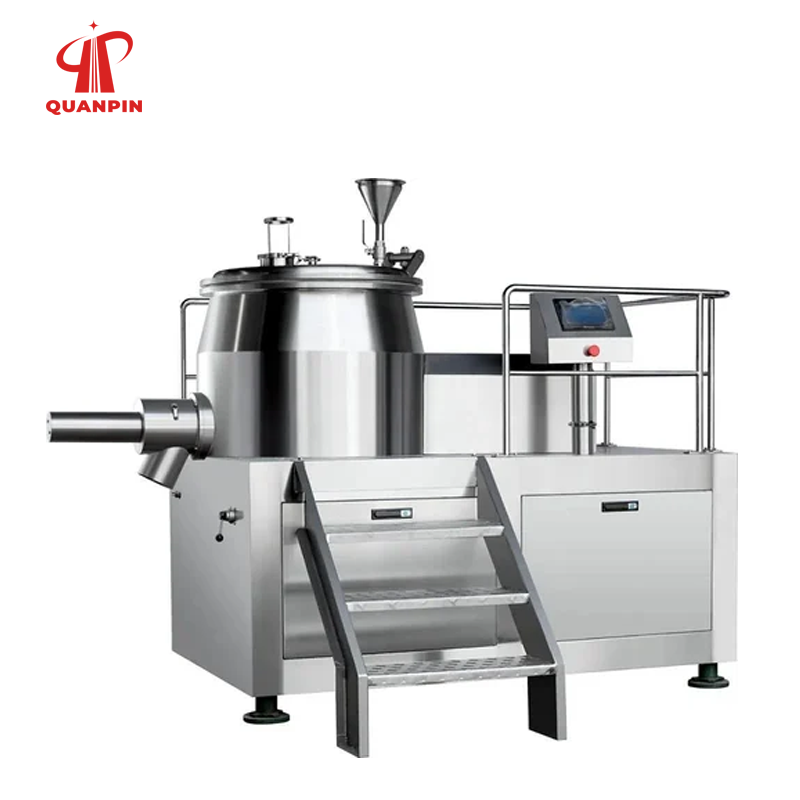
For process evaluation, consider the high speed mixer granulator for high-shear preparation of a suitable wet granulating mass. Confirm suitability with representative material, the required product properties and the proposed process conditions.