Pharmaceutical Pulverizer Unit: Distinguish Product Residue from Cleaning-Agent Residue
By QUANPIN
Product residue and cleaning-agent residue are separate questions in a pharmaceutical pulverizer review. A finding about one should not silently establish the condition of the other.
A pulverizer machine enquiry should identify the material of concern, the relevant contact boundary and the evidence available from the actual cleaning process. See pharmaceutical applications.
Define the Evidence Question
The verified unit combines mechanical size reduction with conveying and powder collection for compatible feeds.
A universal pulverizer description does not establish that a particular cleaning procedure removes every relevant residue. Use product-specific development knowledge to justify the attributes being examined. See FDA ICH Q8 pharmaceutical development.
State the Review Boundary
Define whether the immediate concern is retained product, a substance used for cleaning or another identified finding.
Keep the investigation tied to the actual formulation and cleaning procedure instead of assuming a universal acceptance limit.
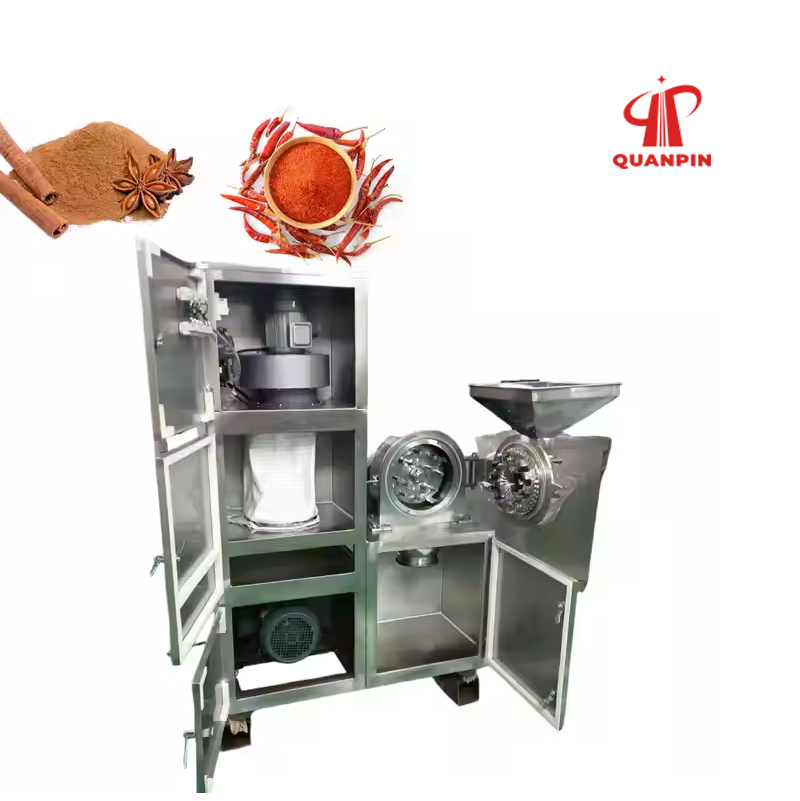
Five Steps for a Traceable Comparison
Identify product and cleaning materials
Identify the previous product and the cleaning materials actually used.
Map the contact surfaces
Map the contact surfaces included in the cleaning review.
Preserve sampling and analytical records
Preserve the sampling and analytical records for the stated concern.
Separate appearance from measured residues
Separate observations about appearance from relevant measured residue results.
State each supported residue conclusion
State the conclusions supported for each identified residue question.
Separate the Four Relevant Records
A previous-product residue belongs to a defined product and processing history.
A cleaning-agent residue belongs to the actual cleaning material and procedure.
Visible cleanliness describes an observation and should not be expanded into unmeasured chemical claims.
A sampling method also has a defined scope; an inaccessible or unsampled surface should not be called assessed.
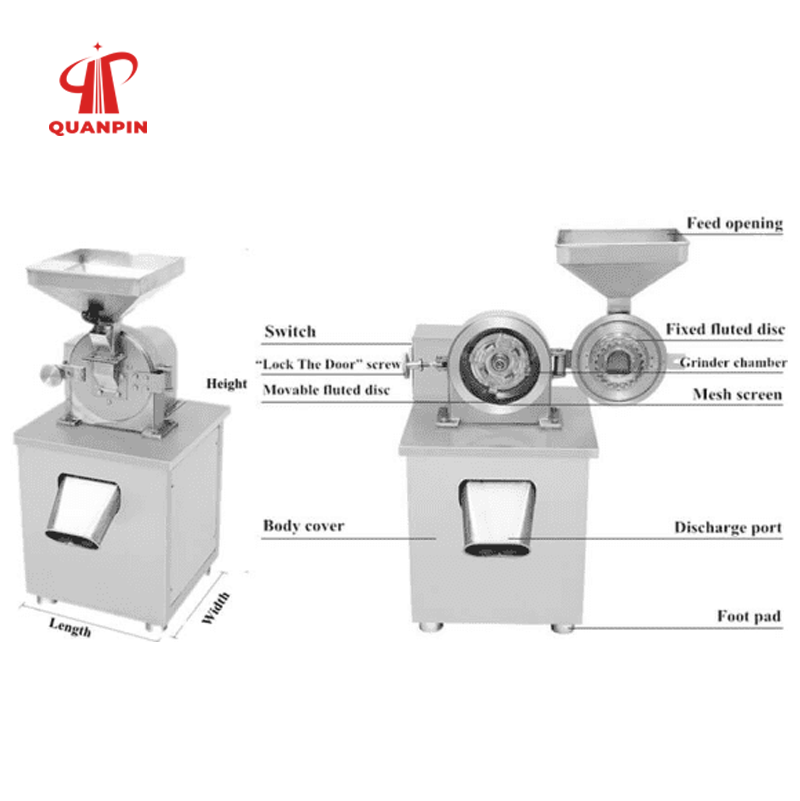
Equipment and Evidence Interfaces
Grinding-chamber contact surfaces
The grinding chamber supplies product-contact surfaces within the actual milling configuration.
Conveying connections
Conveying connections can extend the contact path beyond the chamber.
Collection equipment
Collection equipment adds locations that may need their own access and cleaning review.
Seals and contact components
Seals and other relevant contact components belong to the confirmed construction scope.
Sampling access
Sampling access determines what evidence can be obtained under approved procedures.
Receiving-process boundary
The receiving process establishes which further product-contact stages fall outside the supplied unit.
Interpret the Actual Results
Define the reference basis
For an industrial pulverizer, identify whether the cleaning review includes the whole connected system or a stated part.
Do not assume that evidence from one accessible location represents every collection or conveying surface.
Describe the cleaning material using its actual identity and available instructions.
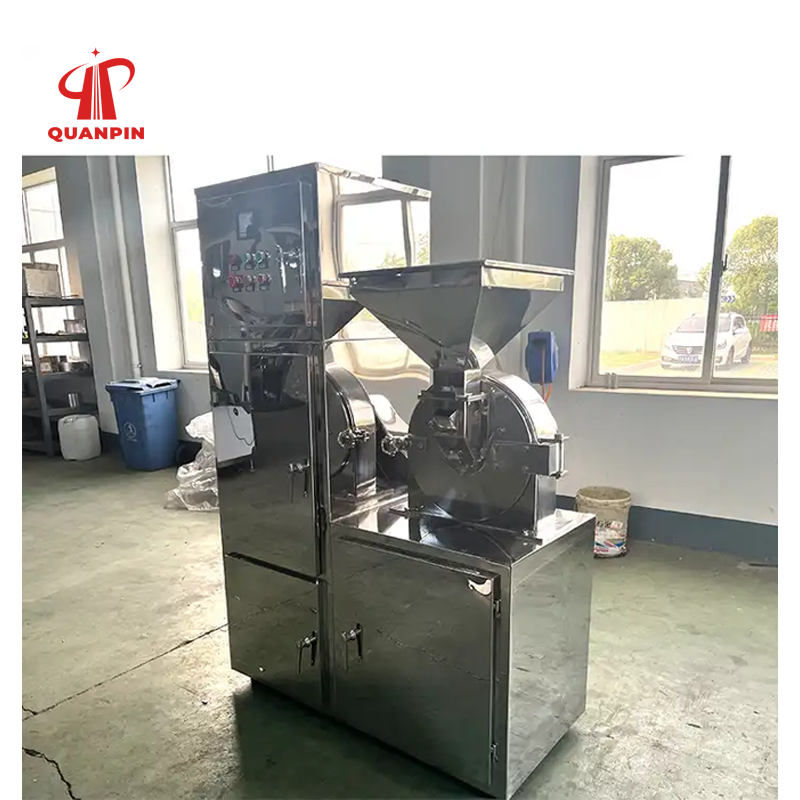
Keep changes visible
Keep product-residue and cleaning-material questions distinguishable when choosing the relevant analytical evidence.
A powder grinding machine‘s construction documentation can inform compatibility review but cannot replace cleaning-performance evidence.
If the cleaning method changes, preserve that change when reviewing earlier observations.
Assess the relevant product
An unexplained analytical finding needs its applicable investigation rather than an assumed machine adjustment.
An industrial pulverizer price comparison should identify cleaning access and supplied contact components as part of the scope.
A quotation alone does not establish the acceptability of a customer’s cleaning procedure or residue specification.
Benefits and Limits of the Review
Separating the residue questions helps prevent a visual observation from being presented as complete chemical evidence.
It can also expose an omitted part of the contact path before another product is processed. A development comparison should not be presented as complete validation of an untested production process. See FDA process validation guidance.
The review does not prescribe one cleaning agent, sampling method or residue limit for every formulation.
Those decisions require the actual application and the appropriate technical and quality assessment.
Identify the Material and Method
Identify the previous product and the next intended material duty.
Record the actual cleaning materials and procedure references. Assess relevant quality risks using the actual material and process context. See FDA ICH Q9 quality risk management.
Records, Handling and Safe Access
Describe the surfaces included in the review and any inaccessible scope.
Preserve sample identities and the methods behind measured observations.
Distinguish product-related results from cleaning-material results where they answer different questions.
Document unresolved findings and the evidence needed for their review. Interpret measurements through process understanding rather than treating an isolated instrument reading as product acceptance. See FDA process analytical technology framework.
Cleaning and inspection require the approved shutdown, access and isolation procedures for the installation.
Review the actual cleaning material’s hazards and compatibility before selecting or changing the procedure.
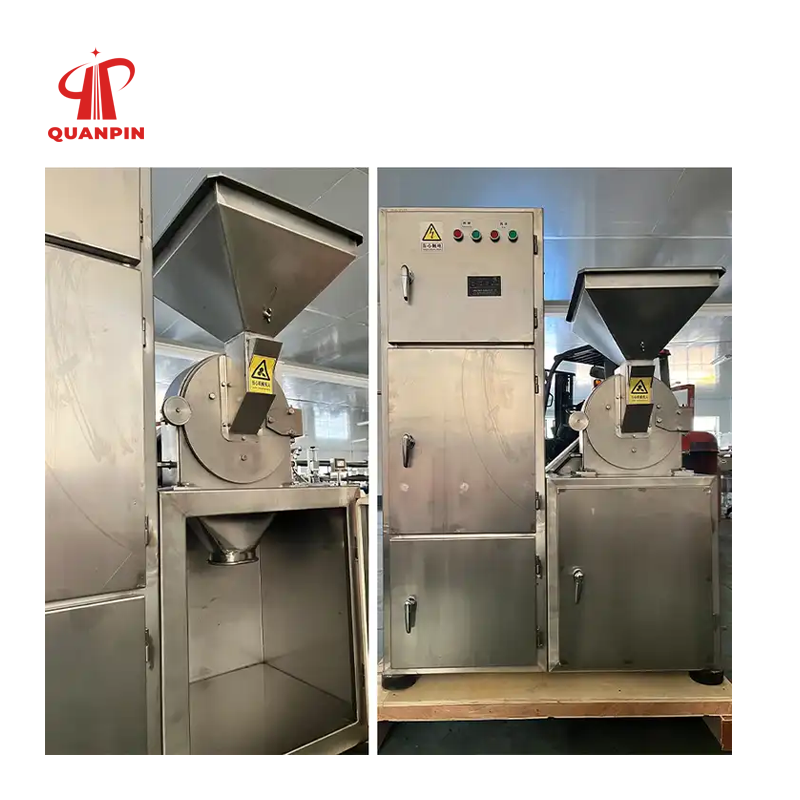
Provide QUANPIN with the Application Scope
Send QUANPIN the confirmed contact boundary and the equipment-access question that needs review.
Keep the customer’s cleaning and analytical acceptance requirements separate from equipment functions that require supplier confirmation.
Preserve the Evidence and Its Limits
Retain the reviewed procedure and scope with the actual configuration and residue evidence.
Describe what was assessed without implying that unobserved surfaces or unmeasured substances were proven acceptable. Retain knowledge and manage adopted process changes through the pharmaceutical quality system. See FDA ICH Q10 pharmaceutical quality system.
Frequently Asked Questions
Are product and cleaning-agent residues the same question?
Product residue and cleaning-agent residue concern different material histories.
Does visual cleanliness establish every residue result?
A visually clean surface does not independently establish every relevant chemical-residue result.
Can the sampling method affect interpretation?
Sampling location and method define which evidence a result can support.
Does construction documentation establish cleaning performance?
Construction documentation describes components and materials; it does not validate a cleaning procedure.
Is one residue limit suitable for every application?
No universal residue acceptance limit is established here for every product or cleaning material.
What should the cleaning enquiry distinguish?
The enquiry should distinguish the actual residues, contact scope, cleaning procedure, sampling basis and unresolved equipment-access needs.
Discuss the Confirmed Application with QUANPIN
Discuss the confirmed High-Efficiency Pulverizer Unit application with QUANPIN. Use the enquiry form or the contact page to describe your project.
Email sales@qpdryer.com or stacie@qpdryer.com. Call +86 19850785582, or contact us on WhatsApp: +86 15921493205.