Hopper Mixer: Identify Which Product-Contact Parts Belong to the Quoted Container Scope
By QUANPIN
A hopper-mixer enquiry should identify the product-contact parts included in the quoted configuration. Review the container, closures and connecting scope before installation planning.
The objective is a clear supply boundary without assuming accessories from another photograph or model. See the matching pharmaceutical industry applications.
Which Contact Parts Are Confirmed in the Proposal?
Use the actual quotation and equipment documents to identify supplied contact components.
List unconfirmed requirements separately so they can be resolved before the scope is accepted. Use product-specific development knowledge to justify the attributes being examined. See FDA ICH Q8 pharmaceutical development.
Equipment Principle and Material Requirements
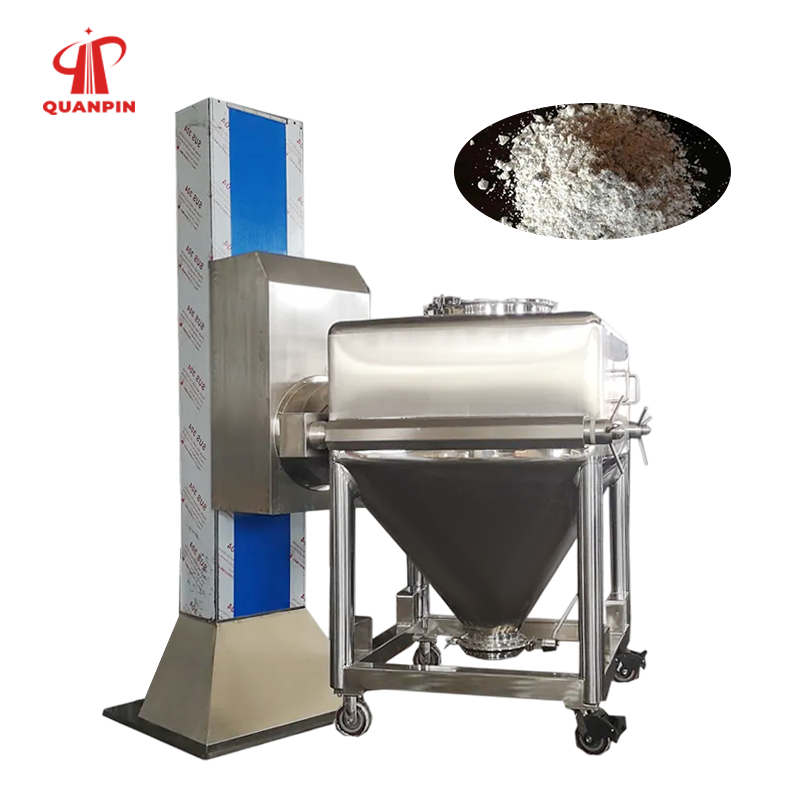
A hopper mixer moves powder within its specified container arrangement. Describe the intended hopper mixer machine duty using the actual ingredient properties and working load.
The actual construction and contact interfaces depend on the confirmed configuration, not the general equipment family name.
Five Steps for the Application Study
Identify the pharmaceutical duty and intended container route
Identify the pharmaceutical duty and intended container route.
Review the actual quoted configuration and relevant drawings
Review the actual quoted configuration and relevant drawings.
Map supplied and customer-provided contact interfaces
Map supplied and customer-provided contact interfaces.
Resolve required documentation and connection responsibilities
Resolve required documentation and connection responsibilities.
Assess the agreed arrangement through the appropriate engineering and quality review
Assess the agreed arrangement through the appropriate engineering and quality review.
Four Process Boundaries to Record
The machine boundary identifies the supplied mixing arrangement.
The container boundary identifies the hopper and fitted components.
The contact boundary maps material-exposed parts within scope.
The site boundary assigns responsibility for external connections and services.
Hopper Mixer Components and Interfaces
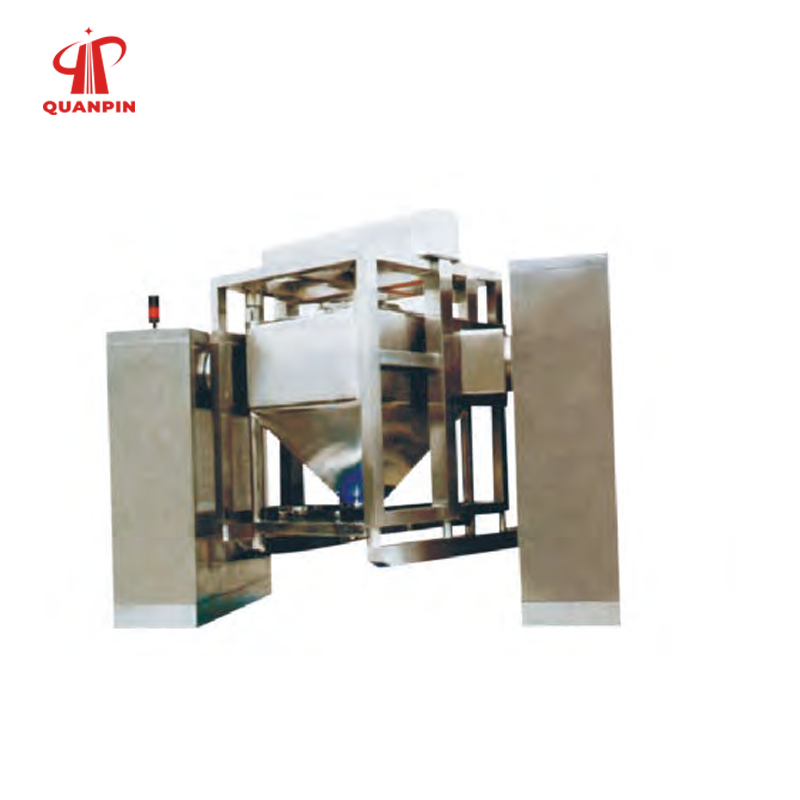
Hopper configuration
Confirm the hopper configuration and identity. The bin blender comparison needs both the sample method and the discharge boundary.
Loading closures
Identify loading closures in the actual supply list. Choose the granule blending arrangement for the documented material rather than a generic vessel-volume claim.
Discharge connection
Review the discharge closure and connection.
Seals and contact components
Include relevant seals or other contact components.
External receiving parts
Describe customer-provided receiving parts separately.
Material and cleaning documents
Preserve material and cleaning documentation required for the duty.
Comparison Choices and Process Interfaces
Define the Reference Basis
Establish a reference scope using the actual equipment proposal. Review the low-shear tumble mixing interfaces, including charging, sampling and receiving equipment.
Keep its drawing and revision identities available.
State which contact parts are confirmed rather than presumed.
Keep the Comparison Interpretable
When scope changes, preserve the revised component and responsibility record.
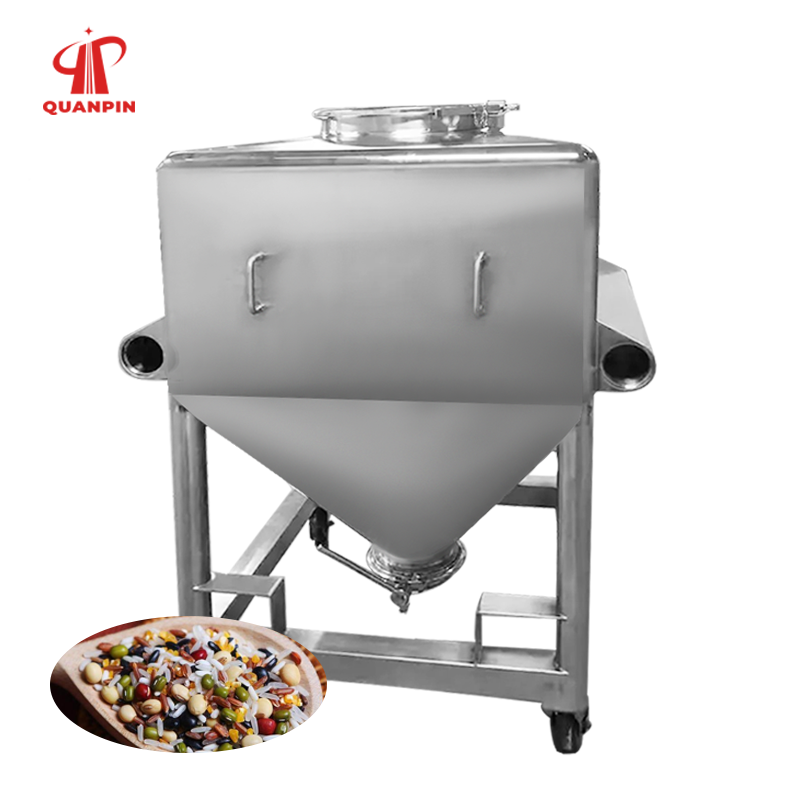
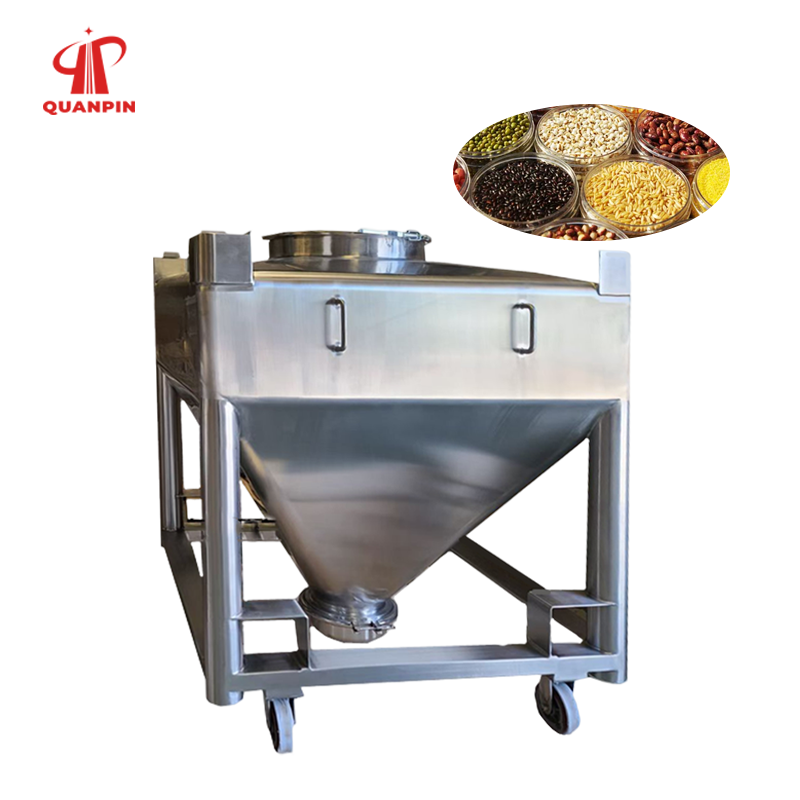
Do not infer an accessory from an image of a different configuration.
Keep unresolved specifications visible instead of substituting a generic material grade.
Assess the Receiving Process
Review the agreed material path into the receiving process. Define how the powder blender connects to the preceding preparation and the next operation.
Keep equipment scope separate from product-quality acceptance.
Use unresolved interfaces to define further supplier or site review.
Industry Application and Acceptance
Pharmaceutical equipment selection needs contact information appropriate to the intended product.
Construction documents support that assessment without establishing a validated cleaning process by themselves. A development comparison should not be presented as complete validation of an untested production process. See FDA process validation guidance.
The quality system should preserve adopted configuration and component changes.
A scope review does not approve every possible site installation.
Benefits and Practical Limits
A contact-part map can reveal missing responsibilities before delivery. Selection of a powder mixer should include cleaning access and the intended campaign sequence.
It cannot establish compatibility or cleaning performance without the necessary application evidence. Assess relevant quality risks using the actual material and process context. See FDA ICH Q9 quality risk management.
Six Details That Affect the Result
Identify the actual quotation and configuration.
Preserve relevant drawing revisions.
Distinguish supplied parts from requested options.
Record external contact interfaces and their owners. Interpret measurements through process understanding rather than treating an isolated instrument reading as product acceptance. See FDA process analytical technology framework.
Keep missing specifications explicitly unresolved.
Review changes against the pharmaceutical application requirements.
Safety and Operating Requirements
Assembly and setup must follow approved equipment procedures.
Cleaning, exposure and material handling need assessment for the actual site duty.
Prepare Your Equipment Enquiry
Provide QUANPIN with the powder duty and intended container connections. Specify the evidence required for Mixing Equipment; a favorable visual impression is insufficient where composition matters.
List the contact documentation and interfaces that must be included in the proposal. Compare uniform powder mixing at the same material and acceptance boundary before scaling the working batch. Retain knowledge and manage adopted process changes through the pharmaceutical quality system. See FDA ICH Q10 pharmaceutical quality system.
Frequently Asked Questions
Does a family name define every contact part?
An equipment-family name does not define every supplied contact part.
Does another model's image confirm an accessory?
A photograph of another configuration does not confirm an accessory.
Where should material descriptions come from?
A material description should come from verified documentation.
Does construction documentation validate cleaning?
Construction information does not by itself validate cleaning.
Do external connections need owners?
External receiving connections need assigned responsibilities.
What supply boundary should be defined?
A useful enquiry defines both the material duty and the required supply boundary.
Discuss Your Hopper Mixer Application with QUANPIN
Discuss your application with Hopper Mixer specialists at QUANPIN. Use the enquiry below or our contact page.
Email sales@quanpinmachine.com or stacie@quanpinmachine.com. Call +86 19850785582, or contact us on WhatsApp: +86 15921493205.