Hollow Paddle Sludge Drying: Distinguish Ammonia and Nitrogen Observations from Water Removal
By QUANPIN
Removing water from sewage sludge does not independently establish where its nitrogen goes. A useful drying trial keeps water removal, ammonia in gas or liquid streams and nitrogen remaining in solids as separate observations.
For a Hollow Paddle Dryer enquiry, identify the sludge and the proposed system boundary before comparing emissions results. This guide concerns measurement interpretation, not an assertion that QUANPIN equipment meets a particular environmental limit.
Define the Chemical and Water-Removal Questions
Water removal is normally expressed through a defined mass or solids comparison. Ammonia release concerns a chemical species that requires its own measurement, reporting basis and collection boundary.
Total nitrogen is not interchangeable with ammonium nitrogen or gaseous ammonia. A report should preserve the species or fraction actually determined rather than abbreviating all results to nitrogen loss.
Confirm the Dryer and Vapour-System Boundary
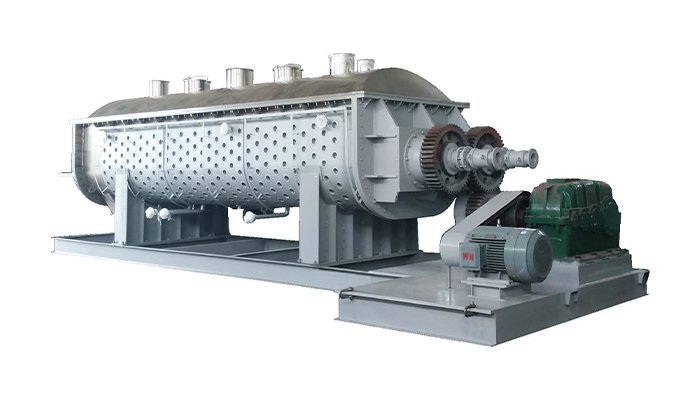
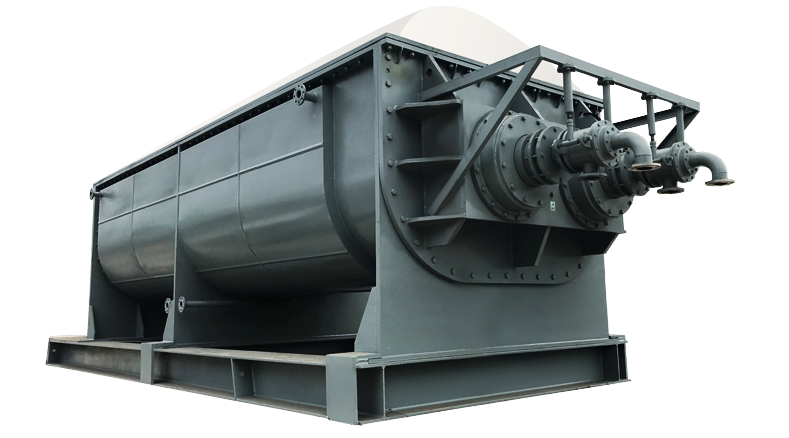
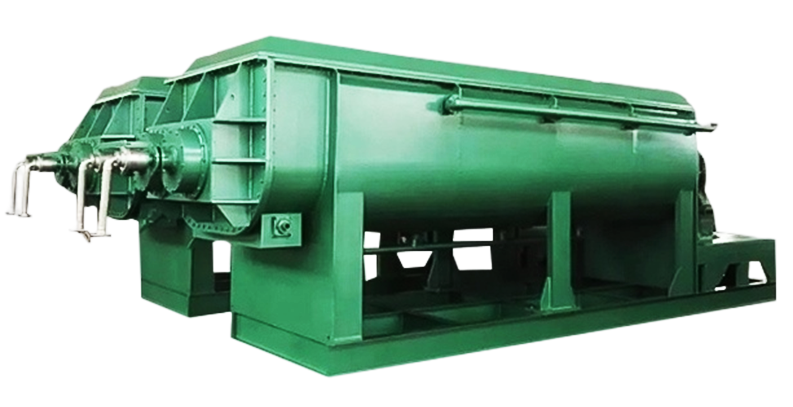
A KJG Series Hollow Paddle Dryer transfers heat through the configured heated surfaces while material is moved. Its drying duty and the assessment of downstream gas or liquid streams need separately confirmed responsibilities.
An installation may include vapour handling, condensation or additional treatment within its agreed scope. Do not assume those functions or their performance from the dryer model name.
Five Inputs for a Nitrogen Measurement Plan
Sludge identity
Identify the sludge origin and preceding treatment. Municipal, industrial and differently stabilised sludges need not contain the same nitrogen fractions.
Initial composition
Retain feed solids, moisture and chemical information relevant to the investigation. Initial composition is needed before interpreting a concentration change during drying.
Gas boundary
Define the gas-sampling location and the period represented. An upstream process sample and a treated outlet sample describe different system boundaries.
Liquid collection
Identify liquid collections and their volumes. Condensate concentration alone does not establish the total nitrogen transported through that stream.
Species and units
Record the species, units and analytical method. Distinguish ammonia mass from ammonia-as-nitrogen, and wet-material values from values based on dry solids.
Read Thermal-Drying Research within Its Limits
An original municipal-sludge experiment measured gaseous pollutants online during thermal drying and studied calcium-oxide addition. Ammonia release changed with the experimental conditions and time. See the original thermal-drying and pollutant experiment.
The investigators used a laboratory tubular-furnace setup, not a commercial KJG trial. Their temperature and additive results cannot be copied into a QUANPIN operating guarantee.
The study also found that additive effects depended on the conditions and pollutant considered. It does not support assuming that any alkaline addition always suppresses ammonia.
Use such research to plan which streams and times should be observed. Equipment settings, sludge chemistry and downstream treatment still require evaluation for the actual installation.
Follow Six Sludge and Sampling Boundaries
Receiving
At receiving, label the sludge and its treatment history. Keep a representative feed specimen linked to the material entering the drying comparison.
Feed analysis
At feed analysis, preserve the measured solids and nitrogen fractions. A previous analysis from an unrelated campaign may not characterise the current feed.
Drying observations
At drying, retain the actual operating and material observations. These provide context without substituting for gas, liquid or solids analysis.
Vapour sampling
At the vapour boundary, identify the sample location and collection period. Document the process state represented by an intermittent specimen.
Liquid sampling
At liquid collection, retain volume, time and sampling procedure. Different condensate collections should not be combined without a documented basis.
Solids sampling
At solids discharge, identify the sample and reporting basis. A higher concentration per unit wet mass may result from water removal rather than a greater total amount.
Build an Interpretable Stream Comparison
Draw the measurement boundary
Begin with a diagram of the agreed measurement boundary. Include the feed, dried solids and relevant gas and liquid streams before attempting a nitrogen balance.
Use consistent species and units when combining measurements. Converting between ammonia and nitrogen reporting bases requires a stated calculation, not a silent change of label.
A hollow paddle dryer for sludge dewatering should therefore be specified together with the required observations. In this context, clarify that the proposed dryer duty is thermal water removal, distinct from upstream mechanical dewatering.
Pair concentration with quantity
Pair concentration with the corresponding quantity of material or stream when estimating mass. A gas concentration without an appropriate flow and time basis is not a total emitted mass.
Retain whether gas values are reported on a wet or dry basis and any stated reference conditions. Comparisons can become misleading when these conventions differ.
Likewise, distinguish measured collection from assumed recovery. A liquid sample may show nitrogen, but that alone does not demonstrate complete capture of nitrogen leaving the dryer.
Review timing and unresolved terms
Check the representativeness and timing of specimens before interpreting a balance discrepancy. Unmatched feed, discharge and vapour observations may describe different material periods.
Document unmeasured streams and analytical limitations. A balance with unresolved terms should remain incomplete rather than assigning the difference to one mechanism automatically.
For a continuous hollow paddle dryer comparison, retain the residence and collection context confirmed for the actual trial. Do not apply a batch sampling assumption without review.
Preserve Sludge Identity and Nitrogen Fractions
Original sand-drying-bed research measured nitrogen fractions in differently stabilised sludges and at different depths. Sludge type strongly influenced the observed nutrient characteristics. See the original sludge-type and nitrogen-fraction experiment.
This was drying-bed research rather than thermal paddle drying. Its value here is to show why feed identity and the measured nitrogen fraction belong beside a drying observation.
A total-nitrogen value in dried solids cannot by itself identify ammonia release. It needs an appropriate material basis and complementary measurements if the question concerns nitrogen transport.
Avoid inferring a drying-stage emission mechanism solely from a before-and-after concentration. Consider water removal and actual stream quantities before drawing that conclusion.
Separate Field Fluxes from Dryer Performance
Original field measurements on sludge drying pans investigated ammonia fluxes over drying cycles and included nitrogen-balance information. See the original drying-pan ammonia investigation.
Open drying pans have different transport and operating boundaries from an enclosed thermal dryer. Their emission factors should not be assigned to KJG equipment or used as its performance estimate.
Keep Condensate and Recovery Claims Distinct
A pilot-scale septic-sludge treatment study characterised condensate from microwave drying and discussed variability associated with sludge origin and technology. See the original pilot condensate investigation.
Its condensate findings describe that specific process. They do not establish that another drying condensate is suitable for discharge, reuse or a particular treatment route.
For the actual installation, identify who specifies the gas and liquid analyses and who reviews the relevant acceptance requirements. The measurement plan and equipment scope should agree.
Odour perception and ammonia concentration are also different observations. An apparently less noticeable smell does not independently quantify a nitrogen stream or demonstrate control of all pollutants.
Original mass-and-energy-balance research modelled integration of thermal drying, further sludge treatment and nitrogen recovery. Its calculations included recovery from more than one process stream. See the original integrated sludge-recovery modelling study.
This was a scenario calculation, not a demonstrated recovery rate for a QUANPIN installation. State the assumptions whenever modelled recovery is discussed.
Prepare the KJG Trial Enquiry
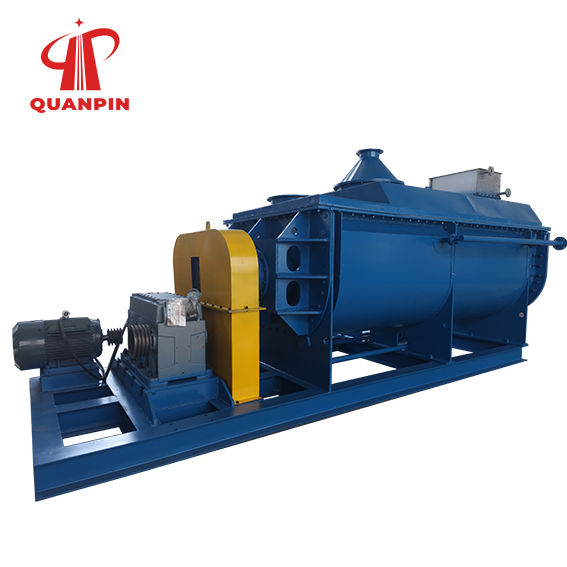
Provide QUANPIN with the sludge description, intended water-removal duty and proposed vapour-handling boundary. Identify the gas, condensate and solids questions to be investigated.
A hollow paddle dryer price comparison should reflect the confirmed supply scope and required trial observations. Specify whether additional sampling, condensation or treatment equipment is included.
Retain Separate Drying and Nitrogen Conclusions
Retain feed analysis, operating histories, sample identities, stream quantities and analytical reports together. Explain the conversion and material basis used for any calculated nitrogen amount.
Conclude separately about water removal and measured nitrogen transport. An environmental acceptance statement requires its own applicable criteria and supporting evidence from the actual system.
Frequently Asked Questions
Does water removal establish ammonia release?
No. Water removal and ammonia transport are different measurements. Their relationship must be investigated for the actual sludge, operating history and system boundary.
Is total nitrogen the same as ammonia?
No. Preserve the measured fraction and species. Total nitrogen, ammonium nitrogen and gaseous ammonia are related but analytically different quantities.
Does condensate concentration prove recovery?
No. The amount collected also depends on liquid volume and the collection boundary. Concentration alone does not establish total recovery.
Is gas concentration a total emission amount?
No. A concentration result needs a justified flow, time and reporting basis before it can support a calculated emitted mass.
Can open-pan values predict KJG performance?
No. Different geometries, feed histories and operating conditions limit transfer. The cited studies help frame measurements rather than predict KJG emission performance.
What should accompany an enquiry?
Provide sludge identity, feed composition, intended drying duty, stream boundaries and required analyses. Identify the parties responsible for assessment of the actual gas and liquid results.
Discuss Your Sludge-Drying Duty
Discuss the material, processing objective and required trials with QUANPIN. Review the equipment information and the relevant industry applications, or send an enquiry through our contact page.
Email sales@qpdryer.com or stacie@qpdryer.com. Call +86 19850785582 or contact WhatsApp +86 15921493205 to discuss the proposed scope.
For process evaluation, consider the hollow blade dryer for indirect heat transfer to suitable wet solids; the continuous disc dryer for indirect drying across heated disc surfaces; and the drum scraper dryer for drying a suitable feed as a thin layer on a heated drum. Confirm suitability with representative material, the required product properties and the proposed process conditions.