Citrus Powder Milling: Define the Ingredient Fraction Before Comparing Hydration
By QUANPIN
Citrus powder is not a single ingredient. Whole peel, pulp and extracted dietary fibre contain different proportions of structural and soluble material. A milling specification becomes misleading when it compares their hydration measurements without identifying which fraction was tested.
For a fine powder grinder enquiry, define the ingredient identity before the fineness target. The useful question is whether the proposed powder meets the intended formulation requirement after its actual preparation route.
Why Citrus Fractions Need Different Specifications
Whole peel retains the material present in the selected peel preparation. Removing selected components to produce dietary fibre changes the test material, even when both powders originate from the same fruit.
Extracted dietary fibre is therefore a separate reference material. A result measured on that fraction can suggest an investigation but cannot establish the water requirement of an untreated peel powder.
Name the Actual Feed Material
Record the citrus species, selected tissue and preparation steps. A supplier describing feed only as orange waste has not supplied enough information for a controlled comparison.
Keep pulp, peel and mixed juice-processing remnants under separate sample identities. Record their actual proportions when a mixture is used rather than treating the mixture as a pure peel sample.
Preserve the Drying History
Whole peel
Drying occurs before grinding in the studies considered here. Its contribution belongs in the material history because different upstream treatments can leave different starting powders.
Extracted dietary fibre
Do not compare two grinding routes while changing the drying route without acknowledging both changes. A paired trial needs feed prepared from a common, documented batch.
Species and fraction
A published sweet-orange investigation combined drying methods with ambient, water-cooled and liquid-nitrogen-cooled hammer milling. Its design provides a reason to preserve both processing histories rather than attributing every difference to fineness. See the sweet-orange biochemical study for the original experimental scope.
Drying route
The biochemical study reports results for its specific combinations. Those observations do not establish a universal temperature limit or the capabilities of an air classifier mill.
Ambient grinding
Ambient grinding describes one experimental condition. It does not mean that the powder temperature stayed constant, and the term should not replace an actual temperature record in a proposed trial.
Read Whole-Peel Grinding Evidence
Cooling treatments in a paper identify what the researchers did. A purchaser must separately establish whether the offered equipment includes a suitable cooling arrangement for the actual duty.
An orange-peel ultrafine-grinding study examined specific surface area against starting particle size, rotation speed and grinding number. That endpoint describes exposed area rather than a finished-food hydration specification. See the orange-peel ultrafine-grinding study for the original experimental scope.
A mill setting is not itself a material result. Measure the recovered powder instead of assuming that a chosen speed establishes either its particle distribution or its surface area.
Particle dimensions and surface area answer different questions. A useful comparison retains both reports where surface exposure is relevant to the ingredient-development objective.
Compare Extracted Fibre on Its Own Basis
Cooling during grinding
Avoid translating a laboratory grinding number directly into an industrial operating instruction. Different equipment and feed conditions require a material-specific demonstration.
Particle dimensions
Research on dietary fibre extracted from Jincheng sweet-orange peel and pomace compared ordinary grinding with planetary ball milling. Extraction and the chosen mechanisms are essential boundaries of that comparison. See the Jincheng dietary-fibre study for the original experimental scope.
Specific surface area
The fibre study measured structural and functional responses together. That design supports checking more than a size result when changing a prepared fibre ingredient.
Insoluble and soluble fractions
A reported change in a soluble or insoluble fraction belongs to the analytical procedure and treated material. It should not be assigned to every whole-peel powder with a similar particle size.
Extraction history
Preserve extraction records with the sample. A fibre concentrate whose preparation is undocumented is a weak reference for assessing a new industrial feedstock.
Pulp composition
A separate low-temperature study investigated Chachi citrus pulp powder. Pulp evidence must remain labelled as pulp evidence when considering a peel processing project. See the Chachi pulp-powder study for the original experimental scope.
Keep Pulp Results Within Their Scope
Grinding duration
Within that experiment, longer superfine grinding was associated with lower water holding and changes in other functional measurements. The result demonstrates why one favourable response cannot substitute for the entire specification.
Pulp composition differs from an isolated peel-fibre fraction. A commercial decision should use the fraction intended for the finished food rather than select the most favourable published value.
Grinding duration is part of the published treatment. It cannot establish the necessary residence time or production rate of another machine without a representative trial.
Water holding
Water-holding capacity describes water retained under the chosen procedure. Specify the sample basis, water addition and separation conditions before comparing results from different laboratories.
Swelling describes a different response. A powder that occupies a different hydrated volume does not necessarily retain a corresponding mass of water under a centrifugation procedure.
Keep hydration time and temperature consistent. Otherwise a difference attributed to milling may include the influence of the analytical preparation itself.
Swelling
Specify whether results use dry sample mass. Comparing wet-basis and dry-basis values can create a disagreement that has nothing to do with grinding performance.
Contradictory hydration trends are a reason to inspect material identity and method first. Whole peel, isolated fibre and pulp are not interchangeable experimental specimens.
The published findings justify a comparative test on the actual feed. They do not justify promising that finer citrus powder will always increase water holding or improve a recipe.
Measure Hydration Under Defined Conditions
The hydration study on sweet-orange peel explicitly varied drying and grinding methods. Its factorial preparation is relevant when deciding which variables need to be controlled in a purchasing trial. See the sweet-orange hydration study for the original experimental scope.
Evaluate the accepted ingredient against the intended food. A bakery water adjustment and a beverage dispersion requirement can assign different priorities to the same powder.
Provide representative feed for an equipment evaluation. Include preparation history, actual moisture information if measured and the proposed fineness and application endpoints.
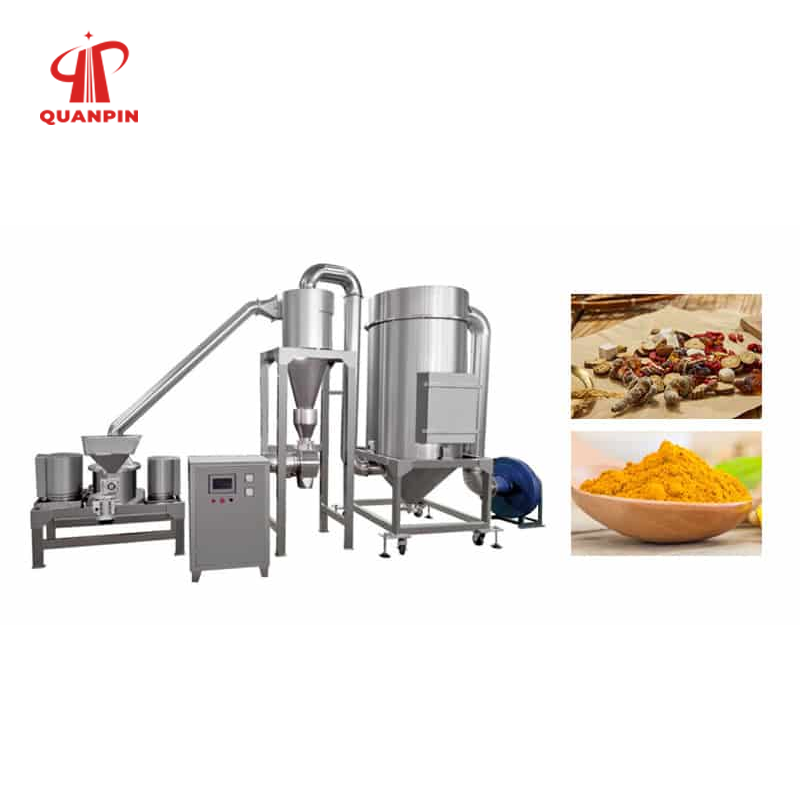
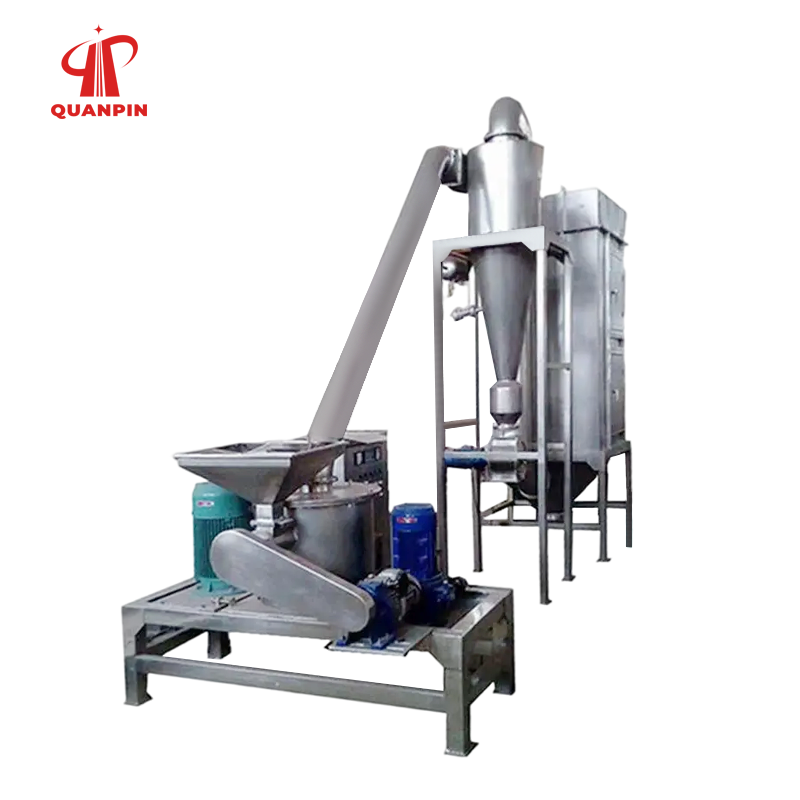
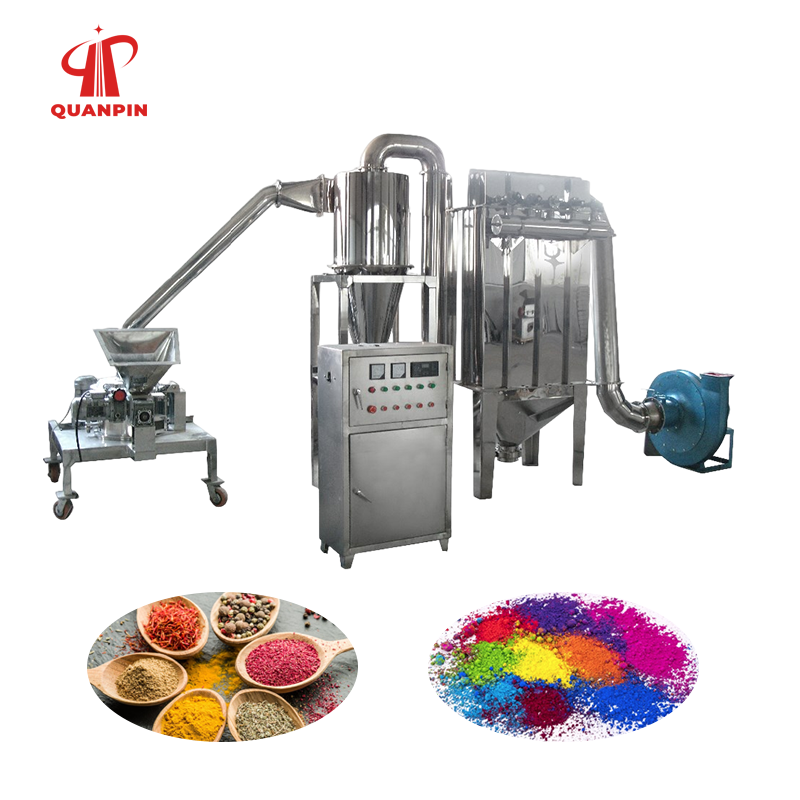
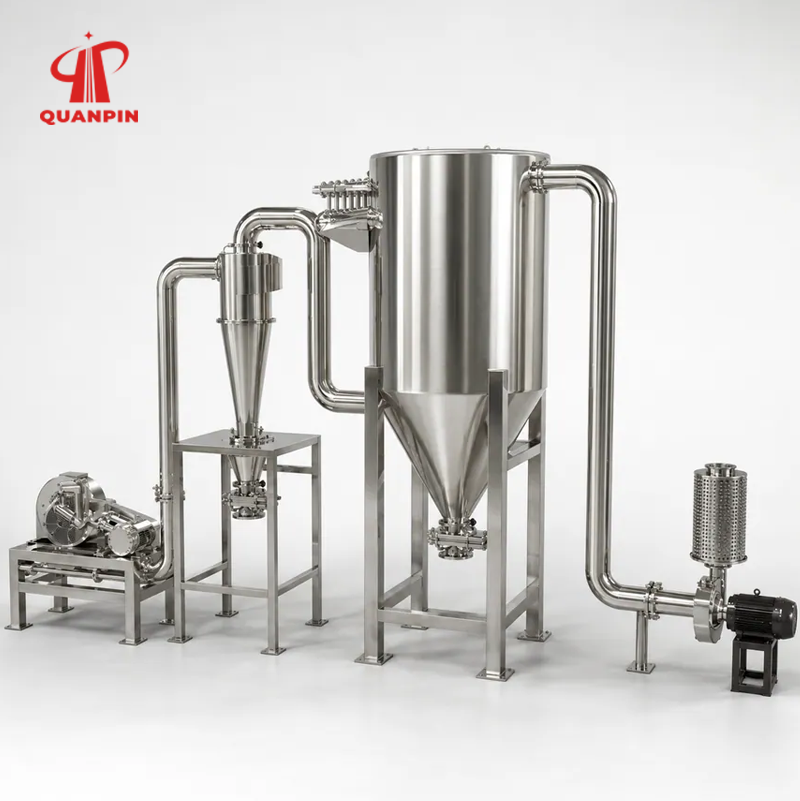
An air classifying mill enquiry should identify the required duty without assigning unverified machine capabilities. Confirm the tested configuration and collection arrangement with the supplier.
Interpret Contradictory Responses
Use a common feed lot for the initial comparison. Retain enough unground material to investigate whether a later difference arose before the milling step.
Separate the request for an ACM mill from the ingredient acceptance decision. The equipment name alone does not establish citrus suitability, cooling performance or finished-food behaviour.
Prepare an Equipment Trial
Agree which powder fraction will be sampled. A sample collected from one location should not silently stand for every recovered stream in a different collection arrangement.
Retain the actual milling record and the test methods with each powder. Their combination allows a later reviewer to understand why two nominally similar samples behaved differently.
Application testing should use the intended inclusion level and formulation procedure. Changing those conditions while comparing powders introduces another explanation for a texture difference.
Do not accept a smaller median size as the sole success criterion when hydration is central to the product. The powder must satisfy the separately defined functional requirement.
Keep a reference sample and its original report. A named commercial comparator without its preparation and storage history may be unsuitable for a detailed mechanistic comparison.
A decision record should identify what passed, what remains uncertain and which formulation observations supported acceptance. This is more useful than an unsupported statement that the powder was improved.
Link Acceptance to the Food Application
Discuss the proposed citrus material with QUANPIN using a representative sample and a defined ingredient objective. A material-specific evaluation can establish whether the proposed fine grinding route deserves further development.
Provide the required finished-food behaviour alongside the particle-size requirement. This gives the equipment discussion a practical acceptance question rather than an assumed benefit from finer powder.
Keep the Comparison Reproducible
Record the comparison boundaries before ordering a trial. Clear fraction identity makes the published citrus evidence useful without turning laboratory findings into unsupported production promises.
Keep the final specification attached to the actual ingredient preparation. A change from whole peel to extracted fibre should trigger a review of the hydration evidence and acceptance basis.
Frequently Asked Questions
Can a finer powder hold less water?
Can a finer citrus powder retain less water? Yes, a published pulp experiment reported that direction under its conditions. Material identity and method determine how the result should be interpreted.
Is pulp equivalent to peel?
No. Pulp and peel are different starting materials. Their results should retain the tissue labels and preparation histories used in the studies.
Can a fibre study define a whole-peel target?
No. An extracted fibre result can inform test design, but the whole-peel material requires its own measurement before a production specification is assigned.
Does cooling prove a machine specification?
No. A cooled laboratory treatment does not establish the cooling arrangement or performance of a proposed industrial pulverizer. Obtain a documented equipment proposal and trial evidence.
Which samples should be retained?
Retain the representative feed, comparison powders and relevant application specimens where practicable. Label every sample with its preparation route and collection identity.
What should an equipment enquiry include?
Include the citrus species, fraction, drying and extraction history, actual feed condition and application objective. State the fineness and hydration methods so the supplier can assess the requested duty.
Discuss Your Citrus Powder Duty
Discuss the material, processing objective and required trials with QUANPIN. Review the equipment information and the relevant industry applications, or send an enquiry through our contact page.
Email sales@qpdryer.com or stacie@qpdryer.com. Call +86 19850785582 or contact WhatsApp +86 15921493205 to discuss the proposed scope.