A workable botanical powder process connects the incoming material with the ingredient specification used by the next production team. For dried orange peel, equipment selection should follow that connection from receiving through processing and collection. The purpose of a development trial is to expose the steps that determine a repeatable result and to produce samples the customer can evaluate.
The following production review separates the equipment operating principle from the results that still require testing. It uses the QUANPIN product as the proposed processing route and institutional references for the surrounding handling and hygiene questions. No capacity, fineness, processing time or certification is assumed for this application; these decisions need documented product information and representative material trials.
- Orange peel intended for a botanical powder often reaches the preparation area as irregular dried pieces. Before selecting a coarse reduction stage, inspect the balance of stiff fragments and flexible strips. Explain what the following mill can accept and how that requirement will be checked. The useful intermediate is a manageable feed for another operation, so buying decisions should start with transfer and feeding behaviour rather than a photograph of small pieces. Discuss this requirement when reviewing the coarse crusher with the supplier.
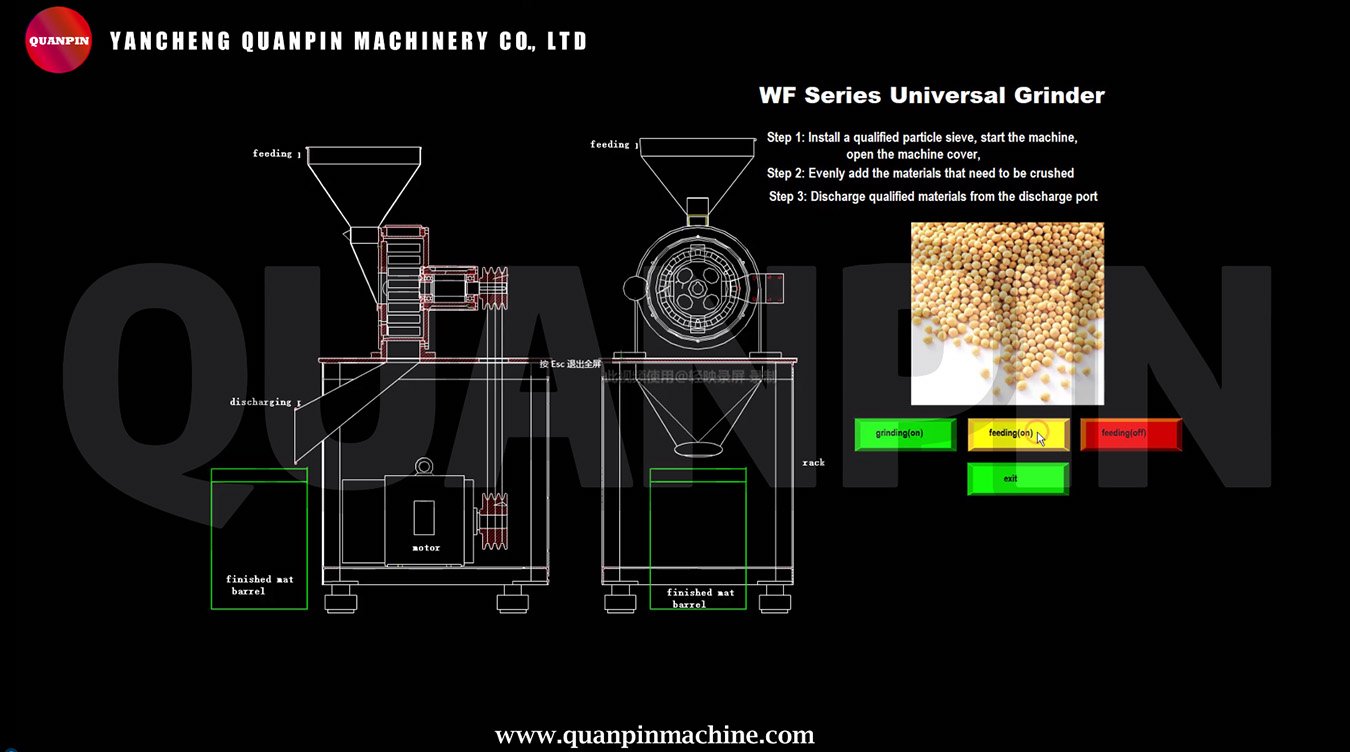
- The WF roughness grinder uses a rotating blade working with a fixed cutter, with reduced material passing through a sieve. Cutting and discharge therefore belong in the same review. Fibrous strips that resist reduction deserve particular attention because their behaviour may differ from brittle fragments in the same load. The product principle supports a coarse preparation duty; the trial establishes whether the actual peel reaches the intended intermediate condition. Discuss this requirement when reviewing the coarse grinding machine with the supplier.
- Inspect the dried peel before charging and remove unsuitable foreign matter through the plant’s established preparation procedure. Record the storage history, the form received and any previous drying or cutting. Avoid changing several preparation conditions between trial runs. If the first sample contains unusually long strips, retain examples and record their presence so the supplier can understand the actual challenge rather than demonstrating only selected easy pieces. Discuss this requirement when reviewing the coarse pulverizer with the supplier.
- Collect successive portions during the trial and compare their physical form. Look for long strips, excessive fines and pieces that would make the downstream feed inconsistent. These checks translate the objective into observable results without inventing a universal size limit. If the team changes the proposed setup, repeat the same inspection sequence. Keeping the comparison consistent matters more than choosing a visually attractive handful from one container. Discuss this requirement when reviewing the industrial coarse grinder with the supplier.
- Transfer the intermediate to the next operation using the containers and tools proposed for production. Check whether pieces bridge at the feed point, remain behind during emptying or separate during handling. A useful coarse cutting stage may simplify downstream preparation, but that advantage must be demonstrated across the whole route. Include retained pieces and operator intervention when comparing alternatives, because these details can dominate an otherwise straightforward preparation task.
- Dried citrus peel is the proposed application, while roots, dried leaves and other botanical materials require separate assessment. Their structure and breakage behaviour can differ substantially. Ask QUANPIN to review representative material together with the intended next step. A documented sample run should provide the intermediate product, the loading method and observations during discharge, giving the purchaser evidence that relates directly to its own production sequence.
- FAO’s compound-feed manual discusses ingredient selection, processing machinery and feed preparation. Use that general context to document a specific check for the botanical powder route. Name the task, responsible person and evidence retained after the trial. The cited guidance supports this process question; it does not establish performance of the proposed machine or acceptance of the finished ingredient. Read the original institutional source.
- FAO’s herb and spice guidance discusses process flow and quality-assurance factors. Apply the reference at the relevant handling interface, including charging, receiving or container exchange. Review the actual installed arrangement with the responsible plant team. Keep the resulting procedure with the batch documentation so operators can follow the agreed method and report departures consistently. Read the original institutional source.
- CCOHS treats workplace housekeeping as an organized part of everyday work. Include this topic in the pre-trial discussion and identify what staff should observe during ordinary operation. Record the selected controls and how their condition will be checked. A public reference supplies background; the production team still needs to evaluate suitability for its own ingredients and layout. Read the original institutional source.
- CCOHS discusses machinery safeguarding and the hazards associated with moving equipment. Consider the issue when planning access for inspection, interruptions and cleaning. Identify the plant procedure that governs the task and ensure the trial team understands it before work begins. Processing observations should be recorded separately from decisions about the installed machine’s protective arrangements. Read the original institutional source.
- FDA’s spice risk profile addresses pathogen and filth issues in spices. Use the reference to frame questions about cleaning methods and checks between recipes. Record which product-contact areas and transfer tools need attention. The source is context for the review, rather than evidence that this application or equipment already meets a particular regulatory requirement. Read the original institutional source.
- To develop this botanical powder application, send QUANPIN the material description, intended ingredient specification and a clear account of the following operation. Ask for a representative trial with an agreed sampling and acceptance procedure. Keep the resulting samples, collection records and changeover observations together, then base the purchasing discussion on those documented results. Contact stacie@qpdryer.com with the application details.
Discuss your material and production route with QUANPIN. Review the corresponding equipment information before arranging a material trial.
YANCHENG QUANPIN MACHINERY CO.. LTD
Sales Manager – Stacie Tang
MP: +86 19850785582
Tel: +86 0515-69038899
E-mail: stacie@qpdryer.com
WhatsAPP: 8615921493205
https://quanpindrying.en.alibaba.com/
Address: Jiangsu Province, China.