For the stacked-plate PLG configuration discussed here, wet solids move over heated drying surfaces while scrapers redistribute the material through successive levels. This combines an indirect heat path with a mechanical solids path. For pharmaceutical intermediates, the useful question is how those paths interact as wet cake becomes a more mobile solid. QUANPIN distinguishes this vertical arrangement from horizontal disc-and-shaft equipment; confirm the selected layout before transferring these observations to a quotation.
A development campaign should connect incoming cake condition, movement over the discs, vapor removal and recovered product. These observations explain where the continuous arrangement may help and where the formulation creates difficulty. The discussion describes process development rather than a qualified recipe: no particular throughput, solvent compatibility or product quality follows automatically from choosing this machine.
- Prepare a feed that can enter consistently. Break up unusually large cake masses upstream using a suitable method, and identify whether the feed is granular, cohesive or paste-like. A feeder that alternates between starvation and heavy charging creates different drying histories before the solids reach the second disc. Review this stage with the Continuous Disc Dryer configuration. For finished-drug operations within its scope, 21 CFR 211.80 supports this requirement: identify and protect incoming component lots during feed preparation and storage.
- Trace heat through the disc wall. The heating medium supplies energy indirectly through the working surface, so the actual contact between solid and metal matters. A thick stationary deposit interrupts that useful contact and can conceal wet material beneath an apparently dry exposed face.
- Watch scraper travel across the surface. The moving arms redistribute solids and guide them toward the transfer edge. Observe the entire accessible travel path during an appropriate trial; a freely moving outer region does not prove that the inner region is equally free of retained deposits.
- Inspect each transfer between levels. Solids must leave one working surface and reach the next rather than collect at the transition. Sticky particles can accumulate at these points even when the surrounding layer moves normally. Keep samples from intermittent releases separate from the main discharge sample. Review this stage with the rotary disc dryers configuration.
- Map the sticky stage. Some pharmaceutical filter cakes smear while wet, then become friable as liquid leaves. Locate that transition by observing discharge and accessible trial samples. The advantage of mechanical redistribution depends on maintaining movement through this difficult interval rather than merely moving already dry powder.
- Separate vapor handling from solids handling. Evaporation creates a vapor stream that needs an appropriate outlet arrangement. State the liquid identity before selecting the configuration. Indirect heating describes energy transfer; it does not establish that every solvent or containment requirement is covered by the standard supply.
- Interpret utility and product temperatures separately. A heating-medium setting is not the temperature of every particle. Material arriving late, traveling quickly or remaining in a deposit can have a different exposure. Development measurements should therefore identify both the sampling location and the operating condition. Review this stage with the indirect contact dryer configuration. For finished-drug operations within its scope, 21 CFR 211.68 supports this requirement: include the dryer instruments in the written calibration and inspection program required for applicable mechanical and electronic equipment.
- Use intermediates as application examples with boundaries. A cake that becomes granular during drying may suit a continuous mechanical route, whereas a persistent adhesive paste may resist transfer. Test the actual formulation and expected feed variation before extrapolating observations from a visually similar ingredient. For finished-drug operations within its scope, 21 CFR 211.82 supports this requirement: where the feed is a received component, maintain its quarantine status until the required examination or testing and release.
- Sample after the process settles. Startup material can experience a different inventory and exposure from established operation. Preserve startup, steady discharge and shutdown fractions independently. Comparing their moisture and physical form helps distinguish normal product variation from a change caused by the operating sequence. For finished-drug operations within its scope, 21 CFR 211.84 supports this requirement: release applicable component lots through appropriate sampling and testing before production use.
- Examine discharge into the receiving equipment. Dried solids may bridge at the outlet or form agglomerates during collection. Connect the dryer trial to the intended mill, receiver or packaging step. Successful evaporation alone does not demonstrate that the next operation can accept the recovered material. Review this stage with the conductive drying configuration.
- Review practical access between campaigns. Disc surfaces, scraper attachments and transfer boundaries can retain material. Ask staff to demonstrate inspection and restoration after cleaning. The continuous process advantage should be evaluated alongside the time needed to make the next campaign ready for operation.
- Build the purchase brief around material evidence. Give QUANPIN representative cake, its liquid phase, feed variability and the required discharge condition. Request observations of movement, retained solids and downstream handling. Compare usable recovered product and operating continuity rather than treating nominal machine size as the decision. For finished-drug operations within its scope, 21 CFR 211.86 supports this requirement: when scheduling campaigns using approved component stock, rotate the oldest approved stock first unless an appropriate temporary deviation applies.
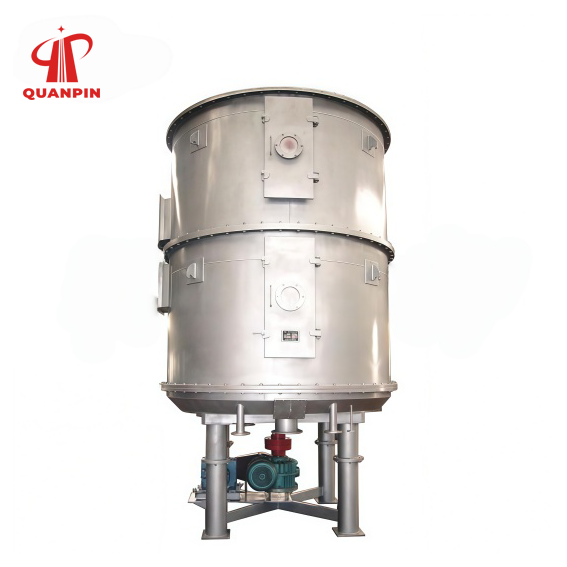
Discuss your material and production route with QUANPIN. Review the corresponding equipment information before arranging a material trial.
YANCHENG QUANPIN MACHINERY CO.. LTD
Sales Manager – Stacie Tang
MP: +86 19850785582
Tel: +86 0515-69038899
E-mail: stacie@qpdryer.com
WhatsAPP: 8615921493205
https://quanpindrying.en.alibaba.com/
Address: Jiangsu Province, China.