Producing a consistent batch of bakery carrier blends requires a clear connection between equipment movement and the condition of the material delivered downstream. Rotation changes the slope of the powder bed, allowing portions to fall and redistribute through gravity. This tumbling action suits an assessment of freely moving starch, sugar and compatible granular ingredients. The useful selection question is whether that mechanism matches the actual feed and handling route.
This guide organizes the assessment around preparation, operation and verification. Start with representative production material and define what the next process needs to receive. Supplier information establishes the equipment concept; a documented material trial establishes whether the proposed arrangement is suitable for the application, without assuming a universal cycle or guaranteed result.
- For the double cone blender, separate ingredient preparation from blending. Sieve or otherwise prepare agglomerated ingredients through a suitable upstream operation; the rotating cone should not be treated as a milling device. Record the observation alongside the batch identity and operating arrangement so that a later comparison reflects the same material-handling conditions rather than an undocumented change in preparation or loading.
- For the double cone mixer, measure occupied volume as well as mass. Two flour carriers can weigh the same while occupying different volumes, changing the free space available for bed movement. Record the observation alongside the batch identity and operating arrangement so that a later comparison reflects the same material-handling conditions rather than an undocumented change in preparation or loading.
- For the double cone powder mixer, plan the charging order for minor additions. A compatible carrier can distribute a small ingredient before the main batch, provided the preparation is documented and evaluated. Record the observation alongside the batch identity and operating arrangement so that a later comparison reflects the same material-handling conditions rather than an undocumented change in preparation or loading.
- For the double cone tumble blender, observe particle integrity after rotation. Tumbling avoids an internal ribbon in the basic arrangement, but wall contact and particle collisions still require attention with fragile sugar granules. Record the observation alongside the batch identity and operating arrangement so that a later comparison reflects the same material-handling conditions rather than an undocumented change in preparation or loading.
- Sample the receiving container during discharge. A uniform-looking vessel surface cannot describe how fine and coarse fractions distribute across the complete emptied batch. Record the observation alongside the batch identity and operating arrangement so that a later comparison reflects the same material-handling conditions rather than an undocumented change in preparation or loading.
- Check transfer height and receiver geometry. Separation after mixing can undermine an acceptable vessel result, particularly where ingredients differ in size or density. Record the observation alongside the batch identity and operating arrangement so that a later comparison reflects the same material-handling conditions rather than an undocumented change in preparation or loading.
- Allergen transfer requires attention when recipes share equipment. Plan ingredient identification, tools and changeover around the actual formulation sequence. Consult the relevant primary guidance for its stated scope. This source supports the handling or governance issue described here; it supplies no model-specific production rate, drying endpoint or blend-uniformity guarantee.
- Particle properties and preparation influence the interpretation of mixing trials. Document ingredient condition and weighing before attributing a difference to machine movement. Consult the relevant primary guidance for its stated scope. This source supports the handling or governance issue described here; it supplies no model-specific production rate, drying endpoint or blend-uniformity guarantee.
- Airborne powder deserves assessment during weighing and charging. A contained operating stage does not describe exposure during the complete handling task. Consult the relevant primary guidance for its stated scope. This source supports the handling or governance issue described here; it supplies no model-specific production rate, drying endpoint or blend-uniformity guarantee.
- Flour and other food powders require material-specific handling controls. Review dust release at emptying and receiver changes with the site team. Consult the relevant primary guidance for its stated scope. This source supports the handling or governance issue described here; it supplies no model-specific production rate, drying endpoint or blend-uniformity guarantee.
- Machinery access and cleaning tasks require a practical operating plan. Consider isolation, working space and operator movement before finalizing the installation. Consult the relevant primary guidance for its stated scope. This source supports the handling or governance issue described here; it supplies no model-specific production rate, drying endpoint or blend-uniformity guarantee.
- Prepare the supplier inquiry around representative bakery carrier blends, incoming condition, required outgoing condition and the complete transfer route. Include loading, emptying, inspection and changeover when comparing the production cycle. Request a trial that records these variables and retains samples for the agreed assessment. Select the configuration on the strength of that evidence and the actual installation requirements.
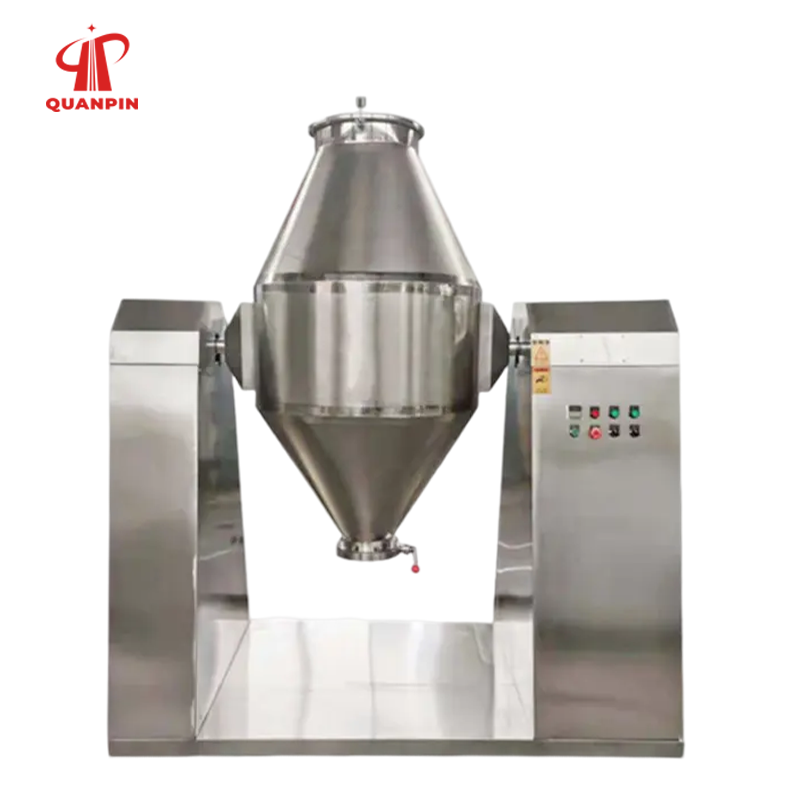
Discuss your material and production route with QUANPIN. Review the corresponding equipment information before arranging a material trial.
YANCHENG QUANPIN MACHINERY CO.. LTD
Sales Manager – Stacie Tang
MP: +86 19850785582
Tel: +86 0515-69038899
E-mail: stacie@qpdryer.com
WhatsAPP: 8615921493205
https://quanpindrying.en.alibaba.com/
Address: Jiangsu Province, China.