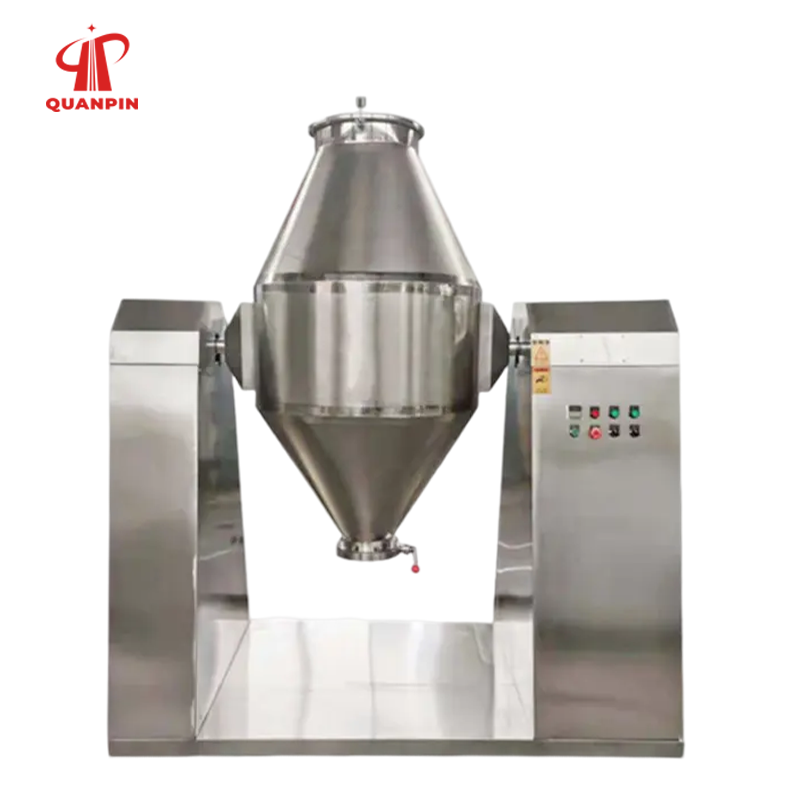
A dry carrier premix may combine a major starch ingredient with compatible powdered or granular additions before further processing. A double-cone vessel blends through gravity-driven redistribution as it rotates. The approach deserves consideration when the ingredients can move freely, while cohesive lumps or strongly dissimilar particles call for closer evaluation.
The important production question is how vessel motion translates into an acceptable blend at the receiving point. Ingredient preparation, working fill and downstream transfer all influence that answer. This guide follows a food carrier application through the decisions that distinguish a useful tumbling process from a machine selected only by nominal size.
- Begin the double cone blender assessment with samples that represent normal production feed, including foreseeable storage changes. Check for lumps, moisture-related cohesion and large differences among the ingredients. Free-flowing solids can redistribute during rotation; a compacted mass may simply travel as a mass. Record any preparation step separately so its contribution is not mistaken for a property of the blender.
- The rotating vessel of a double cone mixer continually changes the position of the powder bed. Portions move under gravity and meet other portions as the vessel turns. This explains the tumbling mechanism without suggesting that all ingredients follow identical paths. The recipe and available free space determine whether that movement creates useful redistribution under the proposed operating conditions.
- For a double cone powder mixer, compare formulations by both mass and occupied volume. A different carrier can change the working fill even when the production ticket specifies the same batch weight. Ask the supplier to relate the selected vessel to the actual density and loading condition. A catalogue vessel volume alone cannot establish the usable batch for every food formulation.
- One reason to consider a double cone tumble blender is the absence of an internal ribbon agitator in the basic tumbling route. Vessel movement supplies the blending action. This can be relevant where a rotating container suits the material-handling concept, but particles still contact each other and the walls. Assess fragile granules directly rather than describing the mechanism as damage-free.
- Prepare low-dose additions with a deliberate charging sequence. Decide whether a compatible carrier premix is needed and keep each weighed ingredient identifiable until it is loaded. Differences in ingredient location at the start can affect the early distribution pattern. A documented sequence also helps explain trial results when the same formulation behaves differently between batches.
- Carry the assessment beyond rotation. Compare the material at discharge with the condition after the normal transfer to its next receiver. Size and density differences can promote separation during pouring or vibration. Avoid unnecessary transfers where practical and agree a representative sampling approach; appearance at the vessel opening is only one observation within the complete handling route.
- Treat recipe scheduling as part of process design. The CFIA allergen-control guidance explains unintended allergen transfer and preventive controls. A carrier premix can introduce an allergen into later products through retained residues or shared tools. Identify both the preceding and following recipes when planning the blender campaign, and verify the cleaning approach for that actual sequence.
- Use formulation variables to structure trials instead of choosing a duration in isolation. The FAO feed-preparation chapter discusses particle size, measurement, mixer type and duration as influences on homogeneity. This feed-manufacturing background supports careful preparation and weighing in a food-premix review. It provides no model-specific blend time or guarantee for a particular starch-and-additive combination.
- Include every open handling task when the carrier is flour. The HSE bakery dust guidance identifies flour and powdered ingredients as exposure concerns in bakery work. Weighing and charging can create exposure before rotation begins, while emptying creates another handling point. Review the complete task sequence with site personnel rather than assuming the closed rotating stage resolves all airborne-powder concerns.
- Consider the discharge station as a working area with its own handling demands. The HSENI flour-dust guidance discusses dust released by flour milling and subsequent activities, including mixing. For a flour-containing premix, examine how bags or containers are positioned and removed. Apply material-specific controls around those tasks rather than assigning the same hazard assumptions to every possible dry ingredient.
- Check the space occupied during movement as well as the space needed at rest. The HSE food-manufacturing safety guidance provides general food-manufacturing context on machinery and dust hazards. In a double-cone layout, loading positions, the moving vessel and receiver access must work together. Confirm guarding and isolation provisions for the supplied configuration with the responsible site team.
- Prepare an inquiry around the actual carrier recipe, ingredient condition, batch volume and receiving method. Ask QUANPIN to review whether tumbling suits the material and what trial evidence would support the decision. Include preparation, charging, emptying and changeover in the cycle assessment. A defensible selection connects the mechanism to usable product at the next process stage.
Discuss your material and production route with QUANPIN. Review the corresponding equipment information before arranging a material trial.
YANCHENG QUANPIN MACHINERY CO.. LTD
Sales Manager – Stacie Tang
MP: +86 19850785582
Tel: +86 0515-69038899
E-mail: stacie@qpdryer.com
WhatsAPP: 8615921493205
https://quanpindrying.en.alibaba.com/
Address: Jiangsu Province, China.