Dry marinade production brings together salt, ground spices, carriers and sometimes coarse herb pieces. The central challenge is to distribute the ingredients while preserving the condition needed for portioning and packing. A horizontal ribbon system creates mechanically driven circulation inside a trough; its usefulness depends on how the recipe enters that circulation and leaves it.
A production review should follow the material from released ingredients to the packed blend. The sequence below uses a dry marinade as an application example rather than a claim that every spice mixture behaves alike. It explains the mechanism, practical advantages and operating decisions that should be agreed with the supplier before choosing a configuration.
- Use a ribbon blender project brief to describe the ingredient population before discussing output. Distinguish fine spice powders from coarse leaves, crystalline salt and the main carrier. Note which ingredients arrive compacted or change condition during storage. This description helps determine whether the feed is ready for blending or needs separate screening, lump removal or another preparation step first.
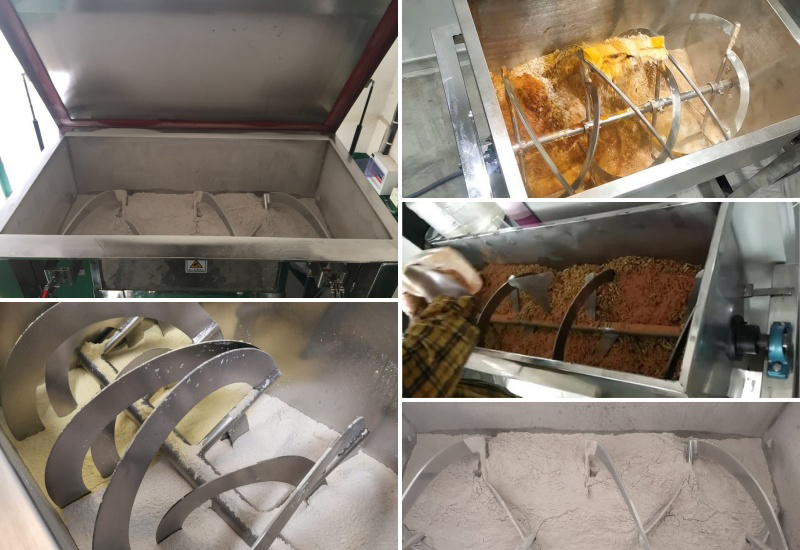
- Inside a ribbon mixer, inner and outer helical elements move material along opposing axial paths. Material exchange also occurs across the trough as the agitator turns. This circulation can repeatedly bring portions of a compatible batch together. It provides a defined mechanical blending route, although the presence of opposing flows alone does not establish an acceptable result for a particular recipe.
- Describe the occupied volume when specifying a horizontal ribbon mixer. A batch of light ground herbs can fill space differently from the same mass of salt-rich seasoning. Share the actual formulation and bulk-density information, then agree the usable loading range for the offered machine. Leave the supplier to confirm configuration-specific limits instead of treating gross vessel volume as finished-product capacity.
- Plan minor additions for the ribbon powder mixer around their required distribution. A concentrated flavour ingredient may benefit from a suitable carrier premix before entering the main vessel. Record where it enters and how the remaining ingredients follow. Consistent weighing, ingredient identity and addition order make a production trial easier to interpret and make later batches more reproducible.
- The practical attraction of ribbon circulation is its direct engagement with material across a horizontal mixing space. That can support a dry marinade workflow where compatible powders need sustained redistribution. Assess coarse herbs separately: rubbing and repeated particle contact may change their appearance. An agreed later addition stage may be worth testing, but it should not be assumed to work without checking the resulting blend.
- Set a discharge acceptance point at the receiving container or packing inlet. Observe retained seasoning, powder released during emptying and any visible separation after transfer. A satisfactory sample from one location inside the trough cannot describe every portion leaving it. Agree representative observations and sampling with the production team so that acceptance addresses the material actually supplied to the next operation.
- Arrange weighing, blending and packing as one identified route. The FAO material-flow chapter describes connections among receiving, processing and packaging; this is useful background for deciding where a marinade batch changes containers. Label intermediate receivers and check that the complete ingredient set follows the same route. These controls support recipe traceability without implying that material-flow guidance establishes mixer performance.
- Where a marinade includes flour, examine the exposure created by bag opening and manual charging. The HSE guidance on reducing flour dust discusses ingredient and handling choices that reduce flour dust. Consider whether an alternative ingredient form is feasible, then assess its effect on the recipe and mixing behaviour. Substituting a liquid ingredient changes the processing duty and requires a separate configuration discussion.
- Identify the tasks that bring operators near the ribbon assembly, including additions, inspection and clearing retained material. The WorkSafe Victoria mixer-guarding guidance explains the role of guarding and interlocks for food-preparation mixers. Its examples provide general context rather than approval of this equipment. Confirm the proposed access and isolation arrangements for the actual installation before routine operating instructions are finalized.
- Create the changeover plan from the complete ingredient declaration. The FDA discussion of food allergens identifies shared equipment as a route for allergen cross-contact. For dry marinades, a milk-derived flavour component or another allergenic ingredient can matter even when it is a minor addition. Include scoops, loading containers and the discharge receiver in the same review as the mixing vessel.
- Choose cleaning checks around the residue the formulation leaves behind. The FDA allergen-cleaning study examines how cleaning method, residue and surface affect allergen removal on retail food-contact surfaces. Those findings cannot prescribe a ribbon-mixer cleaning cycle, but they explain why a familiar wiping routine is insufficient evidence by itself. Verify the selected procedure against the actual equipment and recipe sequence.
- Give QUANPIN the marinade composition, ingredient condition, occupied volume, desired batch duty and packing arrangement. Ask for a trial or application review that covers loading through final collection. Include changeover work in the proposed production schedule. The useful purchasing outcome is an agreed process for the actual blend, supported by observable acceptance criteria rather than a promised universal mixing time.
Discuss your material and production route with QUANPIN. Review the corresponding equipment information before arranging a material trial.
YANCHENG QUANPIN MACHINERY CO.. LTD
Sales Manager – Stacie Tang
MP: +86 19850785582
Tel: +86 0515-69038899
E-mail: stacie@qpdryer.com
WhatsAPP: 8615921493205
https://quanpindrying.en.alibaba.com/
Address: Jiangsu Province, China.