Processing dried turmeric starts with a defined incoming condition and ends with material that the next operation can accept. Piece shape, storage history and preparation affect the feeding discussion. The proposed equipment route needs to connect these material properties with reduction, discharge and inspection rather than treating the machine name as a finished process specification.
This application review follows dried turmeric through preparation and collection. Representative trials should establish suitability before equipment selection is finalized. The published equipment principle provides a starting point, while the material assessment determines the configuration and acceptance procedure. No production rate, final particle size or ingredient quality outcome can be inferred from the material name alone.
- pulverizer machine Start by documenting the incoming lot. Describe piece form, visible fibre and preparation already completed. Keep unsuitable pieces and foreign matter outside the intended feed. A representative sample should include ordinary variation within deliveries, because selected easy-breaking pieces can give an incomplete picture of the production duty. Retain lot identity during handling so trial observations can be traced to their actual feed condition.
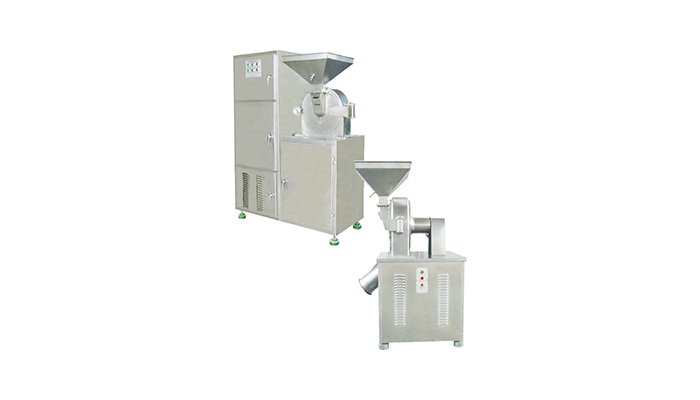
- universal pulverizer Review the reduction principle against the material response. Observe how pieces break and whether long fragments remain after discharge. Equipment geometry and feed condition both influence the intermediate product. Define the next operation before agreeing an acceptance point, and assess the discharged fraction using an agreed sampling method. A visually fine sample is useful evidence only when it represents the material produced throughout the run. The referenced unit applies high-speed impact and cutting. Its dried-ginger application provides the equipment principle; turmeric requires its own representative application review.
- industrial pulverizer Plan the route between discharge and the next operation. Identify every receiver, how it is emptied and where its contents will go. Keep collected fractions distinguishable until their intended use has been established. Include the possibility of retained material during inspection. This gives the operator a clear material-handling sequence and prevents an undefined transfer from becoming the limiting step in an otherwise workable grinding proposal. The referenced arrangement uses cyclone and bag collection to separate powder from conveying air. Identify turmeric fractions recovered at both locations before combining them.
- powder grinding machine Evaluate product condition as part of the application review. Record the observations that matter to the buyer, including temperature where appropriate, rather than assuming that size reduction leaves every ingredient property unchanged. Suitability for this botanical should be established independently of another published application. The value of the proposed arrangement is a defined processing route whose actual performance can be assessed using representative feed.
- Arrange a practical handover to screening, blending or packing. Specify the destination of coarse retained material and whether reprocessing is permitted. Keep rejection decisions separate from routine collection so a repeated preparation problem is visible. A buffer may be needed where batch discharge and downstream feeding follow different operating rhythms. Review available space and container exchange alongside the machine arrangement.
- Inspect accessible process parts under the agreed safe procedure. Changes in wear, obstruction or retained material may alter the discharge observed during production. Record unusual fragments and the reason for any returned fraction. Include loading, collection, inspection and changeover when discussing usable output. These activities belong to the production cycle and should be considered before the final equipment scope is agreed.
- CFIA describes hazards that may enter spices through incoming materials, preparation, movement or storage. Apply that process view to dried turmeric: distinguish treated and untreated material, keep receivers identified and decide where rejected coarse fractions go. Milling itself does not establish that a botanical ingredient is microbiologically acceptable. Read the CFIA spice preparation controls for the supporting context.
- North Carolina Department of Labor identifies crushing and grinding among mechanical actions associated with combustible dust. Review the dust characteristics of the actual turmeric feed and collected fractions with the responsible specialists. An integrated cyclone and bag collector still requires a suitable system-level assessment. Read the North Carolina dust guidance for the supporting context.
- WorkSafeBC notes that cutting, grinding, mixing and screening can create or release combustible dust. In a turmeric line, consider the connection between the pulverizer, collection stage and downstream sieve. Review dust escape and accumulation at transfer points rather than looking only at the visible grinding chamber. Read the WorkSafeBC combustible dust guidance for the supporting context.
- CCOHS discusses unexpected startup and stored energy during servicing and maintenance. Provide a defined isolation procedure for access to the grinding chamber and collection equipment. A routine cleaning instruction should identify the relevant energy sources and who is responsible for securing the machine before access. Read the CCOHS lockout guidance for the supporting context.
- CFIA distinguishes cleaning from sanitizing and asks food businesses to specify what, where, when and how equipment is cleaned. For turmeric powder, include the cyclone, bag-collection receiver and outlet in that plan. Choose methods suited to the actual installation rather than assuming that the main chamber alone determines changeover cleanliness. Read the CFIA cleaning and sanitation guidance for the supporting context.
- Specify a practical production cycle. Include loading, processing, discharge, inspection and changeover when discussing the required output. Give QUANPIN the complete formulation, feed condition, bulk density, target batch or hourly duty and downstream equipment arrangement. Request a configuration review with representative material before committing to the final scope. Acceptance should describe the usable product and operating conditions, rather than an unsupported promise of perfect powder or uniformity.
Discuss your material and production route with QUANPIN. Review the corresponding equipment information before arranging a material trial.
YANCHENG QUANPIN MACHINERY CO.. LTD
Sales Manager – Stacie Tang
MP: +86 19850785582
Tel: +86 0515-69038899
E-mail: stacie@qpdryer.com
WhatsAPP: 8615921493205
https://quanpindrying.en.alibaba.com/
Address: Jiangsu Province, China.