The defining feature of this process is hot air passing through a moving bed. Equipment selection becomes clearer when the team follows the material from preparation through the working zone and into the receiving operation. For pharmaceutical manufacturing, that route must be developed around the actual formulation. A supplier description explains the mechanism; a representative trial establishes whether the selected configuration can produce the condition required by the next stage.
This guide focuses on observable material behavior rather than unsupported output or quality promises. Establish the incoming condition, identify samples by their location or collection time, and compare physical handling with the chosen analytical endpoint. The discussion assumes an appropriately assessed pharmaceutical process. It does not establish suitability for every solvent, potent substance or regulated product, and the equipment itself does not confer regulatory approval.
- Assess botanical pieces before feeding. Leaf fragments, stems and cut roots can differ in thickness and permeability even within one container. Separate unsuitable oversize pieces where the process permits. Record the incoming size distribution so a trial does not accidentally represent only the easiest fraction to dry. Discuss the Belt Dryer when reviewing this part of the process.
- Spread the feed across the belt width. A narrow ridge gives air a different route than a uniform bed and can leave part of the conveyor underused. Observe the feeder during startup and after replenishment. Stable distribution begins upstream of the heated zone, where handling choices determine the layer geometry. For finished-drug operations within its scope, 21 CFR 211.56 addresses sanitation; apply that requirement through the manufacturer’s quality system.
- Preserve open paths through the bed. Through-flow air needs access between particles; compacted fines can increase resistance and encourage uneven passage. Check whether vibration, drops or a deep feed hopper compress the material. An apparently consistent feed weight does not guarantee comparable air permeability.
- Connect the air circuit to the moisture duty. Heated air transfers energy to wet pieces and carries evaporated water away. Temperature alone cannot describe that exchange. Review circulation and exhaust together with the supplier, including how increasing incoming moisture changes the moisture burden on the same installed air system. Discuss the belt conveyor drying when reviewing this part of the process.
- Use belt movement to define exposure. Conveyor travel establishes how long the bed remains within the drying route, but material thickness also controls the internal moisture path. Slowing the belt cannot necessarily correct poor bed distribution. Evaluate belt speed and loading depth as interacting development choices. For finished-drug operations within its scope, 21 CFR 211.58 addresses building maintenance; apply that requirement through the manufacturer’s quality system.
- Inspect transitions between sections. A botanical piece can rotate or overlap as the bed transfers, changing which surfaces are exposed. Observe fines generation and material retained at transfer points. These events may explain downstream variability that would remain hidden if sampling focused only on the final collection bin.
- Sample across the width and through time. Compare material near both belt edges with the center after conditions have stabilized. Keep startup and interruption samples separate. The resulting map helps distinguish an air-distribution issue from changing feed moisture, rather than assigning every difference to the selected temperature. Discuss the mesh-belt dryer when reviewing this part of the process.
- Check physical quality as well as moisture. Botanical materials may curl, become brittle or generate fragments during drying and transfer. Decide which changes affect the intended pharmaceutical preparation. Avoid promising preservation of active constituents unless the relevant analytical evidence exists for the actual material and operating conditions. For finished-drug operations within its scope, 21 CFR 211.63 addresses equipment design; apply that requirement through the manufacturer’s quality system.
- Plan controlled collection. Dried pieces can pick up moisture again while waiting in an unsuitable receiving environment. Coordinate the outlet with covered containers or the next approved operation. Review the residence time after discharge because an acceptable belt-outlet sample may not describe material held for a long period.
- Include belt cleaning in selection. Mesh openings, joints and transfer areas can retain fragments that change airflow or contaminate a later batch. Review access and restoration procedures with operating staff. A design that appears convenient for conveying must also support the cleaning method required for the product campaign. For finished-drug operations within its scope, 21 CFR 211.65 addresses equipment construction; apply that requirement through the manufacturer’s quality system.
- Use hot-air drying where the material can tolerate the route. The moving bed offers continuous transport and avoids the need to unload individual trays, but it requires consistent feeding and sufficient permeability. Establish the practical balance through a trial with normal fines and moisture variation included. Discuss the through-flow drying when reviewing this part of the process.
- Build the specification from the incoming botanical range. Describe cut size, fragility, wetness, required output condition and receiving arrangements to QUANPIN. Request review of feeding, air movement and discharge as one system. Choose acceptance criteria that address both the dried product and reliable passage along the conveyor. For finished-drug operations within its scope, 21 CFR 211.67 addresses equipment cleaning and maintenance; apply that requirement through the manufacturer’s quality system.
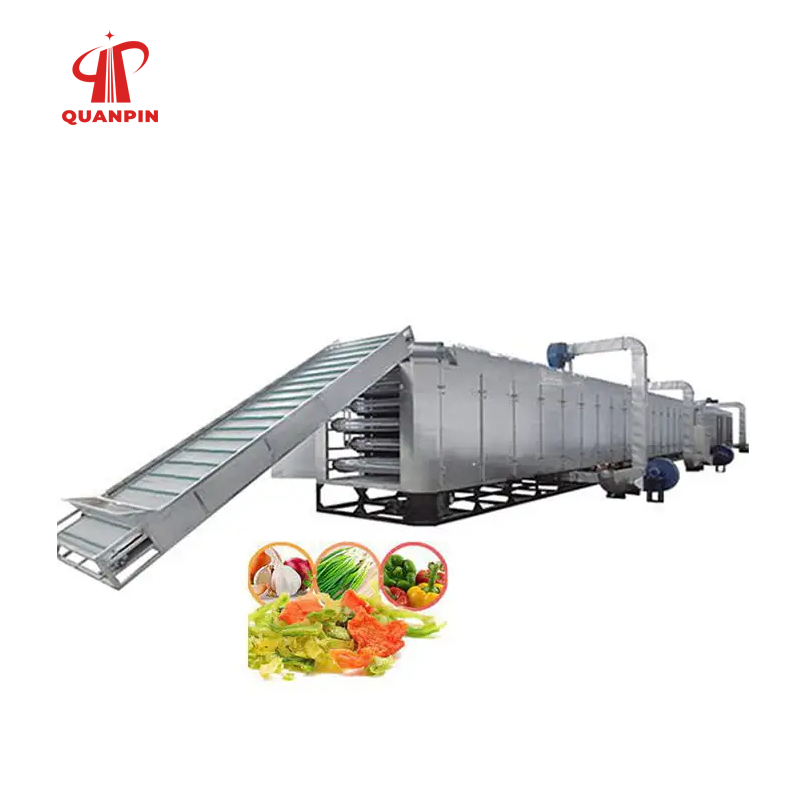
Discuss your material and production route with QUANPIN. Review the corresponding equipment information before arranging a material trial.
YANCHENG QUANPIN MACHINERY CO.. LTD
Sales Manager – Stacie Tang
MP: +86 19850785582
Tel: +86 0515-69038899
E-mail: stacie@qpdryer.com
WhatsAPP: 8615921493205
https://quanpindrying.en.alibaba.com/
Address: Jiangsu Province, China.