High shear granulation should be evaluated as a production sequence for starch-based pharmaceutical blends, rather than as a machine purchased in isolation. The arrangement uses a vessel combining powder mixing and wet granulation. The mixing mechanism distributes powder and granulating liquid while mechanical action brings wetted particles together. The impeller and chopper support the selected granulation sequence. A useful equipment discussion begins with the incoming material and ends with the condition needed by the receiving operation. A nominal output figure cannot establish that the formulation will behave acceptably throughout this sequence.
Combining dry mixing and wet granulation in a defined vessel provides a connected batch route when the formulation and liquid-addition procedure are appropriate. Establish the process boundary before a trial: include preparation, transfer, the main operation, collection and cleaning. Formulation development and the manufacturer’s quality system determine the acceptance criteria. The equipment description does not establish pharmaceutical compliance, finished-product quality or a universal operating recipe. This workflow focuses on the observations needed to make a material-specific decision.
- Confirm the dry ingredient charge before liquid addition. Record the starch grade and other components against the batch instruction. Keep ingredient identity linked to dispensing and charging. An unnoticed material loss or wrong component is not corrected by extending mixing, and a visually consistent powder is not proof of blend composition. Discuss the high shear granulator in relation to this requirement.
- Prepare and identify the binder solution or granulating liquid. Its preparation history can influence wetting behavior. Record the controlled conditions required by development rather than introducing informal adjustments. A change in binder preparation should be investigated when a previously workable powder suddenly forms sticky regions or fails to agglomerate as expected. For finished-drug manufacturing within the regulation’s scope, components exposed to adverse conditions require appropriate retesting or reexamination under 21 CFR 211.87.
- Establish dry distribution under the developed mixing sequence. Assess the evidence needed for the formulation rather than assuming any elapsed mixing time is adequate. The aim is a suitable starting distribution for wetting. Preserve the distinction between confirming the ingredient charge and evaluating the subsequent distribution within the vessel. Discuss the high speed mixer granulator in relation to this requirement.
- Review where and how liquid enters the moving powder. A local wet region may grow before liquid has reached the rest of the charge. Examine delivery pattern and powder movement together. Total liquid quantity is an important record, but it does not fully describe the actual wetting sequence. For finished-drug manufacturing within the regulation’s scope, rejected components must be controlled against use under 21 CFR 211.89.
- Understand the interaction of mixing and granulation. The impeller moves material while the chopper supports the selected mechanical treatment. Their presence does not establish a universal endpoint. Development should connect the observed wet condition with granule behavior after transfer, drying and the intended next manufacturing operation. Discuss the High-Speed Mixing Granulator in relation to this requirement.
- Stop on a justified endpoint. Use the observations or measurements established for the formulation, with elapsed time serving as a record rather than the only explanation. Persistent changes in wet-mass behavior deserve investigation. Continuing liquid addition or processing indefinitely can change the product instead of correcting the original source of variation. For finished-drug manufacturing within the regulation’s scope, written production procedures and documented deviations are required under 21 CFR 211.100.
- Define acceptance before interpreting results. Assess the moisture or wet-mass condition alongside the physical properties required downstream. Appearance alone may hide a local difference that matters later. Keep development samples traceable to their collection position and operating period until the process team understands the variation and has chosen a justified routine sampling method. Discuss the rapid mixer granulator in relation to this requirement.
- Coordinate granulation endpoint with the receiving operation. Determine how material leaves the working zone and what happens immediately afterward. Avoid unnecessary drops, compression or open holding where they would change the product. A satisfactory sample at the machine outlet does not prove that the material retains the same condition after transfer into a production container. For finished-drug manufacturing within the regulation’s scope, component weighing and dispensing require identification and checks under 21 CFR 211.101.
- Plan dryer transfer before finalizing the installation. State the receiving capacity, holding conditions and response to an interruption. Material retained during a stop may have a different history from normal output. Define how the retained portion is identified and assessed instead of automatically combining it with the next satisfactory production portion.
- Include cleaning and inspection in the batch schedule. Review access with the people who will perform routine work. Identify how assemblies are removed, checked and restored where applicable. Product-contact residue and an incorrectly restored component can influence the next batch even when the main production step appeared stable during the previous run. For finished-drug manufacturing within the regulation’s scope, yield calculations at appropriate stages are required under 21 CFR 211.103.
- Use results to refine the equipment brief. Provide QUANPIN with the actual starch-based pharmaceutical blends, intended batch or continuous duty, utilities and final material requirements. Request review of operating interfaces as well as the main machine. Keep unsupported output, energy-saving and quality claims out of the specification until an appropriate test or agreed technical document establishes them.
- Judge the complete production route. Combining dry mixing and wet granulation in a defined vessel provides a connected batch route when the formulation and liquid-addition procedure are appropriate. Compare usable product condition, handling reliability and practical turnaround rather than one isolated operating observation. Agree the trial acceptance criteria and document the selected configuration. Routine production should follow the developed procedure, with deviations assessed through the manufacturer’s quality system rather than treated as informal operator preferences.
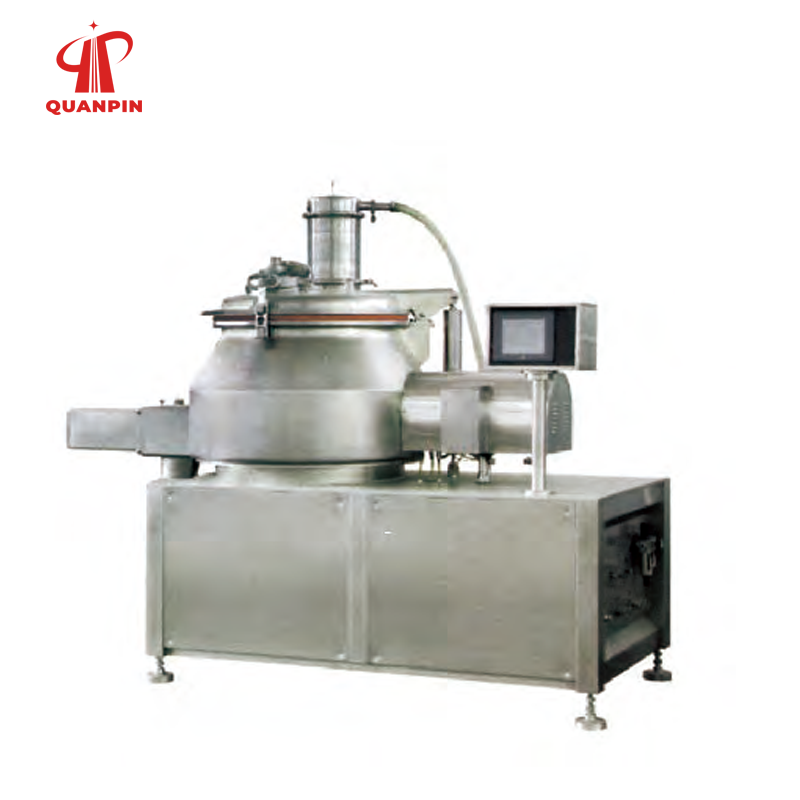
Discuss your material and production route with QUANPIN. Review the corresponding equipment information before arranging a material trial.
YANCHENG QUANPIN MACHINERY CO.. LTD
Sales Manager – Stacie Tang
MP: +86 19850785582
Tel: +86 0515-69038899
E-mail: stacie@qpdryer.com
WhatsAPP: 8615921493205
https://quanpindrying.en.alibaba.com/
Address: Jiangsu Province, China.